Fog Computing US Data Centers: The Future of Edge Computing by 2028

The digital landscape is undergoing a profound transformation, driven by an insatiable demand for real-time data processing, lower latency, and enhanced security. While cloud computing has revolutionized how we store and access information, its centralized nature is increasingly challenged by the proliferation of Internet of Things (IoT) devices and the emergence of latency-sensitive applications. Enter fog computing data centers, a distributed paradigm that extends the cloud closer to the edge of the network, promising to redefine the architecture and capabilities of US data centers by 2028. This comprehensive exploration delves into the intricacies of fog computing, its implications for US data centers, and the strategic advantages it offers in an increasingly connected world.
Understanding the Evolution: From Cloud to Fog
To truly grasp the significance of fog computing data centers, it’s essential to first understand the evolution of distributed computing. Cloud computing, with its immense scalability and cost-efficiency, centralizes computing resources in large data centers. This model has been incredibly successful for many applications, but it faces inherent limitations when dealing with data generated at the network’s periphery.
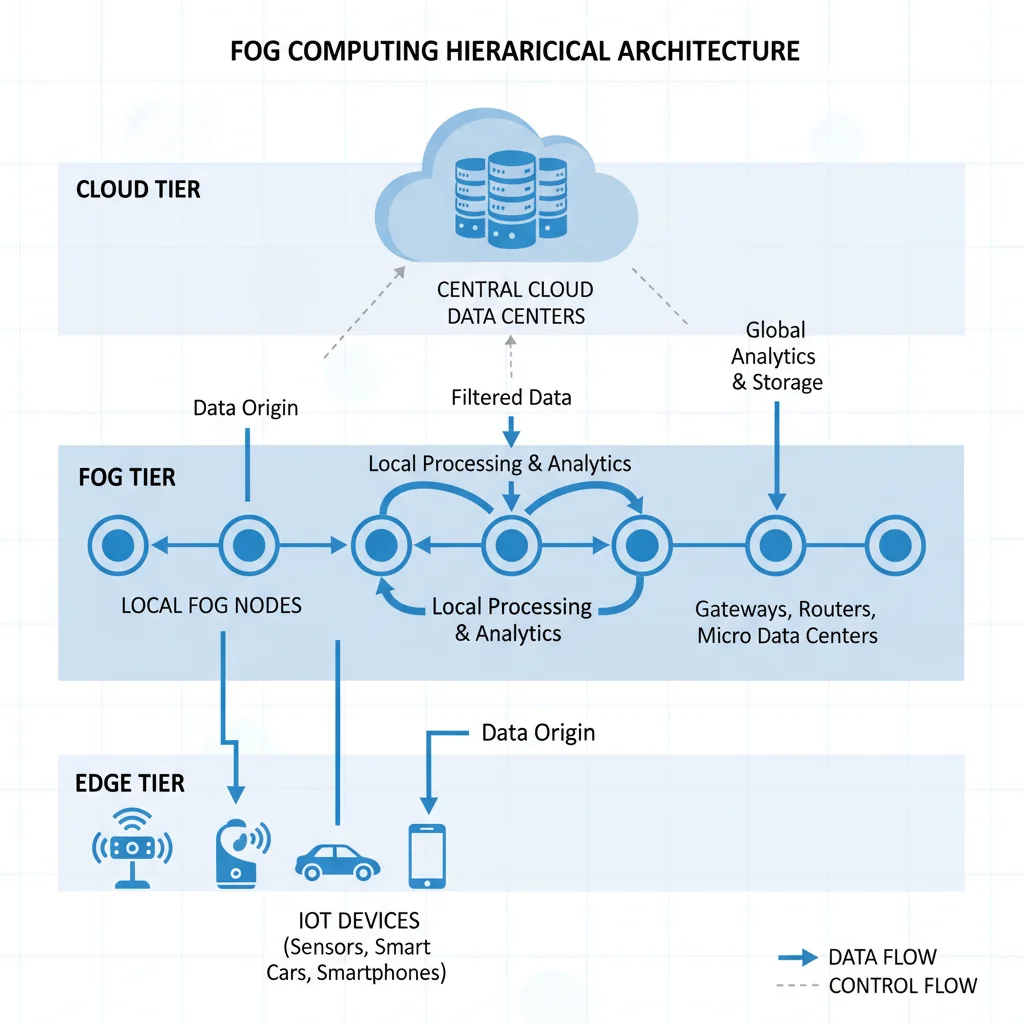
The rise of IoT devices – from smart sensors in industrial settings to autonomous vehicles – generates unprecedented volumes of data. Sending all this raw data to a distant cloud for processing introduces significant latency, consumes considerable bandwidth, and raises concerns about data privacy and security. This is where fog computing steps in, acting as a crucial intermediary layer between the data-generating edge devices and the centralized cloud.
Fog computing brings computation, storage, and networking services closer to the data sources, allowing for immediate processing and analysis. This localized intelligence reduces the reliance on constant cloud connectivity, mitigates latency issues, and improves overall system responsiveness. Imagine a scenario where an autonomous car needs to make split-second decisions based on real-time sensor data; waiting for data to travel to a distant cloud and back is simply not feasible. Fog computing enables these critical decisions to be made at the edge, ensuring safety and efficiency.
The concept of fog computing data centers isn’t about replacing the cloud; rather, it’s about augmenting it. The cloud remains vital for long-term data storage, complex analytics, and applications that don’t require real-time processing. Fog computing handles the immediate, time-sensitive tasks, filtering and pre-processing data before sending only relevant insights to the cloud. This synergistic relationship creates a more robust, efficient, and resilient computing infrastructure.
The Core Principles of Fog Computing
At its heart, fog computing operates on several fundamental principles that differentiate it from traditional cloud models. These principles are key to understanding its growing importance for US data centers:
- Proximity to the Edge: Fog nodes are strategically located closer to the data sources, often within local networks, gateways, or even directly within devices. This physical proximity minimizes the distance data needs to travel, significantly reducing latency.
- Geographical Distribution: Unlike centralized cloud data centers, fog nodes are geographically dispersed, reflecting the distributed nature of IoT deployments. This distribution enhances resilience and allows for localized data processing, catering to regional needs and regulatory requirements.
- Low Latency: By processing data closer to its origin, fog computing drastically cuts down on network delays. This is critical for applications like real-time industrial control, augmented reality, and smart city infrastructure where immediate responses are paramount.
- Heterogeneity: Fog environments are inherently heterogeneous, comprising a diverse range of devices and platforms, from powerful industrial gateways to resource-constrained IoT sensors. Fog computing architectures are designed to manage and orchestrate these disparate resources effectively.
- Interoperability: Seamless communication and data exchange between various fog nodes, edge devices, and the cloud are crucial. Fog computing aims to provide standardized interfaces and protocols to ensure smooth interoperability across the entire ecosystem.
- Scalability: While individual fog nodes may have limited resources compared to cloud servers, the overall fog infrastructure can scale horizontally by adding more nodes as needed. This allows for flexible expansion to meet growing data processing demands.
- Security and Privacy: Processing sensitive data locally at the fog layer offers enhanced control over data privacy and security, as less raw data needs to be transmitted over wide area networks to the cloud. This is particularly important for industries handling confidential information.
These principles collectively enable fog computing data centers to offer a compelling solution for the challenges posed by the explosive growth of IoT and real-time applications. The ability to perform intelligent processing at the network’s edge reduces bandwidth consumption, improves energy efficiency, and fosters greater autonomy for edge devices.
Implications for US Data Centers by 2028
The integration of fog computing is set to profoundly reshape the landscape of US data centers over the next five years. By 2028, we can expect to see a significant evolution in how these facilities are designed, operated, and utilized.
Decentralization and Distributed Architectures
The most immediate impact will be a move towards more decentralized and distributed data center architectures. While hyperscale cloud data centers will continue to exist and grow, there will be a parallel expansion of smaller, localized data processing units – essentially, mini fog computing data centers – closer to urban centers, industrial zones, and rural areas where IoT deployments are prevalent. These smaller facilities will serve as aggregation points for data from numerous edge devices, performing initial processing and analysis before forwarding aggregated or filtered data to larger regional or central cloud data centers.
This distribution will not only improve latency but also enhance resilience. If a single large data center experiences an outage, local operations can continue uninterrupted thanks to the distributed fog infrastructure. This is particularly critical for essential services and critical infrastructure, where downtime can have severe consequences.
Enhanced Connectivity and Network Optimization
The rise of fog computing will necessitate significant upgrades in network infrastructure. High-bandwidth, low-latency connectivity will be crucial to link edge devices to fog nodes and then to the cloud. This will likely accelerate the deployment of 5G networks, fiber optics, and advanced wireless technologies across the US. Data centers will need to adapt to these new network paradigms, optimizing their internal and external connectivity to support the seamless flow of data across the fog-to-cloud continuum.
Network optimization will also involve intelligent routing and traffic management, ensuring that data is processed at the most appropriate location – whether at the edge, in a fog node, or in the cloud – based on factors like latency requirements, computational load, and data sensitivity. This intelligent orchestration will be a hallmark of future fog computing data centers.
New Opportunities for Data Center Operators
For data center operators, fog computing presents both challenges and exciting new opportunities. They will need to evolve their service offerings to include edge infrastructure management, localized data processing services, and specialized connectivity solutions. This could involve deploying modular data centers or micro data centers in new locations, closer to the sources of data generation.
Furthermore, managing a distributed network of fog nodes will require advanced orchestration and automation tools. Data center providers that can offer comprehensive solutions for deploying, managing, and securing fog computing environments will gain a significant competitive advantage. This shift will also drive innovation in software-defined networking (SDN) and network function virtualization (NFV) to efficiently manage the dynamic nature of fog infrastructures.
Security and Compliance at the Edge
As data processing moves closer to the edge, so do the security and compliance challenges. Fog computing data centers will need robust security measures implemented at every layer, from individual IoT devices to fog nodes and cloud connections. This includes advanced encryption, intrusion detection systems, identity and access management, and secure boot processes for fog devices.
Compliance with data privacy regulations (e.g., HIPAA, CCPA) will also become more complex in a distributed environment. Data centers will need to ensure that data processed at the fog layer adheres to all relevant regulations, potentially requiring localized data residency and stricter access controls. The ability to demonstrate a secure and compliant fog infrastructure will be paramount for gaining customer trust.
Key Advantages of Fog Computing for US Industries
The adoption of fog computing data centers is not merely a technological trend; it offers tangible benefits across various US industries, driving efficiency, innovation, and competitive advantage.
Manufacturing and Industrial IoT (IIoT)
In manufacturing, real-time monitoring and control of machinery are crucial for optimizing production lines, predictive maintenance, and ensuring worker safety. Fog computing allows for immediate processing of sensor data from industrial equipment, enabling rapid anomaly detection and automated responses. This reduces downtime, improves operational efficiency, and facilitates the implementation of smart factories. For instance, a fog node can analyze vibration data from a machine in real-time and predict a potential failure hours in advance, allowing for scheduled maintenance rather than costly emergency repairs.
Smart Cities and Urban Development
Smart cities rely on vast networks of sensors to monitor traffic, manage waste, control streetlights, and enhance public safety. Fog computing data centers provide the localized intelligence needed to process this torrent of data efficiently. Traffic management systems can analyze real-time flow data at intersections to optimize light timings, reducing congestion without sending all data to a central cloud. Public safety applications can process video feeds locally to detect incidents and alert authorities instantly, improving response times.
Healthcare and Remote Patient Monitoring
In healthcare, fog computing can enable secure and low-latency processing of patient data from wearable devices and remote sensors. This is vital for applications like continuous patient monitoring, telehealth, and emergency response. Local fog nodes can analyze vital signs, detect critical changes, and alert medical professionals immediately, without the delays associated with cloud-only processing. This also helps in maintaining data privacy by processing sensitive information closer to the source and only sending aggregated, anonymized data to the cloud for long-term storage and research.
Transportation and Autonomous Vehicles
Autonomous vehicles are perhaps the most demanding application in terms of low-latency data processing. Every millisecond counts when making decisions about braking, steering, or object avoidance. Fog computing allows vehicles to communicate with nearby infrastructure (V2I) and other vehicles (V2V) through local fog nodes, enabling collaborative decision-making and enhanced safety. This reduces the reliance on constant cloud connectivity, which can be unreliable or too slow for critical real-time operations.
Retail and Personalized Experiences
In retail, fog computing can enhance in-store analytics, personalized marketing, and inventory management. Sensors and cameras can collect data on customer movement and product interactions, which can be processed by local fog nodes to provide real-time insights to store managers. This enables dynamic pricing, optimized product placement, and personalized recommendations, improving the customer experience and operational efficiency.
Challenges and Considerations for Adoption
Despite its numerous advantages, the widespread adoption of fog computing data centers in the US faces several challenges that need to be addressed:
- Standardization: The lack of universal standards for fog computing architectures, protocols, and APIs can hinder interoperability and widespread adoption. Industry-wide collaboration is needed to establish common frameworks.
- Security at the Edge: Securing a highly distributed and heterogeneous fog environment is complex. Each fog node and connected edge device represents a potential attack vector, requiring robust security policies and management tools.
- Resource Management and Orchestration: Efficiently managing and orchestrating compute, storage, and network resources across a vast number of geographically dispersed fog nodes and integrating them with cloud resources is a significant technical challenge.
- Deployment and Maintenance Costs: Deploying and maintaining a distributed fog infrastructure can be costly, especially in terms of hardware, connectivity, and skilled personnel. The total cost of ownership needs to be carefully evaluated.
- Power Consumption and Cooling: While fog computing can reduce overall data transmission, localized processing still requires power and cooling, especially for more powerful fog nodes. Energy efficiency will be a key design consideration for future fog computing data centers.
- Data Governance and Compliance: Managing data privacy and regulatory compliance across a distributed fog-to-cloud continuum adds complexity. Ensuring data sovereignty and adhering to local regulations for data processing will be crucial.
- Skilled Workforce: There is a growing demand for professionals with expertise in distributed systems, IoT, network engineering, and cloud-fog integration. Bridging this skill gap will be essential for successful implementation.
Addressing these challenges will require concerted efforts from technology providers, industry consortia, regulatory bodies, and academic institutions. Collaborative research and development, along with the creation of open-source frameworks, will accelerate the maturity and adoption of fog computing.
The Road Ahead: Future Trends and Predictions by 2028
Looking towards 2028, several key trends will shape the evolution of fog computing data centers and their impact on the US:
AI and Machine Learning at the Edge
The integration of artificial intelligence (AI) and machine learning (ML) capabilities directly into fog nodes will be a game-changer. Edge AI will enable real-time inference and decision-making without constant cloud connectivity, making applications like predictive maintenance, anomaly detection, and autonomous systems even more powerful and responsive. This will offload significant processing from central data centers, allowing them to focus on training complex AI models.
Serverless Fog and Function-as-a-Service (FaaS)
The serverless paradigm, which has gained traction in cloud computing, will extend to the fog layer. Serverless fog will allow developers to deploy and run functions on fog nodes without managing the underlying infrastructure, simplifying application development and deployment. This Function-as-a-Service (FaaS) model will make it easier to build highly scalable and event-driven applications at the edge.
Enhanced Security Frameworks and Blockchain Integration
As fog computing becomes more pervasive, advanced security frameworks will be developed to protect distributed environments. This may include leveraging blockchain technology for secure data provenance, immutable audit trails, and decentralized identity management across fog nodes. Zero-trust architectures will become standard, with strict authentication and authorization required for every interaction.

Sustainability and Green Fog Computing
With increasing concerns about energy consumption, future fog computing data centers will prioritize sustainability. Innovations in low-power hardware, energy-efficient algorithms, and renewable energy sources for fog nodes will become critical. The distributed nature of fog computing can also reduce the energy footprint associated with long-distance data transmission to centralized clouds.
Interoperability and Open-Source Ecosystems
The push for greater interoperability will lead to the development of more open-source platforms and APIs for fog computing. This will foster innovation, reduce vendor lock-in, and accelerate the creation of a robust ecosystem of tools and services. Standardized communication protocols and data formats will enable seamless integration across different vendors and deployments.
The Rise of ‘Fog-as-a-Service’ (FaaS) Providers
Just as cloud providers offer Infrastructure-as-a-Service (IaaS), Platform-as-a-Service (PaaS), and Software-as-a-Service (SaaS), we can expect the emergence of dedicated ‘Fog-as-a-Service’ (FaaS) providers. These companies will specialize in deploying, managing, and maintaining fog infrastructure for businesses, allowing organizations to leverage fog computing without the complexities of building and operating their own distributed edge networks.
Conclusion
The journey towards 2028 will see fog computing data centers transition from a nascent concept to a critical component of the US digital infrastructure. By bridging the gap between the edge and the cloud, fog computing offers a powerful solution to the challenges of latency, bandwidth, and security posed by the ever-expanding IoT landscape. Its ability to enable real-time processing, enhance operational efficiency, and drive innovation across diverse industries positions it as a transformative force.
While challenges related to standardization, security, and resource management remain, the benefits of fog computing are too significant to ignore. As technology evolves and industry collaboration intensifies, these hurdles will be overcome, paving the way for a more intelligent, responsive, and distributed computing future. US data centers that embrace this paradigm shift and strategically integrate fog computing capabilities will not only remain competitive but will also be at the forefront of the next wave of digital innovation, shaping the technological landscape for decades to come.