5G Advanced US: What Mobile Users Can Expect in the Next Year
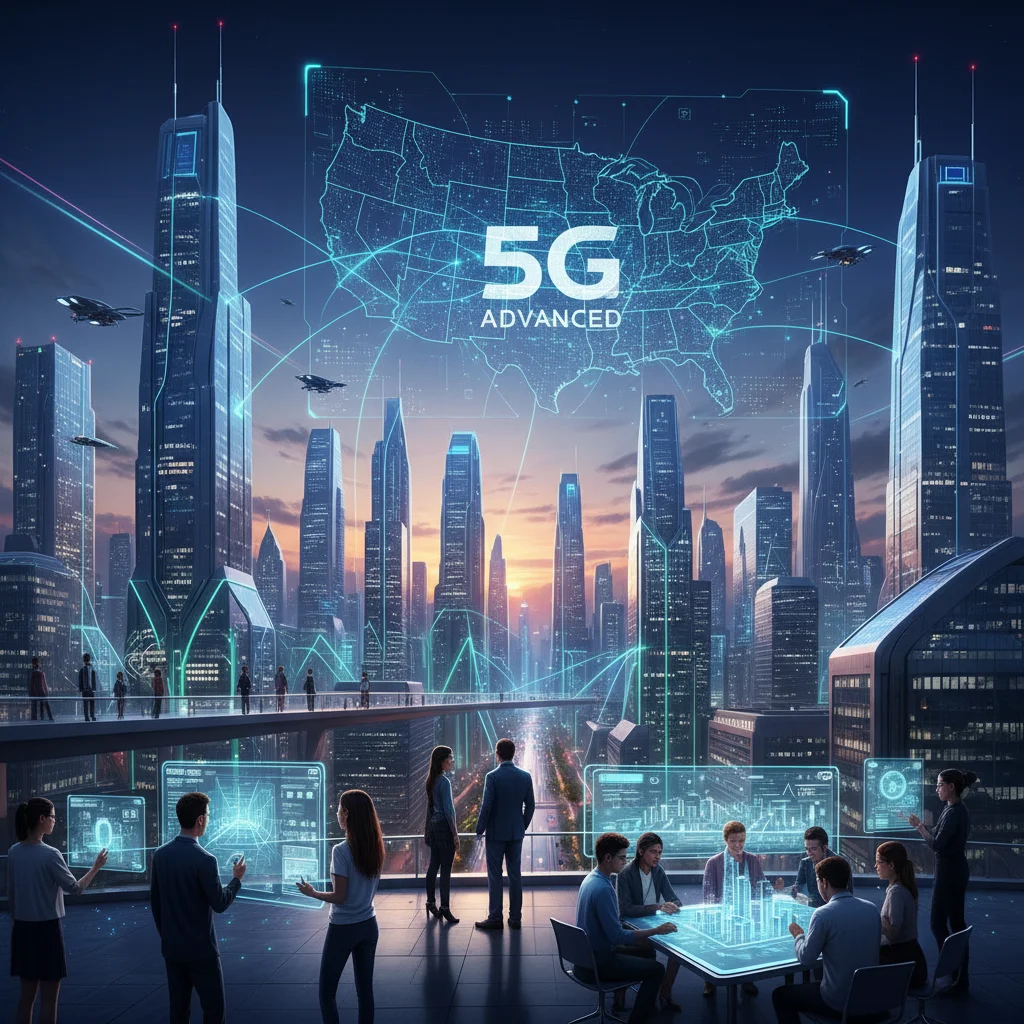
The landscape of mobile technology is in a constant state of evolution, and at the forefront of this change is 5G Advanced. As the next iteration of 5G, it promises to usher in a new era of connectivity, efficiency, and innovation. For US mobile users, understanding these advancements isn’t just about technical jargon; it’s about anticipating a tangible shift in how we interact with our devices, our environment, and each other. The next 12 months are poised to be a pivotal period for the deployment and realization of 5G Advanced US capabilities, bringing with them a wave of enhancements that will redefine our digital experiences.
When 5G was first introduced, it offered a significant leap over 4G, primarily in terms of speed and lower latency. However, 5G Advanced takes these foundational improvements and amplifies them, addressing the growing demands of an increasingly connected world. It’s not merely a speed bump; it’s a comprehensive upgrade designed to unlock the full potential of next-generation applications, from immersive augmented reality (AR) and virtual reality (VR) experiences to highly reliable industrial IoT (IIoT) solutions and smarter cities. This article will delve into the recent updates surrounding 5G Advanced US, what these technical advancements mean for the average mobile user, and what changes we can realistically expect to see unfold in the United States over the coming year.
The journey towards full 5G Advanced US deployment is a complex one, involving intricate collaborations between carriers, infrastructure providers, device manufacturers, and regulatory bodies. Yet, the momentum is undeniable, with significant strides being made in standardization, spectrum allocation, and network optimization. We will explore the key features that differentiate 5G Advanced from its predecessor, focusing on the practical benefits that will soon be within reach for millions of Americans. Prepare to discover how your mobile experience is about to get a substantial upgrade, paving the way for a more connected, intelligent, and efficient future.
Understanding 5G Advanced: More Than Just a Name Change
Before we dive into the specifics of what 5G Advanced US means for you, it’s crucial to grasp what 5G Advanced actually is. It’s not a completely new generation of mobile technology, but rather an evolution of the existing 5G standard, often referred to as ‘Release 18’ and beyond by the 3GPP (3rd Generation Partnership Project), the standardization body for mobile telecommunications. Think of it as 5G 2.0 – a more mature, refined, and powerful version of the technology we’ve been getting accustomed to.
Key Technological Pillars of 5G Advanced
Several core technological advancements underpin 5G Advanced, each designed to enhance specific aspects of network performance and capability:
- Enhanced Mobile Broadband (eMBB) Evolution: While 5G already delivers impressive speeds, 5G Advanced pushes the boundaries further. This means even faster download and upload speeds, crucial for high-bandwidth applications like 8K video streaming, cloud gaming, and more sophisticated AR/VR experiences. For US mobile users, this translates to virtually instantaneous content access and seamless performance even in densely populated areas.
- Advanced Massive MIMO: Massive Multiple-Input, Multiple-Output (Massive MIMO) is a technology that uses many antennas at the base station to serve multiple users simultaneously, improving spectral efficiency and capacity. 5G Advanced refines Massive MIMO with more intelligent beamforming and beam management techniques, leading to better coverage, reduced interference, and more consistent speeds, particularly in challenging environments.
- Full-Duplex Communication: Traditional wireless communication uses separate time slots or frequencies for sending and receiving data (half-duplex or frequency division duplex). Full-duplex allows devices to transmit and receive data on the same frequency at the same time. While still in advanced research phases for broad commercial deployment, advancements in this area within 5G Advanced could dramatically increase network capacity and reduce latency, offering a significant boost to 5G Advanced US networks in the long term.
- AI/ML Integration: A defining characteristic of 5G Advanced is the deeper integration of Artificial Intelligence (AI) and Machine Learning (ML) into the network. AI/ML can optimize network operations, predict traffic patterns, manage resources more efficiently, and even enhance security. This proactive approach leads to a more robust, self-optimizing network, translating to a more reliable and consistent experience for the end-user.
- Extended Reality (XR) Enhancements: XR, encompassing AR, VR, and mixed reality, is a major focus for 5G Advanced. The enhancements in latency, bandwidth, and processing capabilities are specifically tailored to support highly immersive and interactive XR applications, which are currently bottlenecked by existing network limitations.
- Enhanced Power Efficiency: For IoT devices and smartphones, battery life is paramount. 5G Advanced includes features designed to improve device power efficiency, allowing devices to operate longer on a single charge. This is particularly beneficial for the proliferation of IoT devices that need to run autonomously for extended periods.
- Network Slicing Optimization: 5G introduced network slicing, allowing operators to create virtual, isolated network slices tailored for specific applications (e.g., one slice for critical communications, another for gaming). 5G Advanced further refines this capability, making slices more dynamic, flexible, and easier to manage, ensuring optimal performance for diverse use cases across the 5G Advanced US infrastructure.
These technological pillars collectively form the backbone of 5G Advanced, promising a network that is not only faster but also smarter, more efficient, and more capable of supporting the diverse demands of our digital future. The next sections will explore how these theoretical advancements are translating into practical benefits for US mobile users within the next 12 months.
What 5G Advanced Means for US Mobile Users: Concrete Impacts in the Next 12 Months
The technical specifications of 5G Advanced are exciting, but what do they truly mean for the everyday US mobile user? The next year will see a gradual but noticeable shift in how we experience mobile connectivity. Here’s a breakdown of the concrete impacts you can expect:
Noticeably Faster and More Consistent Speeds
While 5G already delivers impressive speeds, 5G Advanced will push the envelope further. Expect to see peak speeds increase, but more importantly, average speeds will become more consistent, even in crowded environments like stadiums, concert venues, or busy city centers. This is largely due to the advancements in Massive MIMO and AI/ML-driven network optimization. Downloading large files, streaming ultra-high-definition content, and uploading substantial data will become even quicker and more reliable. This enhanced eMBB is a cornerstone of the 5G Advanced US rollout.
Improved Latency for Real-Time Applications
Latency, the delay before a transfer of data begins following an instruction, is critical for real-time applications. 5G Advanced aims to further reduce latency, making interactions feel more immediate. For gamers, this means even less lag, providing a competitive edge. For those engaging in cloud computing or remote work, the responsiveness of applications will be enhanced. This low latency is also vital for emerging applications like remote surgery and autonomous vehicles, though these broad applications will take longer than 12 months to become mainstream for the average consumer, early benefits will be felt in current real-time applications.
Enhanced Experience for Streaming and Multimedia
With greater bandwidth and lower latency, streaming services will offer an even higher quality experience. Imagine streaming 4K or even 8K content on your mobile device without buffering, or enjoying interactive live events with unparalleled clarity. 5G Advanced will ensure that multimedia consumption is seamless and immersive, regardless of your location within a 5G Advanced US coverage area. This also extends to video calls, which will benefit from clearer visuals and more stable connections.
More Reliable Connectivity in Challenging Areas
One of the frustrations with current mobile networks can be inconsistent coverage, especially indoors or in areas with many obstructions. 5G Advanced, with its refined beamforming and improved signal penetration capabilities, is designed to offer more robust and reliable connectivity. This means fewer dropped calls, stronger signals in basements or elevators, and a more consistent experience overall. The goal is to make ‘dead zones’ a thing of the past, significantly improving the everyday utility of mobile devices across the 5G Advanced US network.
A Glimpse into Advanced XR (Augmented and Virtual Reality)
While widespread adoption of sophisticated AR/VR applications might still be a few years away, the next 12 months will likely see significant groundwork laid for their future. As 5G Advanced networks become more prevalent, developers will have a more stable and powerful platform to build and test more complex XR experiences. You might start seeing early versions of enhanced AR applications for shopping, navigation, or entertainment that leverage the improved capabilities of 5G Advanced US, offering a taste of what’s to come.
Improved Battery Life for 5G Devices
The initial versions of 5G devices sometimes struggled with battery life due to the increased power demands of the new technology. 5G Advanced aims to address this with more efficient power management techniques. This means that newer 5G Advanced-compatible smartphones and other devices will likely offer better battery endurance, allowing you to enjoy the enhanced connectivity for longer without needing to recharge. This is a practical benefit that will directly impact the daily lives of US mobile users.
The Role of US Carriers in 5G Advanced Deployment
The successful rollout of 5G Advanced US capabilities hinges significantly on the efforts of major US mobile carriers. Each carrier is investing heavily in upgrading their infrastructure, acquiring new spectrum, and optimizing their networks to support these next-generation features. Over the next 12 months, we can expect to see:
Continued Infrastructure Upgrades
Carriers will continue to deploy more 5G Advanced-ready base stations, upgrade existing equipment, and expand their fiber backhaul networks to handle the increased data traffic. This involves installing new antennas, optimizing software, and ensuring that the core network can support the sophisticated features of 5G Advanced. This is an ongoing, capital-intensive process that is essential for delivering the promised benefits of 5G Advanced US.
Spectrum Utilization and Optimization
Spectrum availability is crucial for 5G performance. US carriers are utilizing a combination of low-band, mid-band, and high-band (mmWave) spectrum to build out their 5G Advanced networks. Mid-band spectrum, in particular, offers a good balance of coverage and capacity, and its continued deployment will be key to expanding robust 5G Advanced US coverage. Carriers will also focus on dynamic spectrum sharing (DSS) and other technologies to make the most efficient use of their allocated airwaves.
Focus on Network Slicing for Enterprise and IoT
While consumers will benefit from overall network improvements, a significant focus for carriers in the 5G Advanced US landscape will be on enterprise and industrial applications. Network slicing, perfected in 5G Advanced, allows carriers to offer customized, guaranteed levels of service for specific business needs. This could mean dedicated slices for smart factories, autonomous logistics, or critical public safety communications. While not directly impacting individual mobile users in the same way as faster downloads, a more robust enterprise network indirectly leads to a stronger overall network ecosystem.

Partnerships and Ecosystem Development
Carriers are also actively partnering with technology providers, device manufacturers, and application developers to build out the 5G Advanced US ecosystem. This includes collaborating on new devices that can fully leverage 5G Advanced features, as well as working with businesses to develop innovative applications that take advantage of the network’s enhanced capabilities. These partnerships are vital for translating technical advancements into real-world solutions and services.
Challenges and Considerations for 5G Advanced Adoption
Despite the immense potential, the rollout and adoption of 5G Advanced US are not without challenges. Understanding these considerations provides a more complete picture of what to expect in the coming year:
Device Compatibility
To fully experience the benefits of 5G Advanced, users will need compatible devices. While many newer 5G smartphones are forward-compatible to some extent, specific 5G Advanced features might require newer hardware or software updates. Consumers will need to consider device upgrades to fully leverage the latest network enhancements. This upgrade cycle will be a key driver for 5G Advanced US adoption.
Coverage Expansion
While 5G coverage is expanding rapidly, ubiquitous 5G Advanced coverage will take time. Initial deployments will likely focus on urban centers and high-traffic areas before radiating outwards. Users in rural or less populated areas might experience a slower rollout of the most advanced features. However, the continuous investment by carriers aims to bridge these gaps over time, making 5G Advanced US more accessible.
Regulatory Landscape and Spectrum Availability
Government policies and spectrum auctions play a critical role in how quickly and effectively 5G Advanced can be deployed. Ongoing efforts to allocate more mid-band spectrum and streamline permitting processes for infrastructure deployment are crucial for accelerating the 5G Advanced US rollout. Any delays in these areas could impact the pace of innovation.
Security Concerns and Solutions
As networks become more complex and interconnected, security remains a paramount concern. 5G Advanced incorporates enhanced security features, but the sheer volume of data and devices on the network presents new challenges. Robust cybersecurity measures, both at the network level and for individual users, will be essential to ensure the integrity and privacy of 5G Advanced US communications.
Consumer Awareness and Education
Translating complex technical advancements into understandable benefits for the average consumer is crucial for driving adoption. Carriers and technology companies will need to effectively communicate what 5G Advanced US offers and how it improves daily life, moving beyond simple speed metrics to highlight the qualitative enhancements.
The Future Beyond 12 Months: Glimpses of 6G and Beyond
While our focus is on the next 12 months, it’s worth noting that the telecommunications industry is always looking ahead. Even as 5G Advanced US is being deployed, research and development for 6G are already underway. 6G is expected to push boundaries even further, potentially integrating holographic communications, truly ubiquitous AI, and seamless human-machine interfaces. The advancements made in 5G Advanced are foundational for these future generations, laying the groundwork for even more transformative technologies.
The lessons learned from deploying 5G and 5G Advanced, particularly in areas like network slicing, AI/ML integration, and energy efficiency, will directly inform the development of 6G. This continuous cycle of innovation ensures that mobile technology will remain a driving force behind global digital transformation, constantly pushing the boundaries of what’s possible for US mobile users and beyond.
Conclusion: A Smarter, Faster, and More Connected US Awaits
The next 12 months promise to be an exciting period for mobile connectivity in the United States. 5G Advanced US is not just an incremental upgrade; it represents a significant leap forward in network intelligence, efficiency, and capability. For average mobile users, this translates into a tangible improvement in daily experiences: faster and more consistent speeds for streaming and downloads, lower latency for real-time applications, more reliable connectivity in challenging areas, and improved battery life for devices.
While challenges in device compatibility, coverage expansion, and regulatory hurdles remain, the momentum behind 5G Advanced US deployment is strong. Carriers are heavily investing in infrastructure, spectrum, and ecosystem partnerships to bring these advancements to fruition. As we move through the coming year, expect to see your mobile devices and the applications you use become more powerful, more responsive, and more integrated into a truly smart and connected world.
Stay tuned for updates from your preferred carriers and device manufacturers, as they will be at the forefront of delivering these cutting-edge capabilities. The future of mobile is here, and it’s 5G Advanced.