Beyond Passwords: Implementing 3 Advanced Mobile Authentication Methods by 2026 (Practical Solutions)
In an increasingly mobile-first world, the traditional password has become an outdated and vulnerable relic. Cyberattacks are growing in sophistication, and users are burdened with remembering complex, unique passwords for countless accounts. The demand for more secure, convenient, and user-friendly authentication methods has never been higher. By 2026, businesses that fail to adopt advanced Mobile Authentication Methods risk not only security breaches but also significant user attrition due to poor experience.
This comprehensive guide delves into the three most promising and robust advanced Mobile Authentication Methods that organizations must prioritize for implementation in the coming years: FIDO-based authentication, advanced biometrics, and behavioral analytics. We will explore the intricacies of each method, their benefits, challenges, and provide practical steps for integrating them into your existing infrastructure. The goal is to move beyond mere theoretical understanding to actionable strategies that enhance security, improve user experience, and future-proof your digital identity management.
The Imperative for Advanced Mobile Authentication Methods
The landscape of digital security is constantly evolving. Passwords, while once a cornerstone of online protection, are now widely recognized as a weak link. They are susceptible to phishing attacks, brute-force attempts, credential stuffing, and are often reused across multiple services, creating a domino effect of vulnerabilities. The average user struggles with password fatigue, leading to insecure practices such as using simple, easy-to-guess passwords or writing them down. This human element is often the weakest point in any security chain.
Mobile devices have become the primary interface for digital interactions, from banking and shopping to communication and entertainment. This ubiquity makes them prime targets for cybercriminals. Consequently, securing these mobile interactions with robust Mobile Authentication Methods is paramount. The shift away from passwords is not merely a trend; it’s a strategic necessity driven by the need for enhanced security, regulatory compliance (like GDPR and CCPA), and a superior user experience. Users expect seamless, secure access without friction, and advanced authentication methods deliver precisely that.
By 2026, organizations are expected to have largely transitioned away from sole reliance on passwords. Early adopters of these advanced methods will gain a significant competitive advantage, building greater trust with their users and demonstrating a commitment to cutting-edge security. Ignoring this shift could lead to reputational damage, financial losses, and a lost customer base.
1. FIDO-Based Authentication: The Passwordless Future
The Fast Identity Online (FIDO) Alliance is an open industry association working to address the lack of interoperability among strong authentication devices and to remedy the problems users face with creating and remembering multiple usernames and passwords. FIDO standards define an open, scalable, and interoperable set of mechanisms that reduce the reliance on passwords to authenticate users. This is arguably one of the most significant advancements in Mobile Authentication Methods.
How FIDO Works
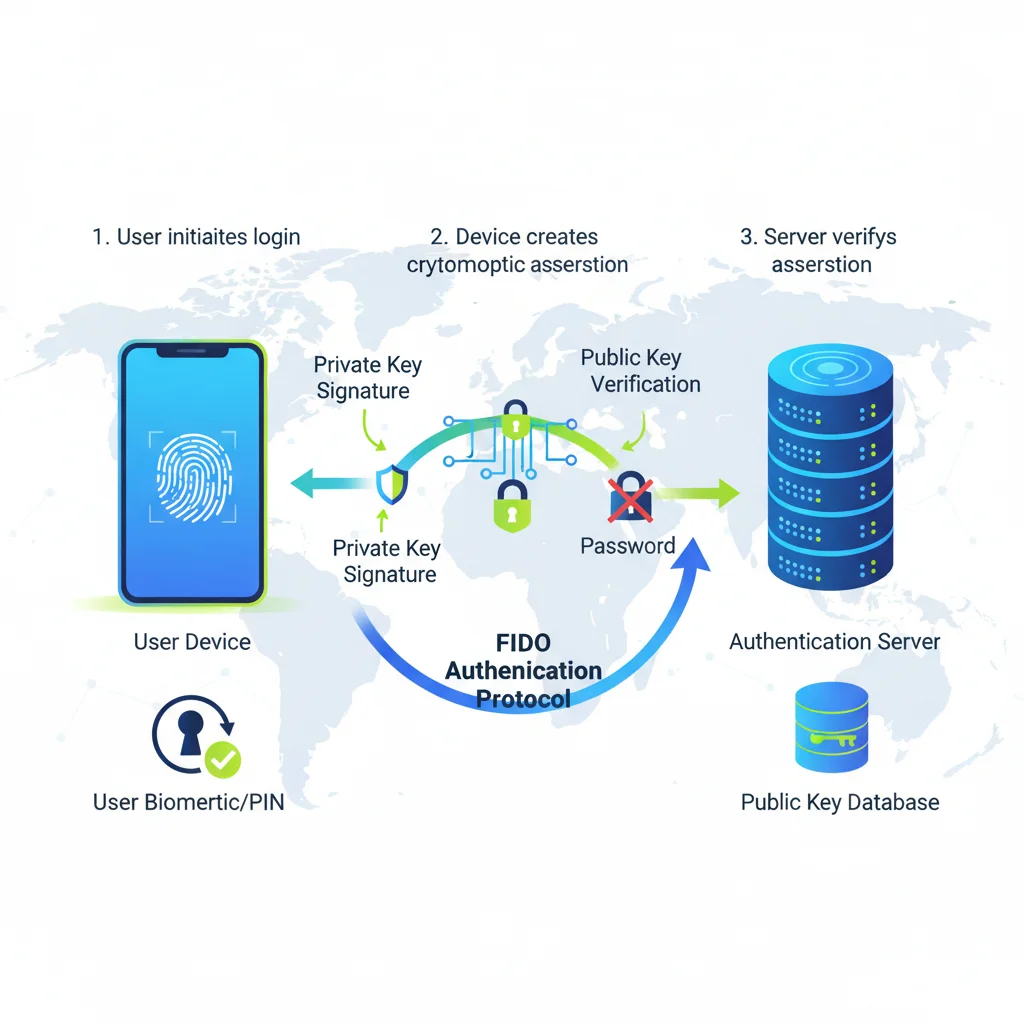
FIDO authentication uses public-key cryptography to provide stronger authentication than traditional passwords. When a user registers with a service, their device (known as an authenticator) creates a new key pair. The public key is registered with the online service, while the private key remains securely stored on the user’s device, often protected by a local gesture like a fingerprint, PIN, or face scan. During subsequent logins, the service challenges the device, which uses its private key to sign the challenge, proving its identity without ever sending the private key or a password over the network.
There are two main FIDO specifications:
- UAF (Universal Authentication Framework): Designed for a passwordless experience with native applications on mobile devices. It allows users to authenticate using local biometrics (fingerprint, iris, voice, face) or a PIN.
- U2F (Universal Second Factor): Provides strong second-factor authentication for existing password-based logins, typically using a hardware security key (like a YubiKey) that plugs into a USB port or uses NFC.
- WebAuthn (Web Authentication): This is the most recent and significant FIDO standard, built upon the FIDO2 project. WebAuthn is a web API that allows websites to integrate FIDO authentication directly into browsers, enabling passwordless or strong second-factor authentication across various platforms and devices. It’s supported by major browsers like Chrome, Firefox, Edge, and Safari.
Benefits of FIDO-Based Authentication
- Enhanced Security: Eliminates passwords, making users immune to phishing, credential stuffing, and server-side breach attacks that compromise passwords. Private keys never leave the device.
- Improved User Experience: Offers a faster, more convenient login experience. Users simply use a biometric or PIN on their device, removing the need to remember complex passwords.
- Interoperability: FIDO standards are open and designed for broad interoperability across devices, operating systems, and online services.
- Privacy: No personally identifiable information or tracking across sites is possible because each service uses a unique key pair.
- Cost Reduction: Reduces helpdesk calls related to password resets and account lockouts.
Challenges and Implementation for FIDO
Implementing FIDO requires careful planning:
- Legacy System Integration: Integrating FIDO with older systems might require significant architectural changes.
- User Education: Users need to understand how FIDO works and its benefits to encourage adoption.
- Device Support: Ensuring a wide range of devices supports FIDO authenticators is crucial, though modern smartphones and browsers increasingly do.
- Recovery Mechanisms: Robust account recovery processes must be in place in case a user loses their FIDO authenticator.
Practical Steps for Implementation:
- Assess Current Infrastructure: Identify which systems can be easily adapted for FIDO and which require more substantial work.
- Choose FIDO Standards: For mobile, prioritize WebAuthn for browser-based experiences and UAF for native apps.
- Partner with FIDO Providers: Leverage existing FIDO-certified solutions and identity providers to accelerate deployment.
- Phased Rollout: Start with a pilot program for a subset of users or specific applications before a full rollout.
- Develop User-Friendly Recovery: Implement secure and accessible account recovery options.
2. Advanced Biometrics: Beyond Fingerprints
Biometric authentication uses unique biological and behavioral characteristics to verify identity. While fingerprints and facial recognition are already common, advanced biometrics are pushing the boundaries, offering even greater security and convenience as critical Mobile Authentication Methods.
Types of Advanced Biometrics
- Multi-modal Biometrics: Combining two or more biometric factors (e.g., face and voice, or fingerprint and iris scan) to increase accuracy and security. This layered approach makes it significantly harder for unauthorized users to gain access.
- Vein Pattern Recognition: Scans the unique pattern of blood vessels beneath the skin, typically in the palm or finger. This method is highly secure as vein patterns are internal, unique, and difficult to forge.
- Iris Recognition: Analyzes the unique patterns in the colored ring surrounding the pupil. It’s one of the most accurate biometric methods, offering high resistance to spoofing attempts.
- Behavioral Biometrics (covered in detail next): Analyzes unique patterns in user behavior, such as typing rhythm, swipe gestures, and gait.
- Heartbeat Biometrics: Uses sensors to detect and recognize the unique electrical signals generated by an individual’s heart. This is less common but represents an emerging area.
Benefits of Advanced Biometrics
- High Security: Biometric traits are difficult to replicate or steal, especially combined with liveness detection (ensuring the biometric sample is from a live person).
- Exceptional Convenience: Users simply present their biometric trait, eliminating the need for memorization or carrying physical tokens.
- Reduced Fraud: Significantly lowers the risk of identity theft and unauthorized access compared to password-based systems.
- Non-Repudiation: Provides strong proof that a specific individual performed an action.
Challenges and Implementation for Advanced Biometrics
Despite their advantages, advanced biometrics present challenges:
- Privacy Concerns: Storing and processing biometric data raises significant privacy implications. Robust encryption and anonymization are crucial.
- False Positives/Negatives: While highly accurate, no biometric system is 100% foolproof. Managing false acceptance rates (FAR) and false rejection rates (FRR) is key.
- Hardware Requirements: Some advanced biometrics require specialized sensors not universally available on all mobile devices.
- Enrollment Process: A smooth and secure enrollment process is essential for user adoption and data accuracy.
Practical Steps for Implementation:
- Evaluate Biometric Modalities: Determine which biometric types are most suitable for your security needs and target audience’s devices.
- Prioritize Privacy by Design: Implement strong data protection measures, including local storage of biometric templates where possible, and strong encryption for any transmitted data.
- Integrate with Existing Systems: Use SDKs and APIs from biometric vendors to embed authentication capabilities into your mobile applications.
- Educate Users: Clearly communicate how biometric data is used, stored, and protected to alleviate privacy concerns.
- Implement Liveness Detection: Crucial for preventing spoofing attacks (e.g., using a photo or recording instead of a live person).
3. Behavioral Analytics: The Invisible Guardian
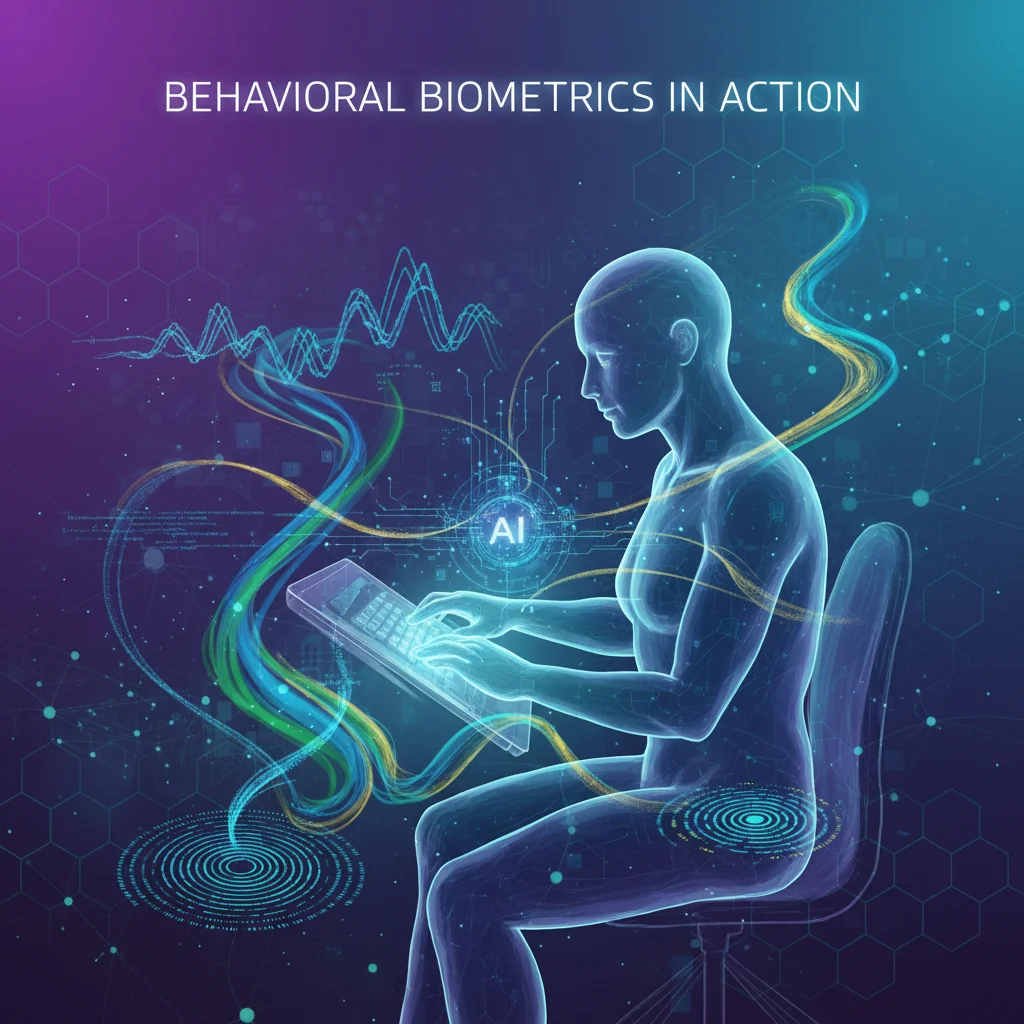
Behavioral analytics, a rapidly evolving area in Mobile Authentication Methods, continuously monitors and analyzes user behavior patterns to verify identity and detect anomalies. Unlike traditional biometrics that capture a static trait, behavioral biometrics create a dynamic profile of how a user interacts with their device and applications.
How Behavioral Analytics Works
Behavioral analytics systems collect vast amounts of data related to a user’s interaction patterns, including:
- Typing Rhythm: The speed, pressure, and pauses between keystrokes.
- Swipe Gestures: The angle, speed, and pressure of swipes and taps on a touchscreen.
- Device Usage Patterns: How a user holds their phone, their navigation habits, app usage frequency, and even their gait if motion sensors are utilized.
- Mouse Movements: For desktop interactions, the speed, path, and stops of mouse cursor movements.
This data is then fed into machine learning algorithms that build a unique behavioral profile for each user. When a user attempts to authenticate or perform an action, their current behavior is compared against this profile. Significant deviations can trigger additional authentication challenges or flag the activity as suspicious, even if initial authentication was successful.
Benefits of Behavioral Analytics
- Continuous Authentication: Provides ongoing security without requiring explicit user action after initial login. It acts as an ‘invisible’ layer of protection.
- Enhanced Fraud Detection: Can detect sophisticated fraud attempts, account takeovers, and bot activity by identifying anomalous behavior in real-time.
- Improved User Experience: Minimal to no friction for legitimate users, as authentication happens passively in the background.
- Adaptive Security: The system learns and adapts over time, improving its accuracy and resilience against new threats.
- Reduced False Positives: By continuously monitoring, it can distinguish between legitimate users with slight variations in behavior and actual imposters.
Challenges and Implementation for Behavioral Analytics
While powerful, behavioral analytics has its own set of considerations:
- Data Volume and Processing: Requires significant data collection and robust analytical capabilities to process and interpret behavioral patterns effectively.
- Initial Learning Phase: The system needs time to build a reliable profile for each user, which might lead to more challenges initially.
- Dynamic Nature of Behavior: Human behavior can change due to stress, injury, or even device changes, requiring the system to be flexible and adaptive.
- Privacy Concerns: Continuous monitoring can raise user privacy concerns, making transparent communication crucial.
Practical Steps for Implementation:
- Select a Robust Platform: Choose a behavioral analytics solution that offers strong machine learning capabilities and integrates well with your existing security stack.
- Define Use Cases: Identify specific high-risk transactions or user flows where continuous authentication provides the most value.
- Phased Deployment with Monitoring: Deploy in stages, closely monitoring performance and fine-tuning algorithms to minimize false positives and negatives.
- Transparency and Consent: Clearly inform users about the data being collected and how it’s used to enhance security, ensuring compliance with privacy regulations.
- Combine with Other Methods: Behavioral analytics works best as a layer of continuous security, often complementing initial FIDO or biometric authentication.
Integrating and Future-Proofing Your Mobile Authentication Strategy
The key to a successful transition to advanced Mobile Authentication Methods by 2026 lies in a multi-layered, adaptive strategy. No single method is a silver bullet; rather, a combination of these technologies provides the most robust defense and seamless user experience.
Building a Multi-Layered Authentication Strategy
Consider the following integration strategies:
- FIDO as Primary, Biometrics as Local Unlock: Use WebAuthn (FIDO2) for initial registration and authentication, with local device biometrics (fingerprint, face ID) serving as the unlock mechanism for the FIDO private key. This offers the best of both worlds: strong, phishing-resistant authentication with user convenience.
- Behavioral Analytics for Continuous Trust: Once a user has initially authenticated (e.g., via FIDO), behavioral analytics can continuously monitor their interaction. If suspicious activity is detected (e.g., a sudden change in typing rhythm or geolocation), it can trigger a step-up authentication challenge (e.g., re-authenticate with FIDO) or block the transaction.
- Fallback Options: Always provide secure fallback options for users who may not have access to their primary authentication method (e.g., device loss, biometric failure). This could involve secure email/SMS OTPs, but these should be considered less secure alternatives and used sparingly.
- Contextual Authentication: Leverage contextual data like device reputation, geolocation, time of day, and network information to dynamically adjust the authentication requirements. A login from a new device in an unusual location might require stronger authentication than a routine login from a familiar device.
The Path to 2026: A Roadmap for Organizations
- Audit Current Authentication: Understand your existing vulnerabilities, user pain points, and compliance requirements.
- Educate Stakeholders: Gain buy-in from leadership, IT, and security teams on the necessity and benefits of advanced Mobile Authentication Methods.
- Pilot Programs: Start small with specific applications or user groups to test and refine your chosen methods.
- Invest in Infrastructure: Ensure your backend systems can support the new authentication protocols and handle the data generated by behavioral analytics.
- Prioritize User Experience: Design authentication flows that are intuitive, fast, and clearly communicate security benefits to users.
- Stay Agile and Adaptive: The threat landscape is constantly changing. Regularly review and update your authentication strategy to incorporate new technologies and address emerging threats.
Conclusion: Embracing the Passwordless Future
The shift towards advanced Mobile Authentication Methods is not a question of ‘if’ but ‘when.’ By 2026, organizations that have embraced FIDO, advanced biometrics, and behavioral analytics will be better positioned to protect their assets, comply with regulations, and provide an unparalleled user experience. The journey away from passwords requires strategic planning, investment in technology, and a commitment to user education.
By implementing these practical solutions, businesses can move beyond the inherent weaknesses of passwords, creating a more secure, convenient, and invisible layer of protection for their mobile-first users. The future of digital identity is passwordless, and the time to build that future is now. Embrace these advanced Mobile Authentication Methods to secure your digital presence for years to come.