Quantum Computing’s Impact on US Cybersecurity by 2028: What Businesses Need to Know Now

The digital landscape is in a constant state of evolution, and few technologies promise to reshape it as profoundly as quantum computing. While still in its nascent stages, the potential of quantum technology to solve complex problems at speeds unimaginable to classical computers is breathtaking. However, this power also brings with it a formidable challenge to existing cybersecurity paradigms. Specifically, the impact of quantum computing on US cybersecurity by 2028 is a topic that demands immediate attention from businesses across all sectors. This article delves into the impending quantum revolution, its implications for national and corporate security, and the proactive steps businesses must take to navigate this transformative era.
For decades, the security of digital communications, financial transactions, and sensitive data has relied heavily on cryptographic algorithms that are computationally infeasible for even the most powerful classical supercomputers to break. These algorithms, such as RSA and ECC, underpin the vast majority of our online interactions. The fundamental mathematical problems they exploit for their security, like integer factorization and discrete logarithms, are precisely the types of problems that quantum computers are theoretically designed to solve with alarming efficiency. This means that by 2028, or potentially even sooner, the very foundations of our digital security could be critically undermined by sufficiently advanced quantum machines. The urgency of understanding and addressing this ‘quantum threat’ cannot be overstated.
Understanding the Quantum Threat to Cybersecurity
The core of the quantum threat lies in algorithms developed by physicists and mathematicians, most notably Shor’s algorithm and Grover’s algorithm. Shor’s algorithm, discovered by Peter Shor in 1994, provides a method for a quantum computer to factor large numbers exponentially faster than any known classical algorithm. This directly threatens public-key cryptography schemes like RSA, which rely on the difficulty of factoring large numbers. Similarly, elliptic curve cryptography (ECC), another widely used public-key system, is vulnerable to quantum attacks through Shor’s algorithm variants.
Grover’s algorithm, while not a direct threat to public-key systems, offers a quadratic speedup for searching unsorted databases. In the context of cybersecurity, this could significantly reduce the time it takes to brute-force symmetric encryption keys (like AES) or hash functions. While it doesn’t break these systems outright, it substantially weakens their security margin, demanding longer key lengths to maintain the same level of protection. The combined power of these quantum algorithms presents a multi-faceted challenge to the cryptographic bedrock of our digital infrastructure.
The timeline for these threats is crucial. While fully fault-tolerant quantum computers capable of running Shor’s algorithm on cryptographically relevant key sizes are still some years away, the consensus among experts suggests that by 2028, we could see machines approaching or even achieving this capability. This timeframe is often referred to as ‘Cryptographically Relevant Quantum Computer’ (CRQC) readiness. The ‘harvest now, decrypt later’ scenario is particularly concerning: adversaries could be collecting vast amounts of encrypted data today, intending to store it until quantum computers become powerful enough to decrypt it. This means that data encrypted today, if not protected by quantum-resistant methods, could be vulnerable in the near future.
For US businesses, this translates into a direct threat to intellectual property, trade secrets, financial records, customer data, and national security information. Industries such as finance, healthcare, defense, and critical infrastructure, which handle highly sensitive data, are particularly exposed. The integrity, confidentiality, and availability of information are all at stake. Therefore, understanding the nuances of the quantum threat and its projected timeline is the first critical step toward effective mitigation and preparation.
The Current State of US Cybersecurity and Quantum Preparedness
The United States government, intelligence agencies, and leading academic institutions have been actively researching and addressing the quantum threat for several years. Initiatives like the National Institute of Standards and Technology (NIST) Post-Quantum Cryptography (PQC) standardization process are at the forefront of this effort. NIST has been evaluating and selecting quantum-resistant cryptographic algorithms since 2016, with the first set of standards expected to be finalized soon. These new cryptographic primitives are designed to withstand attacks from both classical and quantum computers.
However, the transition to PQC is a monumental undertaking. It involves not just developing new algorithms but also integrating them into countless hardware and software systems globally. This transition is often referred to as ‘crypto-agility’ – the ability of systems to quickly and efficiently upgrade or swap out cryptographic algorithms. Many existing systems are not designed with this agility in mind, making the migration process complex, costly, and time-consuming. Businesses, especially those with legacy systems, face significant hurdles in identifying all cryptographic dependencies and planning a phased migration.
Furthermore, there’s a growing awareness gap. While government agencies and large tech companies are increasingly aware of the quantum threat, many small and medium-sized businesses (SMBs) remain largely uninformed or underestimate the urgency. This disparity in preparedness creates vulnerabilities across the supply chain, as a single weak link can compromise an entire ecosystem. The interconnected nature of modern business means that even if a company secures its own systems, it remains vulnerable through its partners, suppliers, and customers if they are not similarly prepared.
The US government has recognized this broader challenge. Executive orders and national security memorandums have been issued to accelerate the transition to PQC across federal agencies. These mandates serve as a strong signal to the private sector about the seriousness of the threat and the necessity of proactive measures. However, the onus remains on individual businesses to translate these high-level directives into concrete action plans tailored to their specific operational contexts and risk profiles. Ignoring these warnings could lead to devastating data breaches and significant financial and reputational damage.
Quantum Computing’s Impact by 2028: Key Scenarios for Businesses
By 2028, several scenarios could unfold, each with distinct implications for US businesses:
- Early Quantum Advantage: Even if full-scale CRQCs capable of breaking RSA/ECC are not widely available, early-stage quantum computers might offer ‘quantum advantage’ in specific, niche areas. This could include breaking weaker or poorly implemented cryptographic systems, or significantly accelerating certain types of cryptanalysis. Businesses relying on older, less robust encryption could be among the first victims.
- The ‘Harvest Now, Decrypt Later’ Reality: As mentioned, adversaries are likely already collecting encrypted data. By 2028, if CRQCs become viable, this data could be decrypted en masse. This poses an existential threat to long-lived sensitive data, such as medical records, biometric data, national security intelligence, and intellectual property, which need to remain confidential for many years.
- Supply Chain Vulnerabilities Exploited: The weakest links in the supply chain will be targeted. A large corporation might have robust PQC migration plans, but if a critical third-party vendor or a small supplier has not updated its security protocols, it becomes an entry point for quantum-enabled attacks. This emphasizes the need for comprehensive supply chain risk management that includes quantum readiness assessments.
- Disruption to Secure Communications: Protocols like TLS/SSL, VPNs, and secure email, which rely on current public-key cryptography, will be vulnerable. This could lead to widespread disruption of secure online communication, impacting e-commerce, banking, government services, and critical infrastructure control systems. The integrity of digital signatures, essential for verifying identities and authenticating transactions, would also be compromised.
- Emergence of Quantum-Resistant Solutions: On the flip side, 2028 will also likely see the broader adoption of quantum-resistant cryptographic solutions. Businesses that have proactively invested in PQC migration will gain a significant competitive advantage, demonstrating resilience and trustworthiness to their customers and partners. Early adopters will be better positioned to secure new contracts and maintain market leadership.
Each of these scenarios underscores the critical need for businesses to act now rather than wait. The lead time for implementing PQC is substantial, involving discovery, assessment, planning, migration, and continuous monitoring. A delayed response could leave businesses catastrophically exposed.
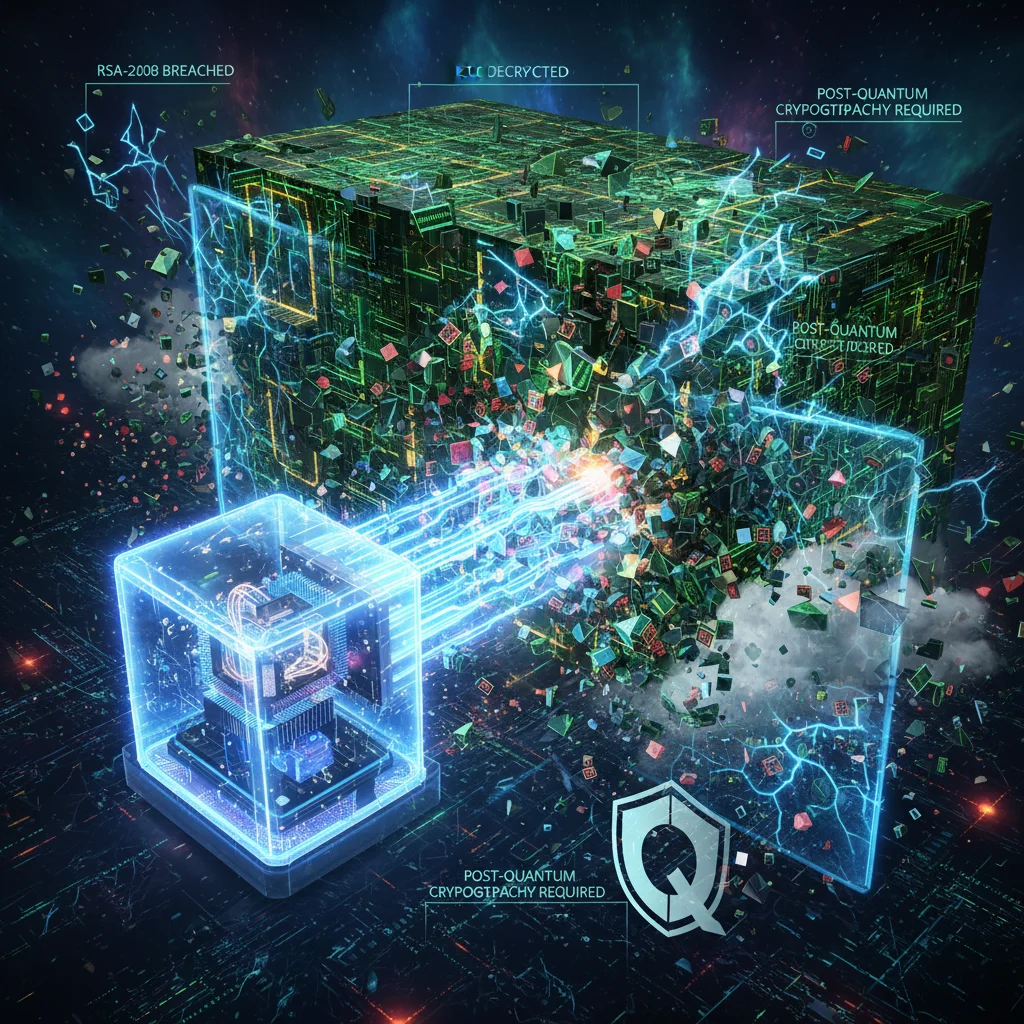
Strategies for Businesses to Prepare for Quantum Cybersecurity by 2028
Preparing for quantum cybersecurity 2028 requires a multi-faceted and proactive approach. Businesses cannot afford to view this as a purely IT problem; it is a strategic business imperative that demands executive-level attention and cross-departmental collaboration. Here are key strategies:
1. Conduct a Comprehensive Cryptographic Inventory and Risk Assessment
The first step is to understand your current cryptographic footprint. This involves:
- Identifying all cryptographic assets: Catalog every instance where cryptography is used, including data at rest, data in transit, digital signatures, authentication mechanisms, and key management systems. This includes hardware, software, applications, and third-party services.
- Mapping cryptographic dependencies: Understand which algorithms and key sizes are being used, and where. Identify dependencies on external libraries, APIs, and cloud services.
- Assessing data longevity and sensitivity: Determine which data needs to remain secure beyond 2028. This is crucial for prioritizing migration efforts, especially for data that could be harvested now and decrypted later.
- Evaluating vendor quantum readiness: Engage with your software and hardware vendors to understand their PQC roadmaps. Your security is only as strong as your weakest vendor.
2. Develop a Quantum-Readiness Roadmap
Based on the inventory and risk assessment, create a phased plan for migration. This roadmap should include:
- Phased migration strategy: Prioritize critical systems and highly sensitive data for early migration. Identify ‘low-hanging fruit’ that can be upgraded more easily.
- Budget allocation: Secure the necessary financial resources for research, development, new hardware/software, and personnel training.
- Resource allocation: Assign dedicated teams or individuals responsible for leading the PQC transition.
- Timeline and milestones: Set realistic deadlines for each phase of the migration, keeping the 2028 deadline in mind.
3. Embrace Crypto-Agility
Future-proofing your systems means designing them to be crypto-agile. This involves:
- Modular cryptographic libraries: Implement cryptography in a way that allows for easy swapping of algorithms without re-architecting entire systems.
- Standardized interfaces: Use standard cryptographic interfaces to minimize vendor lock-in and simplify future upgrades.
- Hybrid mode deployment: Consider deploying hybrid cryptographic solutions that use both classical and post-quantum algorithms simultaneously. This provides a fallback if PQC algorithms are found to have vulnerabilities, or if quantum computers take longer to materialize.
4. Invest in Education and Training
The quantum threat is complex, and your teams need to be equipped with the knowledge to address it.
- Train cybersecurity teams: Educate your security professionals on the principles of quantum computing, the nature of quantum attacks, and the specifics of PQC algorithms.
- Raise awareness across the organization: Ensure that key stakeholders, from IT to legal and executive leadership, understand the implications of the quantum threat.
- Engage with experts: Consider consulting with quantum cybersecurity experts to guide your preparation efforts.
5. Participate in PQC Standards and Communities
Stay informed and contribute to the evolving PQC landscape:
- Monitor NIST PQC process: Keep abreast of the latest developments from NIST regarding selected algorithms and implementation guidelines.
- Join industry groups: Collaborate with peers and industry consortia to share best practices and collectively address common challenges.
- Pilot PQC implementations: Experiment with candidate PQC algorithms in non-critical environments to gain practical experience and identify potential issues before full-scale deployment.

6. Secure Your Supply Chain
Your quantum readiness is directly tied to the readiness of your supply chain.
- Vendor risk management: Incorporate quantum readiness into your vendor assessment and contract negotiations. Mandate that suppliers develop and share their PQC roadmaps.
- Supply chain transparency: Demand greater transparency from your suppliers regarding their cryptographic implementations and security postures.
- Collaborative defense: Work with key supply chain partners to develop joint PQC migration strategies.
The Opportunities Beyond the Threat
While the focus is often on the threats posed by quantum computing, it’s equally important to recognize the opportunities it presents. Quantum technologies are not just about breaking encryption; they also hold the promise of creating new, incredibly secure cryptographic methods. Quantum Key Distribution (QKD), for instance, leverages the principles of quantum mechanics to establish inherently secure communication channels, where any eavesdropping attempt is immediately detectable. While QKD has its own limitations and is not a direct replacement for PQC for all use cases, it represents a frontier in ultra-secure communication.
Furthermore, quantum computing itself could be harnessed to enhance cybersecurity defenses. Quantum machine learning, for example, could potentially detect anomalies and identify advanced persistent threats with unprecedented speed and accuracy. Quantum sensors could offer new ways to monitor and protect critical infrastructure. Businesses that strategically invest in understanding and potentially adopting these quantum-driven security enhancements could gain a significant competitive edge and build truly next-generation resilient systems.
The development of PQC also forces a comprehensive review of existing cryptographic practices, which can lead to overall improvements in security posture. Many organizations have legacy cryptographic implementations that are inefficient or insecure, and the quantum transition provides a perfect impetus to modernize these systems. This ‘crypto-refresh’ can lead to more robust, agile, and efficient security architectures, independent of the quantum threat.
Conclusion: Navigating the Quantum Horizon
The year 2028 is not far off, and the potential impact of quantum computing on US cybersecurity is a challenge that demands immediate and strategic attention. For businesses, the time to prepare for the quantum era is now. Ignoring this impending shift is not an option, as the consequences of inaction could be catastrophic, leading to widespread data breaches, financial losses, and a loss of public trust.
By conducting thorough cryptographic inventories, developing robust quantum-readiness roadmaps, embracing crypto-agility, investing in education, and securing their supply chains, businesses can transform this looming threat into an opportunity for enhanced security and competitive advantage. The transition to post-quantum cryptography is a complex journey, but with proactive planning and strategic investment, US businesses can navigate the quantum horizon successfully, ensuring the integrity and confidentiality of their digital assets well into the future. The future of quantum cybersecurity 2028 will be shaped by the decisions and investments made today.