Learning Apps US Students 2026: A Critical Effectiveness Review
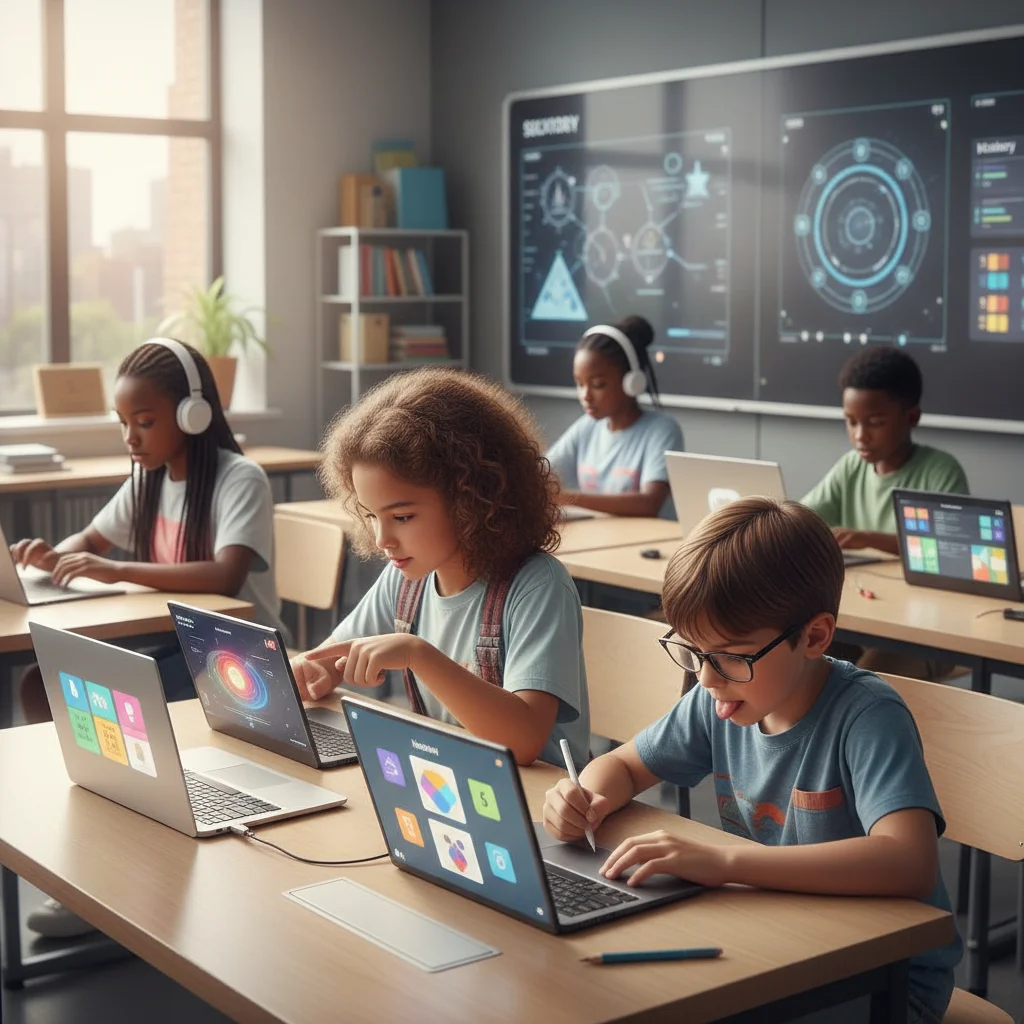
The landscape of education is constantly evolving, and perhaps no aspect has seen more rapid transformation than the integration of digital tools. For US students in 2026, learning apps are no longer a novelty but an integral part of their academic journey. From supplemental homework help to comprehensive curriculum delivery, these applications promise to revolutionize how young minds acquire knowledge and develop skills. However, with an overwhelming number of options available, parents, educators, and even students themselves face the daunting task of discerning which apps truly deliver on their promises of enhanced learning and which are merely engaging distractions. Understanding the true learning apps effectiveness is paramount.
In this comprehensive review, we delve into a critical analysis of six popular learning apps widely used or projected to be popular among US students by 2026. Our goal is to provide an in-depth look at their features, pedagogical approaches, reported outcomes, and overall value. We aim to equip you with the insights necessary to make informed decisions, ensuring that the digital tools chosen genuinely support and enrich the educational experience, rather than detract from it. The digital classroom is here to stay, and navigating it effectively requires a discerning eye and a clear understanding of what makes a learning tool truly impactful.
Before you download another app, consider the nuances of its design, its alignment with educational standards, and its proven track record. This article will serve as your guide through the bustling marketplace of educational technology, focusing specifically on the learning apps effectiveness for the modern American student. We’ll explore everything from personalized learning paths to gamified engagement, data privacy, and accessibility, providing a holistic view that extends beyond mere marketing claims. Let’s embark on this journey to uncover the apps that are truly making a difference in student achievement.
The Evolving Role of Learning Apps in US Education
The past decade has witnessed an unprecedented surge in the adoption of learning apps across all educational levels in the United States. What began as supplementary tools has rapidly transformed into foundational components of many curricula. This shift is driven by several factors: the increasing ubiquity of personal devices, the demand for personalized learning experiences, and the need for flexible educational solutions, particularly highlighted by global events. By 2026, the integration of these apps is expected to be even more seamless, with artificial intelligence (AI) and machine learning (ML) playing a significant role in tailoring content and tracking progress. The promise of these technologies is immense: to provide every student with an individualized learning path that adapts to their pace, style, and specific needs, ultimately boosting learning apps effectiveness.
Personalized Learning: A Core Promise
One of the most compelling arguments for learning apps is their potential to deliver truly personalized education. Traditional classroom settings, with their one-size-fits-all approach, often struggle to cater to the diverse learning needs within a single group of students. Apps, however, can theoretically adjust difficulty levels, introduce new concepts based on mastery, and offer varied instructional methods (visual, auditory, kinesthetic) to match individual preferences. This personalization is not just about pacing; it’s about identifying gaps in understanding, providing targeted interventions, and challenging advanced learners appropriately. The extent to which an app achieves this level of personalization is a key metric in evaluating its learning apps effectiveness.
Engagement Through Gamification and Interactivity
Another significant advantage touted by learning app developers is their ability to engage students through gamification. Elements like points, badges, leaderboards, and interactive challenges can transform mundane learning tasks into exciting quests. This approach leverages intrinsic motivation, making learning feel less like a chore and more like a game. For a generation accustomed to highly interactive digital experiences, this can be a powerful draw. However, the line between engagement and distraction can be thin. A truly effective app balances entertainment with solid pedagogical principles, ensuring that the fun serves to reinforce learning, not overshadow it. Our review will scrutinize how well each app manages this delicate balance to contribute to overall learning apps effectiveness.
Accessibility and Equity Considerations
While learning apps offer incredible opportunities, it’s crucial to address the underlying issues of accessibility and equity. Not all US students have equal access to reliable internet, suitable devices, or the digital literacy skills required to fully utilize these tools. As we move towards 2026, efforts are being made to bridge this digital divide, but it remains a critical factor in the widespread learning apps effectiveness. Furthermore, apps must be designed to be accessible to students with disabilities, incorporating features like screen readers, adjustable font sizes, and alternative input methods. A truly impactful app is one that strives for inclusivity, ensuring that its benefits are available to all learners, regardless of their socioeconomic background or physical abilities.
Our Top 6 Popular Learning Apps for US Students in 2026: A Deep Dive
To provide a balanced and critical assessment of learning apps effectiveness, we’ve selected six apps that represent a cross-section of subjects, pedagogical approaches, and target age groups. These apps are either currently dominant in the US educational technology market or are poised for significant growth and impact by 2026. For each app, we will examine its core features, educational philosophy, reported benefits, potential drawbacks, and ultimately, its contribution to student learning outcomes.
1. Khan Academy: The Free Educational Powerhouse
Overview: Khan Academy has been a staple in online education for over a decade, offering a vast library of free, high-quality educational content across subjects like math, science, history, economics, and test preparation. Its mission is to provide a free, world-class education to anyone, anywhere. By 2026, its adaptive learning pathways, coupled with AI-driven recommendations, are expected to be even more sophisticated.
Key Features:
- Extensive video lessons and practice exercises.
- Personalized learning dashboards for students.
- Progress tracking for students, parents, and teachers.
- Aligned with Common Core State Standards.
- Free access to all content.
Pedagogical Approach: Mastery-based learning. Students work at their own pace, mastering concepts before moving on. The platform uses data to identify areas where students struggle and provides targeted practice. This approach is highly effective for solidifying foundational knowledge and ensuring a deep understanding of complex topics, significantly contributing to learning apps effectiveness.
Reported Benefits: Widely praised for its accessibility and comprehensive coverage. Many students report improved grades and confidence in subjects like math. Teachers use it for differentiation and supplementary instruction. The self-paced nature reduces anxiety for students who need more time to grasp concepts.
Potential Drawbacks: While comprehensive, some argue that the video-lecture format can be passive for certain learning styles. The sheer volume of content can sometimes feel overwhelming without clear guidance. While its algorithm is strong, it may not fully capture the nuances of individual learning preferences as a human tutor would.
Overall Effectiveness for US Students in 2026: High. Its free model makes it indispensable for equity. Its mastery-based approach, especially with anticipated AI enhancements, will continue to make it a highly effective tool for foundational learning and concept reinforcement. Its broad subject coverage makes it versatile for various academic needs, solidifying its place in the discussion of learning apps effectiveness.
2. Duolingo: Gamified Language Acquisition
Overview: Duolingo has become synonymous with language learning, making it accessible and fun for millions worldwide. Its bite-sized lessons and gamified approach encourage consistent engagement. For US students in 2026, Duolingo continues to evolve, integrating more advanced AI for pronunciation feedback and cultural context.
Key Features:
- Short, interactive lessons in over 40 languages.
- Gamified elements: points, streaks, leaderboards, virtual currency.
- Speech recognition for pronunciation practice.
- Personalized exercises based on performance.
- Available on multiple platforms (web, iOS, Android).
Pedagogical Approach: Spaced repetition and gamification. Duolingo breaks down language learning into small, manageable chunks, reinforcing vocabulary and grammar through repeated exposure. The game-like structure motivates users to maintain daily practice, which is crucial for language acquisition. This consistent engagement is a cornerstone of its learning apps effectiveness.
Reported Benefits: Excellent for beginners to build foundational vocabulary and grammar. Its addictive nature promotes daily practice. Many users report being able to engage in basic conversations after consistent use. It’s particularly effective for introducing students to new languages in an unintimidating way.
Potential Drawbacks: While great for basics, it may not be sufficient for achieving true fluency or deep conversational skills without supplemental resources. The focus on translation can sometimes overshadow a deeper understanding of language nuances and cultural context. Some users find the repetitive nature can become tedious over time.
Overall Effectiveness for US Students in 2026: Moderate to High. As a supplementary tool for language introduction and daily practice, its learning apps effectiveness is undeniable. It’s less effective as a standalone solution for advanced fluency but remains a powerful gateway for language learners.

3. Quizlet: Flashcards and Study Tools Redefined
Overview: Quizlet is a popular study tool that leverages flashcards, quizzes, and games to help students master content across virtually any subject. Its user-generated content model means there’s an expansive library of study sets. By 2026, Quizlet is expected to integrate more AI for personalized study recommendations and richer content creation features.
Key Features:
- Digital flashcards, often user-created.
- Multiple study modes (Learn, Flashcards, Write, Spell, Test, Match, Gravity).
- Quizlet Live for collaborative classroom games.
- Text-to-speech functionality.
- Millions of study sets available.
Pedagogical Approach: Active recall and spaced repetition. Quizlet’s various modes encourage students to actively retrieve information rather than passively review it. The spaced repetition algorithm (in its ‘Learn’ mode) helps optimize retention by re-presenting terms at intelligent intervals. This active engagement with content is key to its learning apps effectiveness.
Reported Benefits: Highly effective for vocabulary acquisition, memorizing facts, and test preparation. Its versatility makes it useful for a wide range of subjects, from foreign languages to anatomy. Students appreciate the different study modes that cater to various preferences. Teachers find it useful for creating engaging review activities.
Potential Drawbacks: The quality of study sets can vary greatly as much content is user-generated. It’s primarily a memorization tool and less effective for deep conceptual understanding or problem-solving skills in complex subjects. Over-reliance on Quizlet without understanding the underlying material can lead to superficial learning.
Overall Effectiveness for US Students in 2026: High for specific learning tasks. For memorization, vocabulary, and factual recall, Quizlet’s learning apps effectiveness is outstanding. It serves as an excellent supplementary tool for reinforcing learned material but should not replace comprehensive instruction.
4. IXL: Comprehensive K-12 Practice
Overview: IXL offers a vast array of practice problems covering math, English language arts, science, and social studies for K-12 students. It aims to provide personalized learning experiences with immediate feedback and analytics. By 2026, IXL’s adaptive algorithms are anticipated to be even more refined, offering highly granular diagnostic assessments and prescriptive learning paths.
Key Features:
- Thousands of discrete skills aligned with state standards.
- Adaptive practice that adjusts difficulty based on student performance.
- Immediate feedback and step-by-step explanations for incorrect answers.
- Comprehensive analytics for students, parents, and teachers.
- Awards and certificates for motivation.
Pedagogical Approach: Targeted practice and immediate feedback. IXL’s strength lies in its ability to pinpoint areas where students need extra practice and provide an endless supply of problems. The immediate feedback loop helps students correct misconceptions in real-time, reinforcing correct understanding. This continuous feedback mechanism is a strong driver of its learning apps effectiveness.
Reported Benefits: Excellent for skill reinforcement and closing learning gaps. Students can practice specific concepts until mastery. Teachers use it for differentiated instruction, homework, and assessment. Parents appreciate the detailed progress reports. It’s particularly strong in math and ELA for developing procedural fluency.
Potential Drawbacks: Can be perceived as repetitive, especially for students who prefer more varied or interactive learning styles. While it offers explanations, it’s not a primary teaching tool; it’s designed for practice. Some argue it focuses heavily on rote practice over conceptual understanding, which can limit its overall learning apps effectiveness for deeper learning.
Overall Effectiveness for US Students in 2026: High for skill-building and practice. IXL is an incredibly robust platform for reinforcing learned concepts and ensuring mastery of specific skills. Its diagnostic capabilities are valuable, making it a strong contender for supplementary practice in the K-12 curriculum.
5. ClassDojo: Communication and Classroom Management
Overview: While not a traditional content-delivery learning app, ClassDojo is crucial for the learning ecosystem. It’s a communication platform and classroom management tool that connects teachers, students, and parents. In 2026, its role in fostering positive classroom culture and home-school connections will be more vital, potentially integrating more AI for sentiment analysis in communications.
Key Features:
- Behavior management system with points for positive traits.
- Instant messaging between teachers and parents.
- Class Story and School Story for updates and photos.
- Student portfolios for showcasing work.
- Toolkit with various classroom management aids (timers, group maker).
Pedagogical Approach: Positive behavior reinforcement and strong home-school communication. By rewarding positive behaviors and providing a direct line of communication, ClassDojo aims to create a supportive learning environment. This indirect but significant impact on student well-being and engagement contributes to overall learning apps effectiveness.
Reported Benefits: Improves communication between school and home, leading to greater parental involvement. Motivates students through positive reinforcement and recognition. Helps teachers manage classroom behavior more effectively. The student portfolio feature is excellent for tracking progress and celebrating achievements.
Potential Drawbacks: The focus on points can sometimes lead to superficial behavioral changes rather than intrinsic motivation. Some parents may feel overwhelmed by constant notifications. While it supports learning indirectly, it does not directly deliver educational content, which might not be the primary focus when considering learning apps effectiveness in terms of subject mastery.
Overall Effectiveness for US Students in 2026: High for supporting the learning environment. ClassDojo’s learning apps effectiveness lies in its ability to foster a collaborative educational ecosystem, which is crucial for student success. It’s an excellent tool for enhancing communication and promoting positive behavior, creating conditions conducive to learning.
6. Brilliant: Interactive STEM Learning
Overview: Brilliant distinguishes itself by focusing on interactive problem-solving in STEM fields (science, technology, engineering, and mathematics). Instead of lectures, it uses guided, interactive lessons that encourage active thinking and discovery. By 2026, Brilliant is expected to expand its curriculum depth and integrate more sophisticated AI to adapt problem sets to individual cognitive processes.
Key Features:
- Interactive courses in math, science, and computer science.
- Problem-solving approach over rote memorization.
- Engaging visualizations and guided explanations.
- Courses ranging from foundational concepts to advanced topics.
- Community features for peer learning.
Pedagogical Approach: Active learning and conceptual understanding. Brilliant’s methodology is centered on the idea that students learn best by doing and discovering. It presents concepts through interactive puzzles and challenges, forcing students to engage deeply with the material and build intuition. This active, inquiry-based approach is a hallmark of its learning apps effectiveness.
Reported Benefits: Highly effective for developing critical thinking and problem-solving skills in STEM. Students report a deeper understanding of complex concepts. It’s particularly beneficial for advanced learners or those looking to go beyond traditional curriculum. The interactive nature keeps students engaged and challenged.
Potential Drawbacks: Can be challenging for students who prefer more structured, direct instruction. The subscription model can be a barrier for some. While excellent for conceptual understanding, it might require supplementary practice for procedural fluency in some areas. Its specific focus limits its universality compared to broader platforms, impacting its general learning apps effectiveness for all subjects.
Overall Effectiveness for US Students in 2026: High for STEM conceptual learning. Brilliant’s learning apps effectiveness is exceptional for students seeking to develop a strong intuitive and conceptual grasp of STEM subjects. It’s an invaluable resource for fostering critical thinking and problem-solving abilities.
Key Considerations for Evaluating Learning Apps Effectiveness
Beyond the individual reviews, several overarching factors determine the sustained learning apps effectiveness for US students. As technology continues its rapid advancement towards 2026, these considerations become even more critical for parents, educators, and policymakers.
Alignment with Educational Standards
For an app to be truly effective within the US educational system, it must align with established learning standards, such as the Common Core State Standards (CCSS) or Next Generation Science Standards (NGSS). Apps that are explicitly designed with these frameworks in mind ensure that students are learning content and skills relevant to their curriculum and future assessments. Without this alignment, even the most engaging app might lead to learning that doesn’t translate into academic success.
Data Privacy and Security
In an era of increasing digital awareness, the privacy and security of student data are paramount. Parents and schools must scrutinize an app’s data collection policies, ensuring compliance with regulations like COPPA (Children’s Online Privacy Protection Act) and FERPA (Family Educational Rights and Privacy Act). An app’s learning apps effectiveness is severely compromised if it poses risks to a student’s personal information or digital safety. Transparency in data handling is non-negotiable.
Teacher and Parent Integration
The most effective learning apps are not isolated tools but integrate seamlessly into the broader educational ecosystem. Features that allow teachers to assign tasks, track progress, and communicate with parents significantly enhance an app’s utility. Similarly, parent dashboards that offer insights into a child’s learning journey foster a collaborative environment, making the app a more potent force for academic achievement. The ability to bridge the gap between home and school learning environments is a critical aspect of learning apps effectiveness.
Adaptability and Future-Proofing
The tech world moves fast. An app’s long-term learning apps effectiveness depends on its ability to adapt to new pedagogical research, technological advancements (like more sophisticated AI), and evolving student needs. Apps that regularly update their content, improve their algorithms, and respond to user feedback are more likely to remain relevant and impactful in the years leading up to and beyond 2026.
Cost and Value Proposition
While some excellent apps are free (like Khan Academy), many premium apps come with subscription fees. Evaluating the cost against the educational value received is crucial. Does the app offer unique features or superior pedagogical approaches that justify the expense? For schools, the return on investment for large-scale app adoption needs careful consideration. Understanding the balance between cost and the tangible benefits to student learning is a key part of assessing overall learning apps effectiveness.
The Future of Learning Apps and US Students in 2026
As we look towards 2026 and beyond, the role of learning apps in US education will only become more sophisticated and integrated. We can anticipate several key trends that will shape the future landscape of learning apps effectiveness:
Hyper-Personalization with AI and Machine Learning
The next generation of learning apps will leverage AI and machine learning to an even greater extent. This will move beyond simple adaptive questioning to truly understanding a student’s cognitive patterns, emotional state during learning, and even predicting potential learning difficulties before they arise. Apps will offer not just personalized content but personalized learning strategies, suggesting optimal study times, revision techniques, and even recommending external resources tailored to a student’s unique profile. This level of hyper-personalization promises to unlock unprecedented levels of learning apps effectiveness.
Immersive and Experiential Learning (AR/VR)
Augmented Reality (AR) and Virtual Reality (VR) are set to transform learning apps, moving beyond 2D screens into immersive 3D environments. Imagine dissecting a virtual frog in biology, exploring ancient Rome, or conducting complex chemistry experiments in a safe, virtual lab. These experiential learning opportunities, delivered through apps, will make abstract concepts tangible and deeply engaging, significantly boosting learning apps effectiveness by providing context and real-world application.
Emphasis on Soft Skills and Holistic Development
While academic subjects remain crucial, future learning apps will increasingly focus on developing critical 21st-century skills such as critical thinking, creativity, collaboration, and communication. Apps designed for project-based learning, collaborative problem-solving, and digital citizenship will become more prevalent. The goal will be to foster well-rounded individuals, not just content masters, thus broadening the scope of what constitutes learning apps effectiveness.
Seamless Integration with School Systems
The friction between different learning platforms and school management systems will diminish. Future apps will offer more seamless integration with existing Learning Management Systems (LMS) like Canvas or Google Classroom, simplifying data transfer, assignment management, and progress reporting for teachers and students. This interoperability will reduce administrative burdens and enhance the overall utility and learning apps effectiveness of digital tools.
Conclusion: Maximizing Learning Apps Effectiveness for US Students
The digital revolution has profoundly impacted education, and learning apps are at the forefront of this transformation. For US students in 2026, these tools offer unparalleled opportunities for personalized, engaging, and accessible learning. However, the sheer volume and variability of apps necessitate a critical and informed approach to selection and implementation. As our review of Khan Academy, Duolingo, Quizlet, IXL, ClassDojo, and Brilliant demonstrates, each app brings unique strengths and serves different educational purposes, contributing in various ways to overall learning apps effectiveness.
When considering which learning apps to integrate into a student’s educational journey, remember to look beyond superficial engagement. Prioritize apps that align with curriculum standards, offer true personalization, provide meaningful feedback, protect student data, and foster a supportive learning environment. The most effective strategies often involve a curated blend of apps, each chosen for its specific strengths to complement traditional teaching methods and address individual learning needs.
The future of learning is undoubtedly digital, and with careful consideration, learning apps can be powerful allies in empowering US students to achieve their full academic potential. By understanding and critically evaluating the learning apps effectiveness, we can ensure that technology truly serves as a catalyst for deeper learning, greater engagement, and ultimately, a more successful educational experience for all.