Neural Interfaces: Emerging Tech, Ethics, and US Adoption by 2030

Neural Interfaces: A Look at 2 Emerging Technologies and Their Ethical Considerations for US Adoption by 2030
The dawn of the 21st century has been marked by an unprecedented acceleration in technological advancement, particularly in fields that intertwine with the very essence of human existence. Among these, neural interfaces stand out as a frontier promising to redefine our understanding of interaction, cognition, and even what it means to be human. These sophisticated systems bridge the gap between biological neural networks and external devices, opening up a realm of possibilities that were once confined to science fiction. As we hurtle towards 2030, the prospect of widespread Neural Interface Adoption in the United States is no longer a distant dream but a tangible reality on the horizon.
The implications of this technology are vast, spanning from revolutionary medical treatments to enhanced human capabilities and entirely new forms of communication. However, with such profound potential comes an equally complex web of ethical considerations. As these technologies mature and move closer to mainstream integration, society must grapple with fundamental questions about privacy, autonomy, equity, and the very definition of identity. This article will delve into two particularly promising emerging neural interface technologies, exploring their current state, projected trajectory for US adoption by 2030, and the critical ethical dilemmas they present.
Understanding Neural Interfaces: The Bridge Between Mind and Machine
Before diving into specific technologies, it’s crucial to establish a foundational understanding of what neural interfaces are. At their core, neural interfaces, often referred to as Brain-Computer Interfaces (BCIs) or Brain-Machine Interfaces (BMIs), are systems that allow for direct communication pathways between the brain or other parts of the nervous system and an external device. This communication can be unidirectional, either recording neural activity for analysis or stimulating neural activity to elicit a response, or bidirectional, allowing for a seamless two-way exchange of information.
The history of neural interfaces dates back decades, with early experiments demonstrating the ability to record brain signals. However, recent advancements in neuroscience, materials science, microelectronics, and artificial intelligence have propelled the field into a new era of capability and sophistication. Today, neural interfaces are categorized broadly into invasive, partially invasive, and non-invasive types, each with its own set of advantages, limitations, and ethical considerations. The path to significant Neural Interface Adoption hinges on overcoming these technical and societal hurdles.
- Invasive BCIs: These involve surgical implantation of electrodes directly into the brain. They offer the highest signal quality and precision, making them ideal for high-fidelity control of prosthetic limbs or direct communication for individuals with severe motor impairments. Examples include Utah arrays and microelectrode arrays.
- Partially Invasive BCIs: These involve electrodes placed on the surface of the brain (electrocorticography or ECoG) or within the skull but not penetrating brain tissue. They offer a good balance between signal quality and reduced invasiveness compared to fully invasive methods.
- Non-Invasive BCIs: These use external sensors, such as electroencephalography (EEG) caps, to measure brain activity from the scalp. While less precise due to signal attenuation through the skull, they are safe, easy to use, and suitable for a wider range of applications, including gaming, cognitive training, and basic control tasks.
The rapid pace of innovation in all these categories suggests that by 2030, we will see a significant diversification in the types of neural interfaces available and their applications, driving increased Neural Interface Adoption across various sectors.
Emerging Technology 1: High-Resolution Intracortical Neural Implants for Motor Restoration
Technology Overview and Current State
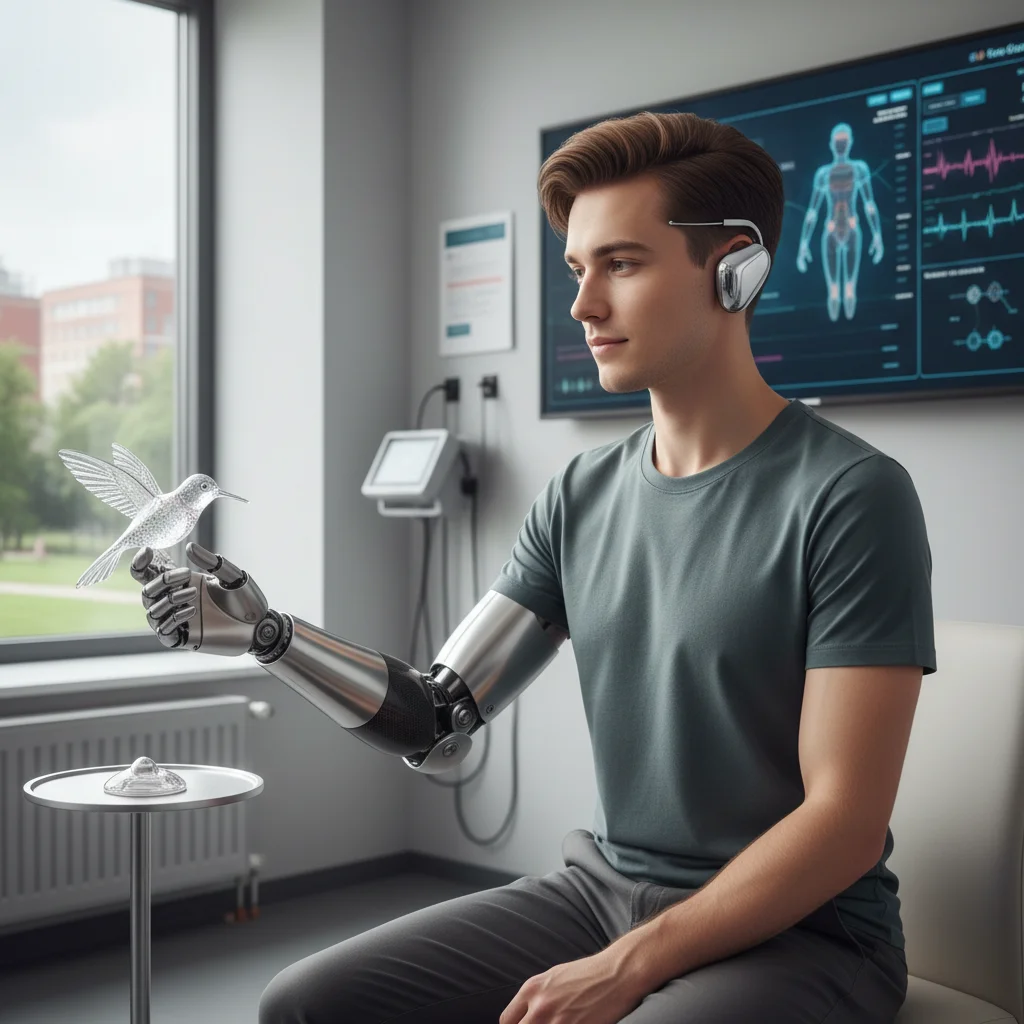
The first emerging technology with immense potential for widespread Neural Interface Adoption by 2030 is the next generation of high-resolution intracortical neural implants, specifically designed for motor restoration. These devices build upon decades of research in brain-computer interfaces aimed at helping individuals with paralysis regain control over external devices, such as robotic prosthetics or computer cursors, directly through their thoughts.
Current state-of-the-art systems, like those developed by companies such as Blackrock Neurotech and academic institutions leading the BrainGate consortium, employ microelectrode arrays (e.g., Utah arrays) implanted into the motor cortex. These arrays can record the electrical activity of hundreds of individual neurons, providing a rich, high-fidelity signal that can be decoded into intended movements. Patients with severe motor impairments, resulting from conditions like spinal cord injury, ALS, or stroke, have already demonstrated remarkable abilities to control complex robotic arms with many degrees of freedom, type on a virtual keyboard at impressive speeds, and even operate tablet devices using only their thoughts.
Projected US Adoption by 2030
By 2030, we anticipate a significant increase in the clinical adoption of these advanced intracortical neural implants in the US, moving beyond experimental trials to more routine medical procedures for specific populations. Several factors will contribute to this growth:
- Improved Durability and Longevity: One of the primary challenges has been the long-term stability and biocompatibility of implanted electrodes. Advances in materials science, such as flexible electronics and bio-integrating coatings, are expected to significantly extend the lifespan and reliability of these implants, reducing the need for revision surgeries.
- Enhanced Decoding Algorithms: Machine learning and AI are continuously refining the algorithms that translate neural signals into control commands. By 2030, these algorithms will be more robust, adaptive, and capable of interpreting complex motor intentions with greater accuracy and less training effort from the user.
- Miniaturization and Wireless Capabilities: Future implants will be smaller, less invasive, and increasingly wireless, eliminating the need for percutaneous cables that pose infection risks and restrict mobility. This will make the technology more user-friendly and aesthetically acceptable.
- Regulatory Approvals and Reimbursement: As the efficacy and safety profiles improve, regulatory bodies like the FDA are likely to grant broader approvals. Concurrently, insurance providers will increasingly recognize the life-changing benefits, leading to better reimbursement policies, which are crucial for widespread adoption.
- Expanded Clinical Indications: While initially focused on severe paralysis, the technology’s application could expand to include individuals with less severe motor deficits, or even for communication in locked-in syndrome patients, further boosting Neural Interface Adoption.
It is conceivable that by 2030, individuals living with high-level paralysis will have access to intracortical neural implants as a standard of care option, allowing them to interact with their environment and communicate in ways previously impossible. This will represent a monumental leap in assistive technology and a powerful driver for Neural Interface Adoption.
Ethical Considerations for High-Resolution Intracortical Implants
The promise of restoring motor function is profound, but it also brings forth a host of ethical questions that must be addressed proactively to ensure responsible Neural Interface Adoption:
- Patient Autonomy and Informed Consent: The decision to undergo brain surgery for an implant is life-altering. Ensuring truly informed consent, especially for individuals who may have cognitive impairments or be highly vulnerable, is paramount. What are the long-term psychological impacts of having a device permanently integrated into one’s brain?
- Data Privacy and Security: Neural data is arguably the most intimate form of personal information. The brain activity recorded by these implants could reveal thoughts, intentions, and even emotional states. How will this highly sensitive data be secured from breaches, misuse, or unauthorized access? Who owns this data, and how will it be regulated?
- Equity of Access: Given the likely high cost of these advanced medical procedures, there is a significant risk of creating a new divide between those who can afford life-changing neurotechnology and those who cannot. How can equitable access be ensured, preventing a future where only the wealthy can benefit from such profound advancements? This is a critical factor for ethical Neural Interface Adoption.
- Identity and Self: For individuals whose motor function is restored, how might the integration of a machine directly into their neural pathways affect their sense of self or identity? While generally positive, the psychological implications of such a deep connection are complex and require careful study.
- The ‘Upgrade’ Dilemma: As the technology advances, the line between restoration and enhancement may blur. If these implants can restore function, could they eventually enhance it beyond typical human capabilities? This raises questions about fairness in competitive environments (e.g., sports, employment) and societal pressures to ‘upgrade.’
Addressing these ethical challenges is not merely an academic exercise; it is essential for building public trust and ensuring that the benefits of high-resolution intracortical implants are realized responsibly and inclusively.
Emerging Technology 2: Non-Invasive Neurofeedback Systems for Cognitive Enhancement and Mental Health
Technology Overview and Current State
The second emerging technology poised for significant Neural Interface Adoption by 2030 focuses on non-invasive neurofeedback systems for cognitive enhancement and mental health applications. Unlike invasive implants, these systems typically use electroencephalography (EEG) or functional near-infrared spectroscopy (fNIRS) to monitor brain activity from outside the skull. Users then receive real-time feedback on their brainwave patterns, allowing them to learn to self-regulate their neural activity.
Neurofeedback has been around for decades, primarily in clinical settings for conditions like ADHD, anxiety, and epilepsy. However, recent advancements, particularly in wearable EEG devices, dry electrode technology (eliminating the need for conductive gel), and sophisticated AI-driven analysis, have made these systems more accessible, user-friendly, and effective. Companies like Muse, NeuroSky, and various research groups are developing consumer-grade devices that can track attention, meditation states, sleep patterns, and even provide real-time cognitive training.
The current state sees these devices primarily used for stress reduction, meditation guidance, and basic focus improvement. However, the underlying principles are being explored for more direct cognitive enhancement, such as improving memory, learning speed, and decision-making, as well as for managing symptoms of depression, PTSD, and chronic pain without pharmaceutical intervention.
Projected US Adoption by 2030
Non-invasive neurofeedback systems are likely to experience a surge in Neural Interface Adoption by 2030, driven by several key factors:
- Accessibility and Affordability: As the technology matures, manufacturing costs will decrease, making these devices more affordable for the average consumer. The non-invasive nature also eliminates surgical risks and costs, significantly broadening their market.
- Consumer Demand for Wellness and Performance: There is a growing societal emphasis on mental wellness, cognitive resilience, and personal optimization. Neurofeedback offers a drug-free, active approach to achieving these goals, appealing to a wide demographic, from students and professionals to athletes and the elderly.
- Integration with Everyday Devices: We will see seamless integration of neurofeedback capabilities into everyday wearables like headphones, smartwatches, and even smart home systems. This ubiquitous presence will make neurofeedback a common tool for self-monitoring and self-improvement, accelerating Neural Interface Adoption.
- Validation through Research: Ongoing scientific research will further validate the efficacy of neurofeedback for various applications, moving it from a niche wellness tool to a recognized method for cognitive training and mental health support.
- Personalized and Adaptive Programs: AI will enable highly personalized neurofeedback protocols that adapt to individual brain patterns and learning styles, maximizing effectiveness and user engagement. This personalization will be a major catalyst for broader Neural Interface Adoption.
By 2030, it is plausible that non-invasive neurofeedback will be a common tool found in homes, schools, and workplaces, used for enhancing focus, managing stress, improving sleep, and supporting overall brain health. This widespread integration will mark a significant milestone in Neural Interface Adoption.

Ethical Considerations for Non-Invasive Neurofeedback Systems
While less invasive, these technologies still present significant ethical challenges that need careful consideration for responsible Neural Interface Adoption:
- Effectiveness and Misinformation: The consumer market is susceptible to exaggerated claims and unproven benefits. Ensuring that neurofeedback devices are marketed truthfully and based on robust scientific evidence is crucial to prevent consumer exploitation and maintain public trust.
- Privacy of Brain Data: Even non-invasive devices collect brain activity data. While less granular than invasive implants, this data can still reveal cognitive states, emotional responses, and potentially even predispositions to certain conditions. How will this data be protected from commercial exploitation, hacking, or use in ways that could lead to discrimination (e.g., by employers or insurers)? The privacy of data is central to ethical Neural Interface Adoption.
- Coercion and ‘Brain Doping’: In competitive environments (e.g., academic, professional, military), there could be pressure or even coercion to use neurofeedback devices for performance enhancement. This raises questions about fairness, equality, and the potential for a ‘brain doping’ arms race.
- Psychological Impact and Over-Reliance: While generally beneficial, over-reliance on these devices for mood regulation or cognitive function could potentially diminish natural coping mechanisms or create new forms of dependency. What are the long-term psychological effects of constant brain self-optimization?
- Regulatory Gaps: The rapid evolution of consumer neurotechnology often outpaces regulatory frameworks. Clear guidelines are needed for device safety, data handling, and marketing claims to protect consumers and ensure responsible innovation.
Addressing these ethical dilemmas is vital to ensure that non-invasive neurofeedback systems serve to genuinely improve human well-being and cognitive function, rather than creating new vulnerabilities or exacerbating existing inequalities. The careful navigation of these issues will determine the success and ethical trajectory of Neural Interface Adoption in the coming decade.
Cross-Cutting Ethical and Societal Considerations for US Adoption by 2030
Beyond the specific ethical concerns for each technology, several overarching societal and ethical questions will shape the landscape of Neural Interface Adoption in the US by 2030:
Regulatory Frameworks and Governance
The pace of neurotechnological innovation demands agile and comprehensive regulatory frameworks. Current regulations, often designed for pharmaceuticals or traditional medical devices, may not adequately address the unique challenges posed by neural interfaces, particularly concerning data privacy, security, and the potential for cognitive modification. The US will need to develop new policies that balance innovation with robust ethical safeguards. This includes defining what constitutes ‘brain data,’ establishing clear ownership rights, and outlining permissible uses and disclosures. International collaboration will also be crucial as these technologies transcend national borders.
The Definition of ‘Human’ and Identity
As neural interfaces become more sophisticated, they will increasingly blur the lines between human and machine, challenging our fundamental understanding of identity. If thoughts can be directly downloaded or uploaded, or if memories can be enhanced or even altered, what does it mean to be an authentic self? These philosophical questions will move from academic debates to practical societal concerns as Neural Interface Adoption grows. Society will need to engage in broad public discourse to collectively define acceptable boundaries and implications for human identity.
Neurosecurity and Cybersecurity
The brain, as the central processing unit of human experience, becomes a new target for cyber threats. Hacking into a neural interface could potentially lead to manipulation of thoughts, emotions, or actions, or the theft of highly sensitive personal data. The field of ‘neurosecurity’ will emerge as a critical discipline, requiring robust encryption, authentication protocols, and continuous vigilance to protect neural integrity. Ensuring the security of these devices is paramount for building public trust and facilitating widespread Neural Interface Adoption.
Economic Impact and Labor Market Transformations
The widespread Neural Interface Adoption could significantly impact the labor market. While creating new industries and job roles (e.g., neuro-engineers, neuroethicists), it could also displace jobs that rely on cognitive functions now augmentable by technology. Furthermore, the divide between ‘enhanced’ and ‘unenhanced’ individuals could create new forms of inequality, affecting educational opportunities, employment prospects, and social mobility. Policymakers will need to consider strategies for workforce retraining, universal basic income, or other social safety nets to mitigate potential disruptions.
Public Perception and Education
Public acceptance is critical for successful Neural Interface Adoption. Misinformation, fear, and sensationalism can hinder progress. Comprehensive public education initiatives will be necessary to demystify neural interfaces, explain their benefits and risks transparently, and foster informed public discourse. Open dialogue between scientists, ethicists, policymakers, and the public will be essential to build trust and navigate the complex societal implications.
Conclusion: Navigating the Future of Neural Interface Adoption
The journey towards widespread Neural Interface Adoption in the United States by 2030 is undoubtedly one of immense promise and profound challenge. The two emerging technologies discussed – high-resolution intracortical implants for motor restoration and non-invasive neurofeedback systems for cognitive enhancement and mental health – represent just a fraction of the innovations on the horizon. Each holds the potential to revolutionize medical treatment, enhance human capabilities, and fundamentally alter our daily lives.
However, the ethical considerations associated with these technologies are not merely footnotes; they are central to their responsible development and integration. Questions surrounding data privacy, patient autonomy, equitable access, the definition of identity, and neurosecurity are not abstract philosophical debates but urgent practical concerns that demand immediate and thoughtful attention. As these technologies become more sophisticated and accessible, society must proactively engage in robust ethical discourse, develop agile regulatory frameworks, and ensure inclusive policies that prioritize human well-being above all else.
By carefully navigating these complex ethical landscapes, the US can harness the transformative power of neural interfaces to create a future where technology truly serves humanity, improving health, fostering connection, and expanding the boundaries of human potential, all while upholding our core values. The path to significant Neural Interface Adoption is not just a technological race but a societal journey that requires collective wisdom and foresight.