Future of Wearable Tech: Top 5 U.S. Apps Launching by Mid-2026
The Future of Wearable Tech: 5 Innovative U.S. Apps Expected to Launch by Mid-2026
The landscape of personal technology is in a constant state of evolution, and few sectors exemplify this rapid advancement as vividly as wearable technology. From smartwatches that monitor our every heartbeat to fitness trackers that guide our workouts, these devices have become indispensable extensions of ourselves. But what lies ahead? The horizon is brimming with even more sophisticated and integrated solutions, promising to redefine our interactions with the digital world and our understanding of our own bodies.
By mid-2026, the United States is poised to witness the launch of a new wave of innovative applications designed specifically for wearable devices. These aren’t just incremental updates; they represent significant leaps forward in artificial intelligence, personalized health, augmented reality, and seamless connectivity. This blog post delves into the exciting realm of the future of wearable tech apps, highlighting five groundbreaking U.S.-based applications that are set to make a profound impact. Our focus keyword, wearable tech apps, will guide us through this exploration of cutting-edge innovation.
The Accelerating Evolution of Wearable Tech Apps
Wearable technology has moved far beyond its initial iterations of step counters and basic heart rate monitors. Today’s devices are sophisticated sensors, data processors, and communication hubs, capable of gathering an unprecedented amount of personal information. This rich data stream, combined with advancements in AI and machine learning, is paving the way for truly intelligent wearable tech apps that can not only track but also analyze, predict, and even intervene to improve our lives.
The U.S. market, a hotbed of technological innovation, is at the forefront of this revolution. Startups and established tech giants alike are investing heavily in research and development to create applications that leverage the unique capabilities of wearable form factors. These apps aim to provide hyper-personalized experiences, offering insights and services that are tailored to individual needs and contexts. From proactive health management to immersive entertainment and enhanced productivity, the possibilities are virtually limitless.
The next few years will be critical in shaping the future of wearable technology. As devices become more discreet, powerful, and integrated into our daily lives, the applications that run on them will become even more crucial. They will be the interface through which we interact with this burgeoning ecosystem, transforming raw data into actionable intelligence and enriching our everyday experiences.
Criteria for Selection: What Makes an App ‘Innovative’?
When identifying the top 5 innovative wearable tech apps, we considered several key criteria. Innovation, in this context, isn’t just about novelty; it’s about significant advancements in functionality, user experience, and potential impact. Our selection process focused on apps that demonstrate:
- Disruptive Technology: Apps leveraging AI, machine learning, advanced sensor fusion, or novel interaction paradigms.
- Personalized Insights: Capabilities that move beyond raw data presentation to offer actionable, individualized recommendations.
- Seamless Integration: How well the app integrates with the wearable device’s unique capabilities and the user’s daily life.
- Addressing Unmet Needs: Solutions that tackle existing challenges in health, wellness, productivity, or accessibility.
- Scalability and Future Potential: The likelihood of widespread adoption and the foundation for future enhancements.
Based on extensive industry analysis, patent filings, and expert predictions, these five U.S. apps stand out as frontrunners in defining the next generation of wearable tech apps.
1. BioSense AI: Proactive Health Monitoring & Predictive Analytics
Overview
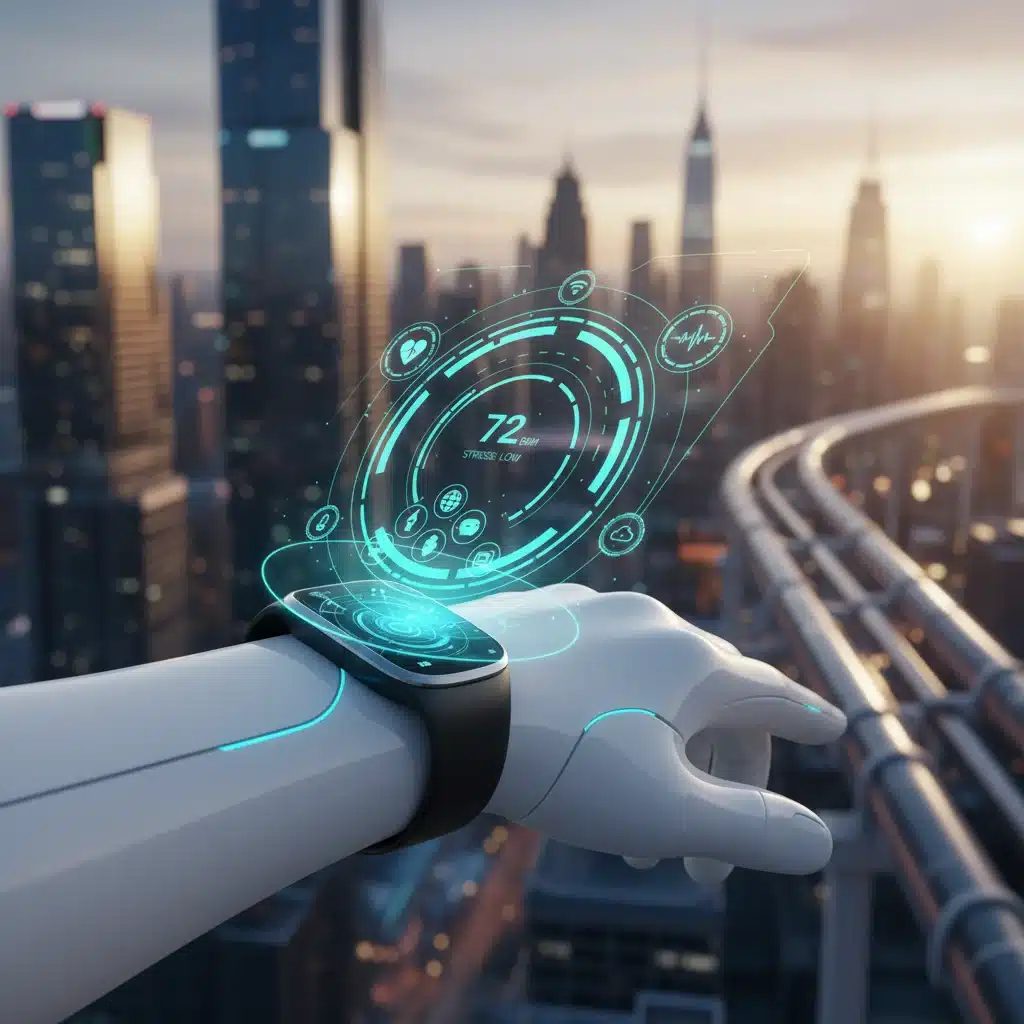
BioSense AI is an ambitious project aiming to transform passive health tracking into proactive health management. Designed for advanced smartwatches and smart patches, this app leverages a suite of non-invasive sensors to collect continuous biometric data, including heart rate variability, skin temperature, blood oxygen levels, sleep patterns, and even early indicators of stress hormones. What sets BioSense AI apart is its sophisticated AI engine, which doesn’t merely present data but analyzes it in real-time to identify subtle deviations from a user’s baseline. This predictive capability is a game-changer for wearable tech apps in the health sector.
Innovative Features
- Personalized Health Baselines: The AI learns each individual’s unique physiological patterns, creating a highly personalized health profile.
- Early Anomaly Detection: Utilizes machine learning algorithms to detect early signs of illness, stress, or fatigue before symptoms become apparent.
- Predictive Wellness Alerts: Notifies users of potential health risks, such as impending illness or burnout, and suggests preventative actions (e.g., ‘Increased stress markers detected, consider a 15-minute mindfulness session’).
- Integration with Telemedicine: Seamlessly connects users with healthcare providers for virtual consultations based on detected anomalies, with user consent.
- Nutritional and Activity Guidance: Offers personalized recommendations for diet and exercise based on real-time physiological needs and recovery status.
Impact
BioSense AI promises to empower individuals with unprecedented control over their health. By shifting from reactive treatment to proactive prevention, it could significantly reduce healthcare costs and improve overall well-being. This app exemplifies the potential of wearable tech apps to become indispensable tools for personal health management, moving beyond mere tracking to genuine health guardianship.
2. EchoMind: Cognitive Enhancement & Focus Training
Overview
EchoMind represents a fascinating leap into cognitive enhancement through wearable technology. Primarily developed for smart rings and advanced brain-computer interface (BCI) headbands (non-invasive EEG sensors), this app focuses on optimizing brain function for improved focus, productivity, and mental well-being. It monitors brainwave patterns and other physiological indicators of cognitive state, providing real-time feedback and personalized training exercises. This is a novel approach for wearable tech apps, extending beyond physical health to mental acuity.
Innovative Features
- Real-time Focus Monitoring: Detects periods of high concentration and distraction based on brainwave activity and eye-tracking (if integrated with smart glasses).
- Personalized Focus Training: Offers gamified exercises and guided meditations tailored to improve attention span, memory, and cognitive flexibility.
- Distraction Interruption: Can subtly alert users (e.g., through gentle vibrations or ambient sound shifts) when their focus wanes, helping them re-engage.
- Cognitive Load Management: Provides insights into mental fatigue and suggests optimal breaks or changes in activity to prevent burnout.
- Adaptive Learning Modes: Adjusts its training protocols based on user performance and neurological responses, ensuring continuous improvement.
Impact
EchoMind has the potential to revolutionize how we approach work, study, and creative tasks. By providing tools to actively train and manage our cognitive states, it could lead to significant improvements in productivity, reduced stress, and enhanced learning capabilities. It pushes the boundaries of what wearable tech apps can achieve in the realm of mental performance.

3. OmniFit XR: Immersive Augmented Reality Fitness
Overview
OmniFit XR is set to redefine the fitness experience by blending the physical and digital worlds through augmented reality (AR) smart glasses and haptic feedback wearables. This app doesn’t just track your workout; it transforms your environment into an interactive training ground. Whether you’re jogging in your neighborhood or working out in your living room, OmniFit XR overlays digital trainers, performance metrics, and gamified challenges directly into your field of vision. This immersive approach is a significant evolution for fitness-focused wearable tech apps.
Innovative Features
- Dynamic AR Workouts: Virtual trainers appear in your real-world environment, guiding you through exercises with perfect form demonstrations.
- Gamified Challenges: Turn mundane workouts into engaging games, with virtual opponents, obstacle courses, or treasure hunts superimposed on your surroundings.
- Real-time Biometric Integration: Seamlessly displays heart rate, calorie burn, pace, and other metrics as AR overlays, without needing to glance at a separate screen.
- Personalized Coaching: AI-driven coaches adapt workouts based on your performance, fatigue levels, and goals, providing real-time feedback on technique.
- Social & Competitive Features: Users can see AR projections of friends or competitors, join virtual group workouts, and participate in global challenges.
Impact
OmniFit XR could make fitness more accessible, engaging, and personalized for millions. By removing the barriers of traditional gym environments and infusing workouts with fun and interactivity, it has the potential to boost adherence to fitness routines and foster a healthier lifestyle. It represents the cutting edge of how wearable tech apps can leverage AR for transformative experiences.
4. AuraComm: Contextual Communication & Smart Notifications
Overview
AuraComm aims to solve the problem of notification fatigue and information overload by delivering truly intelligent, context-aware communication. Designed for smartwatches, smart rings, and even smart earbuds, this app uses a combination of biometric data, location, calendar entries, and user preferences to filter and prioritize incoming communications. Instead of barraging you with alerts, AuraComm ensures you receive the right information at the right time and in the most appropriate format. This is a crucial advancement for wearable tech apps focused on productivity and digital well-being.
Innovative Features
- Biometric-Aware Filtering: Can suppress non-urgent notifications if your stress levels are high or if you’re in a deep focus state (detected by heart rate variability, skin conductance, etc.).
- Location & Calendar Context: Automatically adjusts notification priority based on your current location (e.g., work, home, gym) and scheduled events.
- Adaptive Delivery Methods: Delivers notifications through the least intrusive method possible – a subtle vibration for non-urgent messages, a gentle audio cue for important ones, or a visual alert only when appropriate.
- Summarized Information: For complex messages or emails, AuraComm provides a concise summary on your wearable screen, allowing you to decide if full attention is required.
- Proactive Communication Management: Can suggest automated responses or defer calls/messages based on your current activity and availability.
Impact
In an increasingly connected world, AuraComm offers a path to reclaiming our attention and reducing digital overwhelm. By intelligently managing communications, it allows users to stay connected without being constantly interrupted, fostering deeper focus and improved mental well-being. It highlights how wearable tech apps can enhance, rather than detract from, our presence in the real world.
5. SentinelGuard: Personalized Safety & Environmental Awareness
Overview
SentinelGuard is an innovative safety application designed for smart rings, smart patches, and discreet smart clips that can be attached to clothing. Its primary goal is to enhance personal safety and environmental awareness through advanced sensor fusion and AI. The app continuously monitors a user’s surroundings and physiological state, providing proactive alerts and assistance in potentially dangerous situations. This represents a critical application area for wearable tech apps, moving into personal security.
Innovative Features
- Environmental Threat Detection: Utilizes embedded microphones (with privacy safeguards) and air quality sensors to detect unusual sounds (e.g., breaking glass, shouts, car alarms) or hazardous air conditions.
- Fall & Impact Detection: Advanced accelerometers and gyroscopes can detect falls or sudden impacts, automatically alerting emergency contacts or services if no response is received.
- Biometric Stress Indicators: Monitors heart rate variability and skin conductance to identify extreme stress or panic, prompting discreet check-ins or automated alerts.
- Proximity Alerts: Can alert users if they stray too far from a designated safe zone or if an unknown person approaches within a suspicious proximity (configurable by user).
- Discreet SOS Functionality: A simple, pre-programmed gesture or button press on the wearable can silently send an SOS message with location data to trusted contacts or emergency services.
Impact
SentinelGuard offers a new layer of personal security, particularly for individuals in vulnerable situations or those who frequently travel alone. By leveraging the always-on, always-worn nature of wearables, it provides a discreet and effective safety net. This app underscores the potential of wearable tech apps to offer peace of mind and real-time protection, making our world a safer place.
The Broader Implications of These Wearable Tech Apps
The five applications discussed above are not just isolated innovations; they represent a convergence of several technological trends that will collectively shape the future of wearable tech. These trends include:
Hyper-Personalization
The ability of AI to learn individual baselines and preferences means that wearable tech apps will move beyond generic advice to highly tailored recommendations. This level of personalization will make these devices far more effective and indispensable in our daily lives, adapting to our unique physiological and psychological needs.
Proactive Intelligence
Future wearable tech apps will be less about reporting historical data and more about predictive analytics. They will anticipate our needs, warn us of potential issues, and suggest interventions before problems escalate. This proactive approach will be evident across health, productivity, and safety domains.
Seamless Integration & Contextual Awareness
The distinction between our digital tools and our physical environment will continue to blur. Apps like OmniFit XR leverage AR to integrate digital experiences into the real world, while AuraComm uses contextual data to make digital interactions less intrusive. This seamless integration will make wearable tech apps feel more natural and intuitive.
Ethical Considerations and Data Privacy
As wearable tech apps collect increasingly sensitive personal data, ethical considerations and robust data privacy measures will become paramount. Developers of these innovative apps will need to prioritize transparency, user control, and strong encryption to build and maintain trust. Regulations like GDPR and emerging U.S. privacy laws will heavily influence how these apps handle personal information.
The Rise of Multi-Wearable Ecosystems
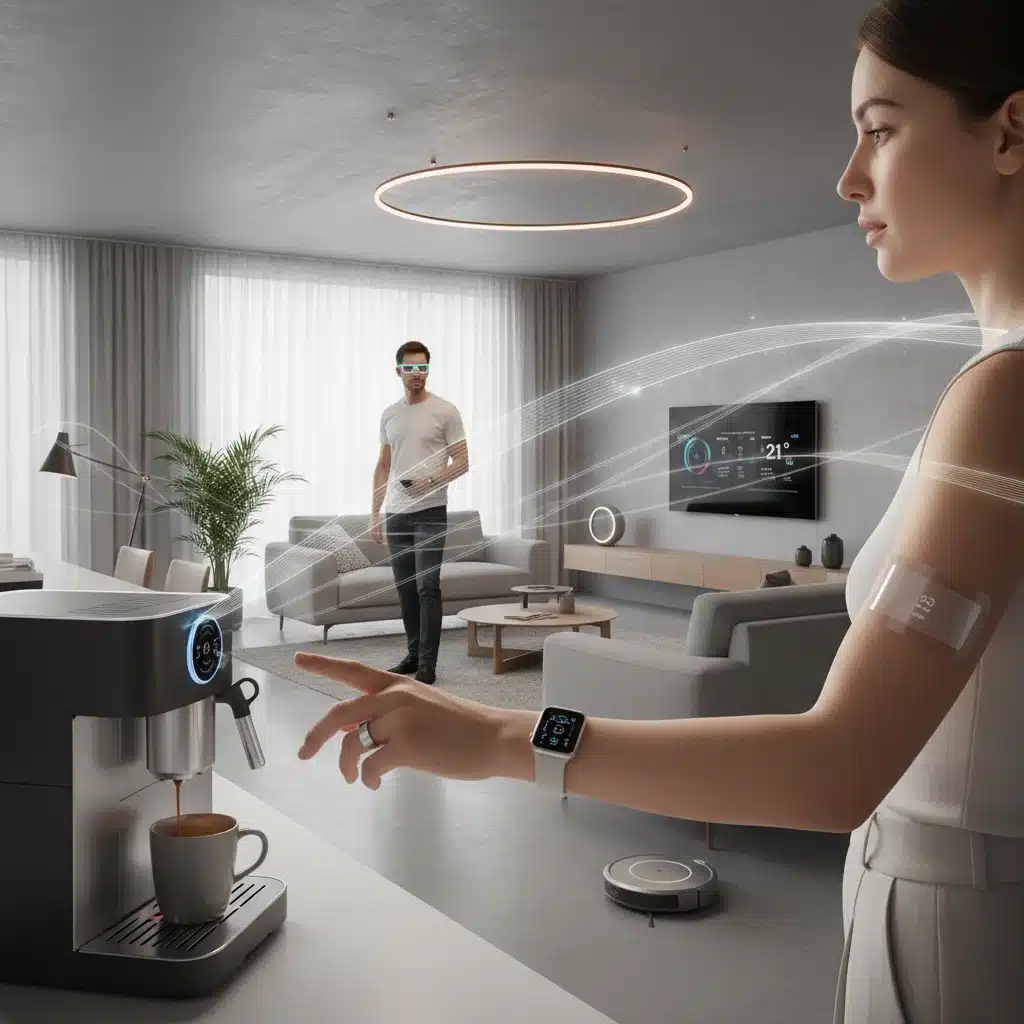
It’s unlikely that a single wearable device will do everything. The future will likely see specialized wearables (e.g., smart rings for payments and basic notifications, smart glasses for AR, smart patches for medical monitoring) working in concert, with advanced wearable tech apps acting as the orchestrators of this interconnected ecosystem. This will allow for more comprehensive data collection and a more nuanced user experience.
Challenges and Opportunities for Wearable Tech Apps
While the future of wearable tech apps is bright, several challenges need to be addressed:
- Battery Life: Advanced sensors and AI processing require significant power, making extended battery life a continuous challenge for wearable devices.
- Accuracy and Reliability: The accuracy of biometric data and the reliability of AI predictions are crucial for user trust and real-world impact.
- User Adoption: Overcoming skepticism and demonstrating tangible value will be key to widespread adoption, especially for more niche applications.
- Interoperability: Ensuring seamless data exchange and functionality across different wearable devices and platforms will be vital for a cohesive user experience.
- Regulatory Hurdles: Especially for health and safety applications, navigating regulatory approvals (e.g., FDA for medical devices) can be a lengthy and complex process.
Despite these challenges, the opportunities presented by these innovative wearable tech apps are immense. They promise to enhance human capabilities, improve health outcomes, and create more intuitive and responsive interactions with technology. The U.S. market, with its vibrant tech ecosystem, is uniquely positioned to drive much of this innovation.
Conclusion: A Glimpse into a Connected Future
The journey of wearable technology is rapidly accelerating, moving us towards a future where our devices are not just tools but intelligent companions that understand our needs, anticipate our challenges, and enhance our capabilities. The five U.S. wearable tech apps — BioSense AI, EchoMind, OmniFit XR, AuraComm, and SentinelGuard — expected to launch by mid-2026 offer a compelling glimpse into this future.
From revolutionizing personal health and cognitive performance to transforming fitness and ensuring personal safety, these applications encapsulate the profound potential of wearable technology. They are designed to be more than just convenient; they are engineered to be transformative, seamlessly integrating into the fabric of our daily lives and providing insights and assistance that were once the stuff of science fiction.
As these and other innovative wearable tech apps come to fruition, we will witness a significant shift in how we interact with technology and how technology interacts with us. The era of truly intelligent, personalized, and proactive wearable experiences is not just on the horizon; it is rapidly approaching, promising a future that is more connected, healthier, and more aware than ever before. Prepare for a paradigm shift, as these innovations are set to redefine what it means to be truly ‘connected’ in the 21st century.