Edge Computing 2026: US Implementations & Mobile App Advantages

Edge Computing in 2026: A Comparison of 3 U.S. Implementations and Their Mobile App Advantages
The technological landscape is constantly evolving, and few advancements promise to reshape our digital interactions as profoundly as Edge Computing US. As we look towards 2026, the United States is at the forefront of deploying this decentralized computing paradigm, moving data processing closer to the source of data generation. This shift is not merely an optimization; it’s a fundamental change that unlocks unprecedented capabilities for mobile applications, enabling real-time responsiveness, enhanced security, and reduced bandwidth consumption. This article delves into three hypothetical, yet highly plausible, U.S. implementations of edge computing, examining their unique characteristics and the significant advantages they offer to the mobile app ecosystem.
The traditional cloud computing model, while powerful, often faces limitations in scenarios demanding ultra-low latency, high bandwidth, or stringent data privacy. Imagine autonomous vehicles needing instantaneous decision-making, augmented reality apps requiring seamless interaction with the physical world, or smart city infrastructure processing vast amounts of sensor data in real-time. These are the domains where edge computing truly shines. By bringing computational resources to the ‘edge’ of the network – closer to users and IoT devices – it minimizes the round-trip time to a central data center, thereby reducing latency and improving overall performance. This is particularly crucial for mobile applications, where user experience is directly tied to responsiveness and efficiency.
In the coming years, the proliferation of 5G networks will further accelerate the adoption of edge computing. The low latency and high bandwidth capabilities of 5G are perfectly complementary to edge infrastructure, creating a powerful synergy that will drive innovation across various sectors. From smart manufacturing to healthcare, retail, and entertainment, the impact of Edge Computing US will be pervasive, transforming how businesses operate and how consumers interact with technology.
Understanding the Core Principles of Edge Computing
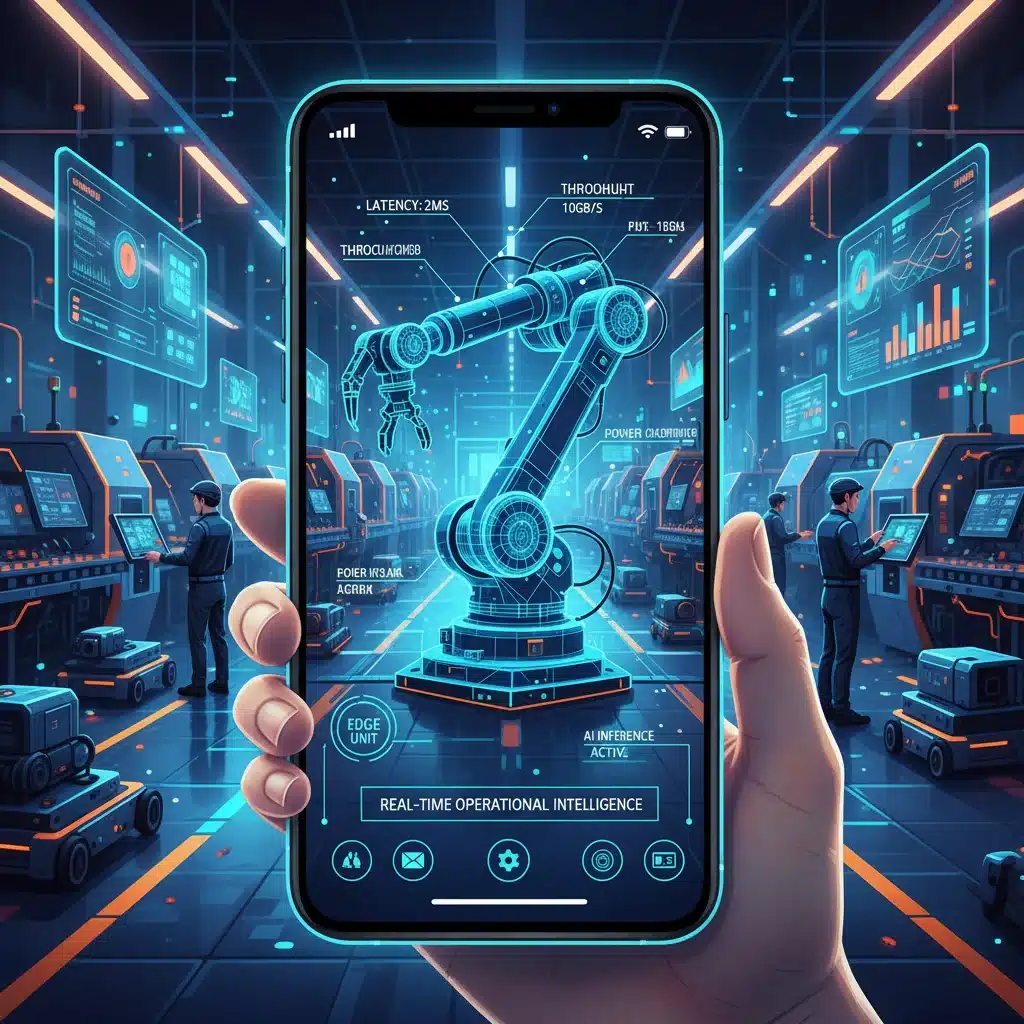
Before diving into specific implementations, it’s essential to grasp the core principles that define edge computing. At its heart, edge computing is about distributed processing. Instead of sending all data to a centralized cloud server for analysis, relevant data is processed locally at the ‘edge’ of the network. This ‘edge’ can be a variety of devices, from IoT gateways and local servers to base stations and even the end-user devices themselves (like smartphones or smart sensors).
Key Characteristics of Edge Computing:
- Proximity: Data processing occurs physically closer to the data source.
- Low Latency: Reduced distance for data travel leads to faster response times.
- Bandwidth Efficiency: Less data needs to be transmitted to the central cloud, conserving bandwidth.
- Enhanced Security: Local processing can reduce the exposure of sensitive data to the wider network.
- Offline Capabilities: Edge devices can often operate autonomously even with intermittent cloud connectivity.
- Scalability: Easier to scale computing resources incrementally at various locations.
These characteristics collectively contribute to a more robust, efficient, and responsive computing environment, which is paramount for the complex and data-intensive mobile applications of tomorrow. The ability to process data at the source means that mobile apps can deliver richer, more personalized, and more immediate experiences, setting a new standard for user interaction. The strategic deployment of Edge Computing US infrastructure is thus a critical factor in maintaining technological leadership.
Implementation 1: Smart City Infrastructure in Phoenix, Arizona
Scenario Overview
Phoenix, a rapidly growing metropolitan area, is investing heavily in smart city initiatives to manage traffic, optimize public services, and enhance citizen safety. By 2026, Phoenix has established a comprehensive edge computing network integrated throughout its urban infrastructure. This network comprises thousands of IoT sensors embedded in traffic lights, public transportation, waste management systems, and environmental monitoring stations. Localized micro-data centers, strategically placed at key intersections and municipal buildings, serve as edge nodes, processing data in real-time.
Mobile App Advantages
- Real-time Traffic Management Apps: Mobile navigation applications can leverage edge-processed data from traffic sensors to provide hyper-accurate, real-time traffic updates and dynamic rerouting suggestions. This significantly reduces commute times and congestion. Instead of sending all raw sensor data to a central cloud for analysis, which introduces latency, edge nodes can instantly identify bottlenecks and communicate optimal routes back to mobile devices.
- Enhanced Public Safety Apps: Citizen safety applications can benefit from immediate data processing from surveillance cameras and environmental sensors. For instance, an app could alert users to localized air quality issues or identify potential safety hazards in public spaces with minimal delay. Edge nodes can perform initial anomaly detection, flagging suspicious activities or environmental changes for immediate review by local authorities, directly improving the responsiveness of mobile emergency services apps.
- Optimized Public Transportation Apps: Mobile apps for public transit can offer real-time bus and light rail tracking with unprecedented accuracy, predicting arrival times based on current traffic conditions and passenger loads, all processed at the edge. This improves reliability and convenience for commuters, making public transport a more attractive option.
- Personalized Urban Experiences: Future mobile apps could offer personalized experiences, such as guiding tourists through historical sites with augmented reality overlays that are rendered locally by edge nodes, ensuring a smooth and immersive experience without lag. This level of responsiveness is a hallmark of effective Edge Computing US deployment.
The Phoenix smart city implementation demonstrates how edge computing can transform urban living, making cities more efficient, safer, and more responsive to the needs of its inhabitants, all mediated through highly capable mobile applications.
Implementation 2: Industrial IoT in a Michigan Automotive Manufacturing Plant
Scenario Overview
In Michigan, a leading automotive manufacturer has deployed an extensive edge computing solution across its massive production facilities. By 2026, every robotic arm, assembly line component, and quality control station is equipped with sensors generating terabytes of data daily. This data is processed by edge servers located directly on the factory floor, often within ruggedized enclosures designed for industrial environments. The goal is to achieve predictive maintenance, optimize production workflows, and ensure stringent quality control in real-time.
Mobile App Advantages
- Predictive Maintenance Apps for Technicians: Mobile applications used by maintenance technicians can receive real-time alerts and diagnostic information about machinery performance directly from edge nodes. This allows for proactive maintenance, preventing costly downtime. For example, an app could notify a technician that a specific robotic arm is showing early signs of wear, suggesting a scheduled intervention before a critical failure occurs. The low latency of edge processing means these alerts are immediate and actionable.
- Real-time Quality Control Apps: Quality assurance personnel utilize mobile apps that integrate with edge-processed visual inspection data. Defects can be identified and flagged instantaneously, allowing for immediate adjustments to the production line. This drastically reduces waste and improves product consistency. Mobile apps can display high-resolution images and analytics, enabling quick decisions on the factory floor.
- Augmented Reality (AR) Assisted Assembly Apps: Workers use AR-enabled mobile devices or smart glasses that overlay instructions, schematics, and performance metrics directly onto physical components. Edge computing processes the complex AR rendering and spatial mapping data locally, ensuring a seamless, lag-free experience critical for precision assembly tasks. This boosts efficiency and reduces errors.
- Inventory and Supply Chain Optimization Apps: Mobile apps can track components and finished products across the factory floor with real-time accuracy, leveraging edge-processed RFID and sensor data. This optimizes inventory levels, reduces bottlenecks, and improves the efficiency of the internal supply chain.
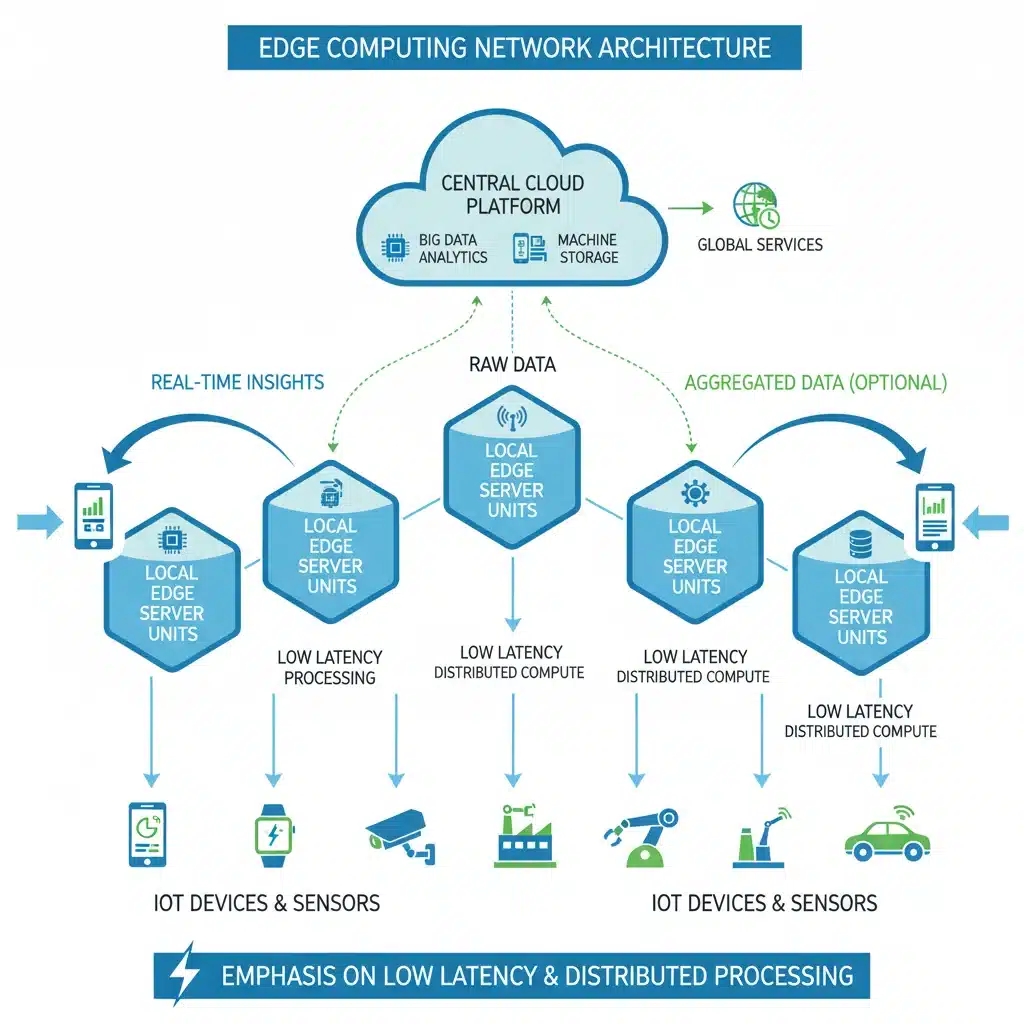
This industrial application of Edge Computing US highlights its potential to revolutionize manufacturing, making factories smarter, more efficient, and more resilient. The integration with mobile apps empowers the workforce with real-time intelligence and advanced tools.
Implementation 3: Remote Healthcare Monitoring in Rural Montana
Scenario Overview
Access to specialized healthcare can be challenging in sparsely populated rural areas. By 2026, a network of edge computing devices and localized mini-data centers is deployed across rural Montana to facilitate advanced remote patient monitoring and telemedicine. These edge nodes are placed in community health centers, assisted living facilities, and even directly in patients’ homes via specialized gateways. They collect and process vital sign data, medical images, and other health metrics from wearable devices and in-home sensors.
Mobile App Advantages
- Real-time Remote Patient Monitoring Apps: Patients and caregivers use mobile apps that display continuous health data (heart rate, blood pressure, glucose levels) processed by local edge devices. Critical anomalies are detected at the edge and immediately trigger alerts to healthcare providers, enabling faster intervention. This is particularly vital in emergencies where every second counts, and relying solely on cloud processing would introduce unacceptable delays.
- Enhanced Telemedicine Apps: Telemedicine platforms can leverage edge computing for higher quality video consultations and the real-time sharing of diagnostic data. Edge nodes can pre-process medical images (e.g., from an in-home ultrasound device) before sending them to a specialist, reducing bandwidth strain and speeding up diagnosis. This improves the effectiveness and accessibility of remote care.
- Personalized Health Coaching Apps: Mobile apps can provide personalized health coaching and medication reminders, with the underlying AI models partially running on edge devices. This allows for more responsive and context-aware feedback, adapting to a patient’s immediate health status and environment without constant cloud communication.
- Secure Data Handling for Privacy: For sensitive health data, edge computing offers a significant advantage in privacy. Initial processing and anonymization can occur at the edge, reducing the amount of raw, personally identifiable information transmitted over wider networks. Mobile health apps can assure users of enhanced data security. This focus on data privacy is a key benefit of Edge Computing US in healthcare.
The Montana healthcare initiative showcases how edge computing can bridge geographical gaps in healthcare access, providing high-quality, responsive, and secure medical services to underserved populations through innovative mobile applications.
Common Advantages of Edge Computing for Mobile Apps Across Implementations
While each implementation has its unique benefits, several overarching advantages of edge computing for mobile applications are evident across all scenarios:
1. Drastically Reduced Latency
This is perhaps the most significant advantage. For applications requiring instant feedback – such as AR/VR, autonomous systems, live gaming, or real-time control – the delay introduced by sending data to a distant cloud server is unacceptable. Edge computing minimizes this round trip, enabling near real-time interactions that were previously impossible. Mobile users experience snappier interfaces, immediate responses, and seamless interactions, leading to a superior user experience.
2. Improved Bandwidth Efficiency
By processing data locally, edge computing reduces the amount of raw data that needs to be transmitted over the network to the central cloud. This is crucial for mobile networks, especially in areas with limited or congested bandwidth. Only processed insights or aggregated data are sent to the cloud, freeing up valuable network capacity and reducing data costs for both users and providers. This is a critical factor for the widespread adoption of advanced mobile applications in the Edge Computing US landscape.
3. Enhanced Data Security and Privacy
Processing sensitive data closer to its source means it travels shorter distances and potentially remains within a more controlled local environment. This can reduce exposure to cyber threats during transit to a central cloud. For highly regulated industries like healthcare or finance, edge computing allows for local compliance with data residency and privacy regulations, processing and potentially anonymizing data before it leaves the local environment. Mobile apps can leverage these features to offer stronger privacy guarantees to users.
4. Greater Reliability and Offline Operation
Edge devices can continue to function and process data even if the connection to the central cloud is interrupted. This provides a critical layer of resilience, ensuring that essential mobile applications remain operational in adverse conditions. For example, a smart factory can continue production, or a remote patient monitoring system can still alert local caregivers, even during a network outage. This robustness is a key differentiator for critical mobile applications.
5. Scalability and Flexibility
Edge computing architectures are inherently more flexible and scalable. Organizations can deploy computing resources precisely where they are needed, scaling up or down based on local demand without overhauling an entire centralized infrastructure. This allows for more agile development and deployment of mobile app features tailored to specific geographic or operational needs. The modularity of Edge Computing US deployments supports rapid innovation.
Challenges and Considerations for Edge Computing in the US
Despite its numerous advantages, the widespread adoption of edge computing in the US also presents several challenges:
1. Infrastructure Deployment and Management
Deploying and managing a distributed network of edge devices and micro-data centers is complex. It requires significant upfront investment, robust network connectivity, and sophisticated management tools to monitor and maintain thousands of dispersed nodes. Ensuring consistent software updates, security patches, and hardware maintenance across a vast edge network is a non-trivial task.
2. Security at the Edge
While edge computing can enhance security by localizing data, it also introduces new attack vectors. Each edge device becomes a potential point of entry, requiring stringent security protocols, encryption, and authentication mechanisms. Securing these numerous, often physically exposed, devices is a paramount concern for any Edge Computing US deployment.
3. Data Governance and Compliance
Managing data across a hybrid cloud-edge environment raises complex data governance questions. Organizations must determine which data is processed at the edge, which is sent to the cloud, and how to ensure compliance with various data privacy regulations (e.g., HIPAA, CCPA) across all processing locations. This requires clear policies and robust data orchestration tools.
4. Standardization and Interoperability
The edge computing landscape is still evolving, with various vendors offering proprietary solutions. A lack of standardization can lead to interoperability issues, making it difficult to integrate different edge devices and software platforms. Industry-wide standards will be crucial for accelerating adoption and fostering a cohesive ecosystem.
5. Power Consumption and Environmental Impact
Deploying computing resources closer to the edge means more distributed power consumption. While individual edge devices might consume less power than a large data center, the aggregate impact of millions of edge nodes needs careful consideration, especially in terms of energy efficiency and cooling requirements for localized deployments.
The Future of Mobile Apps with Edge Computing US
By 2026, edge computing will have fundamentally reshaped the capabilities and expectations for mobile applications across the United States. We will see a new generation of mobile apps that are not just faster and more responsive, but also more intelligent, secure, and context-aware. The distinction between local processing and cloud processing will become increasingly blurred, with applications seamlessly leveraging resources wherever they are most efficient.
Imagine mobile apps that offer truly immersive augmented and virtual reality experiences, processed with such low latency that they become indistinguishable from physical interaction. Consider smart assistants on your phone that understand your nuanced commands and anticipate your needs with unparalleled accuracy, powered by localized AI models. Envision healthcare apps that provide life-saving insights in real-time, or industrial apps that guide complex operations with perfect precision.
The three implementations discussed – smart cities, industrial IoT, and remote healthcare – represent just a fraction of the potential applications. As Edge Computing US infrastructure continues to mature, we can expect to see its integration into almost every facet of our digital lives, driving innovation in areas we can only begin to imagine today. The competitive advantage for businesses will increasingly lie in their ability to harness the power of edge computing to deliver superior mobile experiences.
Conclusion
The year 2026 marks a pivotal point for edge computing in the United States. The examples of Phoenix’s smart city, Michigan’s automotive manufacturing, and rural Montana’s healthcare initiatives illustrate the diverse and profound impact this technology will have. From enabling hyper-responsive mobile apps for urban navigation and public safety to facilitating real-time quality control in factories and delivering critical remote healthcare services, edge computing is set to redefine our interactions with technology.
The advantages of reduced latency, improved bandwidth efficiency, enhanced security, and greater reliability are undeniable drivers for the adoption of Edge Computing US. While challenges related to infrastructure, security, and data governance remain, ongoing innovation and standardization efforts are paving the way for a future where intelligent processing at the edge is the norm, not the exception. For mobile app developers and businesses alike, understanding and leveraging edge computing will be key to unlocking the next generation of digital experiences and maintaining a competitive edge in an increasingly connected world.