U.S. Tech Trends 2026: Mobile App Innovation Beyond Smartphones
Beyond the Smartphone: 3 U.S. Tech Trends Driving Mobile App Innovation in 2026
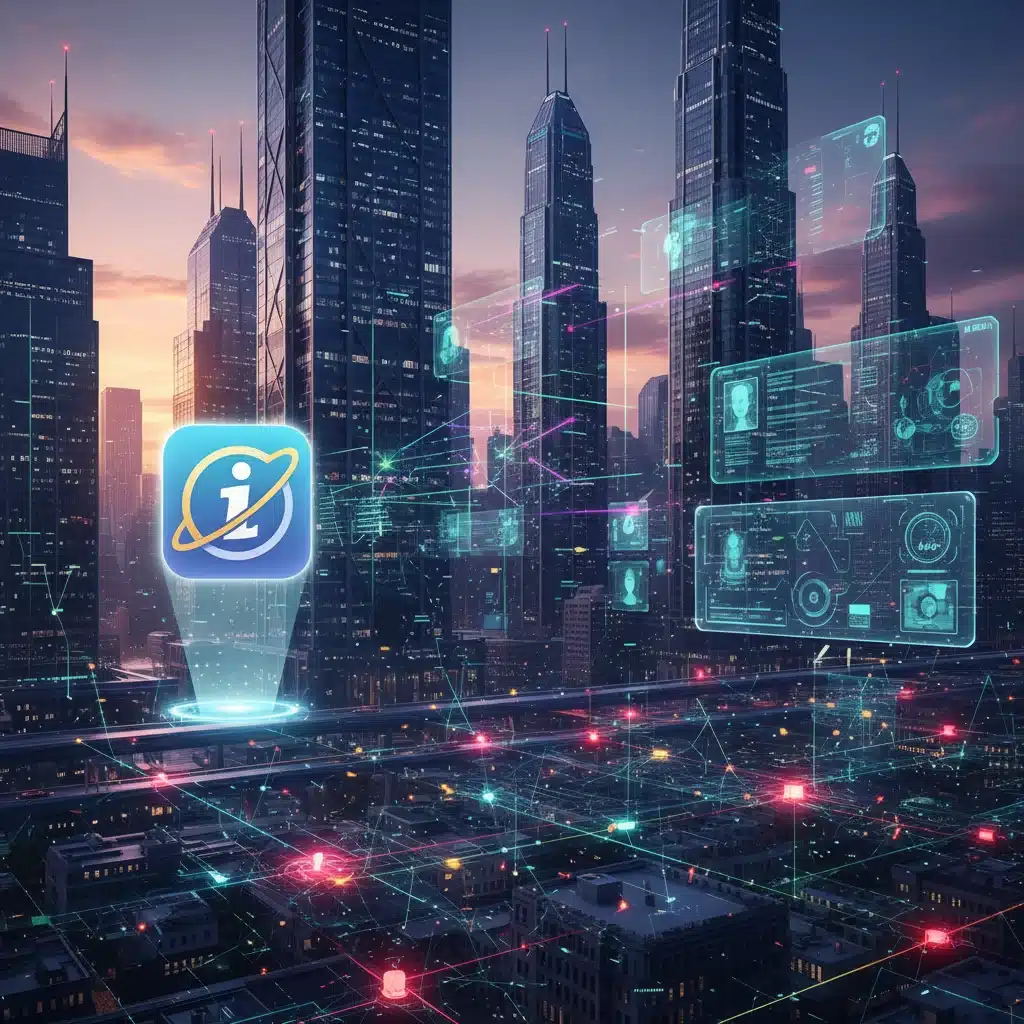
The smartphone, for over a decade, has been the undisputed king of our digital lives. It’s been the primary canvas for mobile app innovation, a pocket-sized supercomputer connecting us to information, entertainment, and each other. However, as we hurtle towards 2026, the landscape of mobile app development is experiencing a seismic shift. The U.S., a perennial powerhouse of technological advancement, is at the forefront of this evolution, pushing boundaries far beyond the traditional smartphone screen. This comprehensive exploration delves into three pivotal U.S. tech trends poised to redefine mobile app innovation in the coming years: Artificial Intelligence (AI) Integration, Augmented Reality (AR) and Virtual Reality (VR) Experiences, and the pervasive expansion of the Internet of Things (IoT).
These aren’t just buzzwords; they are foundational pillars upon which the next generation of applications will be built, offering unprecedented levels of immersion, personalization, and seamless interaction. The future of mobile app innovation isn’t just about what’s on your phone; it’s about how your apps interact with your world, anticipate your needs, and augment your reality in ways previously confined to science fiction.
The AI Revolution: Intelligent Apps Anticipating Your Every Need
Artificial Intelligence (AI) is no longer a distant futuristic concept; it’s an integral component of modern technology, and its integration into mobile applications is accelerating at an astonishing pace. By 2026, AI will be the invisible hand guiding countless app experiences, transforming them from mere tools into intelligent companions. This trend is particularly pronounced in the U.S., where significant investment in AI research and development is yielding groundbreaking results.
Personalization Beyond Prediction
Early AI applications in mobile apps focused on basic recommendations and predictive text. However, the future of mobile app innovation powered by AI will offer hyper-personalization. Imagine a fitness app that not only tracks your workouts but also analyzes your sleep patterns, dietary habits, and even stress levels from wearable sensors to create a truly bespoke wellness plan, adjusting in real-time based on your body’s responses. Or consider a shopping app that understands your style preferences so intimately it can curate outfits based on your calendar, weather forecasts, and even your mood, suggesting items you didn’t even know you needed.
This level of personalization is achieved through advanced machine learning algorithms that constantly learn from user data (with stringent privacy safeguards, of course). These algorithms can identify subtle patterns and correlations that human analysis might miss, leading to incredibly insightful and proactive app functionalities. For businesses, this means deeper customer engagement and higher conversion rates; for users, it means apps that genuinely feel like they were made just for them.
Enhanced User Experience Through Natural Language Processing (NLP)
The days of rigid, command-based app interactions are fading. NLP, a subfield of AI, is enabling apps to understand and respond to human language with increasing sophistication. Voice assistants like Siri and Alexa were just the beginning. By 2026, mobile app innovation will see NLP embedded deeply within a multitude of applications, allowing for more natural, conversational interfaces.
Think of a banking app where you can simply ask, “What were my expenses last month on dining out?” and receive an immediate, accurate breakdown, perhaps even with suggestions for budget adjustments. Or a travel app where you can describe your dream vacation in casual language, and the AI constructs a detailed itinerary, complete with flight and hotel bookings, all within the app. This shift towards natural language interaction removes friction, making apps more accessible and intuitive for a broader audience, further cementing AI’s role in driving mobile app innovation.
AI-Powered Automation and Efficiency
Beyond personalization and natural interaction, AI is set to automate complex tasks within mobile apps, significantly boosting efficiency for both individuals and businesses. This includes everything from automated customer support chatbots that can resolve intricate queries to AI-driven data analysis tools that summarize vast amounts of information into actionable insights.
For instance, project management apps could use AI to automatically assign tasks, predict project delays, and even suggest resource reallocation based on real-time progress. Healthcare apps might leverage AI for preliminary diagnostics based on user-reported symptoms, guiding them to the most appropriate next steps. The underlying principle is to offload cognitive burden from the user, allowing them to focus on higher-value activities while the app handles the mundane or complex computations. This efficiency gain is a powerful driver for continued mobile app innovation.

Augmented Reality (AR) and Virtual Reality (VR): Immersive Experiences Beyond the Screen
While AI makes apps smarter, Augmented Reality (AR) and Virtual Reality (VR) make them more immersive. These technologies, once niche, are rapidly maturing and becoming more accessible, paving the way for a new era of mobile app innovation. The U.S. is a hotbed for AR/VR development, with tech giants and innovative startups alike investing heavily in hardware and software solutions that will bring these experiences to the masses by 2026.
AR: Blending Digital with Reality
Augmented Reality overlays digital information onto the real world, enhancing our perception without fully replacing it. While games like Pokémon Go offered an early glimpse, future AR applications will be far more sophisticated and integrated into daily life. By 2026, mobile app innovation in AR will extend beyond entertainment to practical, utility-focused applications.
Imagine a navigation app that projects turn-by-turn directions directly onto the road ahead, visible through your car’s windshield or smart glasses. Or a shopping app that allows you to virtually try on clothes or place furniture in your home before making a purchase, offering a true-to-scale, realistic preview. Maintenance and repair apps could guide users through complex procedures by highlighting parts and providing step-by-step instructions overlaid onto the actual machinery. Education apps could bring textbooks to life, allowing students to interact with 3D models of historical artifacts or biological systems in their own classrooms.
The key to AR’s success in mobile app innovation lies in its ability to provide contextual, real-time information that enhances our understanding and interaction with our physical surroundings. As AR hardware (like smart glasses) becomes more ubiquitous and powerful, the smartphone itself might transition into a supplementary device, with the primary AR experience delivered through more wearable forms.
VR: Complete Immersion in New Worlds
Virtual Reality, on the other hand, creates entirely simulated environments, transporting users to new digital worlds. While often associated with gaming, VR’s potential for mobile app innovation in areas like training, collaboration, and even therapy is immense. As VR headsets become lighter, more powerful, and untethered, the barrier to entry for immersive experiences will significantly decrease.
Consider a training app that allows medical students to perform complex surgeries in a risk-free virtual operating room, or an architecture app that lets clients walk through a proposed building design before construction even begins. Collaboration apps could create virtual meeting spaces where remote teams feel like they are in the same room, interacting with shared 3D models and whiteboards. Even social media could evolve into immersive VR environments where users customize their avatars and interact in persistent digital worlds.
The challenge for VR mobile app innovation lies in creating compelling content and ensuring accessibility. However, with continued advancements in rendering capabilities, haptic feedback, and user interface design, VR is poised to offer truly transformative experiences that go far beyond what a flat screen can deliver.
The Internet of Things (IoT): Seamlessly Connected Ecosystems
The third major trend reshaping mobile app innovation in the U.S. by 2026 is the ubiquitous expansion of the Internet of Things (IoT). IoT refers to the network of physical objects embedded with sensors, software, and other technologies for the purpose of connecting and exchanging data with other devices and systems over the internet. As more and more devices become ‘smart’ and interconnected, mobile apps are evolving from controlling individual devices to managing entire intelligent ecosystems.
Smart Homes and Cities: Orchestrated Living
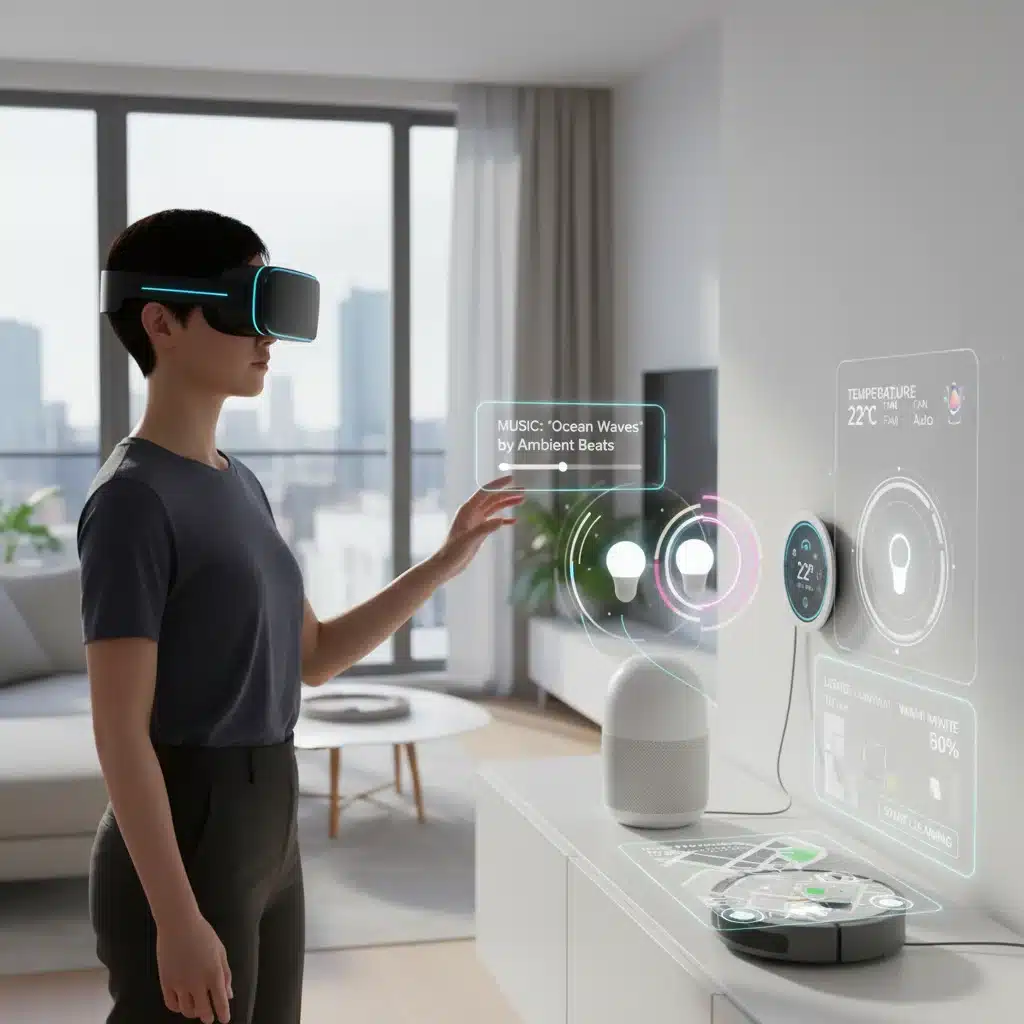
The smart home is perhaps the most visible manifestation of IoT, and mobile apps are the primary interface for managing these connected environments. By 2026, mobile app innovation will move beyond simple on/off controls for lights or thermostats. Apps will become intelligent orchestrators, reacting to environmental cues and user routines to create truly automated and optimized living spaces.
Imagine an app that not only adjusts your home’s temperature and lighting but also monitors your energy consumption, suggests optimal settings based on utility rates, and even orders groceries when your smart fridge detects low stock. In smart cities, apps could provide real-time information on traffic, public transport, air quality, and even parking availability, seamlessly integrating with connected infrastructure to improve urban living. These apps will not just react to data; they will predict needs and proactively manage resources, making our environments more efficient and responsive.
Healthcare and Wearables: Proactive Wellness Management
The convergence of IoT devices and mobile apps is revolutionizing healthcare. Wearable technology, from smartwatches to continuous glucose monitors, is generating a constant stream of health data. Mobile apps are the crucial link, collecting, analyzing, and presenting this data in an understandable format, empowering users to take a more proactive role in their wellness. This area of mobile app innovation holds immense promise.
By 2026, apps will leverage data from various IoT health devices to provide personalized health insights, detect early signs of illness, and even facilitate remote consultations with healthcare professionals. Imagine an app that monitors your heart rate, sleep quality, and activity levels, and if it detects unusual patterns, it automatically schedules a virtual check-up with your doctor. For chronic disease management, these apps can provide reminders for medication, track vital signs, and offer personalized dietary or exercise recommendations, all while securely sharing relevant data with care providers. This shift from reactive to proactive healthcare, driven by IoT and mobile apps, will be a game-changer.
Industrial IoT (IIoT) and Enterprise Applications
Beyond consumer applications, IoT is also transforming industries, and mobile apps are at the heart of this transformation. Industrial IoT (IIoT) involves connecting sensors and devices in factories, logistics, and other industrial settings to gather data for optimization and predictive maintenance. Mobile apps provide the interface for workers and managers to access this critical information on the go, driving significant mobile app innovation in the enterprise sector.
Field service technicians can use apps on ruggedized tablets or smartphones to access real-time data from machinery, diagnose issues remotely, and even follow AR-guided repair instructions. Logistics apps can track shipments in real-time, monitor environmental conditions within containers, and optimize delivery routes based on live traffic and weather data. This integration of IoT sensors with powerful mobile applications leads to increased operational efficiency, reduced downtime, and more informed decision-making across various industries.
The Synergy of Trends: A Holistic Future for Mobile Apps
While we’ve discussed AI, AR/VR, and IoT as distinct trends, their true power in driving mobile app innovation lies in their synergy. By 2026, the most impactful applications will likely be those that seamlessly integrate elements from all three domains, creating holistic and profoundly intelligent user experiences.
Consider a future where you walk into a smart retail store (IoT-enabled). An AR app on your smart glasses identifies products you might be interested in based on your past purchases (AI-driven personalization) and projects personalized discounts or product information directly into your field of view. You can virtually try on clothes (AR), and if you have questions, an AI-powered chatbot provides immediate, conversational assistance. The entire experience is seamless, intuitive, and deeply personalized, blurring the lines between the digital and physical worlds.
Another example: a smart city navigation app. It uses IoT data from traffic sensors and public transport to calculate the fastest route, then provides AR overlays for directions. Along the way, an AI assistant offers personalized recommendations for restaurants or points of interest based on your preferences and current location. This convergence creates a truly intelligent and adaptive environment, elevating mobile app innovation to new heights.
Challenges and Opportunities for Developers and Businesses
This exciting future for mobile app innovation also presents significant challenges and opportunities for developers, businesses, and users alike.
Data Privacy and Security
As apps become more intelligent and interconnected, they will collect and process vast amounts of personal and environmental data. Ensuring robust data privacy and security measures will be paramount. Developers must prioritize secure coding practices, transparent data policies, and give users granular control over their data. Compliance with evolving privacy regulations, both domestically and internationally, will be a non-negotiable aspect of successful mobile app innovation.
Interoperability and Standardization
The proliferation of IoT devices and AR/VR platforms creates a need for greater interoperability and standardization. Developers will face the challenge of creating apps that can seamlessly communicate with a diverse ecosystem of devices and platforms. Industry-wide standards and open APIs will be crucial for fostering a truly connected and innovative app landscape.
Hardware Evolution
The capabilities of future mobile apps will be heavily dependent on the evolution of hardware. More powerful processors, advanced sensors, longer-lasting batteries, and improved display technologies (especially for AR/VR wearables) will unlock new possibilities. Developers must keep abreast of hardware advancements to fully leverage their potential in mobile app innovation.
User Adoption and Education
While these technologies are exciting, widespread user adoption will depend on ease of use and perceived value. Developers and businesses will need to focus on creating intuitive user experiences and effectively communicating the benefits of these advanced apps to a broad audience. Education will play a key role in helping users adapt to new interaction paradigms and understand the potential of these emerging technologies.
Conclusion: The Dawn of a New Era for Mobile Apps
The U.S. tech landscape is a vibrant incubator for the next generation of mobile app innovation. By 2026, the confluence of Artificial Intelligence, Augmented/Virtual Reality, and the Internet of Things will have profoundly reshaped how we interact with our digital world. Apps will no longer be confined to the flat screen of a smartphone but will permeate our environments, anticipate our needs, and augment our realities in ways that enhance productivity, entertainment, and overall quality of life.
For developers, this is an era of unprecedented opportunity to create groundbreaking applications that solve real-world problems and offer truly immersive experiences. For businesses, it’s a call to rethink their digital strategies and embrace these transformative technologies to stay competitive. And for users, it’s the promise of a more intelligent, intuitive, and seamlessly connected future, where mobile app innovation truly goes beyond the smartphone.
The journey has just begun, and the coming years promise to be an exhilarating ride as we witness the full potential of these U.S. tech trends unfold, forever changing the face of mobile applications.