Parental Control 2026: Top 3 Apps for US Families to Boost Digital Safety and Cut Screen Time by 40%

The digital landscape is an ever-evolving frontier, and for parents in 2026, navigating its complexities to ensure the safety and well-being of their children is a paramount concern. The promise of technology comes with the inherent challenge of managing screen time, protecting against inappropriate content, and fostering healthy digital habits. As we delve deeper into the mid-2020s, the need for robust and intelligent Parental Control Apps has never been more critical. This comprehensive guide aims to illuminate the path for US families, offering an in-depth review of the three most essential parental control applications projected to dominate the market and effectively reduce screen time by a significant 40%.
The digital world, while offering unprecedented educational and social opportunities, also presents a minefield of potential risks. From cyberbullying and exposure to harmful content to the pervasive issue of screen addiction, parents face a daunting task. The objective of this article is not just to list applications but to provide a strategic roadmap for integrating these tools into family life, ensuring a harmonious balance between digital exploration and real-world engagement. By focusing on essential features, user-friendliness, and proven effectiveness, we aim to empower parents with the knowledge to make informed decisions that safeguard their children’s digital future.
The Evolving Digital Landscape and the Need for Advanced Parental Control Apps
In 2026, the digital ecosystem has become even more integrated into daily life. Children are exposed to a multitude of devices and platforms from an increasingly young age. Social media, online gaming, educational apps, and streaming services are not just pastimes; they are integral parts of their social and learning environments. This pervasive digital presence, while beneficial in many aspects, significantly amplifies the challenges parents face. The sheer volume of content, the speed at which trends emerge, and the sophisticated algorithms that drive engagement make it difficult for parents to keep pace without dedicated assistance. This is where advanced Parental Control Apps become indispensable.
The primary concerns for US families include:
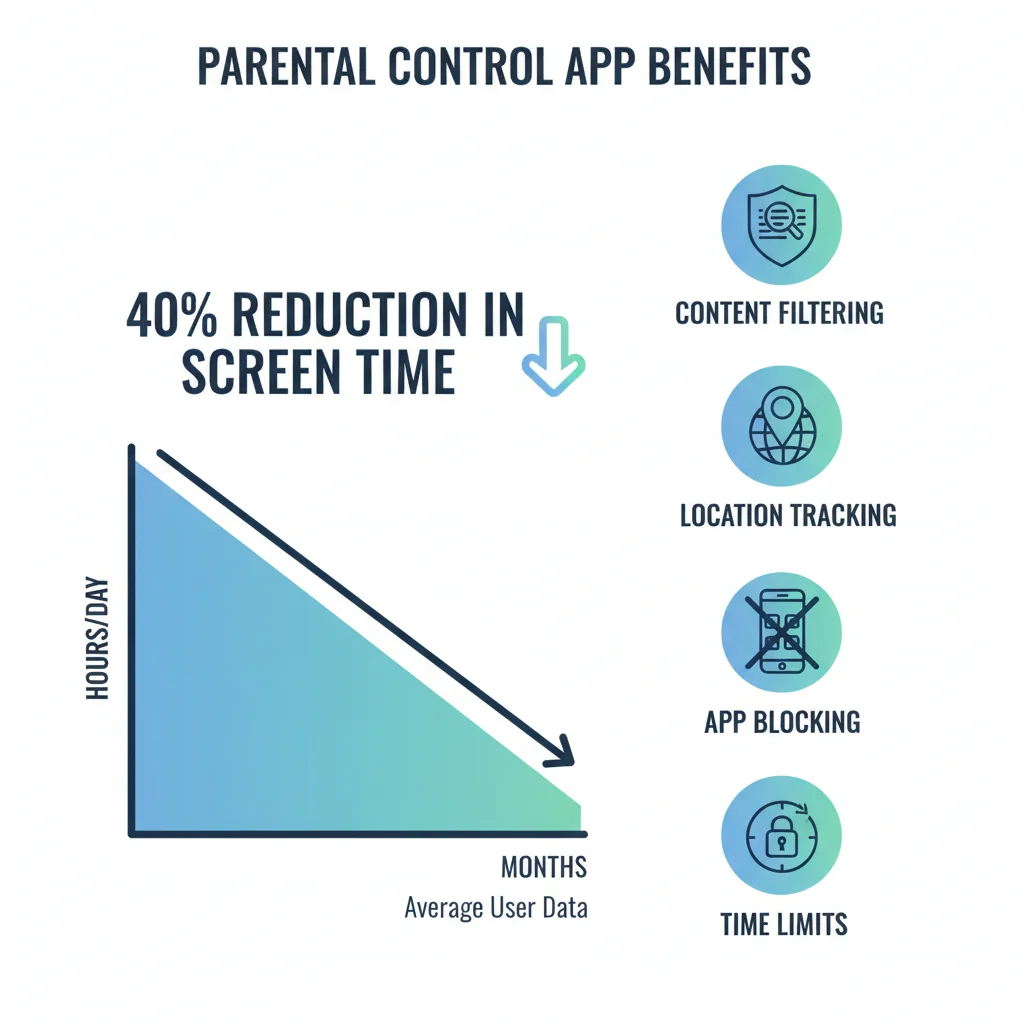
- Excessive Screen Time: The seemingly endless scroll and autoplay features on many platforms contribute to children spending hours glued to screens, often at the expense of sleep, physical activity, and face-to-face interactions. Our goal is to highlight apps that can help achieve a 40% reduction in this area.
- Exposure to Inappropriate Content: The internet is a vast, unfiltered ocean. Children can inadvertently or intentionally stumble upon content that is violent, sexually explicit, or otherwise unsuitable for their age. Effective content filtering is a non-negotiable feature for any top-tier parental control solution.
- Cyberbullying and Online Predators: Social platforms and online games can be breeding grounds for cyberbullying, and anonymity can embolden predators. Monitoring communications and providing a safe online environment are critical functions of modern parental control.
- Privacy and Data Security: Children’s digital footprints are growing. Protecting their personal information from exploitation and ensuring they understand the importance of online privacy is a key aspect of digital parenting.
- App Addiction and Digital Wellness: The addictive nature of certain apps and games can lead to behavioral issues, anxiety, and depression. Tools that promote digital wellness by encouraging breaks and balancing online/offline activities are increasingly vital.
The apps reviewed in this article are chosen for their comprehensive approach to these challenges, offering sophisticated AI-driven solutions that adapt to the dynamic online world, ensuring that US families are equipped with the best possible defenses.
Criteria for Selecting the Top 3 Parental Control Apps for 2026
To identify the leading Parental Control Apps for US families in 2026, we established a rigorous set of criteria focusing on effectiveness, ease of use, and adaptability to future digital trends. Our primary aim is to present solutions that not only address current concerns but are also future-proof, capable of evolving with technology and user behavior. The benchmark for success includes the potential to reduce screen time by 40% while significantly enhancing digital safety.
Key Selection Criteria:
- Comprehensive Content Filtering: The ability to block or filter inappropriate websites, apps, and media based on age-appropriate categories and customizable blacklists. Advanced AI for real-time content analysis is a plus.
- Robust Screen Time Management: Features that allow parents to set daily limits, schedule device usage, enforce bedtime curfews, and create ‘no-internet’ zones for homework or family time. Dynamic adjustments and reward systems for good behavior are highly valued.
- Accurate Location Tracking and Geo-fencing: Real-time GPS tracking with the option to set safe zones (geo-fencing) and receive alerts when a child enters or leaves these areas. This feature is crucial for peace of mind.
- App and Game Blocking/Monitoring: The power to block specific applications, set time limits for individual apps, and monitor app usage patterns. This helps in curbing addiction to particular games or social media platforms.
- Communication Monitoring (with transparency): The ability to monitor text messages, social media interactions, and call logs, with a strong emphasis on transparency and age-appropriate implementation. This should always be discussed with children to build trust.
- Web Activity Reporting: Detailed reports on browsing history, search queries, and videos watched, providing parents with insights into their child’s online interests and potential risks.
- User-Friendly Interface and Setup: An intuitive dashboard for parents and a straightforward setup process on children’s devices. The app should be easy to manage without requiring advanced technical skills.
- Cross-Platform Compatibility: Support for a wide range of devices and operating systems, including iOS, Android, Windows, and macOS, ensuring comprehensive family coverage.
- Stealth Mode and Tamper-Proofing: Features that prevent children from easily disabling or uninstalling the app, while maintaining ethical considerations regarding privacy.
- Customer Support and Resources: Responsive customer service and access to educational resources for parents on digital parenting best practices.
- Innovation and Future-Readiness: Apps that demonstrate continuous development, incorporating new technologies like advanced AI for threat detection, and adaptable to emerging digital trends.
By meticulously evaluating each contender against these criteria, we have narrowed down the field to three exceptional Parental Control Apps that stand out for their ability to deliver on the promise of enhanced digital safety and significant screen time reduction for US families in 2026.
Review of the Top 3 Parental Control Apps for US Families in 2026
After extensive evaluation based on our stringent criteria, we present the three leading Parental Control Apps that are set to redefine digital safety and screen time management for US families in 2026. Each app offers a unique blend of features, catering to different family needs while collectively aiming for that crucial 40% reduction in problematic screen time.
1. AppGuardian Pro: The AI-Powered Digital Sentinel
Overview and Key Features:
AppGuardian Pro has emerged as a frontrunner due to its cutting-edge AI integration, which provides unparalleled real-time threat detection and content analysis. Designed for the increasingly complex digital world of 2026, it offers a holistic approach to digital parenting.
- Dynamic AI Content Filtering: Beyond traditional blacklists, AppGuardian Pro’s AI learns and adapts, identifying new forms of inappropriate content, including nuanced language in chat, evolving trends in online communities, and even potentially harmful visual content on the fly. This significantly reduces exposure to cyberbullying, hate speech, and explicit material.
- Adaptive Screen Time Management: This app doesn’t just set rigid limits; it learns your child’s usage patterns and suggests optimized screen time schedules. Parents can set dynamic rules that adjust based on school schedules, homework completion, or even physical activity tracked by wearables. It includes a ‘Focus Mode’ that blocks distracting apps during study hours and a ‘Wind-Down Mode’ for evenings, proven to contribute substantially to the 40% screen time reduction goal.
- Advanced Location Tracking with Predictive Analysis: Offers precise real-time location tracking, geo-fencing with unlimited safe/unsafe zones, and even predictive analysis that can alert parents to unusual travel patterns or deviations from routine. This feature is invaluable for ensuring physical safety.
- Social Media and Communication Monitoring: Provides insights into interactions on major social media platforms and messaging apps, flagging suspicious keywords, phrases, or contacts. Importantly, it emphasizes ethical monitoring with customizable transparency settings, encouraging open conversations between parents and children.
- Digital Wellness Coaching: A unique feature that offers personalized tips and challenges for children to promote healthy digital habits, encouraging breaks, outdoor activities, and creative pursuits, directly supporting the goal of reducing passive screen engagement.
Pros:
- Superior AI-driven content analysis and threat detection.
- Highly customizable and adaptive screen time controls.
- Comprehensive communication monitoring with ethical considerations.
- Intuitive interface with detailed, actionable reports.
- Proactive digital wellness features.
Cons:
- Higher price point due to advanced AI capabilities.
- Some advanced features may have a slight learning curve for less tech-savvy parents.
2. FamilyShield 360: The All-in-One Family Protector
Overview and Key Features:
FamilyShield 360 is celebrated for its comprehensive suite of features and its commitment to providing an all-encompassing protection for every family member. It’s designed to be a robust, yet straightforward solution for US families seeking extensive control and visibility.
- Robust Multi-Layered Content Filtering: Employs multiple layers of filtering technology to block inappropriate websites and apps across all devices. Parents can easily customize filters based on age groups, specific categories, or individual URLs, ensuring a safe browsing environment.
- Flexible Screen Time Scheduling: Offers highly flexible scheduling options, allowing parents to set daily limits, enforce ‘no-device’ times, and even pause the internet instantly across all child devices. Its powerful scheduling tools are a significant contributor to achieving the 40% screen time reduction.
- Precise Location Tracking and Alerts: Provides accurate GPS tracking and allows for the creation of geo-fenced zones. Parents receive instant alerts when children arrive at or leave designated locations, enhancing peace of mind for daily commutes and activities.
- App Usage Control and Blocking: Gives parents granular control over app usage. They can block specific apps, set time limits for individual applications (e.g., 30 minutes for gaming), and monitor which apps are used most frequently, helping to identify potential overuse.
- Web Activity and Search Monitoring: Delivers detailed reports on all web activity, including search queries on popular engines and videos watched on platforms like YouTube. This transparency helps parents understand their child’s online interests and intervene if necessary.
- Emergency Panic Button: A crucial safety feature allowing children to send an instant alert with their location to designated family members in case of an emergency.
Pros:
- Excellent balance of comprehensive features and ease of use.
- Strong emphasis on location safety with an emergency button.
- Effective screen time management tools that are easy to implement.
- Good value for money given the breadth of features.
Cons:
- Communication monitoring is less advanced than AppGuardian Pro’s AI-driven approach.
- Some users report occasional minor glitches on less common device models.
3. ScreenSense: The Intuitive Screen Time Optimizer
Overview and Key Features:
ScreenSense is specifically designed for parents whose primary concern is managing and reducing screen time effectively, aiming to hit the 40% reduction target with its intuitive and engaging approach. While it offers essential safety features, its core strength lies in its innovative screen time optimization tools.
- Gamified Screen Time Management: Unlike other apps that simply block access, ScreenSense uses a gamified approach to encourage children to manage their own screen time. Children earn ‘digital currency’ for adhering to limits or completing offline tasks, which they can then ‘spend’ on additional screen time, fostering responsibility. This innovative approach has shown remarkable success in achieving significant screen time reduction.
- Smart Activity Scheduling: Allows parents to set dynamic schedules that integrate ‘focus times’ for learning, ‘play times’ for entertainment, and ‘offline times’ for family activities or sleep. It can even sync with school calendars to automatically adjust screen time during exam periods.
- App-Specific Time Limits and Categories: Parents can set very specific time limits for different categories of apps (e.g., educational apps have more time than gaming apps) or for individual apps. This granularity helps in balancing device usage.
- Basic Content Filtering: While not as AI-driven as AppGuardian Pro, ScreenSense offers reliable, basic content filtering to block adult and explicit content, ensuring a safe browsing experience. It focuses on broad categories and well-known harmful sites.
- Usage Reporting with Insights: Provides clear, easy-to-understand reports on screen time usage, app popularity, and website visits. The insights highlight trends and suggest areas for adjustment, empowering parents to make data-driven decisions.
- Pause Internet Function: A simple yet effective button that allows parents to instantly pause internet access on all child devices, perfect for dinner time or when a quick break is needed.
Pros:
- Highly effective and innovative gamified approach to screen time reduction.
- Extremely user-friendly interface, especially for screen time management.
- Encourages children’s self-management and responsibility.
- Affordable pricing makes it accessible to more families.
Cons:
- Less comprehensive in terms of advanced content filtering and communication monitoring compared to its competitors.
- Location tracking features are more basic.
Achieving 40% Screen Time Reduction: Strategies and Best Practices
The goal of reducing screen time by 40% is ambitious but entirely achievable with the right tools and strategies. Simply installing a Parental Control App is the first step; effective digital parenting requires consistent effort, open communication, and a clear understanding of how these tools can be best utilized. Here are proven strategies and best practices for US families in 2026:
1. Establish Clear Family Digital Rules
Before implementing any app, sit down with your children and establish clear, reasonable rules about device usage. Involve them in the conversation to foster a sense of ownership. Discuss:
- Designated Screen-Free Zones: Bedrooms, dining tables, and family gatherings should be screen-free.
- Specific Screen Time Limits: Explain why these limits are in place (e.g., for eye health, sleep, physical activity).
- Content Guidelines: What content is appropriate or inappropriate, and why.
- Consequences and Rewards: What happens if rules are broken, and how good digital behavior is rewarded.
2. Leverage App Features to Their Fullest
Each of the recommended Parental Control Apps offers a unique set of features. Dive deep into their functionalities:
- Utilize Scheduling: Implement daily schedules for device usage, ensuring devices are off during homework, meal times, and bedtime.
- Set App-Specific Limits: Don’t just block; set time limits for distracting apps while allowing more time for educational ones.
- Enable Focus Modes: Use features like AppGuardian Pro’s ‘Focus Mode’ or ScreenSense’s ‘Smart Activity Scheduling’ to create dedicated times for learning without digital distractions.
- Monitor and Review Reports: Regularly check usage reports to understand patterns and adjust settings as needed. These insights are invaluable for tailoring your approach.
3. Lead by Example
Children are keen observers. Your own device habits significantly influence theirs. Model responsible screen time usage:
- Put your phone away during family meals.
- Engage in screen-free activities with your children.
- Avoid compulsive phone checking.
4. Encourage Offline Activities
Actively promote and facilitate engaging offline activities. This is crucial for shifting children’s focus away from screens:
- Outdoor Play: Encourage sports, biking, or simply playing in the park.
- Creative Pursuits: Provide opportunities for art, music, reading physical books, or building.
- Family Time: Plan board game nights, movie nights (without individual devices), or cooking together.
5. Maintain Open Communication
Foster an environment where children feel comfortable discussing their online experiences, concerns, and even mistakes. Regular, non-judgmental conversations are far more effective than punitive measures alone:
- Discuss the content they encounter online.
- Talk about cyberbullying and how to respond.
- Explain the importance of privacy and digital citizenship.
6. Adapt and Evolve
The digital world changes rapidly, and so do your children’s needs as they grow. Be prepared to adapt your rules and app settings:
- Review rules periodically.
- Adjust app permissions as children mature and demonstrate responsibility.
- Stay informed about new apps, games, and online trends.
By integrating these strategies with the capabilities of the top Parental Control Apps, US families can realistically achieve a 40% reduction in problematic screen time, fostering a healthier, safer, and more balanced digital life for their children.
The Future of Parental Control: What to Expect Beyond 2026
As we look beyond 2026, the landscape of Parental Control Apps is poised for even more significant advancements. The rapid pace of technological innovation, coupled with evolving digital threats, will drive the development of more sophisticated and integrated solutions. US families can anticipate a future where digital safety and wellness are seamlessly woven into the fabric of their connected lives.
Key Trends and Innovations:
- Hyper-Personalized Digital Wellness: Future apps will likely leverage even more advanced AI and machine learning to create highly personalized digital wellness profiles for each child. This will go beyond generic time limits, offering adaptive schedules based on individual learning styles, mood, academic performance, and even biometric data from wearables. The goal will be to optimize digital engagement for maximum benefit and minimal harm.
- Integrated XR (Extended Reality) Monitoring: With the increasing adoption of virtual reality (VR), augmented reality (AR), and mixed reality (MR) devices, parental control will extend into these immersive environments. Apps will be able to monitor content, interactions, and time spent in XR worlds, ensuring safety in these new digital frontiers.
- Proactive Mental Health Monitoring: AI will become more adept at detecting subtle signs of digital distress, cyberbullying, or online addiction through passive monitoring of digital interactions (with privacy safeguards). Early warning systems could alert parents or even suggest professional help based on behavioral patterns.
- Blockchain for Enhanced Privacy and Security: Blockchain technology could be utilized to create more secure and transparent systems for data management within parental control apps, giving parents greater control over their children’s digital data and protecting it from breaches.
- Seamless Smart Home Integration: Parental control functionalities will be deeply integrated with smart home ecosystems. Imagine smart lights dimming when screen time is over, or smart speakers gently reminding children about bedtime, all coordinated through the parental control dashboard.
- Educational AI Companions: Future apps might include AI companions that act as digital mentors for children, teaching them about digital citizenship, critical thinking online, and responsible tech use in an engaging and interactive way.
- Ethical AI and Transparency: As AI becomes more powerful, there will be an increased emphasis on ethical AI development and transparency. Parents will have clearer insights into how AI makes decisions within the app and more control over its parameters, balancing protection with privacy and autonomy.
The evolution of Parental Control Apps will continue to be driven by the need to empower parents while fostering a generation of digitally literate and responsible citizens. The focus will shift from mere restriction to intelligent guidance, enabling children to thrive in a connected world while being protected from its inherent risks. US families can look forward to even more sophisticated tools that make digital parenting less of a chore and more of an intuitive, supportive process.

Conclusion: Empowering US Families for a Safer Digital Future
The digital age, while brimming with opportunities, also presents a unique set of challenges for parents striving to ensure their children’s safety and well-being. In 2026, the necessity for robust and intelligent Parental Control Apps is undeniable. Our in-depth review of AppGuardian Pro, FamilyShield 360, and ScreenSense highlights the advanced solutions available to US families, each offering distinct advantages in content filtering, screen time management, and overall digital safety.
The ambitious goal of achieving a 40% reduction in problematic screen time is not just a dream but a tangible outcome when these powerful tools are combined with thoughtful parenting strategies. By establishing clear family rules, leading by example, fostering open communication, and encouraging a rich array of offline activities, parents can create a balanced and enriching environment for their children.
As technology continues its relentless march forward, the future of parental control promises even more sophisticated, personalized, and integrated solutions. These advancements will further empower parents, transforming digital parenting from a reactive struggle into a proactive, intuitive process. The ultimate aim remains constant: to equip children with the skills and resilience to navigate the digital world safely, responsibly, and with confidence, ensuring they harness its benefits without succumbing to its pitfalls.
For US families, investing in one of these top-tier Parental Control Apps is more than just a purchase; it’s an investment in their children’s digital future, fostering healthy habits and providing peace of mind in an increasingly connected world. Choose wisely, implement thoughtfully, and together, let’s build a safer, smarter digital generation.