Q3 2026 Update: Top 7 Cloud Collaboration Tools for US Remote Workers – Performance Ranked

Q3 2026 Update: The Top 7 Cloud Collaboration Tools for US Remote Workers, Ranked by Performance
In the rapidly evolving landscape of remote work, selecting the right cloud collaboration tools is not just a preference; it’s a strategic imperative for US-based businesses. As we enter Q3 2026, the demand for efficient, secure, and user-friendly platforms has never been higher. Remote teams rely heavily on these tools to maintain productivity, foster communication, and ensure project continuity across different time zones and locations. The market is saturated with options, making the choice daunting for many organizations. This comprehensive guide cuts through the noise, offering an updated ranking of the top 7 cloud collaboration tools specifically tailored for the needs of US remote workers, based on their performance, feature sets, security protocols, and overall user experience.
The shift to remote and hybrid work models has accelerated the adoption of cloud-based solutions, transforming how teams interact and manage their workflows. For US remote workers, the ability to collaborate seamlessly, share documents securely, and communicate effectively is paramount. Our evaluation considers a multitude of factors, including real-time collaboration capabilities, integration with other business applications, scalability for growing teams, and robust security measures that comply with US data privacy regulations. Understanding these nuances is crucial for any organization aiming to optimize its remote operations and empower its workforce. Let’s delve into the top contenders that are setting the standard for cloud collaboration in Q3 2026.
Understanding the Importance of Cloud Collaboration Tools for Remote Success
The foundation of any successful remote operation lies in its ability to facilitate effective communication and collaboration, regardless of geographical barriers. Cloud collaboration tools serve as the digital backbone, enabling teams to work together on projects, share insights, and make decisions in real-time. Without these essential platforms, remote work can quickly devolve into a fragmented and inefficient process. For US remote workers, who often navigate complex projects and tight deadlines, the reliability and performance of their collaboration suite directly impact their productivity and job satisfaction.
Beyond simple communication, modern cloud collaboration tools offer a suite of functionalities that mimic and often enhance in-person interactions. This includes shared document editing, virtual whiteboards, project management dashboards, and integrated communication channels. The benefits extend beyond mere convenience; they contribute to a more inclusive work environment, allowing diverse teams to contribute equally and asynchronously. Furthermore, the inherent flexibility of cloud-based solutions means that teams can access their work from any device, anywhere, fostering a truly agile and responsive work culture. The right tools not only streamline workflows but also boost morale and reduce the feeling of isolation that can sometimes accompany remote work.
Our Ranking Methodology: What Makes a Cloud Collaboration Tool Top-Tier?
To accurately rank the top cloud collaboration tools for Q3 2026, we employed a rigorous methodology that assessed various critical aspects. Our evaluation focused on what truly matters to US remote workers and the businesses that employ them. Key criteria included:
- Performance and Reliability: This encompasses speed, uptime, and the ability to handle multiple users and complex tasks without lag. A tool that constantly crashes or slows down is counterproductive.
- Feature Set and Functionality: We looked for comprehensive suites that offer more than just basic chat. This includes advanced project management, real-time document co-editing, video conferencing, screen sharing, and integration capabilities.
- User Experience (UX) and Ease of Use: An intuitive interface and minimal learning curve are crucial for widespread adoption and sustained use across diverse teams.
- Security and Compliance: Given the sensitive nature of business data, robust encryption, data privacy policies, multi-factor authentication, and compliance with US regulations (e.g., HIPAA, GDPR for international operations) were heavily weighted.
- Scalability and Integration: The ability to scale with growing teams and integrate seamlessly with existing business software (CRM, ERP, HR platforms) is vital for long-term viability.
- Customer Support: Responsive and effective customer support can make a significant difference when issues arise, minimizing downtime and frustration.
- Cost-Effectiveness: While not the sole determinant, the value offered for the price point was also considered, especially for small to medium-sized businesses.
By applying these criteria consistently, we aim to provide an unbiased and practical ranking that reflects the current needs and demands of the remote work environment in the US.
The Top 7 Cloud Collaboration Tools for US Remote Workers in Q3 2026
1. Microsoft 365 (Teams, SharePoint, OneDrive)
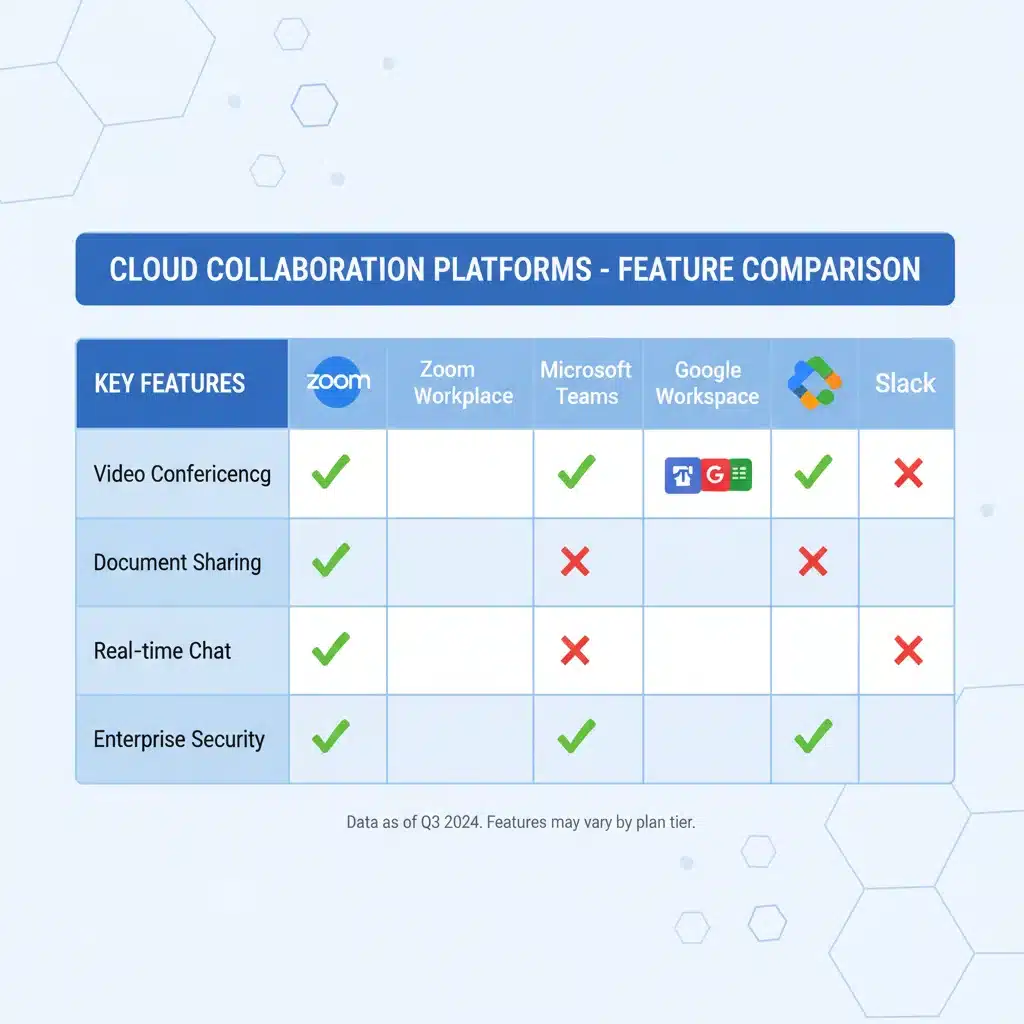
Microsoft 365 continues to dominate the enterprise space, and for good reason. Its suite of cloud collaboration tools, anchored by Microsoft Teams, offers unparalleled integration with other essential business applications like Word, Excel, PowerPoint, and Outlook. For US remote workers, this means a unified ecosystem where communication, document creation, and project management are seamlessly intertwined. Teams excels in video conferencing, chat, and file sharing, while SharePoint provides robust content management and intranet capabilities. OneDrive ensures secure cloud storage and easy file access. The robust security features and compliance certifications make it a top choice for organizations prioritizing data governance. Its continuous updates and AI-powered enhancements further solidify its position at the forefront.
2. Google Workspace (Meet, Drive, Docs, Chat)
Google Workspace (formerly G Suite) remains a strong contender, particularly favored by startups and businesses that prioritize agility and ease of use. Its intuitive interface and real-time collaboration features across Docs, Sheets, and Slides are exceptional. Google Meet provides reliable video conferencing, and Google Chat offers instant messaging. Google Drive’s generous storage and powerful search capabilities are a huge plus for US remote workers needing quick access to shared files. While perhaps not as deeply integrated with legacy enterprise systems as Microsoft 365, its web-first approach and extensive third-party integrations make it incredibly versatile and accessible from any device. Its AI-driven smart features, like intelligent document suggestions, enhance productivity.
3. Slack
Slack has become synonymous with instant communication for many remote teams. Its channel-based messaging system, robust search functionality, and extensive integration library make it an indispensable tool for real-time discussions and information sharing. While not a full-fledged productivity suite like Microsoft 365 or Google Workspace, Slack excels at what it does: facilitating quick, organized, and searchable communication. For US remote workers, Slack reduces email clutter and centralizes conversations, making it easier to stay updated on project progress and team discussions. Its huddle feature and video calls are also gaining traction, offering lightweight alternatives for quick meetings.
4. Zoom
Zoom revolutionized video conferencing and remains a go-to platform for virtual meetings, webinars, and online events. Its reliability, high-quality audio/video, and user-friendly interface have made it a staple for US remote workers. Beyond basic meetings, Zoom offers features like breakout rooms, virtual whiteboards, and robust recording capabilities, making it ideal for interactive collaboration sessions. While primarily a communication tool, its widespread adoption and integration with other collaboration platforms ensure its continued relevance. As hybrid work becomes more prevalent, Zoom’s ability to connect remote and in-office participants seamlessly is a significant advantage.
5. Asana
For project management and task tracking, Asana stands out as a leading cloud collaboration tool. It provides teams with a clear overview of who is doing what by when, preventing miscommunication and ensuring accountability. Its intuitive interface allows for easy creation of tasks, subtasks, deadlines, and dependencies. US remote workers benefit from Asana’s ability to centralize project information, track progress, and facilitate asynchronous collaboration. While it integrates with communication tools like Slack and Microsoft Teams, Asana’s core strength lies in its ability to structure and manage complex projects efficiently, making it an essential tool for project-driven remote teams.
6. Trello
Trello, based on the Kanban board methodology, offers a highly visual and flexible way to manage projects and workflows. Its drag-and-drop interface with cards, lists, and boards makes it incredibly easy to organize tasks, track progress, and collaborate with team members. For smaller teams or projects requiring a less complex management system, Trello is an excellent choice among cloud collaboration tools. US remote workers appreciate its simplicity and adaptability, allowing them to quickly set up and manage various types of projects, from content calendars to software development sprints. Its power-ups extend its functionality, integrating with other popular tools.
7. Dropbox Business
While often seen purely as a cloud storage solution, Dropbox Business has evolved into a powerful cloud collaboration tool, particularly for file sharing and co-editing. Its robust version control, granular sharing permissions, and seamless integration with popular productivity apps (like Microsoft Office and Google Workspace) make it invaluable for US remote workers who frequently deal with large files or require secure document management. Dropbox Paper, its collaborative document editor, offers a lightweight yet effective way for teams to brainstorm, outline, and create content together. For businesses with extensive digital assets, Dropbox Business provides a secure and efficient central repository.
Key Considerations for Adopting Cloud Collaboration Tools
Choosing the right cloud collaboration tools goes beyond just selecting from a list of top performers. Organizations must consider several factors unique to their operations and team dynamics:
- Existing Infrastructure: How well do new tools integrate with your current software stack? Minimizing disruption and ensuring compatibility is key.
- Team Size and Structure: Smaller teams might thrive on simpler tools like Trello, while larger enterprises might require the comprehensive suites of Microsoft 365 or Google Workspace.
- Specific Workflow Needs: Does your team prioritize real-time document editing, intense project management, or primarily communication? Match the tool to your primary needs.
- Budget Constraints: While many tools offer free tiers, advanced features and scalability often come with a cost. Evaluate the ROI carefully.
- Training and Adoption: Even the best tools are useless if employees don’t know how to use them. Plan for adequate training and support to ensure smooth adoption.
- Data Residency and Compliance: For US businesses, understanding where data is stored and ensuring compliance with relevant regulations is paramount.
A thorough assessment of these considerations will help organizations make an informed decision that truly empowers their US remote workers.
The Future of Cloud Collaboration: Trends to Watch
The landscape of cloud collaboration tools is constantly evolving, driven by advancements in AI, increased demand for hybrid work solutions, and a growing focus on digital well-being. Here are some trends to keep an eye on:
AI-Powered Productivity Enhancements
Artificial intelligence is increasingly integrated into collaboration platforms, offering features like intelligent meeting summaries, automated task assignments, predictive analytics for project delays, and personalized recommendations. AI can significantly reduce manual effort and free up remote workers to focus on more strategic tasks.
Enhanced Immersive Experiences
Beyond traditional video conferencing, we’re seeing a rise in more immersive virtual environments, including metaverse-like spaces for meetings and collaboration. While still nascent, these technologies promise to create more engaging and natural interactions for US remote workers, bridging the physical distance more effectively.
Focus on Digital Well-being and Asynchronous Work
Tools are evolving to support asynchronous collaboration more effectively, reducing the pressure of constant real-time availability. Features like improved status indicators, focus modes, and intelligent notification management help combat digital fatigue and promote a healthier work-life balance for remote teams.
Increased Security and Privacy Features
With cyber threats becoming more sophisticated, cloud collaboration tools are continually enhancing their security protocols. Expect to see more advanced end-to-end encryption, zero-trust architectures, and AI-driven threat detection becoming standard features, providing greater peace of mind for US businesses.
Deeper Integrations and Ecosystems
The trend towards creating more cohesive ecosystems will continue, with platforms offering deeper integrations not just with their own suite of tools but also with a wider array of third-party applications. This will enable remote workers to build highly customized and efficient workflows tailored to their specific needs.

Maximizing the Impact of Your Cloud Collaboration Tools
Simply adopting the best cloud collaboration tools is only half the battle. To truly maximize their impact, US remote teams need to implement best practices:
- Establish Clear Guidelines: Define how each tool should be used. For example, clarify when to use chat vs. email, or which platform is for project management vs. casual discussion.
- Provide Continuous Training: Technology evolves, and so should your team’s skills. Regular training ensures everyone is utilizing the tools to their full potential.
- Encourage Feedback: Regularly solicit feedback from your remote workers on what’s working and what’s not. This helps in identifying pain points and making necessary adjustments.
- Foster a Culture of Digital Etiquette: Promote respectful and efficient digital communication to prevent misunderstandings and reduce digital noise.
- Regularly Review and Update: The tech landscape changes rapidly. Periodically review your chosen tools to ensure they still meet your evolving needs and explore new features or alternatives.
By following these best practices, businesses can ensure that their investment in cloud collaboration tools translates into tangible improvements in productivity, communication, and overall remote work success.
Conclusion: Empowering US Remote Workers with the Right Cloud Collaboration Tools
The Q3 2026 update on cloud collaboration tools underscores a clear message: the right technology is indispensable for the success of US remote workers. From comprehensive suites like Microsoft 365 and Google Workspace to specialized platforms like Slack for communication and Asana for project management, each tool offers unique strengths that can cater to diverse organizational needs. The key is to understand your team’s specific requirements, prioritize security and user experience, and embrace the ongoing evolution of these platforms.
As the remote work paradigm continues to mature, the tools that facilitate seamless collaboration will only become more sophisticated and integrated. By strategically selecting and effectively implementing these top-tier cloud collaboration tools, US businesses can empower their remote workforce, enhance operational efficiency, and build a resilient, productive, and connected team, regardless of physical location. Staying informed about the latest trends and continuously optimizing your tech stack will be crucial for maintaining a competitive edge in the dynamic world of remote work.