Insider Report: 6 Emerging Mobile Security Threats to Watch in the U.S. During 2026
Insider Report: 6 Emerging Mobile Security Threats to Watch in the U.S. During 2026
In an increasingly connected world, mobile devices have become indispensable tools for both personal and professional use. From managing finances and communicating with loved ones to conducting critical business operations, smartphones and tablets hold a wealth of sensitive information. This pervasive reliance, however, makes them prime targets for malicious actors. As we look towards 2026, the landscape of mobile security threats is evolving at an alarming pace, demanding proactive measures and a keen understanding of emerging risks. This insider report delves into six significant mobile security threats 2026 that are projected to impact the U.S., offering insights into their nature, potential impact, and strategies for mitigation.
The digital frontier is constantly shifting, and cybercriminals are always seeking new vulnerabilities to exploit. The sophistication of attacks is escalating, moving beyond simple phishing scams to highly targeted, multi-vector assaults. For individuals, businesses, and government entities alike, understanding these future threats is not merely an academic exercise but a critical component of digital resilience. Ignoring these warnings could lead to severe data breaches, financial losses, reputational damage, and even national security risks. Our focus on mobile security threats 2026 is designed to equip you with the knowledge needed to stay one step ahead of these evolving dangers.
The U.S. market, with its high adoption rate of advanced mobile technologies and significant economic footprint, presents a particularly attractive target for cyber adversaries. From state-sponsored groups to independent criminal organizations, the motivation to compromise mobile devices is diverse and powerful. This report aims to shed light on the specific vectors and methodologies that are expected to dominate the threat landscape in the coming year, providing actionable intelligence for cybersecurity professionals, IT managers, and everyday users.
1. AI-Powered Phishing and Social Engineering Campaigns
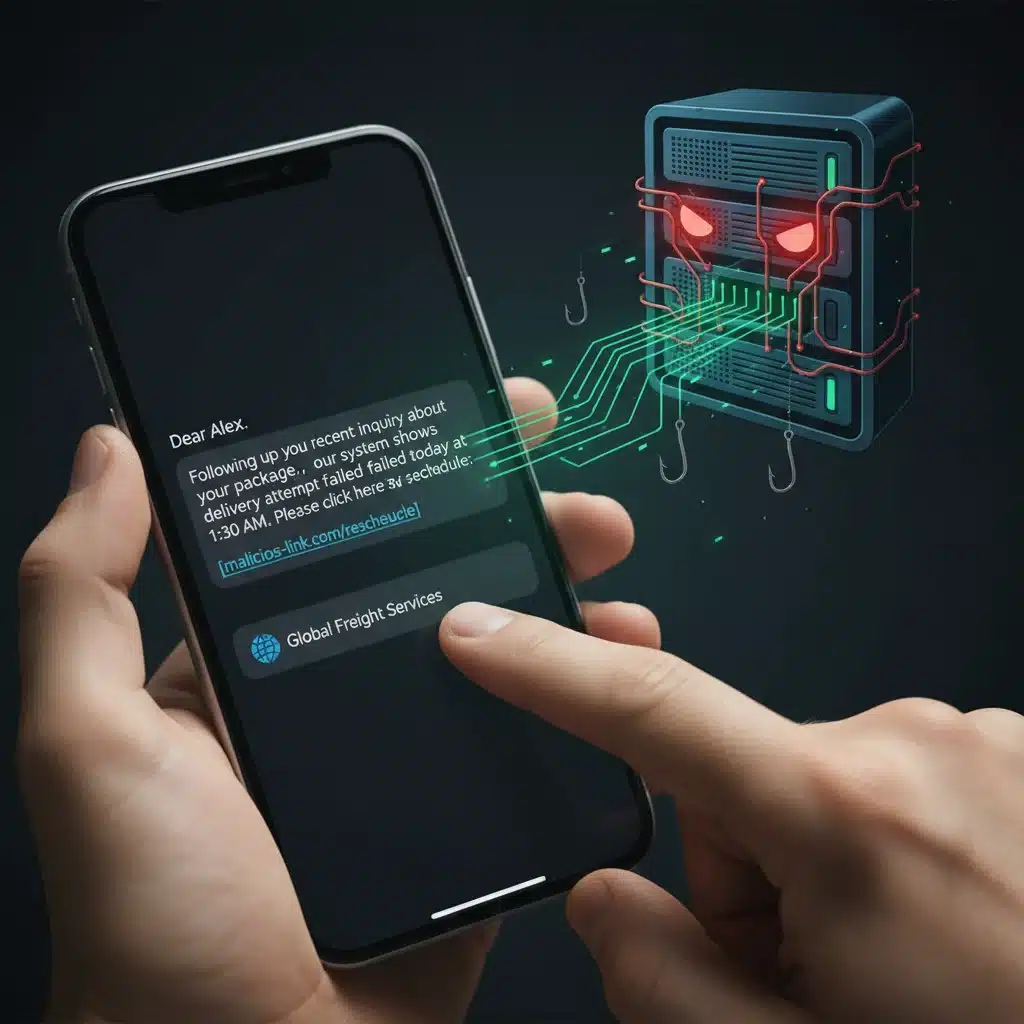
Phishing and social engineering have long been mainstays in the cybercriminal’s arsenal, but their evolution with artificial intelligence (AI) is set to redefine their potency. In 2026, expect to see highly sophisticated, AI-driven phishing campaigns that are virtually indistinguishable from legitimate communications. These attacks will leverage advanced natural language processing (NLP) to craft hyper-personalized messages, mimicking trusted contacts, brands, or even specific individuals within an organization. AI can analyze vast amounts of public and stolen data to understand a target’s communication style, interests, and vulnerabilities, making these attacks incredibly difficult to detect.
The Mechanics of AI-Driven Deception
Instead of generic emails, imagine receiving a text message that perfectly emulates your bank’s tone, referencing a recent transaction you actually made, or a voice call from a deepfake of your CEO requesting urgent action. AI will enable attackers to automate the generation of these highly convincing artifacts at scale, targeting thousands of individuals simultaneously with customized lures. These campaigns will exploit cognitive biases and emotional triggers, making recipients more likely to click malicious links, download infected attachments, or divulge sensitive information. The ability of AI to adapt and learn from interactions will also make these campaigns more resilient to traditional detection methods, constantly refining their approach based on user responses.
Impact and Mitigation Strategies
The primary impact will be an increased rate of successful breaches, leading to data theft, credential compromise, and ransomware infections. For businesses, this translates to significant financial losses, reputational damage, and regulatory penalties. Individuals face identity theft and direct financial fraud. To combat these advanced mobile security threats 2026, organizations must invest in advanced email and message filtering solutions that incorporate AI-driven anomaly detection. User education will become paramount, focusing on critical thinking, recognizing subtle inconsistencies, and verifying requests through alternative, trusted channels. Multi-factor authentication (MFA) will be a crucial barrier against compromised credentials, even if a user falls victim to an AI-powered phishing attempt.
2. Advanced Mobile Malware and Ransomware
Mobile malware and ransomware are far from new, but their sophistication continues to climb. In 2026, we anticipate a surge in polymorphic and evasive mobile malware designed to bypass traditional antivirus solutions. These threats will leverage advanced obfuscation techniques, anti-analysis capabilities, and dynamic code execution to avoid detection. Ransomware, specifically targeting mobile devices, will become more prevalent, locking users out of their phones or encrypting critical data, demanding payment in cryptocurrency.
Evolving Malware Tactics
Future mobile malware will be adept at persistence, embedding itself deep within the operating system or leveraging legitimate app permissions to maintain control even after reboots or app uninstalls. We can also expect an increase in fileless malware, which operates purely in memory, leaving minimal traces on the device’s storage, making forensic analysis exceptionally challenging. These threats will often be distributed through compromised apps, malicious advertisements, or even via vulnerabilities in legitimate app stores. The goal remains the same: unauthorized access to data, surveillance, or financial gain.
Defending Against Sophisticated Mobile Threats
To counter these evolving mobile security threats 2026, robust mobile endpoint detection and response (EDR) solutions will be essential. These tools can monitor device activity, detect anomalous behavior, and respond to threats in real-time. Regular software updates are non-negotiable, as they patch known vulnerabilities that malware often exploits. Users should exercise extreme caution when downloading apps, sticking to official app stores and scrutinizing app permissions. Regular data backups to secure, off-device locations are also critical to mitigate the impact of ransomware. Furthermore, implementing application whitelisting policies in enterprise environments can restrict the execution of unauthorized applications, significantly reducing the attack surface.
3. Exploitation of 5G and IoT Device Vulnerabilities
The widespread rollout of 5G networks and the proliferation of Internet of Things (IoT) devices connected to mobile ecosystems introduce new attack vectors. While 5G promises faster speeds and lower latency, its increased complexity and expanded attack surface present novel security challenges. Similarly, the sheer number and often lax security of IoT devices connected to mobile networks create a fertile ground for exploitation.
The 5G and IoT Security Paradigm
In 2026, attackers will target vulnerabilities in 5G network slicing, which allows for customized network segments, potentially isolating critical services but also creating new points of entry if misconfigured. Edge computing, a core component of 5G, brings data processing closer to the source, but also distributes the attack surface. Furthermore, the vast array of IoT devices – from smart home gadgets to industrial sensors – often lack robust security protocols, making them easy targets for botnets or as entry points into more secure mobile networks. A compromised IoT device connected to a user’s phone via Wi-Fi or Bluetooth could serve as a bridge for attackers to gain access to the mobile device itself, or use the mobile device as a stepping stone to other network resources.
Securing the Interconnected Future
Addressing these mobile security threats 2026 requires a multi-layered approach. For 5G, this involves stringent network security audits, robust authentication mechanisms for network slices, and continuous monitoring for anomalies. For IoT, manufacturers must prioritize security by design, implementing strong default passwords, regular firmware updates, and secure communication protocols. Users and organizations should segment IoT devices onto separate networks, limit their internet access, and regularly assess their security posture. Mobile devices connecting to these networks should employ VPNs, strong firewalls, and regularly scan for compromised IoT devices within their proximity. Education on the risks associated with unsecured IoT devices is also vital for both consumers and businesses.
4. Supply Chain Attacks Targeting Mobile Software and Hardware
The software supply chain has become a major vulnerability, and mobile ecosystems are particularly susceptible. In 2026, we anticipate an increase in sophisticated supply chain attacks that compromise mobile devices even before they reach the end-user, or through updates to legitimate software. This could involve injecting malicious code into operating system components, third-party libraries used by popular apps, or even directly into hardware during manufacturing.
The Insidious Nature of Supply Chain Compromises
Imagine purchasing a new smartphone only to find it secretly pre-loaded with spyware, or a critical operating system update that introduces a backdoor. These scenarios, once considered theoretical, are becoming increasingly feasible. Attackers target weaker links in the supply chain – a small software vendor, a hardware component manufacturer, or even a distribution channel – to inject malicious code or tamper with devices. Once compromised, these elements can propagate malware or backdoors to millions of end-users without their knowledge. The difficulty lies in detecting these compromises, as they often leverage trusted sources, making them appear legitimate.
Strengthening the Mobile Supply Chain
Mitigating these mobile security threats 2026 requires a collective effort from manufacturers, developers, and users. Manufacturers must implement rigorous security audits throughout their supply chain, from component sourcing to final assembly. Developers need to adopt secure coding practices, regularly audit third-party libraries, and implement robust code signing and verification processes. For users and organizations, verifying the authenticity and integrity of software updates, utilizing mobile threat defense (MTD) solutions that can detect tampered apps, and maintaining an inventory of authorized software are crucial. Furthermore, leveraging trusted boot mechanisms and hardware-backed security features can provide a foundational layer of protection against low-level compromises.

5. Exploitation of Biometric Authentication Bypass Vulnerabilities
Biometric authentication (fingerprint, facial recognition, iris scans) has significantly enhanced mobile security, offering a more convenient and often more secure alternative to passwords. However, as these technologies become more prevalent, so does the incentive for attackers to find ways to bypass them. In 2026, we expect to see more sophisticated methods for spoofing or bypassing biometric authentication systems on mobile devices.
The Evolving Threat to Biometrics
While current biometric systems are robust, vulnerabilities can arise from various sources: flaws in the sensor hardware, weaknesses in the software algorithms that process biometric data, or even advanced spoofing techniques. For example, high-resolution 3D printed fingerprints, sophisticated facial masks, or even deepfake technology could be used to trick facial recognition systems. Furthermore, side-channel attacks that exploit residual data or power consumption patterns during biometric verification could potentially reveal biometric templates. The goal of these attacks is to gain unauthorized access to a mobile device, bypassing the user’s primary security measure.
Fortifying Biometric Defenses
To address these mobile security threats 2026, manufacturers must continuously improve the liveness detection capabilities of their biometric sensors, making it harder for spoofing attempts to succeed. Multi-modal biometrics, combining two or more different biometric factors (e.g., fingerprint and facial recognition), can significantly enhance security. Users should also ensure their devices are running the latest software updates, as these often include patches for newly discovered biometric vulnerabilities. It is also wise to maintain a strong, complex PIN or password as a fallback, and to be aware of the physical security of your device. Enterprise environments should consider implementing FIDO (Fast IDentity Online) compliant authentication standards, which offer stronger, phishing-resistant authentication methods.
6. State-Sponsored Mobile Cyber Espionage and Surveillance
The geopolitical landscape continues to be a driving force behind advanced cyber threats. In 2026, state-sponsored actors will intensify their efforts in mobile cyber espionage and surveillance, targeting high-value individuals, government officials, dissidents, and critical infrastructure personnel in the U.S. These sophisticated campaigns will leverage zero-day vulnerabilities, custom malware, and highly stealthy techniques to gain persistent access to mobile devices.
The Covert World of State-Sponsored Attacks
Unlike financially motivated cybercriminals, state-sponsored groups often have vast resources, advanced technical capabilities, and a long-term strategic objective. Their attacks are typically characterized by extreme stealth, persistence, and the ability to adapt to defensive measures. They might deploy sophisticated spyware that can exfiltrate communications, location data, and even activate microphones and cameras remotely without the user’s knowledge. These attacks often originate from highly tailored spear-phishing campaigns or by exploiting vulnerabilities in popular messaging apps or operating systems before patches are available. The goal is intelligence gathering, disruption, or strategic advantage.
Countering Nation-State Threat Actors
Defending against state-sponsored mobile security threats 2026 is exceptionally challenging but not impossible. For high-risk individuals and organizations, rigorous mobile threat defense (MTD) solutions are indispensable, offering advanced anomaly detection and behavioral analysis. Regular security audits of mobile devices, including forensic analysis, can help detect the presence of sophisticated spyware. Strict adherence to security best practices, such as never clicking on suspicious links, using strong and unique passwords, and enabling MFA, becomes even more critical. Furthermore, using secure communication channels, encrypting sensitive data, and being highly skeptical of unsolicited communications are vital. Government agencies and critical infrastructure operators must implement robust mobile device management (MDM) and mobile application management (MAM) policies, coupled with continuous threat intelligence sharing to stay informed about emerging state-sponsored tactics.
The Path Forward: Proactive Security in 2026
The emerging mobile security threats 2026 paint a challenging picture, but they also highlight the urgent need for a proactive and adaptive security posture. Relying on outdated security measures is no longer an option. The convergence of AI, 5G, IoT, and increasingly sophisticated attack methodologies demands a comprehensive and multi-layered defense strategy.
Key Recommendations for Enhanced Mobile Security:
- Continuous User Education: Regular training on identifying phishing, social engineering tactics, and the risks of unsecured apps is paramount. A well-informed user base is the first and most critical line of defense.
- Advanced Mobile Threat Defense (MTD): Implement MTD solutions that offer real-time threat detection, behavioral analysis, and anomaly detection to protect against sophisticated malware and zero-day exploits.
- Strict Software Update Policies: Ensure all mobile devices and applications are consistently updated to the latest versions to patch known vulnerabilities. Automate updates where possible.
- Robust Authentication: Enforce strong, unique passwords and ubiquitous multi-factor authentication (MFA) across all accounts and applications. Explore FIDO standards for enhanced security.
- Secure App Practices: Stick to official app stores, meticulously review app permissions, and uninstall unnecessary applications. For enterprises, implement application whitelisting.
- Network Segmentation and VPNs: Isolate IoT devices on separate network segments. Utilize Virtual Private Networks (VPNs) for secure communication, especially on public Wi-Fi networks.
- Data Backup and Encryption: Regularly back up critical mobile data to secure, off-device locations. Encrypt sensitive data both at rest and in transit.
- Supply Chain Vigilance: Organizations must demand transparency and security assurances from their hardware and software vendors. Implement integrity checks for critical updates.
- Incident Response Planning: Develop and regularly test a comprehensive incident response plan specifically for mobile device compromises. This includes detection, containment, eradication, recovery, and post-incident analysis.
The future of mobile security in the U.S. hinges on our collective ability to anticipate, understand, and adapt to these emerging threats. By embracing advanced security technologies, fostering a culture of cybersecurity awareness, and prioritizing proactive defense strategies, we can safeguard our digital lives and maintain trust in our increasingly mobile-centric world. The battle against mobile security threats 2026 is ongoing, but with informed action, we can build a more resilient and secure digital future.