Voice AI in 2026: NLP Innovations Transforming US Customer Service

Voice AI in 2026: NLP Innovations Transforming US Customer Service
The landscape of customer service is in a constant state of evolution, driven by technological advancements that redefine how businesses interact with their clientele. Among these innovations, Voice AI and Natural Language Processing (NLP) stand out as particularly disruptive forces. As we look towards 2026, the integration of these technologies into US customer service operations is set to reach unprecedented levels, promising a future where interactions are not only more efficient but also profoundly more personalized and empathetic.
For years, the promise of AI in customer service has been a topic of enthusiastic discussion. However, what was once a futuristic dream is rapidly becoming a present-day reality. By 2026, the sophisticated capabilities of Voice AI, powered by cutting-edge NLP, will no longer be a novelty but a fundamental component of competitive customer service strategies across the United States. This comprehensive exploration will delve into the recent updates in NLP, the profound impact of Voice AI on US customer service, and what businesses need to understand to navigate this transformative era successfully.
The Dawn of Hyper-Intelligent Voice AI in Customer Service
The journey of Voice AI from rudimentary voice recognition systems to today’s hyper-intelligent conversational agents has been nothing short of remarkable. Early iterations were often frustrating, struggling with accents, complex queries, and the nuances of human speech. However, the exponential growth in computational power, coupled with breakthroughs in machine learning and deep learning, has propelled Voice AI into a new era. By 2026, these systems will be characterized by their ability to understand, process, and respond to human language with a level of sophistication that was previously unimaginable.
The core of this evolution lies in advanced Natural Language Processing (NLP). NLP is the branch of AI that enables computers to understand, interpret, and generate human language. Recent updates in NLP have focused on several key areas:
- Contextual Understanding: Modern NLP models can now maintain context across extended conversations, remembering previous turns and leveraging that information to provide more relevant responses. This moves beyond simple keyword recognition to a deeper comprehension of the user’s intent and emotional state.
- Sentiment Analysis: The ability to detect and analyze the emotional tone of a customer’s voice and language is becoming increasingly refined. This allows Voice AI to adapt its responses, escalating calls to human agents when frustration is detected or offering more empathetic solutions.
- Speech-to-Text and Text-to-Speech Accuracy: Significant improvements in these areas mean that Voice AI can accurately transcribe spoken words into text and generate natural-sounding speech, reducing misunderstandings and improving the overall user experience.
- Multilingual Capabilities: With a diverse US population, the ability of Voice AI to seamlessly switch between and understand multiple languages is crucial. NLP advancements are making these systems more versatile and inclusive.
- Domain-Specific Knowledge: AI models are now being trained on vast amounts of domain-specific data, allowing them to become experts in particular industries (e.g., healthcare, finance, retail). This specialized knowledge enables them to handle complex inquiries with greater accuracy and efficiency.
These advancements are not just incremental improvements; they represent a paradigm shift in how Voice AI interacts with customers. The goal is no longer just to automate simple tasks but to create a genuinely intelligent and helpful conversational partner.
The Impact on US Customer Service by 2026: A Multifaceted Transformation
The integration of advanced Voice AI in customer service will have a profound and multifaceted impact on US businesses by 2026. This transformation will touch every aspect of the customer journey, from initial contact to post-service follow-up.
Enhanced Customer Experience (CX)
One of the most significant benefits of sophisticated Voice AI is the ability to deliver a superior customer experience. By 2026, customers will increasingly expect instant, personalized, and efficient support. Voice AI can provide this by:
- 24/7 Availability: Voice AI agents can operate around the clock, ensuring customers receive assistance whenever they need it, regardless of time zones or business hours.
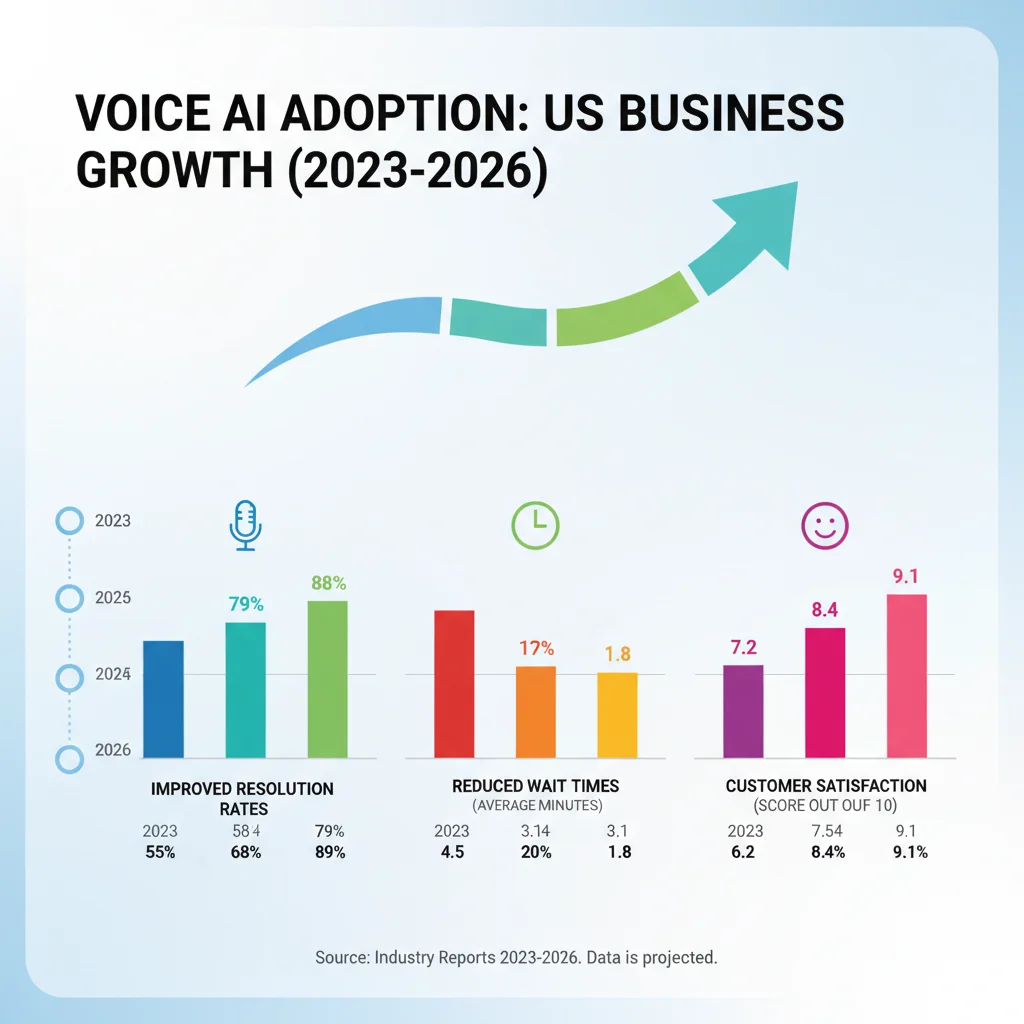
- Reduced Wait Times: By automating routine inquiries and efficiently routing complex ones, Voice AI dramatically reduces the time customers spend waiting for assistance, a major pain point in traditional customer service.
- Personalized Interactions: Leveraging customer data and NLP’s contextual understanding, Voice AI can offer highly personalized recommendations, solutions, and even anticipate customer needs, fostering a sense of being understood and valued.
- Consistent Service Quality: Unlike human agents who can have varying performance levels, Voice AI delivers a consistent quality of service, adhering to predefined protocols and best practices.
- Proactive Engagement: Advanced Voice AI can proactively reach out to customers with relevant information, updates, or offers, transforming customer service from a reactive cost center into a proactive engagement tool.
The result is not just satisfied customers, but loyal advocates who appreciate the seamless and intelligent support they receive.
Operational Efficiency and Cost Reduction
Beyond improving CX, Voice AI offers substantial operational benefits and cost savings for US businesses. By 2026, companies will increasingly rely on Voice AI to optimize their contact center operations:
- Automation of Repetitive Tasks: Voice AI can handle a vast array of common inquiries, such as checking order status, answering FAQs, or updating account information, freeing human agents to focus on more complex and high-value interactions.
- Scalability: Voice AI systems can easily scale up or down to meet fluctuating demand without the need for extensive hiring or training, providing unparalleled flexibility during peak seasons or unexpected events.
- Reduced Training Costs: While human agents require continuous training, Voice AI systems can be updated and retrained with new information much more rapidly and cost-effectively.
- Improved Agent Productivity: When human agents do intervene, Voice AI can provide them with real-time information, customer history, and suggested responses, significantly increasing their efficiency and reducing average handling times.
- Data-Driven Insights: Every interaction with Voice AI generates valuable data. This data can be analyzed to identify trends, pinpoint common customer issues, and uncover areas for service improvement, leading to continuous optimization.
These efficiencies translate directly into significant cost reductions and a more agile, responsive customer service operation.
Empowering Human Agents
Contrary to popular belief, the rise of Voice AI does not necessarily mean the obsolescence of human customer service agents. Instead, by 2026, Voice AI will increasingly serve as a powerful tool to empower and augment human capabilities.
- Focus on Complex Issues: With Voice AI handling routine tasks, human agents can dedicate their expertise to resolving intricate, emotionally charged, or unique customer problems that require human empathy and nuanced decision-making.
- Real-time Assistance: Voice AI can act as an intelligent assistant for human agents, providing real-time information, suggesting solutions, and even drafting responses during live calls, enhancing agent confidence and effectiveness.
- Reduced Burnout: By offloading monotonous and repetitive tasks, Voice AI helps reduce agent burnout and stress, leading to higher job satisfaction and lower turnover rates.
- Skill Development: Agents can focus on developing advanced problem-solving, communication, and emotional intelligence skills, transforming their roles from order-takers to trusted advisors.
- Seamless Handoffs: When a call needs to be escalated from Voice AI to a human agent, advanced NLP ensures that the agent receives a complete and accurate summary of the conversation history, eliminating the need for customers to repeat themselves.
This collaborative model, often referred to as ‘augmented intelligence,’ leverages the strengths of both AI and humans to deliver unparalleled service.
Key Trends Driving Voice AI Adoption in the US by 2026
Several overarching trends are accelerating the adoption and sophistication of Voice AI Customer Service in the US market:
The Rise of Conversational Commerce
Customers are increasingly comfortable interacting with brands through conversational interfaces, whether it’s for purchasing, seeking information, or resolving issues. Voice AI is a natural fit for this trend, enabling frictionless transactions and support through spoken commands.
Demand for Instant Gratification
In an always-on world, patience is a dwindling commodity. Customers expect immediate answers and resolutions. Voice AI’s ability to provide instant, 24/7 support directly addresses this growing demand, setting a new standard for service speed.
Personalization as a Competitive Differentiator
Generic, one-size-fits-all service is no longer acceptable. Businesses are realizing that personalization is key to customer loyalty. Advanced NLP allows Voice AI to tailor interactions based on individual customer history, preferences, and real-time context, making each interaction feel unique and relevant.
Data Security and Privacy Enhancements
As Voice AI becomes more prevalent, concerns about data security and privacy are also rising. By 2026, significant advancements in secure data handling, anonymization, and ethical AI practices will be crucial. Companies implementing Voice AI will prioritize robust security measures to build customer trust and comply with evolving regulations like CCPA and potential federal privacy laws.
Integration with Omnichannel Strategies
Voice AI will not operate in a silo. By 2026, it will be seamlessly integrated into broader omnichannel customer service strategies, allowing customers to switch between voice, chat, email, and social media channels without losing context. This unified experience is critical for modern customer journeys.
Challenges and Considerations for Voice AI Implementation
Despite the immense potential, the implementation of Voice AI Customer Service is not without its challenges. Businesses looking to leverage this technology by 2026 must consider:
Data Quality and Availability
The effectiveness of Voice AI heavily relies on the quality and quantity of training data. Insufficient or biased data can lead to inaccurate responses and poor customer experiences. Businesses must invest in collecting, cleaning, and labeling vast datasets relevant to their specific domain.
Integration with Existing Systems
Seamless integration with CRM systems, knowledge bases, and other enterprise software is crucial for Voice AI to be truly effective. This can be a complex technical undertaking, requiring careful planning and robust API development.
Maintaining the Human Touch
While Voice AI can handle many interactions, there will always be situations that require human empathy, creativity, and nuanced problem-solving. Businesses must strike the right balance between automation and human intervention, ensuring that customers can easily escalate to a human agent when needed.
Ethical AI and Bias Mitigation
AI systems, including Voice AI, can inadvertently perpetuate biases present in their training data. Ensuring fairness, transparency, and accountability in AI decision-making is paramount. Regular auditing and ethical guidelines will be essential to prevent discriminatory outcomes.
Continuous Improvement and Adaptation
Voice AI is not a set-it-and-forget-it solution. It requires continuous monitoring, optimization, and retraining to adapt to evolving customer needs, language patterns, and business offerings. This ongoing investment is crucial for long-term success.

Future Predictions: Beyond 2026 for Voice AI in US Customer Service
Looking beyond 2026, the evolution of Voice AI Customer Service promises even more transformative advancements:
- Emotional AI and Empathy: Future Voice AI systems will not only detect emotions but will also be able to respond with a greater degree of simulated empathy, making interactions feel more natural and supportive.
- Proactive Problem Solving: Voice AI will move beyond reactive problem solving to proactively identify potential issues based on customer data and external factors, offering solutions before customers even realize they have a problem.
- Hyper-Personalization and Predictive Analytics: Leveraging even more sophisticated data analysis, Voice AI will offer truly hyper-personalized experiences, predicting customer needs and preferences with uncanny accuracy and delivering highly tailored service.
- Advanced Biometric Authentication: Voice biometrics will become a standard for secure and seamless customer authentication, eliminating the need for passwords and cumbersome verification processes.
- Sentient AI Assistants: While still a distant concept, the long-term vision includes Voice AI systems that exhibit a form of ‘sentience’ or at least a highly advanced level of understanding and independent problem-solving, blurring the lines between human and AI interaction.
These predictions highlight a future where Voice AI is not just a tool but an integral, intelligent partner in delivering exceptional customer experiences.
Implementing Voice AI: A Strategic Roadmap for US Businesses
For US businesses aiming to lead in customer service by 2026, a strategic roadmap for adopting Voice AI Customer Service is essential. Here are key steps:
- Define Clear Objectives: Start by identifying specific pain points in your current customer service and setting clear, measurable goals for what Voice AI should achieve (e.g., reduce wait times by X%, improve CSAT scores by Y%).
- Pilot Programs: Begin with pilot programs in specific areas or for particular use cases. This allows for testing, learning, and refining the Voice AI solution before a full-scale deployment.
- Invest in Data Infrastructure: Ensure you have robust data collection, storage, and processing capabilities. High-quality, relevant data is the lifeblood of effective Voice AI.
- Choose the Right Technology Partner: Select a Voice AI vendor with proven expertise, scalability, and a strong track record in your industry. Consider their NLP capabilities, integration options, and ongoing support.
- Train and Empower Your Team: Prepare your human agents for the transition. Provide comprehensive training on how to work alongside Voice AI, focusing on developing skills for complex problem-solving and empathetic interactions.
- Iterate and Optimize: Voice AI is an iterative process. Continuously monitor performance metrics, gather customer feedback, and use insights to refine and improve the AI models and conversational flows.
- Prioritize Security and Ethics: Build security and ethical considerations into every stage of development and deployment. Ensure compliance with data privacy regulations and establish guidelines for responsible AI use.
By following a structured approach, businesses can effectively harness the power of Voice AI to transform their customer service operations and gain a significant competitive advantage.
Conclusion: The Intelligent Voice of Future Customer Service
The year 2026 marks a pivotal moment for Voice AI Customer Service in the United States. Driven by rapid advancements in Natural Language Processing, Voice AI is evolving from a supplementary tool to an indispensable component of modern customer service strategies. Its ability to deliver instant, personalized, and efficient support is reshaping customer expectations and operational paradigms.
Businesses that embrace these innovations will not only enhance customer satisfaction and loyalty but also unlock unprecedented levels of operational efficiency and cost savings. The future of customer service is conversational, intelligent, and deeply integrated with AI. By understanding the recent updates, anticipating future trends, and strategically implementing Voice AI, US businesses can ensure they are well-prepared to meet the demands of an increasingly digital and voice-centric customer landscape.
The intelligent voice of the future is here, and it’s ready to transform how we connect with customers, creating more meaningful and effective interactions than ever before.