Blockchain Beyond Crypto: Enterprise Applications US 2027

In recent years, the term ‘blockchain’ has become almost synonymous with cryptocurrencies like Bitcoin and Ethereum. However, to confine blockchain technology solely to the realm of digital currencies is to overlook its true transformative potential. Far from being a niche financial tool, blockchain is rapidly evolving into a foundational technology poised to revolutionize various industries. As we look towards 2027, the United States is emerging as a hotbed for the adoption and innovation of enterprise blockchain applications, moving well beyond its crypto origins to deliver tangible business value. This shift signifies a maturation of the technology, as businesses recognize its inherent capabilities in enhancing security, transparency, efficiency, and trust across complex operations.
The initial hype surrounding blockchain was often intertwined with speculative financial ventures, which, while capturing public attention, sometimes obscured the underlying technological advancements. Now, a more pragmatic approach is taking hold, with enterprises focusing on specific pain points that blockchain can uniquely address. From optimizing convoluted supply chains to securing sensitive healthcare data, and from streamlining financial transactions to empowering robust digital identity solutions, the versatility of blockchain is proving to be a game-changer. The US market, characterized by its innovation-driven economy and a strong appetite for technological disruption, is particularly fertile ground for these developments.
Understanding these emerging trends is crucial for businesses, investors, and technologists alike. The landscape of enterprise blockchain applications is dynamic, with new use cases and platforms continually emerging. This article aims to cut through the noise, identifying the four most significant enterprise blockchain applications that are not just theoretical concepts but are actively gaining substantial traction and are projected to see widespread adoption across various sectors in the United States by 2027. We will delve into how these applications are fundamentally reshaping industries, offering unprecedented levels of security, efficiency, and trust, and ultimately driving a new era of digital transformation.
1. Revolutionizing Supply Chain Management with Enterprise Blockchain Applications
The global supply chain is a labyrinthine network of manufacturers, suppliers, logistics providers, and retailers. It is notorious for its opaqueness, inefficiencies, and susceptibility to fraud. Consumers demand greater transparency regarding product origins, ethical sourcing, and environmental impact, while businesses struggle with fragmented data, slow dispute resolution, and the high cost of manual reconciliation. This is where enterprise blockchain applications are stepping in to offer a transformative solution, particularly within the US market.
Blockchain’s inherent characteristics – immutability, transparency, and decentralization – make it an ideal technology for supply chain management. By creating a shared, unchangeable ledger, all participants in a supply chain can access the same real-time information about a product’s journey from its origin to the end consumer. This eliminates information silos and reduces the need for intermediaries, fostering greater trust and collaboration among disparate entities.
Enhanced Traceability and Transparency
One of the most immediate and impactful benefits of blockchain in supply chains is enhanced traceability. Imagine a scenario where a consumer can scan a QR code on a product and instantly access its entire history: where it was manufactured, the raw materials used, its journey through various logistics hubs, and even certifications of ethical production. This level of transparency is becoming increasingly vital, especially in industries like food and pharmaceuticals, where product authenticity and safety are paramount. In the US, regulatory bodies and consumer advocacy groups are pushing for greater visibility, making blockchain a crucial tool for compliance and brand reputation.
For businesses, this means being able to pinpoint the exact origin of a contaminated batch of food, for example, within minutes, rather than days or weeks. This drastically reduces recall costs, minimizes public health risks, and protects brand integrity. Companies like IBM Food Trust, built on blockchain technology, are already demonstrating these capabilities, connecting farmers, processors, wholesalers, distributors, and retailers on a single, secure network.
Improved Efficiency and Reduced Costs
Beyond transparency, enterprise blockchain applications streamline numerous operational processes. Smart contracts, self-executing agreements whose terms are directly written into code, can automate payments, customs clearances, and quality checks. This automation reduces administrative overhead, minimizes human error, and accelerates transaction times. Manual paperwork and reconciliation processes, which are significant time and cost sinks in traditional supply chains, can be largely eliminated.
Furthermore, blockchain can facilitate better inventory management by providing real-time data on stock levels and movement. This allows companies to optimize warehousing, reduce waste, and improve forecasting. The ability to track assets digitally and securely also helps in preventing counterfeiting, a multi-billion-dollar problem that plagues many industries. By 2027, the adoption of blockchain in US supply chains is expected to lead to significant cost savings and a substantial boost in operational efficiency across sectors ranging from automotive to luxury goods.
Building Trust and Collaboration
Perhaps one of the most understated benefits of blockchain in supply chain management is its ability to foster trust among participants who may not otherwise have a direct relationship. The immutable ledger acts as a neutral, verifiable source of truth, reducing disputes and improving collaboration. This is particularly important in complex global supply chains involving numerous partners across different jurisdictions. The US market, with its extensive network of domestic and international trade, stands to gain immensely from this enhanced trust framework provided by enterprise blockchain applications.

2. Enhancing Healthcare Data Security and Interoperability
The healthcare industry in the US grapples with immense challenges related to data security, patient privacy, and interoperability. Electronic Health Records (EHRs) are often fragmented across different providers, making it difficult to share vital patient information securely and efficiently. This lack of seamless data exchange can lead to medical errors, redundant tests, and delays in treatment. Enterprise blockchain applications are emerging as a powerful solution to these long-standing problems, promising a more secure, patient-centric, and efficient healthcare ecosystem by 2027.
Unprecedented Data Security and Privacy
Patient health information (PHI) is among the most sensitive data, making it a prime target for cyberattacks. Blockchain’s cryptographic security and decentralized nature offer a robust defense against data breaches. Instead of storing all patient data in a single, vulnerable central server, blockchain can create a distributed ledger where data is encrypted and distributed across multiple nodes. This makes it significantly harder for malicious actors to compromise the entire system.
Crucially, blockchain enables a patient-centric model where individuals have greater control over their own health data. Patients can grant or revoke access to their medical records to specific doctors, hospitals, or researchers using private keys. This granular control not only enhances privacy but also empowers patients, moving away from a system where their data is often held hostage by various providers. Compliance with regulations like HIPAA in the US can be significantly strengthened through blockchain’s audit trails and secure data handling capabilities.
Seamless Interoperability and Data Exchange
The lack of interoperability between different healthcare systems is a major hurdle, costing the US healthcare system billions annually. Blockchain can act as a foundational layer to connect disparate EHR systems, creating a secure and standardized way to share patient information. While blockchain itself may not store the voluminous medical records directly (due to scalability concerns), it can store encrypted hashes or pointers to these records, along with access permissions.
This allows authorized healthcare providers to access a patient’s complete medical history – including diagnoses, medications, allergies, and treatment plans – regardless of where that information was initially recorded. This seamless exchange of information can lead to more accurate diagnoses, better coordinated care, and a reduction in medical errors. For emergency situations, having instant access to a patient’s critical medical history can be life-saving. By 2027, we anticipate a significant push towards blockchain-enabled health information exchanges in the US.
Streamlining Research and Clinical Trials
Blockchain also holds immense promise for medical research and clinical trials. The integrity and traceability of data are paramount in these fields. Blockchain can provide an immutable record of research data, ensuring its authenticity and preventing tampering. It can also facilitate secure data sharing among researchers, accelerating the pace of discovery while maintaining patient privacy through anonymization and consent mechanisms.
For clinical trials, blockchain can track patient consent, drug provenance, and trial results with unparalleled transparency and security, reducing fraud and ensuring regulatory compliance. This could significantly cut down the time and cost associated with bringing new drugs and treatments to market, benefiting patients across the US.
3. Transforming Financial Services: Beyond Cryptocurrencies
While blockchain’s origins are deeply rooted in financial services through cryptocurrencies, its enterprise applications extend far beyond speculative trading. The traditional financial system is burdened by slow transaction speeds, high intermediary costs, and complex reconciliation processes. Enterprise blockchain applications are poised to fundamentally transform banking, payments, and asset management in the US by 2027, offering unprecedented efficiency, security, and accessibility.
Faster and Cheaper Cross-Border Payments
International remittances and cross-border payments are notoriously slow and expensive due to multiple intermediaries and varying regulatory frameworks. Blockchain-based payment systems can bypass these traditional channels, enabling near-instantaneous and significantly cheaper transactions. By eliminating correspondent banks and reducing settlement times from days to minutes or even seconds, businesses and individuals can move funds across borders with greater ease and lower fees.
Companies like Ripple, for instance, are already leveraging blockchain technology to facilitate real-time gross settlement systems, currency exchange, and remittance networks for financial institutions. The US, as a major global financial hub, stands to benefit enormously from these efficiencies, enhancing its competitiveness in international trade and finance.
Streamlining Trade Finance and Supply Chain Finance
Trade finance, which involves financing international trade and commerce, is another area ripe for blockchain disruption. The process often involves numerous documents, multiple parties, and significant risks. Blockchain can digitize and secure trade documents, such as bills of lading and letters of credit, creating an immutable audit trail and reducing the risk of fraud. Smart contracts can automate the release of funds upon the fulfillment of specific conditions, greatly accelerating the trade finance cycle.
Similarly, supply chain finance, where suppliers can get early payment on their invoices, can be made more efficient and accessible through blockchain. By providing transparent and verifiable transaction histories, small and medium-sized enterprises (SMEs) can gain better access to financing, as lenders have greater confidence in the underlying transactions. This can unlock significant capital and foster economic growth across the US.
Asset Tokenization and Digital Securities
One of the most profound impacts of blockchain on financial services is the tokenization of assets. This involves representing real-world assets – such as real estate, fine art, or even illiquid private equity – as digital tokens on a blockchain. These tokens can then be fractionalized, traded, and managed with far greater efficiency and liquidity than traditional assets.
Tokenization democratizes investment opportunities by allowing smaller investors to own a fraction of high-value assets. It also enables 24/7 trading, reduces settlement times from days to minutes (T+0 settlement), and lowers transaction costs. The nascent but rapidly growing field of digital securities, underpinned by enterprise blockchain applications, is expected to reshape capital markets in the US, providing more efficient ways to raise capital and manage investments. Regulatory clarity is still evolving, but the potential for innovation is immense.
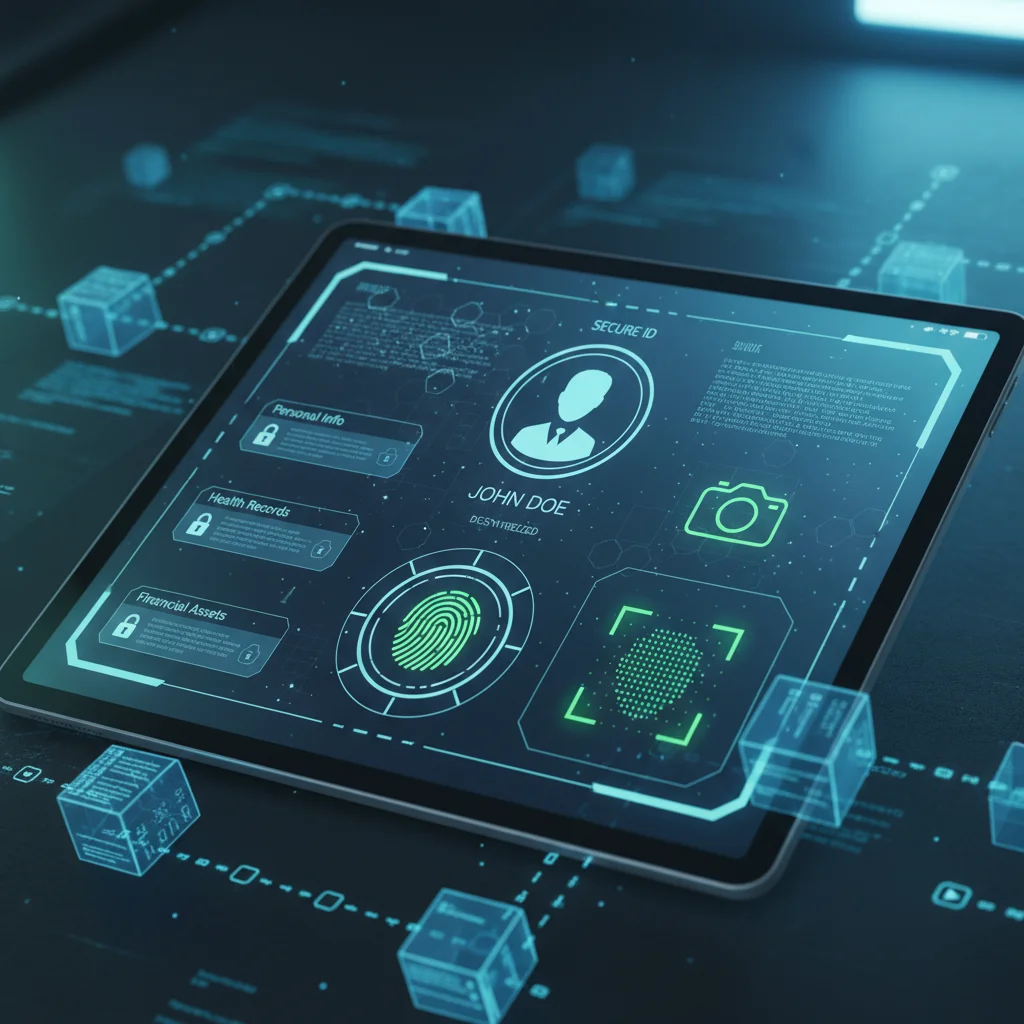
4. Secure and Verifiable Digital Identity Management
In an increasingly digital world, managing and verifying identity is a growing challenge. Traditional identity systems are often centralized, vulnerable to breaches, and cumbersome for individuals to manage. From online logins to government services and healthcare access, the need for a secure, private, and user-controlled digital identity solution is paramount. Enterprise blockchain applications are offering a groundbreaking approach to digital identity management, which is gaining significant traction in the US for its potential to enhance security, privacy, and user empowerment by 2027.
Self-Sovereign Identity (SSI) Principles
Blockchain-based digital identity is often built on the principles of Self-Sovereign Identity (SSI). This model dictates that individuals should have ultimate control over their digital identities and personal data. Instead of relying on a single, centralized authority (like a government or a social media company) to manage their identity, individuals can store their verifiable credentials (e.g., driver’s license, academic degrees, professional certifications) on a blockchain. They then selectively disclose specific pieces of information to service providers, without revealing their entire identity.
For example, if an individual needs to prove they are over 21 for an online purchase, they can use a blockchain-verified credential to confirm their age without revealing their date of birth, name, or address. This minimizes the amount of personal data shared, significantly reducing the risk of identity theft and enhancing privacy. The US market, with its strong focus on individual privacy and data protection, is particularly receptive to SSI solutions.
Enhanced Security and Fraud Prevention
Traditional identity systems are prone to single points of failure, making them attractive targets for hackers. A breach in a centralized database can expose millions of identities. Blockchain, with its distributed and cryptographic nature, inherently offers a higher level of security. Identity credentials stored on a blockchain are encrypted and immutably recorded, making them incredibly difficult to alter or forge.
This enhanced security has profound implications for fraud prevention across various sectors. From financial institutions onboarding new customers (Know Your Customer – KYC) to government agencies issuing digital licenses, blockchain can provide a tamper-proof method of verifying identities. This reduces the costs associated with fraud and compliance, while simultaneously increasing trust in digital interactions. The US government and private sector are actively exploring these applications to bolster national security and consumer protection.
Streamlining Onboarding and Compliance
For businesses, particularly in regulated industries, customer onboarding and compliance processes (like KYC and Anti-Money Laundering – AML) are often time-consuming, expensive, and frustrating for customers. Blockchain-based digital identity can significantly streamline these processes. Once a user’s identity is verified and recorded on a blockchain, they can reuse those verified credentials across multiple service providers, eliminating the need for repeated submissions of documents and lengthy verification checks.
This ‘one-and-done’ approach not only improves the customer experience but also reduces operational costs for businesses. Furthermore, the immutable audit trail provided by blockchain simplifies regulatory reporting and demonstrates compliance with greater ease. By 2027, the adoption of blockchain for digital identity is expected to create a more efficient, secure, and user-friendly ecosystem for identity verification in the US, impacting everything from banking to online services and travel.
The Future Landscape of Enterprise Blockchain in the US
The journey of blockchain technology from a niche application for cryptocurrencies to a powerful tool for enterprise solutions has been rapid and remarkable. As we approach 2027, the US market is at the forefront of this evolution, driven by a combination of technological innovation, increasing regulatory clarity, and a growing recognition of blockchain’s inherent advantages. The four enterprise blockchain applications discussed – supply chain management, healthcare data security and interoperability, financial services transformation, and secure digital identity management – represent just the tip of the iceberg of what’s possible.
Several factors are contributing to this accelerated adoption. Firstly, the maturity of blockchain platforms, moving beyond experimental stages to robust, scalable, and enterprise-grade solutions, is critical. Companies like Hyperledger Fabric, R3 Corda, and Ethereum Enterprise Alliance are providing the foundational infrastructure for these applications. Secondly, increased investment from venture capitalists and corporate giants signals strong confidence in the technology’s long-term viability. Major corporations are not just experimenting but actively deploying blockchain solutions in their core operations.
Thirdly, a clearer regulatory environment, while still evolving, is providing more certainty for businesses looking to integrate blockchain. As policymakers in the US gain a deeper understanding of the technology, they are developing frameworks that encourage innovation while mitigating risks. This balance is crucial for widespread adoption. Finally, the growing demand from consumers and businesses for greater transparency, security, and efficiency is a powerful driver. In an age of pervasive data breaches and complex global networks, blockchain offers a compelling answer to many modern challenges.
However, challenges remain. Scalability, interoperability between different blockchain networks, and the need for a skilled workforce to develop and manage these systems are ongoing hurdles. Yet, the pace of innovation suggests that these challenges are being addressed with increasing effectiveness. The collaborative nature of the blockchain community, coupled with significant research and development efforts, promises continuous improvements.
In conclusion, the narrative around blockchain in the US is shifting decisively from speculative crypto assets to practical, value-driven enterprise solutions. By 2027, these enterprise blockchain applications will not just be buzzwords but integral components of the digital infrastructure across various industries. Businesses that embrace this transformation early will be better positioned to reap the benefits of enhanced security, efficiency, and trust, ultimately shaping the future of commerce and interaction in the digital age.