Sustainable Tech 2026: US Companies Reduce E-Waste by 20% with New Approaches

The year is 2026, and a significant shift is underway in the American technology landscape. A remarkable achievement has been recorded: US companies have collectively reduced electronic waste (e-waste) by an impressive 20%. This isn’t a mere statistical anomaly; it’s the culmination of years of dedicated effort, innovative thinking, and a fundamental re-evaluation of how technology is designed, produced, consumed, and discarded. The driving force behind this success is a widespread adoption of sustainable tech e-waste practices, moving beyond mere recycling to embrace a holistic circular economy approach.
E-waste has long been a burgeoning global crisis. Mountains of discarded electronics, laden with toxic chemicals and valuable rare earth minerals, have polluted ecosystems and presented significant health risks. The rapid pace of technological innovation, coupled with a culture of planned obsolescence and fast consumption, has only exacerbated the problem. However, the tide is turning. By 2026, US companies, spurred by consumer demand, regulatory pressures, and a growing sense of corporate responsibility, have demonstrated that a significant reduction in e-waste is not only possible but economically viable.
The Genesis of a Movement: Why Sustainable Tech E-Waste Became a Priority
The journey to a 20% reduction in e-waste didn’t happen overnight. It was a gradual evolution, propelled by several key factors:
- Mounting Environmental Pressure: The visible impacts of e-waste landfills, both domestically and internationally, became undeniable. Public awareness campaigns, documentaries, and scientific reports highlighted the environmental degradation and health hazards associated with improper e-waste disposal.
- Resource Scarcity and Economic Imperative: The realization that critical raw materials, such as cobalt, lithium, and rare earth elements, are finite and often sourced from conflict zones, pushed companies to seek alternatives. Recycling and reusing these materials became an economic necessity, reducing reliance on volatile supply chains.
- Evolving Consumer Expectations: Today’s consumers are more environmentally conscious than ever before. Studies showed a significant preference for brands demonstrating genuine commitment to sustainability. This translated into purchasing decisions, forcing companies to adapt or risk losing market share.
- Regulatory Frameworks and Incentives: Government bodies, both federal and state, began implementing stricter e-waste regulations, extended producer responsibility (EPR) schemes, and offering incentives for sustainable practices. These policies provided a crucial push for companies to invest in green technologies and processes.
- Technological Advancements: Breakthroughs in material science, recycling technologies, and modular design made sustainable tech e-waste solutions more feasible and cost-effective.
These factors converged to create a fertile ground for the sustainable tech e-waste movement, transforming it from a niche concern into a mainstream business imperative.
Pillars of Progress: Key Approaches Driving E-Waste Reduction
The 20% reduction in e-waste by US companies is attributable to a multi-pronged approach, encompassing design, production, consumption, and end-of-life management. Here are the core strategies that have proven most effective:
1. Design for Longevity and Repairability
One of the most impactful changes has been a fundamental shift in product design philosophy. Gone are the days of sealed units and proprietary components designed to make repairs difficult or impossible. By 2026, leading US tech companies are embracing:
- Modular Design: Products are now engineered with easily replaceable components. Think of a smartphone where the battery, screen, and camera can be swapped out with minimal technical skill, extending the device’s lifespan significantly. This reduces the need to replace an entire device for a single faulty part.
- Durable Materials: Investment in more robust, higher-quality materials that can withstand wear and tear, reducing the frequency of replacements. This includes scratch-resistant screens, stronger casings, and more resilient internal components.
- Standardized Parts: A push towards industry-wide standardization of certain components, making it easier for third-party repair services and consumers to find compatible replacement parts.
- Access to Repair Manuals and Tools: Companies are providing comprehensive repair manuals, diagnostic tools, and even spare parts directly to consumers and independent repair shops, empowering a ‘right to repair’ movement.
This focus on longevity and repairability directly combats planned obsolescence, a major contributor to e-waste. By making products last longer and easier to fix, the overall volume of discarded electronics naturally decreases.
2. The Rise of the Circular Economy Model
Beyond design, the adoption of circular economy principles has been pivotal for sustainable tech e-waste reduction. This model aims to keep resources in use for as long as possible, extract the maximum value from them whilst in use, then recover and regenerate products and materials at the end of each service life.
- Product-as-a-Service (PaaS): Instead of selling devices, many companies now offer them as a service. This model encourages manufacturers to design for durability and ease of repair, as they retain ownership of the product and are responsible for its maintenance and end-of-life management. Examples include leased electronics for businesses or subscription-based personal devices.
- Take-Back Programs and Reverse Logistics: Robust and accessible take-back programs are now commonplace. Consumers can easily return old devices to manufacturers or retailers, who then take responsibility for refurbishment, recycling, or safe disposal. Advanced reverse logistics systems efficiently collect, sort, and process these returned items.
- Refurbishment and Resale: A thriving market for refurbished electronics has emerged. Companies are investing in facilities to professionally refurbish used devices, bringing them back to near-new condition and reselling them at a lower price point, making technology more accessible and extending product life cycles.
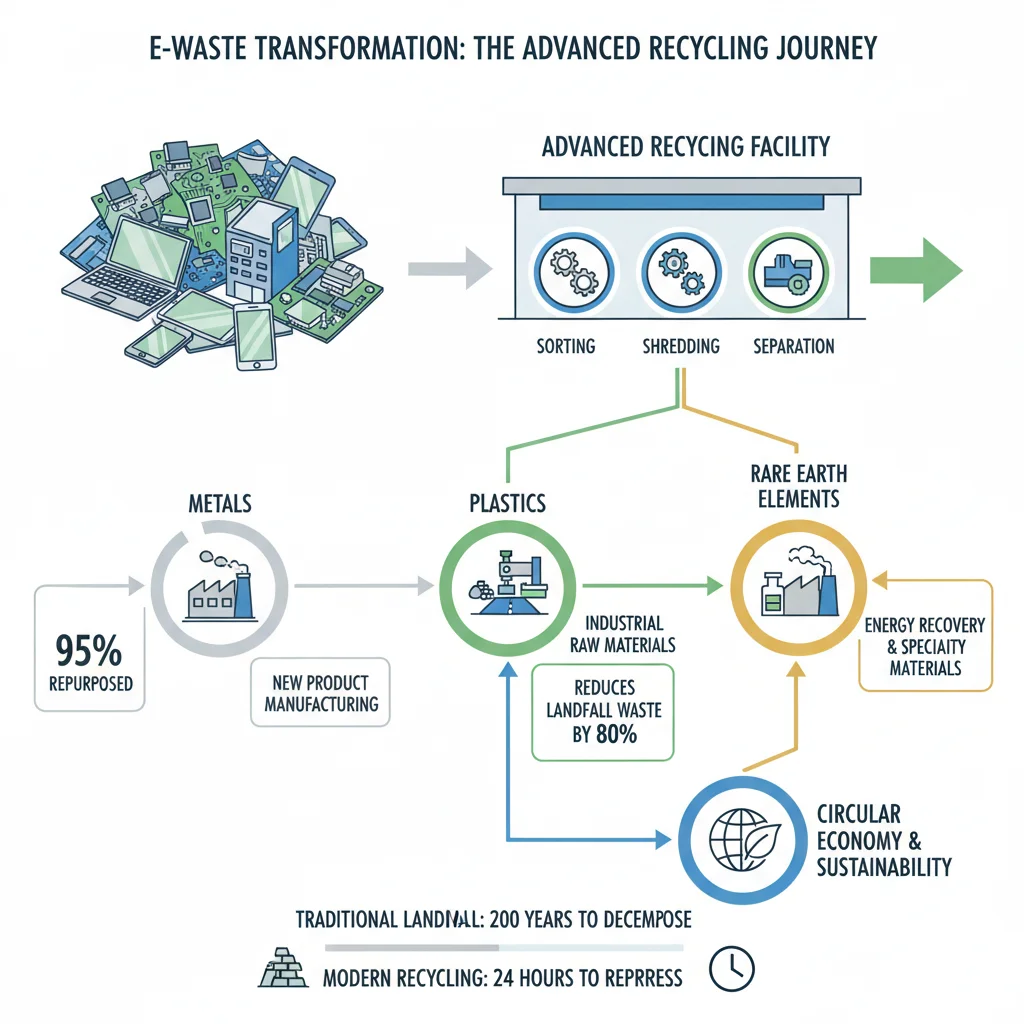
- Material Recovery and Recycling Innovation: While recycling has always been part of the solution, 2026 sees vastly improved technologies. Advanced sorting, shredding, and material separation techniques allow for higher purity recovery of valuable metals, plastics, and rare earths. This reduces the need for virgin materials and minimizes hazardous waste.

3. Sustainable Manufacturing and Supply Chains
The impact of sustainable tech e-waste initiatives extends upstream into manufacturing processes and supply chains:
- Eco-Friendly Materials: Increased use of recycled plastics, bio-based polymers, and sustainably sourced metals in new product manufacturing. Research and development into novel, biodegradable materials are also gaining traction.
- Reduced Hazardous Substances: Companies are actively eliminating or significantly reducing the use of hazardous materials (e.g., lead, mercury, cadmium) in their products, making end-of-life processing safer and less environmentally damaging.
- Energy-Efficient Production: Manufacturing facilities are adopting renewable energy sources and more energy-efficient processes, reducing the overall carbon footprint of electronic device production.
- Transparent Supply Chains: Greater transparency in supply chains ensures ethical sourcing of raw materials and responsible labor practices, aligning with broader sustainability goals.
The Role of Policy and Collaboration
While corporate initiatives are crucial, the 20% reduction wouldn’t have been possible without supportive policy frameworks and collaborative efforts:
- Extended Producer Responsibility (EPR) Laws: Many states have implemented or strengthened EPR laws, holding manufacturers responsible for the entire life cycle of their products, from design to end-of-life management. This financial and logistical responsibility incentivizes sustainable design and robust take-back programs.
- Federal Incentives and Grants: Government programs offer tax breaks, grants, and subsidies to companies investing in e-waste reduction technologies, circular economy models, and sustainable manufacturing practices.
- International Cooperation: Collaboration with international bodies and other nations has helped standardize e-waste management practices and combat illegal e-waste dumping.
- Industry Alliances and Partnerships: Tech giants, startups, and recycling firms are forming alliances to share best practices, develop common standards, and invest in joint research and development for sustainable tech e-waste solutions.
- Consumer Education: Public awareness campaigns, often government-backed or industry-led, educate consumers on the importance of responsible e-waste disposal, the benefits of repair, and how to participate in take-back programs.
Case Studies in Sustainable Tech E-Waste Success
Several US companies stand out as pioneers in this sustainable tech e-waste revolution:
- "Eco-Gadget Inc." (Fictional Example): This mid-sized electronics manufacturer completely redesigned its product line by 2024 to be 90% modular. Their ‘Gadget-as-a-Service’ model, where customers lease devices, includes free repairs and upgrades, significantly extending product life. Their take-back program boasts a 95% recovery rate, with materials fed back into their production cycle.
- "Circuit Solutions Corp." (Fictional Example): Specializing in enterprise IT equipment, Circuit Solutions shifted its focus to providing refurbished servers and networking gear, backed by extensive warranties. Their advanced diagnostics and repair centers have saved thousands of tons of equipment from landfills, offering businesses a cost-effective and sustainable alternative to new purchases.
- "GreenCycle Technologies" (Fictional Example): This innovative startup developed a proprietary process for extracting rare earth elements from complex circuit boards with unprecedented efficiency. Partnering with major tech firms, they’ve become a critical link in the circular economy, reducing reliance on new mining operations.
These examples illustrate the diverse ways companies are contributing to the overall reduction, showcasing that sustainable tech e-waste strategies can be implemented across various sectors of the electronics industry.
Challenges and the Road Ahead
While a 20% reduction is a monumental achievement, the journey towards a truly waste-free electronics industry is ongoing. Several challenges remain:
- Complexity of Modern Electronics: Devices are becoming increasingly intricate, with miniaturized components and complex material compositions, making full material recovery challenging.
- Battery Recycling: The growing reliance on lithium-ion batteries presents a significant recycling hurdle due to their chemical complexity and potential fire hazards. Advanced and scalable battery recycling infrastructure is still developing.
- Consumer Behavior: Despite increased awareness, ingrained habits of upgrading frequently and neglecting proper disposal channels persist among some consumer segments.
- Economic Viability: For smaller companies, the initial investment in sustainable design, reverse logistics, and advanced recycling can be substantial, requiring continued innovation to make these practices universally cost-effective.
- Global E-Waste Trade: While US domestic e-waste management has improved, the illegal export of e-waste to developing countries remains a concern, requiring international vigilance and stricter enforcement.
The next phase of the sustainable tech e-waste movement will focus on overcoming these challenges. Continued investment in research and development for new materials and recycling techniques, stronger international agreements, and sustained public education campaigns will be crucial.
The Future of Sustainable Tech E-Waste: Towards a Zero-Waste Horizon
Looking beyond 2026, the ambition is to push the e-waste reduction even further. Imagine a future where:
- Ubiquitous Modular Design: Almost all electronic devices are designed with modularity in mind, making repairs and upgrades as simple as snapping in new components.
- Bio-Integrated Electronics: Research into fully biodegradable electronics progresses, where devices can safely decompose at the end of their life, returning nutrients to the earth.
- AI-Powered Recycling: Artificial intelligence and robotics revolutionize recycling facilities, enabling hyper-efficient sorting and material recovery, even for the most complex devices.
- Global Circular Economy: A truly global circular economy for electronics is established, with standardized collection, processing, and material exchange networks spanning continents.
- Personalized Product Lifecycles: Consumers have greater control over their product lifecycles, with options for extended warranties, easy upgrades, and guaranteed buy-back schemes.
This vision, while ambitious, is becoming increasingly attainable thanks to the foundation laid by the sustainable tech e-waste initiatives of the past few years. The 20% reduction by 2026 is not just a statistic; it’s a testament to what can be achieved when innovation, responsibility, and collaboration come together. It signals a new era where technological progress is harmonized with environmental stewardship, paving the way for a healthier planet and a more sustainable future for all.
The collective efforts of US companies in tackling the e-waste crisis offer a powerful blueprint for other nations and industries. It demonstrates that economic growth and environmental protection are not mutually exclusive but can, in fact, be mutually reinforcing. As we move forward, the lessons learned and the innovations developed in achieving this 20% reduction will undoubtedly inspire even greater strides toward a truly circular and sustainable technological ecosystem.
The journey to zero e-waste is long, but 2026 marks a pivotal and encouraging milestone. The commitment to sustainable tech e-waste practices is not just a trend; it’s a fundamental shift in how we interact with technology and our planet.