Biometric Security Mobile Devices 2026: The Future of Authentication
Beyond Passwords: Understanding and Implementing Biometric Security for Mobile Devices in 2026
(INSIDER KNOWLEDGE, COMPARISON/ANALYSIS)
In the rapidly evolving landscape of digital security, the traditional password is fast becoming a relic of the past. As we stride confidently into 2026, the reliance on complex strings of characters is giving way to a more intuitive, secure, and user-friendly authentication method: biometric security. For mobile devices, this shift is not just a convenience but a critical evolution in protecting our most personal and sensitive data. The integration of advanced biometric security mobile systems is no longer a futuristic concept; it is our present reality and the unwavering foundation of future digital interactions. This comprehensive guide, informed by insider knowledge and rigorous analysis, delves deep into the current state and projected future of biometric authentication on mobile platforms, offering a detailed comparison of technologies and their implications.
The ubiquity of smartphones has transformed them into digital extensions of ourselves. They hold our financial information, personal communications, health records, and access to countless online services. Consequently, the security of these devices is paramount. Weak authentication methods are an open invitation for cyber threats, leading to devastating consequences. This is where biometric security mobile solutions step in, offering a robust defense that leverages our unique biological characteristics. Unlike passwords, which can be forgotten, stolen, or guessed, biometrics are inherently tied to an individual, making them significantly harder to compromise.
Our exploration will cover the various forms of biometric security currently deployed and those on the horizon, examining their underlying technologies, strengths, weaknesses, and the practicalities of their implementation. We will also analyze the challenges faced by this burgeoning field, from privacy concerns to the ever-present threat of spoofing, and discuss how the industry is innovating to overcome these hurdles. Prepare to gain an insider’s perspective on how biometric security is shaping the future of mobile interaction and why understanding these advancements is crucial for both consumers and developers alike.
The Evolution of Biometric Security Mobile: A Historical Perspective
While biometric security might seem like a modern marvel, its roots stretch back further than many realize. Early forms of identification, such as fingerprinting, have been used in law enforcement for over a century. However, the integration of these concepts into personal computing and, more recently, mobile devices, is a relatively new phenomenon. The journey began with rudimentary fingerprint scanners on laptops in the early 2000s, offering a glimpse into a password-less future. For mobile devices, the real breakthrough came with Apple’s Touch ID in 2013, which normalized fingerprint authentication on smartphones, making it a mainstream feature rather than a niche technology.
Following the success of Touch ID, other manufacturers quickly adopted and refined fingerprint technology. Simultaneously, facial recognition started gaining traction, initially with less secure 2D methods, but rapidly evolving into sophisticated 3D facial mapping systems like Apple’s Face ID. This period marked a significant turning point, demonstrating that biometric security mobile could offer both enhanced protection and unparalleled convenience. The industry has since been in a continuous cycle of innovation, striving for faster, more accurate, and more secure biometric solutions. By 2026, we are witnessing the maturation of these technologies, with significant advancements in sensor technology, AI-driven analysis, and multi-modal biometric systems. This historical context is vital for appreciating the current sophistication and understanding the trajectory of future developments in biometric security mobile. The increasing processing power of mobile devices, coupled with miniaturization of sensors, has been instrumental in this rapid advancement, allowing for complex algorithms to run locally on the device, enhancing both speed and privacy.
Key Biometric Modalities in Mobile Devices for 2026
As of 2026, several biometric modalities dominate the mobile security landscape, each with its unique advantages and specific applications. Understanding these is crucial for anyone looking to implement or simply comprehend biometric security mobile solutions.
1. Fingerprint Recognition
Still the most prevalent form of biometric authentication on mobile devices, fingerprint recognition has undergone significant advancements. Early capacitive sensors have largely been replaced by more sophisticated optical and ultrasonic sensors. Ultrasonic sensors, in particular, offer superior security by mapping the 3D ridges and pores of a fingerprint, making them far more resistant to spoofing attempts using molds or prints. These sensors can even work through wet or greasy fingers, improving user experience. The integration of in-display fingerprint scanners has also become standard, allowing for larger screens and more seamless designs. The speed and accuracy of these systems have reached unprecedented levels, often unlocking devices in milliseconds. The algorithms used have also become more adaptive, learning from each successful scan to improve future recognition, further solidifying its position as a cornerstone of biometric security mobile.
2. Facial Recognition
Facial recognition has evolved dramatically from simple 2D scans that could be fooled by a photograph. Modern systems, like those employing structured light or Time-of-Flight (ToF) sensors, create a detailed 3D map of the user’s face. This 3D data is incredibly difficult to spoof and can even detect subtle movements to ensure the user is alive and attentive. Advancements in AI and machine learning have also enhanced the accuracy and speed of facial recognition, allowing it to work effectively across various lighting conditions, with glasses, or even with some facial coverings. The convenience of simply looking at your phone to unlock it makes facial recognition a highly popular choice for biometric security mobile, despite ongoing discussions about privacy and potential biases in certain AI models. Manufacturers are continually refining these systems to address these concerns, focusing on robust encryption and on-device processing to protect user data.
3. Iris Recognition
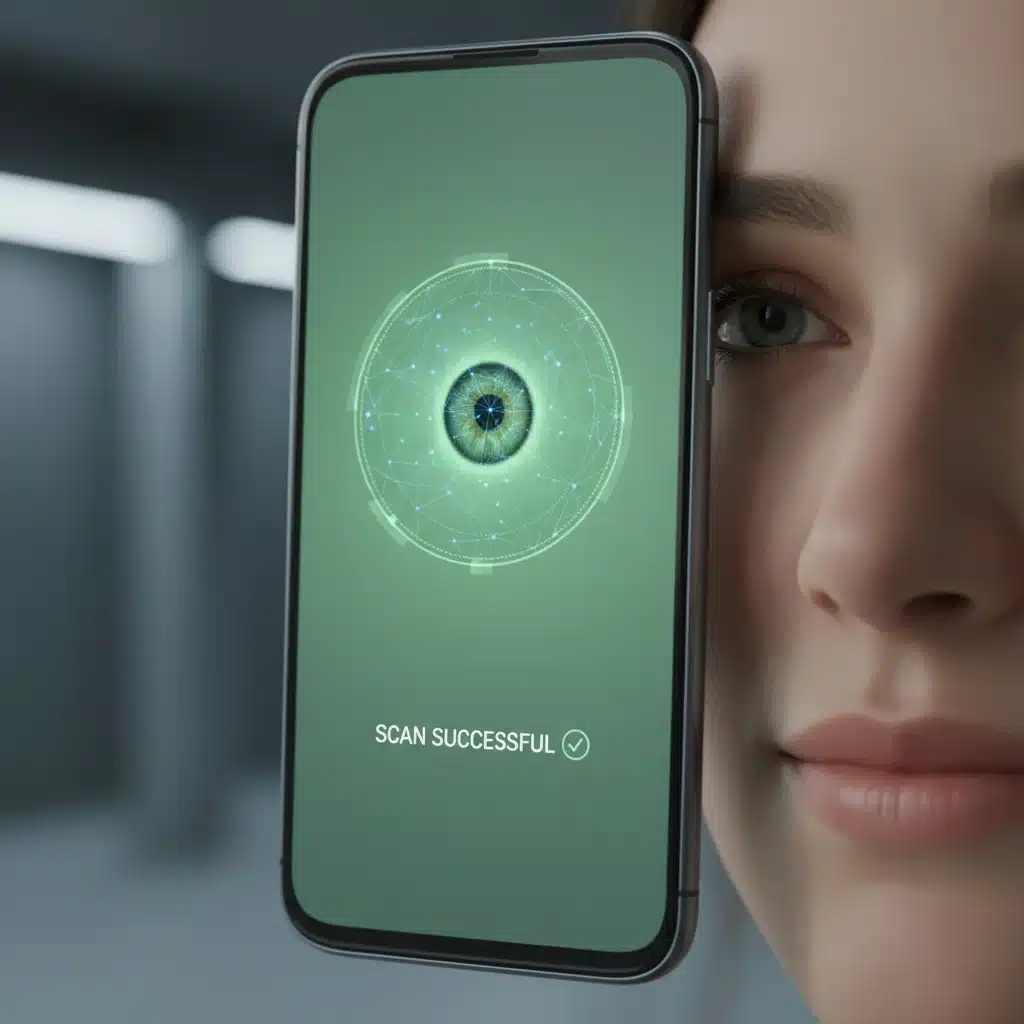
While less common than fingerprint or facial recognition, iris recognition offers an exceptionally high level of security due to the unique and complex patterns of the human iris. These patterns are stable throughout life and are virtually impossible to replicate. Mobile devices equipped with dedicated infrared cameras can capture these intricate details, providing a highly accurate and secure form of authentication. The primary challenge for widespread adoption has been the need for specialized hardware and the user experience, which often requires aligning the eye with a specific sensor. However, advancements in miniaturization and improved user interfaces are making iris recognition a more viable option for high-security applications within the biometric security mobile ecosystem. Its strength lies in its distinctiveness and resistance to spoofing, making it ideal for accessing highly sensitive information or transactions.
4. Voice Authentication
Voice authentication, leveraging the unique characteristics of a person’s vocal patterns, is another burgeoning area in biometric security mobile. While historically prone to spoofing, advanced AI models are making significant strides in distinguishing live voices from recordings and even synthesizing voices. These systems analyze not just what is said, but how it is said – the timbre, pitch, cadence, and unique physiological attributes of the vocal tract. Its hands-free nature makes it particularly appealing for certain use cases, such as in-car systems or smart home integration. However, environmental noise and illness can still pose challenges. Future developments are focusing on multi-factor voice authentication, combining voiceprints with liveness detection and phrase recognition to enhance security. As voice assistants become more integrated into our daily lives, the demand for robust voice authentication as a component of biometric security mobile is expected to grow exponentially.
Implementing Biometric Security Mobile: Challenges and Solutions in 2026
The journey to widespread and flawless biometric security mobile implementation is not without its hurdles. While the technology has matured significantly, several challenges persist, driving continuous innovation in the field.
1. Privacy Concerns
The collection and storage of unique biological data raise significant privacy concerns. Users are rightly apprehensive about their biometric templates being compromised or misused. In 2026, the industry has largely addressed this by emphasizing on-device processing and encryption. Most modern biometric systems process and store templates locally on a secure enclave within the device’s hardware, never transmitting raw biometric data to the cloud. This significantly reduces the risk of mass data breaches. Furthermore, regulations like GDPR and CCPA have pushed manufacturers to implement robust consent mechanisms and transparent data handling policies, building greater trust in biometric security mobile solutions.
2. Spoofing and Liveness Detection
The threat of spoofing – attempting to trick a biometric system with a fake – remains a constant challenge. Early systems were vulnerable to photographs for facial recognition or latex molds for fingerprints. However, 2026 technologies incorporate advanced liveness detection mechanisms. For facial recognition, this includes 3D depth sensing, eye tracking, and even subtle micro-expression analysis. Fingerprint scanners use ultrasonic waves to detect blood flow and skin elasticity. Iris scanners look for pupil dilation and reflective properties unique to a living eye. These multi-layered liveness detection protocols are critical for maintaining the integrity of biometric security mobile systems and are constantly being refined to counter increasingly sophisticated spoofing techniques.
3. Accuracy and False Positives/Negatives
Achieving near-perfect accuracy is paramount. False positives (incorrectly identifying someone) and false negatives (failing to identify a legitimate user) can severely undermine user trust and security. While modern biometric systems boast impressive accuracy rates (often above 99%), continuous improvement is sought. Environmental factors, user interaction variations, and even physiological changes (e.g., injuries, aging) can affect performance. Machine learning algorithms are continuously trained on vast datasets to improve accuracy across diverse populations and conditions, ensuring that biometric security mobile remains reliable for everyone. The goal is to minimize both types of errors to an acceptable, almost negligible, level.
4. Hardware and Cost Considerations
Implementing advanced biometric security mobile features often requires specialized hardware, such as dedicated infrared cameras, ultrasonic sensors, or secure enclaves. This can add to the manufacturing cost of devices, potentially limiting their availability in budget-friendly segments. However, economies of scale and technological advancements are steadily driving down these costs. By 2026, many of these components are becoming more standardized and integrated into general-purpose chipsets, making advanced biometric security more accessible across a wider range of mobile devices. The long-term security benefits often outweigh the initial hardware investment.
The Future of Biometric Security Mobile: Trends and Innovations (2026 and Beyond)
Looking beyond the current state, the future of biometric security mobile promises even more sophisticated and integrated solutions. Several key trends are shaping this evolution:
1. Multi-modal Biometrics
The most significant trend is the move towards multi-modal biometric systems. Instead of relying on a single biometric, these systems combine two or more modalities (e.g., fingerprint and facial recognition, or iris and voice) to create an even more robust and secure authentication process. This significantly enhances security, as compromising multiple distinct biometrics simultaneously is exponentially harder. It also improves reliability; if one modality fails (e.g., a dirty finger), another can seamlessly take over. Multi-modal biometric security mobile is becoming the gold standard for high-security applications and is increasingly common even in consumer-grade devices.
2. Behavioral Biometrics
Beyond static physical characteristics, behavioral biometrics analyze unique patterns of user interaction. This includes typing rhythm, gait analysis, mouse movements (for larger devices), and even how a user holds and swipes their phone. These biometrics are continuously monitored in the background, providing a ‘passive’ layer of security that can detect anomalies indicating unauthorized use without requiring explicit user action. While still in its nascent stages for primary authentication, behavioral biometrics offer a powerful layer of continuous authentication for biometric security mobile, constantly verifying the user’s identity throughout a session.
3. Biometrics-as-a-Service (BaaS) and Decentralized Identity
The concept of Biometrics-as-a-Service (BaaS) is gaining traction, allowing third-party applications and services to integrate robust biometric authentication without needing to develop their own systems. This will be facilitated by standardized APIs and secure frameworks. Concurrently, decentralized identity solutions, often leveraging blockchain technology, aim to give users more control over their biometric data, allowing them to verify their identity without sharing raw biometric templates with every service provider. This shift empowers users and enhances privacy within the biometric security mobile ecosystem.
4. Integration with IoT and Wearables
As the Internet of Things (IoT) expands, biometric security mobile will extend beyond smartphones to wearables, smart home devices, and connected vehicles. Your smartwatch might authenticate your identity based on your heartbeat (ECG biometrics) or gait, seamlessly unlocking your phone, car, or home. This creates a truly ubiquitous and frictionless authentication experience, where your identity is continuously verified across your personal digital ecosystem. The challenge here lies in ensuring interoperability and maintaining consistent security standards across a diverse range of devices and platforms.
5. Enhanced Liveness Detection with AI and Machine Learning
The arms race between spoofing techniques and liveness detection will continue. Advanced AI and machine learning models will become even more sophisticated at detecting subtle signs of life, analyzing minute physiological responses, and identifying synthetic attempts. This will involve deeper analysis of skin texture, blood flow, micro-expressions, and even thermal signatures. These AI-driven enhancements are crucial for maintaining the integrity of biometric security mobile against increasingly advanced threats.
Comparison and Analysis: Biometric Security Mobile in Practice
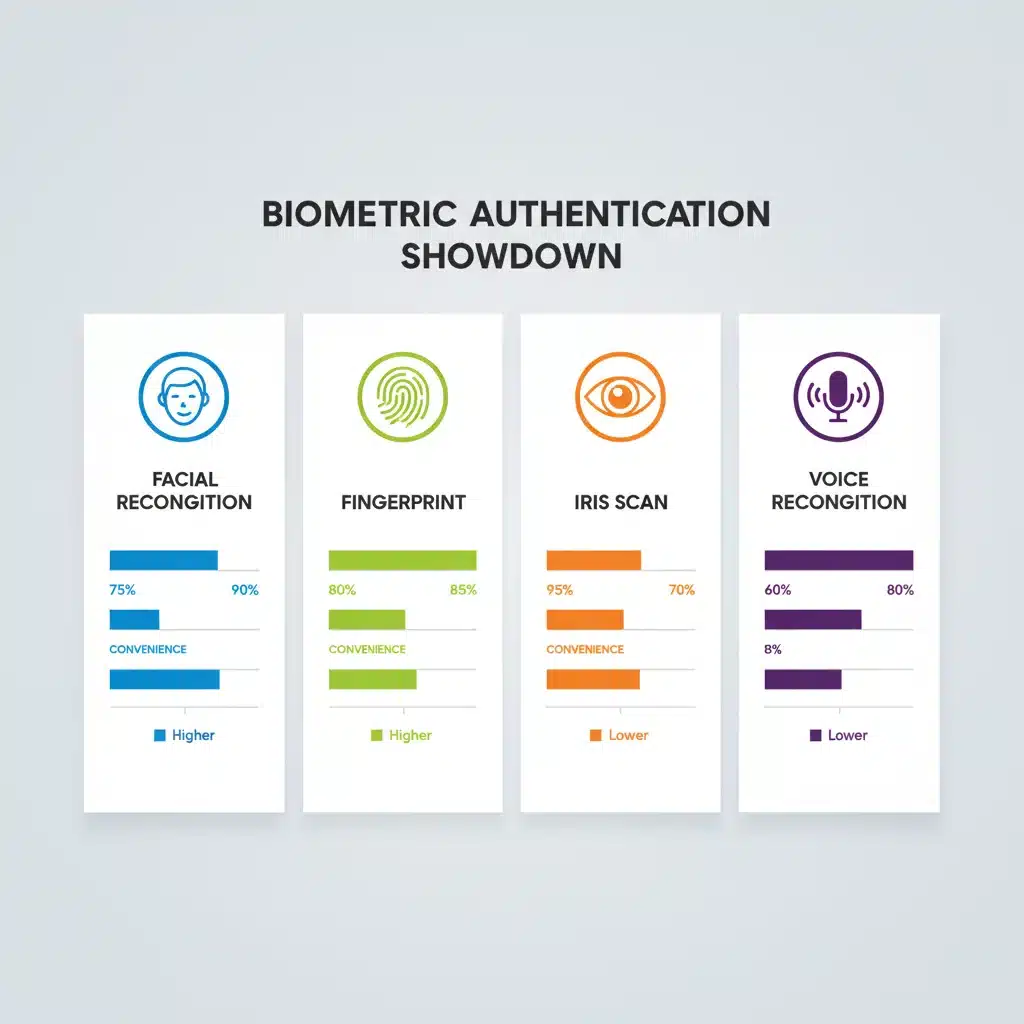
To truly understand the implications of biometric security mobile, a comparative analysis of its practical applications and underlying strengths is essential. Each modality offers a different balance of security, convenience, and cost.
| Biometric Modality | Security Level (2026) | Convenience | Typical Application | Key Challenges |
|---|---|---|---|---|
| Fingerprint Recognition (Ultrasonic) | Very High | High | Device unlock, app login, secure payments | Finger damage, environmental factors (e.g., extreme cold affecting blood flow) |
| Facial Recognition (3D Depth) | High | Very High | Device unlock, app login, secure payments, augmented reality | Lighting conditions, privacy perception, potential for bias in AI models |
| Iris Recognition | Extremely High | Medium | High-security apps, government IDs, enterprise access | Dedicated hardware, user alignment, glasses/contacts |
| Voice Authentication (AI-enhanced) | Medium-High | High (hands-free) | Voice assistants, smart home control, call center authentication | Environmental noise, illness, sophisticated voice synthesis |
| Behavioral Biometrics | High (passive) | Very High (seamless) | Continuous authentication, fraud detection | Establishing baseline, subtle changes in user behavior |
This comparison highlights that there is no single ‘best’ biometric solution. Instead, the optimal approach often involves a combination of these technologies, tailored to the specific security requirements and user experience goals. For instance, a mobile banking app might use facial recognition for quick access but require an iris scan or a multi-modal combination for high-value transactions. This layered security approach is becoming the norm in biometric security mobile, providing robust protection while maintaining user convenience.
The Role of AI and Machine Learning in Biometric Security Mobile
Artificial Intelligence (AI) and Machine Learning (ML) are not just supporting players; they are the backbone of modern biometric security mobile systems. Their influence spans every aspect, from initial data capture to real-time threat detection.
Enhanced Accuracy: ML algorithms are trained on vast datasets of biometric samples, allowing them to identify patterns and variations that human eyes or traditional algorithms might miss. This leads to significantly improved accuracy rates, reducing both false positives and false negatives.
Liveness Detection: AI is crucial for sophisticated liveness detection. ML models can analyze subtle cues like micro-expressions, skin texture variations, blood flow, and even the natural reflections in an eye to determine if a biometric sample is from a living person or a static spoof. This is an ever-evolving field, with AI constantly learning to identify new spoofing methods.
Adaptability and Learning: Modern biometric systems are not static. They use ML to continuously learn and adapt to changes in a user’s biometric data over time. For example, a fingerprint scanner can learn to recognize a finger even if it has a minor cut or is slightly scarred. Facial recognition can adapt to changes in appearance like growing a beard or wearing new glasses. This adaptability enhances user experience and maintains security without requiring re-enrollment.
Behavioral Biometrics: AI is the core enabler of behavioral biometrics. ML algorithms analyze patterns in typing, swiping, gait, and other interactions to build a unique behavioral profile. Any deviation from this profile can trigger additional authentication steps or flag potential fraud, providing a seamless, continuous layer of security. This passive authentication is a game-changer for biometric security mobile, as it protects the device even after initial unlock.
Threat Intelligence: AI can also analyze global threat intelligence, identifying emerging spoofing techniques or vulnerabilities in biometric systems. This allows manufacturers to proactively update their algorithms and firmware, staying ahead of malicious actors. The proactive nature of AI in threat detection is vital for maintaining the long-term integrity of biometric security mobile solutions.
Conclusion: Embracing the Biometric Future of Mobile Security
As we navigate 2026, it is unequivocally clear that biometric security mobile is not just a trend but a fundamental shift in how we interact with our digital world. The move beyond passwords offers unparalleled convenience, significantly enhanced security, and a more intuitive user experience. From sophisticated ultrasonic fingerprint scanners and 3D facial mapping to advanced iris and voice authentication, the technologies at our disposal are more robust and reliable than ever before.
While challenges related to privacy, spoofing, and accuracy persist, the industry is actively addressing these concerns through continuous innovation, powered largely by the relentless advancements in AI and machine learning. Multi-modal biometrics, behavioral analysis, and decentralized identity solutions are paving the way for a future where our mobile devices are secured by our unique biological signatures, seamlessly and effortlessly.
For individuals, understanding these advancements means making informed choices about device security and embracing the convenience that comes with robust protection. For developers and businesses, it means integrating these cutting-edge solutions to build more secure applications and services, fostering greater trust among users. The era of biometric security mobile is here, and it promises a safer, more intuitive digital experience for everyone.
The journey towards a password-less future is an ongoing one, but with the rapid evolution of biometric security mobile, we are closer than ever to achieving a state where our digital identities are protected by the most secure and personal authentication method available: ourselves.