Boost Business Efficiency: Top 3 Underutilized Productivity Tools for US Companies

In the fiercely competitive landscape of modern business, efficiency isn’t just a buzzword; it’s the bedrock of sustained success. For US businesses, the quest for enhanced productivity is perpetual, driven by the need to innovate faster, serve customers better, and outperform rivals. While many companies have adopted mainstream solutions, a significant competitive edge often lies in leveraging underutilized business productivity tools that can unlock new levels of operational excellence. By mid-2026, those businesses that strategically integrate these less-common yet powerful tools will be poised for remarkable growth and resilience.
The digital transformation journey is ongoing, and simply having tools isn’t enough. It’s about having the *right* tools and, crucially, understanding how to maximize their potential. This article delves into three such underutilized business productivity tools that US companies should seriously consider adopting. These aren’t just minor upgrades; they represent shifts in how work gets done, fostering greater collaboration, automating tedious tasks, and providing deeper insights into performance. Let’s explore how these game-changers can redefine your operational framework.
The Evolving Landscape of Business Productivity
Before diving into specific tools, it’s essential to understand the current environment. The past few years have accelerated trends like remote work, hybrid models, and the demand for instant communication and data access. This has pushed companies to rethink traditional workflows and embrace digital solutions more fully. However, many organizations still operate with fragmented systems, leading to data silos, inefficiencies, and employee frustration. The market is saturated with productivity software, making it challenging to identify truly impactful solutions that go beyond basic functionalities.
The goal is no longer just to complete tasks but to complete them smarter, faster, and with higher quality. This requires a proactive approach to technology adoption, one that looks beyond the obvious choices and identifies niche or emerging platforms that offer specialized capabilities. These underutilized business productivity tools often address specific pain points that mainstream software overlooks, or they offer a more integrated, intelligent approach to common challenges. The key is to find tools that not only streamline individual tasks but also enhance the overall ecosystem of your business operations.
Why Underutilized Tools? The Competitive Advantage
Why focus on tools that are “underutilized” rather than widely popular ones? The answer lies in competitive advantage. When everyone is using the same popular software, the playing field is level. By discovering and mastering less common but highly effective business productivity tools, your company can gain unique capabilities that your competitors might lack. This could translate into faster project delivery, more accurate data analysis, superior customer service, or more efficient resource allocation. Early adoption, coupled with strategic integration, can create a significant lead in your industry.
Furthermore, underutilized tools often come from innovative startups or specialized developers who are pushing the boundaries of what’s possible. They might offer more tailored solutions, better customer support, or more agile development cycles compared to larger, more established players. Investing in these tools can also foster a culture of innovation within your organization, encouraging employees to explore new ways of working and continuously improve processes. It’s about being a pioneer, not just a follower, in the realm of business efficiency.
Tool 1: Advanced Workflow Orchestration Platforms
Many businesses use basic workflow automation tools, but advanced workflow orchestration platforms take this to the next level. These aren’t just about automating simple sequences; they’re about intelligently managing complex, multi-stage processes across different departments and systems. Think beyond IFTTT or Zapier; we’re talking about platforms that can dynamically adapt workflows based on real-time data, integrate with legacy systems, and provide sophisticated analytics on process performance.
These platforms act as a central nervous system for your business operations. They can automate everything from customer onboarding and supply chain management to HR processes and financial approvals. The true power lies in their ability to handle conditional logic, parallel processing, and human-in-the-loop interventions seamlessly. This means that even highly complex, decision-intensive workflows can be largely automated, freeing up human capital for more strategic tasks.
Key Features and Benefits for US Businesses
- Intelligent Process Automation (IPA): Combines robotic process automation (RPA) with artificial intelligence (AI) and machine learning (ML) to handle more complex, cognitive tasks. This allows for automation of tasks that require decision-making, data interpretation, and pattern recognition.
- Cross-System Integration: Seamlessly connects disparate systems, from CRM and ERP to custom internal applications, breaking down data silos and ensuring a unified flow of information. This is crucial for businesses operating with a mix of modern and legacy software.
- Real-time Visibility and Analytics: Provides dashboards and reports that offer deep insights into workflow performance, bottlenecks, and areas for optimization. This data-driven approach allows for continuous improvement of business processes.
- Dynamic Workflow Adaptation: Workflows can automatically adjust based on predefined rules, external triggers, or even AI-driven insights, making processes more resilient and responsive to changing conditions.
- Reduced Manual Errors: By automating repetitive tasks and enforcing standardized procedures, these platforms significantly reduce the incidence of human error, leading to higher quality outputs and fewer rework cycles.
- Scalability: As your business grows, these platforms can scale to handle increased volume and complexity without requiring a complete overhaul of your operational infrastructure.
For US businesses struggling with operational inefficiencies, manual handoffs, and a lack of transparency in their processes, an advanced workflow orchestration platform can be a transformative investment. It moves beyond simple task automation to true process optimization, making it one of the most impactful business productivity tools for the coming years.
Tool 2: AI-Powered Knowledge Management Systems (KMS)
While many companies have some form of internal wiki or document repository, AI-powered Knowledge Management Systems are a different beast entirely. These systems don’t just store information; they actively organize, categorize, retrieve, and even generate insights from your company’s collective knowledge base. They leverage natural language processing (NLP) and machine learning to make every piece of information instantly accessible and relevant.
Imagine a system where an employee can ask a question in natural language and receive an accurate, synthesized answer drawn from thousands of internal documents, meeting notes, project files, and customer interactions. This goes far beyond a simple search bar. These KMS solutions understand context, identify relationships between different pieces of information, and can even proactively suggest relevant knowledge based on an employee’s current task or query. This significantly reduces the time spent searching for information and ensures consistency in responses and decision-making.
Key Features and Benefits for US Businesses
- Intelligent Search and Discovery: NLP-driven search capabilities allow employees to find precise information quickly, even with vague queries, by understanding intent and context. This drastically cuts down on information retrieval time.
- Automated Content Curation: AI algorithms can automatically tag, categorize, and link related content, ensuring that the knowledge base remains organized and easy to navigate without extensive manual effort.
- Personalized Knowledge Delivery: Systems can learn user preferences and roles to deliver personalized content recommendations, pushing relevant information to employees before they even search for it.
- Knowledge Gap Identification: AI can analyze search queries and content usage patterns to identify gaps in your knowledge base, prompting the creation of new documentation or updates to existing ones.
- Enhanced Onboarding and Training: New employees can quickly get up to speed by accessing a comprehensive, intelligently organized repository of company policies, procedures, and best practices.
- Improved Customer Service: Customer support teams can rapidly find answers to complex queries, leading to faster resolution times and higher customer satisfaction. This also empowers self-service portals with more accurate and comprehensive information.
- Preservation of Institutional Knowledge: Prevents critical knowledge from being lost when employees leave, as it’s systematically captured and made accessible to the entire organization.
For any US business that relies heavily on information – which is virtually all of them – an AI-powered KMS can transform how knowledge is managed and utilized. It turns your company’s accumulated wisdom into an active asset, making it one of the most powerful yet underutilized business productivity tools available.

Tool 3: Advanced Resource Management and Capacity Planning Software
Many companies use project management software, but often, the resource management capabilities within these tools are basic. Advanced Resource Management and Capacity Planning software goes much deeper, providing a comprehensive view of your entire workforce’s availability, skills, and workload. It helps businesses optimize resource allocation, forecast future needs, and prevent burnout or underutilization.
These specialized platforms allow you to map out who is working on what, for how long, and what their future capacity looks like. They consider skills, certifications, costs, and even employee preferences to make optimal assignment suggestions. This isn’t just about assigning tasks; it’s about strategic workforce planning, ensuring that you have the right people with the right skills available at the right time for critical projects, while also balancing workloads to maintain employee well-being.
Key Features and Benefits for US Businesses
- Centralized Resource Pool: A single, real-time view of all human resources, including their skills, roles, availability, and current assignments across all projects and departments.
- Intelligent Resource Allocation: AI-driven recommendations for assigning resources to projects based on skills, availability, cost-effectiveness, and project priority. This moves beyond manual assignments to data-optimized decisions.
- Capacity Planning and Forecasting: Tools to predict future resource needs based on project pipelines, historical data, and strategic goals, helping businesses proactively plan for hiring, training, or contractor engagement.
- Workload Balancing: Visual dashboards and alerts to identify over-utilized or under-utilized team members, allowing managers to reallocate tasks and prevent burnout or idle time.
- Skill Gap Analysis: Identifies skill shortages within the organization relative to upcoming project demands, informing training programs and recruitment strategies.
- What-If Scenario Planning: Allows managers to model the impact of different resource allocation strategies or project timelines before committing, helping to mitigate risks and optimize outcomes.
- Improved Project Delivery: Ensures that projects are adequately staffed with the right talent, leading to fewer delays, higher quality deliverables, and better project success rates.
For US businesses, particularly those in project-driven industries like IT services, consulting, engineering, or creative agencies, advanced resource management software is invaluable. It transforms resource allocation from a reactive, often chaotic process into a strategic, data-driven function, making it one of the most impactful business productivity tools for operational efficiency.
Integrating These Tools for Maximum Impact
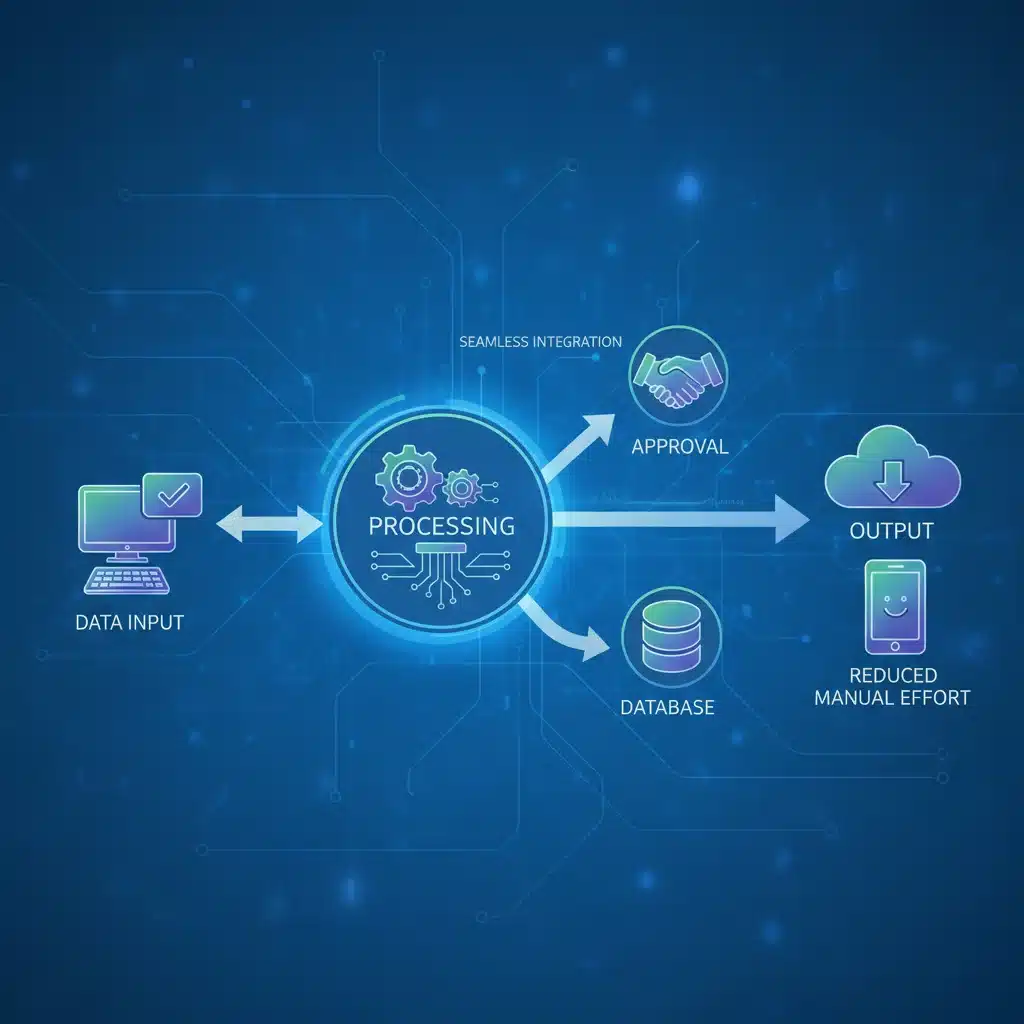
Adopting any single tool can bring benefits, but the true power comes from integrating these underutilized business productivity tools into a cohesive ecosystem. Imagine:
- Your Advanced Workflow Orchestration Platform automatically kicks off a new employee onboarding process.
- The onboarding process triggers the AI-Powered Knowledge Management System to provide personalized learning paths and access to relevant company policies.
- Simultaneously, the Advanced Resource Management Software identifies the best mentor for the new employee based on skills and availability, and allocates their initial training tasks.
- As the employee progresses, their performance data feeds back into the workflow platform, which then updates their profile in the resource management system, and any new knowledge they contribute is indexed by the KMS.
This level of interconnectedness creates a synergistic effect, where each tool amplifies the capabilities of the others. It reduces manual data entry, minimizes errors, and provides a holistic view of operations and human capital. The result is a highly efficient, agile, and intelligent business environment.
Overcoming Adoption Challenges
Implementing new business productivity tools always comes with challenges. To ensure successful adoption, US businesses should:
- Start Small, Scale Big: Begin with a pilot project or a specific department to demonstrate value before a company-wide rollout.
- Provide Comprehensive Training: Invest in thorough training programs and ongoing support to ensure employees are comfortable and proficient with the new tools.
- Champion from the Top: Secure buy-in from leadership, who can advocate for the tools and set the example for their use.
- Focus on User Experience: Choose tools that are intuitive and user-friendly, as complex interfaces can deter adoption.
- Measure ROI: Clearly define metrics for success and track the return on investment to justify the expenditure and demonstrate the value of the tools.
- Foster a Culture of Continuous Improvement: Encourage feedback from users and be prepared to adapt processes and tool configurations based on real-world usage.
The Future of Business Productivity in the US
By mid-2026, the competitive landscape for US businesses will be even more intense. Companies that fail to embrace advanced business productivity tools risk falling behind. The shift towards more intelligent, integrated, and automated operations is not just a trend; it’s a fundamental evolution in how successful businesses operate. These three underutilized categories – Advanced Workflow Orchestration, AI-Powered Knowledge Management, and Advanced Resource Management – represent significant opportunities for companies to leapfrog their competition.
Investing in these solutions is not merely an IT expenditure; it’s a strategic investment in your company’s future. It’s about building a more resilient, efficient, and innovative organization capable of adapting to change and seizing new opportunities. As technology continues to advance, the gap between businesses that leverage cutting-edge tools and those that stick to the status quo will only widen. The time to explore and adopt these transformative business productivity tools is now.
Final Thoughts on Strategic Implementation
The journey to enhanced productivity is continuous. It requires a commitment to innovation, a willingness to challenge existing processes, and a strategic vision for technology adoption. US businesses that proactively seek out and integrate underutilized business productivity tools will not only optimize their operations but also empower their employees, foster a culture of excellence, and ultimately secure a stronger position in the global market. Don’t just work harder; work smarter by leveraging the power of these advanced solutions.