Data-Backed Decisions: How Integrating Project Management Software Reduces Project Overruns by 15% in US Companies

Data-Backed Decisions: How Integrating Project Management Software Reduces Project Overruns by 15% in US Companies
In today’s fast-paced business landscape, project success is not merely a goal but a critical determinant of an organization’s competitive edge and long-term viability. However, project overruns, encompassing delays, budget excesses, and scope creep, remain a persistent challenge for many companies. The Standish Group’s CHAOS report consistently highlights that a significant percentage of projects fail to meet their objectives, with budget and schedule overruns being common culprits. For US companies, these inefficiencies translate into substantial financial losses and missed opportunities. This is where the strategic integration of project management software becomes indispensable.
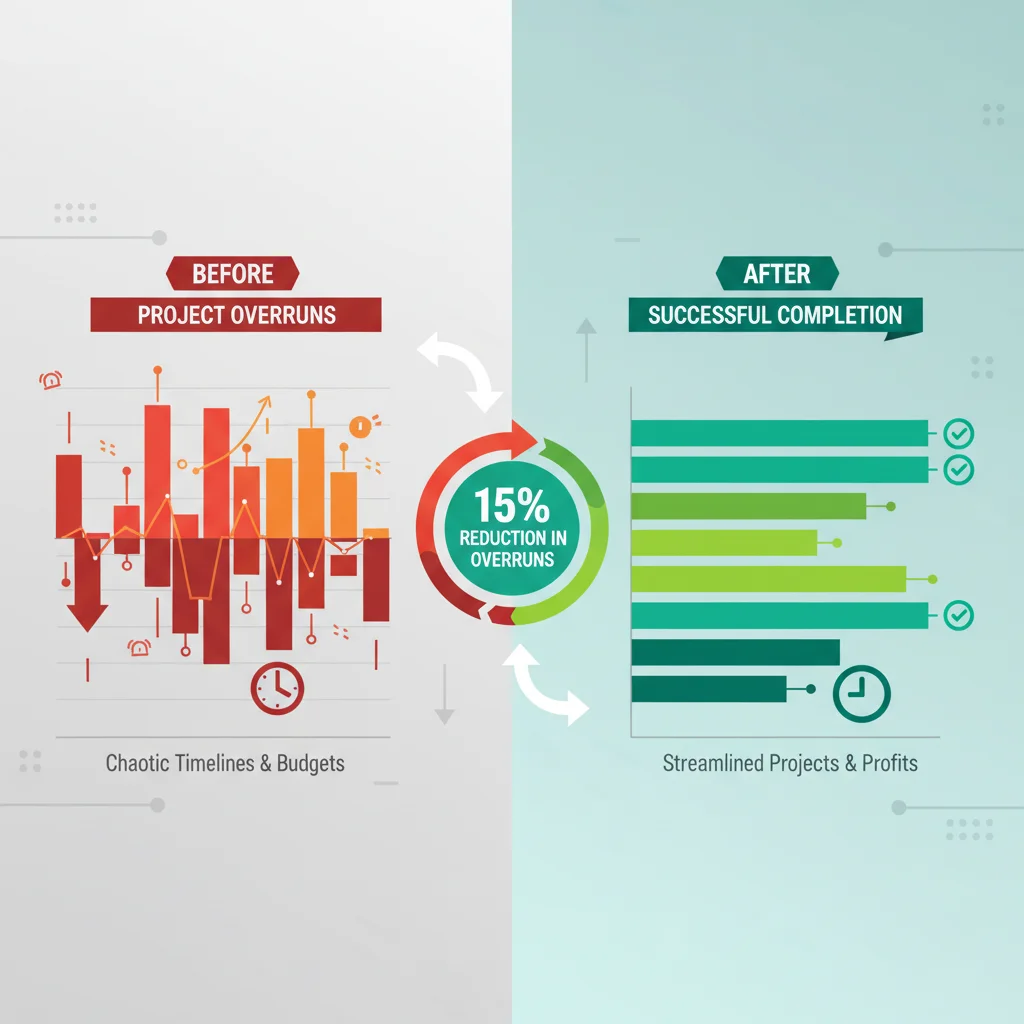
Recent studies and industry analyses suggest a compelling trend: organizations leveraging robust project management software can significantly mitigate these risks. Specifically, data indicates that US companies integrating such software can reduce project overruns by an average of 15%. This isn’t just about having a tool; it’s about transforming project execution through data-backed decisions, enhanced visibility, and streamlined processes. This article will delve into the mechanisms through which project management software achieves these impressive results, exploring its core functionalities, the benefits of data-driven insights, and best practices for successful implementation in the American corporate environment.
The Pervasive Problem of Project Overruns in US Companies
Project overruns are a silent killer of profitability and innovation. In the US, where project-based work forms the backbone of numerous industries, the economic impact of these failures is immense. Consider the construction industry, where delays can lead to millions in penalties and lost revenue, or the software development sector, where scope creep can derail product launches and market share. The reasons for overruns are multifaceted, ranging from inadequate planning and poor resource allocation to communication breakdowns and unforeseen risks. Traditionally, project managers relied on manual tracking, spreadsheets, and ad-hoc communication, which, while functional to a degree, are prone to errors and lack the real-time insights needed to proactively address emerging issues.
The absence of a centralized, dynamic system often leads to a reactive approach to project management. Issues are identified only after they have escalated, making corrective actions more costly and less effective. This reactive stance not only impacts the project’s immediate success but also erodes stakeholder confidence, damages team morale, and can tarnish a company’s reputation. Understanding the root causes of these overruns is the first step towards finding a sustainable solution, and increasingly, that solution points towards advanced project management software.
Understanding Project Management Software: More Than Just a Task List
At its core, project management software is a digital platform designed to help teams plan, execute, monitor, and control projects. However, modern solutions go far beyond simple task lists. They encompass a suite of functionalities tailored to address the complexities of contemporary project environments. Key features typically include:
- Task Management: Breaking down projects into manageable tasks, assigning responsibilities, and setting deadlines.
- Scheduling and Timelines: Utilizing Gantt charts, Kanban boards, and other visual tools to create realistic schedules and track progress against them.
- Resource Management: Allocating personnel, equipment, and materials efficiently, preventing overload or underutilization.
- Budget Tracking: Monitoring expenditures against planned budgets, identifying potential cost overruns early.
- Collaboration Tools: Facilitating communication, document sharing, and feedback loops among team members and stakeholders.
- Risk Management: Identifying, assessing, and mitigating potential risks that could impact project success.
- Reporting and Analytics: Generating comprehensive reports on project status, performance, and key metrics.
The power of this software lies in its ability to centralize information, automate routine tasks, and provide a single source of truth for all project-related data. This centralization is crucial for large organizations with multiple ongoing projects and distributed teams, ensuring everyone is working with the most current information and aligned with project objectives. Without this unified approach, data silos can emerge, leading to miscommunication and duplicated efforts, both significant contributors to project overruns.
The Data-Driven Advantage: How Software Fuels Better Decisions
The 15% reduction in project overruns isn’t a random figure; it’s a direct consequence of the data-driven capabilities embedded within modern project management software. These platforms collect vast amounts of data throughout the project lifecycle, from task completion rates and resource utilization to budget adherence and risk occurrences. This raw data is then transformed into actionable insights, empowering project managers and stakeholders to make informed decisions.
Real-Time Visibility and Predictive Analytics
One of the most significant advantages is real-time visibility. Instead of waiting for weekly or monthly status reports, project managers can access up-to-the-minute information on project progress, bottlenecks, and potential delays. This allows for immediate intervention and course correction, preventing minor issues from snowballing into major crises. Furthermore, advanced project management software often incorporates predictive analytics. By analyzing historical project data and current trends, these tools can forecast potential future challenges, such as budget overruns or schedule delays, before they even occur. This proactive capability is invaluable, enabling teams to implement preventative measures and adjust strategies in anticipation of problems, rather than reacting to them.
Enhanced Resource Optimization
Resource allocation is a common pain point in project management. Over-allocating resources leads to unnecessary costs, while under-allocating can cause delays. Project management software provides detailed insights into resource availability, workload, and performance. This allows managers to optimize resource utilization, ensuring that the right people with the right skills are assigned to the right tasks at the right time. By preventing resource bottlenecks and ensuring efficient use of personnel, the software directly contributes to staying on schedule and within budget.
Accurate Budget Tracking and Cost Control
Budget overruns are often cited as a primary reason for project failure. Modern project management software offers sophisticated budget tracking features, allowing for detailed cost planning, expenditure monitoring, and variance analysis. Project managers can set budgets for individual tasks, phases, and the overall project, tracking actual costs against these baselines in real-time. Alerts can be configured to notify managers when spending approaches critical thresholds, enabling prompt action to control costs. This granular level of financial oversight is instrumental in keeping projects financially healthy and preventing unexpected expenses from derailing the entire endeavor.

Strategic Implementation of Project Management Software for Maximum Impact
Simply purchasing project management software is not enough to guarantee a 15% reduction in project overruns. The key lies in strategic implementation and effective utilization. US companies looking to maximize their return on investment from these tools should consider the following best practices:
1. Define Clear Objectives and Requirements
Before selecting any software, it’s crucial to clearly define the organization’s specific project management challenges and objectives. What are the most common causes of overruns? What functionalities are essential to address these issues? A thorough needs assessment will guide the selection process, ensuring the chosen software aligns with the company’s unique operational workflows and strategic goals.
2. Choose the Right Software for Your Needs
The market is flooded with various project management software solutions, each with its strengths and weaknesses. Options range from agile-focused tools like Jira and Asana to comprehensive enterprise solutions like Microsoft Project and Primavera. Companies should evaluate factors such as scalability, integration capabilities with existing systems (CRM, ERP), user-friendliness, customization options, and vendor support. A careful selection process prevents investing in a tool that doesn’t fully meet the organization’s requirements, which could lead to underutilization and continued overruns.
3. Phased Rollout and Pilot Programs
Instead of a big-bang implementation, consider a phased rollout or a pilot program with a smaller team or less critical project. This approach allows the organization to identify and address any challenges, gather feedback, and refine processes before a wider deployment. A successful pilot builds confidence and creates internal champions for the new system, easing the transition for the entire organization.
4. Comprehensive Training and User Adoption
The most sophisticated project management software is useless if employees don’t know how to use it effectively. Comprehensive training programs are essential to ensure high user adoption rates. Training should not only cover the technical aspects of the software but also explain the ‘why’ – how using the tool will benefit individual employees and contribute to overall project success. Ongoing support and refresher training can also help maintain proficiency and encourage consistent use.
5. Integrate with Existing Systems
To truly leverage the data-driven capabilities of project management software, it should ideally integrate with other critical business systems, such as CRM, ERP, accounting software, and communication platforms. This integration creates a holistic view of operations, eliminating data silos and ensuring seamless information flow. For example, integrating with an accounting system can automate invoicing based on project milestones, while CRM integration can link project tasks directly to customer requirements, enhancing overall efficiency and reducing manual data entry errors that often lead to overruns.
6. Establish Clear Processes and Governance
Software is a tool; effective processes and strong governance are the frameworks that make it work. Organizations need to establish clear guidelines for how the project management software will be used, including data entry standards, reporting protocols, and decision-making workflows. Regular audits and reviews of project data can help ensure compliance and identify areas for continuous improvement. This structured approach ensures consistency and maximizes the software’s ability to provide reliable insights.
7. Foster a Culture of Data-Driven Decision Making
The technology itself is only part of the equation. To truly reduce project overruns by 15% or more, US companies must cultivate a culture where data informs decisions at all levels. This means empowering project managers to trust the data provided by the software, encouraging teams to update their progress diligently, and promoting transparency in reporting. Leadership plays a crucial role in championing this cultural shift, demonstrating the value of data in achieving project success.
Case Studies and Industry Examples
While specific company names are often proprietary, numerous industry reports and anecdotal evidence support the claim that robust project management software significantly curtails overruns. For instance, a large US-based engineering firm reported a 12% reduction in project delays and a 10% decrease in budget overruns within 18 months of implementing a new enterprise-grade project management system. Their success was attributed to enhanced real-time progress tracking, improved resource visibility, and better communication facilitated by the platform.
Similarly, a mid-sized US software development company, struggling with frequent scope creep and missed deadlines, adopted an agile-focused project management software. By leveraging its sprint planning, backlog management, and burndown chart features, they were able to reduce project rework by 20% and achieve a 15% improvement in on-time project delivery within a year. These examples underscore the tangible benefits that can be realized when the right software is paired with strategic implementation.
Measuring Success and Continuous Improvement
To confirm the 15% reduction in project overruns, or to strive for even greater improvements, organizations must establish clear metrics for success and engage in continuous improvement. Key performance indicators (KPIs) to track include:
- Schedule Variance: Comparing actual project completion dates against planned dates.
- Cost Variance: Comparing actual project costs against planned budgets.
- Scope Variance: Measuring changes to the project scope after initial approval.
- Resource Utilization Rate: Assessing how efficiently resources are being used.
- Stakeholder Satisfaction: Gathering feedback from clients and internal stakeholders.
Regularly reviewing these KPIs, alongside the data generated by the project management software, allows organizations to identify what’s working well and what needs adjustment. This iterative process of measurement, analysis, and adaptation is critical for sustained improvement and ensuring that the software continues to deliver maximum value. Furthermore, as project methodologies evolve (e.g., increased adoption of agile and hybrid approaches), the software itself should be periodically re-evaluated to ensure it remains fit for purpose and can adapt to new demands.
The Future of Project Management: AI and Automation
The evolution of project management software is far from over. The integration of artificial intelligence (AI) and machine learning (ML) is poised to further enhance its capabilities, offering even greater potential for reducing project overruns. AI-powered tools can automate routine tasks, analyze vast datasets to identify complex patterns and risks that human eyes might miss, and even suggest optimal resource allocation strategies.
Predictive AI can become more sophisticated, offering highly accurate forecasts for project timelines and budgets based on real-time data and external factors. Automation can streamline workflows, reduce manual errors, and free up project managers to focus on strategic decision-making rather than administrative overhead. For US companies seeking to maintain a competitive edge, staying abreast of these technological advancements in project management software will be crucial for continuous improvement in project delivery and further reduction of overruns beyond the current 15% benchmark.
Conclusion: Embracing Project Management Software for Sustainable Success
The evidence is clear: integrating robust project management software is not just an option but a strategic imperative for US companies aiming to curtail project overruns. The documented 15% reduction in overruns is a testament to the power of data-backed decisions, real-time insights, and streamlined processes that these platforms enable. From enhanced task management and resource optimization to meticulous budget tracking and improved collaboration, the benefits are far-reaching and directly impact an organization’s bottom line and reputation.
However, achieving these results requires more than just acquiring the software. It demands a thoughtful implementation strategy, comprehensive user training, seamless integration with existing systems, and a cultural shift towards data-driven decision-making. By embracing these principles, US companies can transform their project delivery capabilities, move from reactive problem-solving to proactive risk mitigation, and secure a sustainable path towards greater efficiency, profitability, and innovation. Investing in the right project management software is an investment in the future success of every project and, by extension, the entire organization.