Maximize Focus: 6 Digital Tools to Combat Distractions and Boost Concentration for US Workers in 2026

Maximize Focus: 6 Digital Tools to Combat Distractions and Boost Concentration for US Workers in 2026
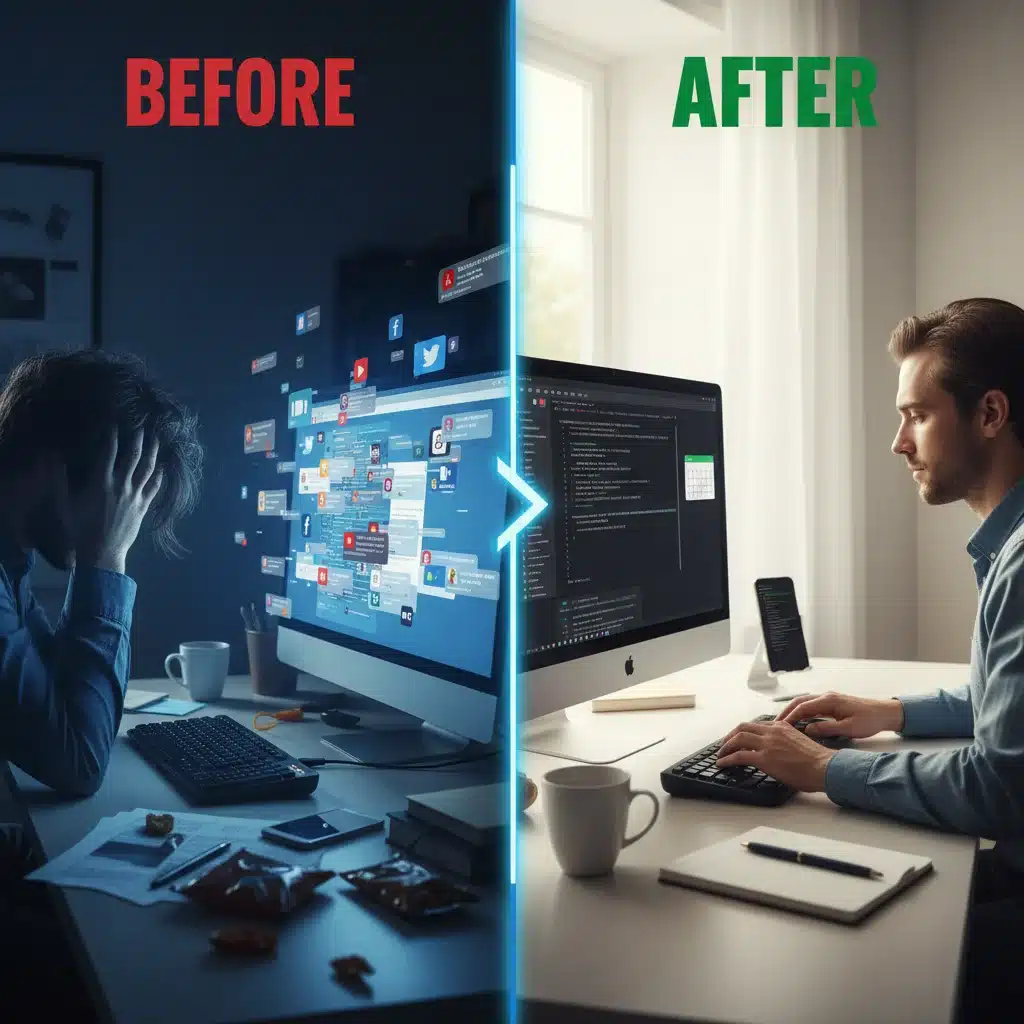
In the dynamic and ever-evolving landscape of the modern workplace, the ability to maintain unwavering focus has become an invaluable asset, particularly for US workers navigating the complexities of 2026. The digital age, while offering unparalleled connectivity and access to information, simultaneously presents an unprecedented barrage of distractions. From constant notifications and an endless stream of emails to the siren call of social media and the allure of myriad online content, our attention spans are under constant assault. This pervasive challenge of digital distraction is not merely an inconvenience; it significantly erodes productivity, diminishes the quality of work, and contributes to increased stress levels and burnout. The quest for enhanced concentration is no longer a luxury but a fundamental necessity for professional success and personal well-being.
The average US worker in 2026 is grappling with more digital inputs than ever before. The lines between work and personal life have blurred, especially with the continued prevalence of remote and hybrid work models. This fusion means that the distractions of home life often merge with the digital demands of the office, creating a perfect storm for fragmented attention. Studies consistently show that it takes an average of 23 minutes and 15 seconds to return to a task after being interrupted. When these interruptions are frequent and varied, the cumulative loss of productive time becomes staggering. Beyond the immediate impact on task completion, chronic distraction can hinder critical thinking, creativity, and problem-solving abilities – skills that are paramount in today’s knowledge-based economy. Therefore, identifying and implementing effective strategies and tools to combat these digital intrusions is not just about doing more, but about doing better, with greater clarity and purpose.
Fortunately, the same digital innovation that brings forth these distractions also offers powerful solutions. A new generation of digital focus tools has emerged, specifically designed to help individuals reclaim their attention, structure their workdays more effectively, and cultivate an environment conducive to deep work. These tools leverage advanced technology, behavioral psychology, and user-centric design to block out noise, streamline workflows, and encourage mindful engagement with tasks. For US workers aiming to thrive in 2026, embracing these digital aids is a strategic move towards achieving sustained productivity and fostering a more focused, fulfilling professional life. This article will delve into six such cutting-edge digital focus tools, exploring how each can serve as a powerful ally in the battle against distraction and a catalyst for enhanced concentration.
The Pervasive Problem of Digital Distraction in 2026
Before we dive into the solutions, it’s crucial to fully grasp the scope of the problem. Digital distraction is more than just a minor annoyance; it’s a systemic challenge impacting the mental well-being and output of US workers across all industries. In 2026, our digital environments are richer and more complex than ever. We’re not just dealing with email and social media; we have team collaboration platforms like Slack and Microsoft Teams, project management software, news feeds, streaming services, and an endless array of apps vying for our attention. Each notification, each new message, each trending topic acts as a micro-interruption, pulling our minds away from the task at hand and forcing a costly context switch.
The human brain is not wired for constant multitasking, despite popular belief. When we attempt to juggle multiple digital inputs, our cognitive load increases, leading to reduced efficiency, more errors, and a feeling of being constantly overwhelmed. This phenomenon, often referred to as ‘attention residue,’ means that even after we switch back to our primary task, a part of our mind remains engaged with the previous distraction, impairing our ability to fully concentrate. For US workers, this translates into longer working hours to achieve the same output, increased stress, and a diminished sense of accomplishment. The economic impact is also significant, with countless hours of lost productivity costing businesses billions annually.
Furthermore, the addictive nature of many digital platforms exacerbates the problem. Designed with sophisticated algorithms to maximize engagement, social media feeds and news aggregators can create dopamine loops that make it incredibly difficult to disengage. This constant craving for novelty and external validation makes focused, deep work an uphill battle. The challenge is compounded by the expectation in many workplaces for immediate responses, blurring the lines between urgent and important, and fostering a culture of constant connectivity that is detrimental to sustained concentration. Recognizing these deep-seated issues is the first step towards seeking effective antidotes, and that’s where digital focus tools come into play, offering a structured approach to reclaim our mental real estate.
Understanding the Need for Digital Focus Tools
Given the intricate web of digital distractions, relying solely on willpower to maintain focus is often an insufficient strategy. Our brains are naturally drawn to novelty and immediate gratification, making us susceptible to the constant pings and alerts from our devices. This is where specialized digital focus tools become indispensable. These aren’t just simple timers or notification blockers; they are sophisticated applications designed to create an environment conducive to deep work. They work by implementing various techniques, from strict application blocking to gentle nudges for mindfulness, helping users to train their attention and build sustainable habits.
The demand for such tools has surged among US workers as the understanding of cognitive performance and its link to digital hygiene grows. Businesses are also increasingly recognizing the value of supporting their employees in managing digital overload, as a focused workforce is a productive and innovative workforce. These tools offer a proactive approach to managing one’s digital environment, rather than a reactive one. Instead of constantly fighting off distractions, users can set up boundaries and structures that automatically guide them towards concentration. This shift from reactive to proactive management is key to long-term success in maintaining focus.
Moreover, digital focus tools often provide valuable insights into usage patterns, helping individuals identify their biggest time-wasters and understand when and how they are most productive. This data-driven approach empowers users to make informed decisions about their digital habits and tailor their strategies for optimal concentration. Whether it’s through the Pomodoro Technique timers, website blockers, ambient noise generators, or advanced analytics dashboards, these tools offer a diverse toolkit to address various aspects of digital distraction. For US workers in 2026, embracing these digital aids is not about limiting freedom, but about regaining control over one’s most precious resource: attention.
1. Freedom: The Ultimate Digital Distraction Blocker
In the relentless battle against digital distractions, Freedom stands out as a formidable ally. This powerful application is much more than a simple website blocker; it’s a comprehensive tool designed to create a distraction-free work environment across all your devices. Freedom allows users to block distracting websites and applications for a set period, effectively cutting off the primary sources of digital noise. What makes Freedom particularly effective is its cross-device synchronization. Once a blocking session begins, it applies to your computer, phone, and tablet simultaneously, ensuring there are no digital escape routes.
For US workers struggling with the temptation of social media, news sites, or entertainment platforms during work hours, Freedom offers a robust solution. You can create custom blocklists tailored to your specific needs, ranging from a few notorious time-wasting sites to a comprehensive list that includes almost everything except essential work tools. The ability to schedule recurring sessions is a game-changer, allowing users to automatically enter focused work periods each day without having to manually initiate a session. This proactive scheduling helps build consistent habits and reduces the mental effort required to start deep work.
Beyond its core blocking functionality, Freedom also provides an optional ‘Locked Mode’ which prevents you from ending a session prematurely, reinforcing discipline during critical work periods. The psychological benefit of knowing you’ve committed to a distraction-free block of time can significantly boost concentration and reduce the cognitive load associated with resisting temptations. In 2026, where the digital landscape is only becoming more cluttered, Freedom offers a clear path to reclaiming your attention and dedicating it entirely to your professional goals. It’s an investment in your productivity and mental clarity that pays dividends in focused output.
2. Forest: Gamifying Focus with a Purpose
Forest takes a unique and engaging approach to combating digital distraction by gamifying the process of staying focused. This innovative app transforms your focus sessions into a virtual forest-building exercise. When you want to start a period of concentrated work, you plant a virtual tree in the app. As long as you remain focused and don’t leave the app to browse distracting websites or use other apps on your phone, your tree grows. If you break your focus and succumb to digital temptation, your tree withers and dies. This simple yet brilliant mechanism leverages positive reinforcement and a sense of responsibility to encourage users to stay on task.
The appeal of Forest lies in its ability to turn a mundane act of self-control into a rewarding experience. Watching your forest grow, filled with healthy, vibrant trees, provides a tangible representation of your sustained focus and productivity. This visual feedback can be incredibly motivating, especially for those who find traditional time management methods less engaging. Forest also incorporates the Pomodoro Technique, allowing users to set specific focus intervals (typically 25 minutes) followed by short breaks, further structuring their work time.
What sets Forest apart and adds an extra layer of purpose is its partnership with a real tree-planting organization, Trees for the Future. When users spend virtual coins earned through successful focus sessions, they can contribute to planting real trees in the world. This connection to a tangible environmental impact provides an additional, powerful incentive for US workers to stay focused, transforming personal productivity into a collective good. In 2026, as environmental consciousness continues to rise, Forest offers a compelling way to align personal and global goals, making it an excellent digital focus tool for those seeking both productivity and purpose.
3. Brain.fm: Curated Soundscapes for Enhanced Concentration
Traditional background music can often be more distracting than helpful, especially if it contains lyrics or unpredictable rhythms. Brain.fm addresses this challenge by offering scientifically engineered functional music designed specifically to enhance focus, relaxation, or sleep. Unlike conventional music, Brain.fm’s patented technology generates audio that is designed to synchronize with your brainwaves, gently guiding your mind into a state of heightened concentration. This isn’t just ambient noise; it’s a carefully crafted auditory experience optimized for cognitive performance.
For US workers struggling to find a quiet environment or needing to block out office chatter, Brain.fm provides an auditory sanctuary. The app offers various categories, including ‘Focus,’ ‘Relax,’ ‘Meditate,’ and ‘Sleep,’ each with unique soundscapes tailored to achieve the desired mental state. The ‘Focus’ category, in particular, is invaluable for deep work. Users report feeling more immersed in their tasks, less prone to external distractions, and able to sustain concentration for longer periods. The absence of jarring changes or lyrical content ensures that the audio remains a background aid rather than a foreground distraction.
In 2026, with the proliferation of open-plan offices and an increasing number of people working from home with potential domestic interruptions, Brain.fm offers a personalized and portable solution to create an optimal working atmosphere anywhere. Its effectiveness is backed by scientific research, providing a level of credibility that sets it apart from generic white noise apps. By providing a consistent and cognitively optimized sound environment, Brain.fm helps US workers to enter and maintain a flow state, significantly boosting their ability to concentrate on complex tasks and achieve high-quality output.
4. Todoist: Streamlining Tasks for Mental Clarity
While not a direct distraction blocker, Todoist plays a crucial role in enhancing focus by providing unparalleled clarity and organization for your tasks. One of the biggest culprits of fragmented attention is the mental burden of unorganized to-dos, looming deadlines, and a general sense of not knowing what to tackle next. Todoist addresses this by offering a robust, intuitive, and highly flexible task management system that helps US workers capture, organize, and prioritize everything they need to do, both professionally and personally.
The power of Todoist lies in its simplicity combined with its powerful features. Users can quickly add tasks, set due dates, assign priorities, and organize them into projects. The ability to break down large tasks into smaller, manageable sub-tasks helps to reduce overwhelm and makes complex projects seem less daunting. By externalizing your to-do list into a reliable system, you free up valuable mental bandwidth that would otherwise be spent remembering what needs to be done. This mental clarity is a prerequisite for deep concentration.
Furthermore, Todoist’s natural language input, recurring tasks, and integration with countless other applications make it an indispensable tool for maintaining order in a chaotic digital world. For US workers in 2026, having a centralized and accessible system for all commitments means less time spent worrying about forgotten tasks and more time dedicated to focused execution. By providing a clear roadmap for your day, Todoist helps you to proactively manage your workload, minimize stress, and direct your attention precisely where it’s needed most, thereby indirectly but powerfully boosting your concentration and overall productivity.
5. RescueTime: Unveiling Your Digital Habits
You can’t manage what you don’t measure. RescueTime operates on this fundamental principle, offering a powerful, automated time-tracking and analytics tool that provides US workers with invaluable insights into their digital habits. This application runs quietly in the background on your computer and mobile devices, automatically categorizing the time you spend on various websites and applications. It then generates detailed reports, highlighting where your time is actually going versus where you think it’s going.
The revelations from RescueTime can be profoundly eye-opening. Many individuals underestimate the cumulative impact of short bursts of distraction throughout the day. RescueTime quantifies this, showing you exactly how much time is lost to unproductive activities. This data is crucial for understanding your personal patterns of distraction and identifying the biggest time sinks. Armed with this knowledge, US workers can make informed decisions about modifying their digital environment and habits. For instance, if RescueTime reveals that an hour a day is spent on social media, that’s an hour that can be reclaimed for focused work.
Beyond tracking, RescueTime also offers features to help you improve. You can set personal goals, receive alerts when you spend too much time on distracting sites, and even block distracting websites for a set period, similar to Freedom. The integration of data-driven insights with actionable blocking capabilities makes RescueTime a comprehensive solution for self-awareness and improvement. In 2026, understanding your digital footprint is the first step towards mastering your attention, and RescueTime provides the essential data to guide US workers towards more intentional and concentrated work habits.
6. Focus@Will: Personalized Music for Cognitive Enhancement
Similar to Brain.fm but with its own distinct approach, Focus@Will is a subscription-based service that provides scientifically optimized music channels designed to enhance concentration and productivity. The platform offers a diverse range of genres, from classical and ambient to cinematic and even specific ADHD-friendly tracks, all engineered to reduce distractions and help users achieve a flow state. The core principle behind Focus@Will is that certain types of music, when created and modulated correctly, can significantly improve your ability to focus by engaging your brain without distracting it.
What makes Focus@Will particularly effective for US workers in 2026 is its personalization algorithms. The service adapts to your unique brain type and preferences, learning what works best for you over time to optimize your focus sessions. This adaptive quality ensures that the music you listen to is always working to your advantage, rather than simply being background noise. The tracks are designed to prevent habituation, meaning your brain won’t get too used to the sounds and start tuning them out, thus maintaining their effectiveness over long periods.
For professionals who require sustained periods of deep concentration – such as writers, programmers, analysts, or designers – Focus@Will can be a powerful asset. It provides an auditory shield against external disturbances and internal mental wanderings, creating a consistent and stimulating environment for cognitive performance. The platform also includes a productivity tracker to monitor your focus sessions and observe improvements over time. By providing a tailored auditory experience, Focus@Will helps US workers to unlock their full cognitive potential, reduce mental fatigue, and achieve higher levels of sustained concentration in their daily tasks.
Integrating Digital Focus Tools into Your Workflow for Optimal Results
Adopting digital focus tools is not merely about downloading an app; it’s about strategically integrating them into your daily workflow to cultivate lasting habits of concentration. For US workers in 2026, the key to maximizing the benefits of these tools lies in a thoughtful and disciplined approach. Simply having these tools on your devices won’t magically make you more focused; you need to actively use them and adapt your routines around them. The first step is to identify your primary challenges. Are you constantly checking social media? Do emails derail your deep work? Or do you struggle with organizing your tasks?
Once you understand your specific pain points, you can select the tools that best address them. For instance, if social media is your Achilles’ heel, Freedom or RescueTime’s blocking features would be a priority. If you struggle with maintaining task clarity, Todoist becomes indispensable. If external noise is an issue, Brain.fm or Focus@Will can create your personal sound sanctuary. It’s often most effective to start with one or two tools and gradually integrate more as you become comfortable and see positive results. Overloading yourself with too many new systems at once can be counterproductive.
Consistency is paramount. Schedule dedicated focus blocks using tools like Freedom or Forest, and treat them as non-negotiable appointments. During these blocks, actively engage with your chosen auditory aid (Brain.fm/Focus@Will) and ensure your task list (Todoist) is clear and prioritized. Use RescueTime to review your progress and identify areas for further improvement. Regularly analyze the data provided by these tools to refine your strategies. For example, if RescueTime shows you’re most productive in the mornings, schedule your most demanding tasks for that time and use your blocking tools aggressively.
Furthermore, communicate your usage of these tools to your colleagues and team members, especially in remote or hybrid work environments. Let them know when you’re in a ‘deep work’ session and might be less responsive. This sets clear boundaries and manages expectations, further reducing interruptions. Remember that these tools are enablers, not magic bullets. They empower you to exercise greater control over your attention, but the ultimate responsibility for focus lies with you. By consistently applying these digital aids and adapting your habits, US workers can transform their relationship with technology, turning it from a source of distraction into a powerful engine for sustained concentration and unparalleled productivity in 2026 and beyond.
The Future of Focus: Beyond 2026
As we look beyond 2026, the landscape of work and technology will continue to evolve, and with it, the challenges and solutions for maintaining focus. Artificial intelligence and machine learning are poised to play an even more significant role in personal productivity. We can anticipate more sophisticated, predictive focus tools that learn our individual work patterns, anticipate potential distractions, and proactively create optimal working environments. Imagine an AI assistant that not only blocks notifications but also intelligently analyzes your calendar, task list, and even biometric data to suggest the best times for deep work and automatically configure your digital environment accordingly.
Further advancements in neurotechnology might lead to more personalized brain-computer interfaces or wearable devices that provide real-time feedback on our mental state, helping us to self-regulate our attention more effectively. The integration of virtual and augmented reality could also offer new ways to create immersive, distraction-free workspaces, transporting us to virtual offices or serene digital landscapes conducive to concentration, regardless of our physical surroundings. These technologies could provide unprecedented levels of control over our sensory input, minimizing external distractions to an extreme degree.
However, regardless of technological advancements, the fundamental principles of focus will remain constant. The need for clear goals, structured work, and mindful engagement with tasks will always be paramount. Digital focus tools, whether in 2026 or decades later, will continue to serve as powerful aids in this human endeavor. They will evolve to be more seamless, more intelligent, and more integrated into our lives, but their core purpose will endure: to help us reclaim our most valuable resource – our attention – in an increasingly complex and demanding world. For US workers, staying abreast of these innovations and continually adapting their strategies will be key to thriving in the future of work.
Conclusion: Reclaiming Your Attention in a Digital World
The challenge of digital distraction is a defining characteristic of the modern professional landscape, particularly for US workers navigating the demands of 2026. The constant barrage of notifications, the allure of infinite online content, and the blurring lines between work and personal life conspire to fragment our attention and diminish our productivity. However, this challenge is not insurmountable. As we have explored, a powerful arsenal of digital focus tools has emerged, offering effective and innovative solutions to combat these distractions and significantly boost concentration.
Tools like Freedom provide robust, cross-device blocking to create truly distraction-free zones, while Forest gamifies the process of staying focused, even contributing to real-world tree planting. Brain.fm and Focus@Will offer scientifically engineered soundscapes to gently guide your brain into a state of optimal concentration, shielding you from auditory distractions. Todoist brings order to the chaos of tasks, freeing up mental bandwidth for deep work, and RescueTime provides invaluable insights into your digital habits, empowering you to make data-driven improvements. Each of these digital focus tools offers a unique approach to tackling the multifaceted problem of modern-day distraction, collectively forming a comprehensive strategy for enhanced productivity.
The key to harnessing the full potential of these tools lies in thoughtful integration and consistent application within your daily workflow. By understanding your personal distraction triggers, selecting the right tools for your needs, and committing to their regular use, US workers can transform their digital environment from a source of constant interruption into a catalyst for deep work and sustained achievement. In 2026 and beyond, mastering your attention is not just about avoiding distractions; it’s about proactively cultivating an environment and a mindset that fosters clarity, creativity, and unparalleled productivity. Embrace these digital focus tools, and reclaim your most valuable asset: your ability to concentrate.