Boost Business Productivity: Unlocking Software’s ROI for US Companies

The ROI of Productivity Software: How US Businesses See an Average 30% Increase in Project Completion Rates by 2026
In today’s hyper-competitive global landscape, US businesses are constantly seeking innovative strategies to enhance efficiency, streamline operations, and ultimately, boost their bottom line. A key area of investment that has consistently delivered substantial returns is productivity software. Far from being a mere convenience, these digital tools have become indispensable assets, fundamentally transforming how organizations manage projects, communicate, and collaborate. Indeed, industry projections indicate that US businesses are poised to witness an average 30% increase in project completion rates by 2026, a testament to the profound impact of strategic investments in productivity software.
This comprehensive guide delves into the intricate world of productivity software, exploring its multifaceted benefits, the tangible return on investment (ROI) it offers, and how businesses can strategically implement and leverage these tools to achieve remarkable operational improvements. We will dissect the mechanisms through which productivity software drives efficiency, reduces costs, and fosters a more collaborative and engaged workforce. Understanding the true value of productivity software ROI is no longer optional; it’s a critical imperative for any business aiming to thrive in the digital age.
Understanding Productivity Software and Its Evolution
Productivity software encompasses a vast array of applications designed to help individuals and teams perform tasks more efficiently and effectively. From simple word processors and spreadsheets to sophisticated project management platforms, communication tools, and automation suites, these technologies have evolved dramatically over the past few decades. Initially focused on individual task completion, modern productivity software emphasizes collaboration, real-time data sharing, and intelligent automation, reflecting the shift towards more interconnected and agile work environments.
The evolution of productivity software has been closely tied to advancements in cloud computing, artificial intelligence (AI), and mobile technology. Cloud-based solutions have democratized access to powerful tools, allowing businesses of all sizes to leverage enterprise-grade capabilities without significant upfront infrastructure investments. AI-driven features, such as smart scheduling, predictive analytics, and automated workflows, are further enhancing the intelligence and efficiency of these platforms. Mobile accessibility ensures that teams can remain productive regardless of their physical location, supporting the growing trend of remote and hybrid work models.
The Core Pillars of Productivity Software
At its heart, productivity software addresses several core operational challenges:
- Task Management: Tools like Trello, Asana, and Monday.com help teams organize tasks, set deadlines, assign responsibilities, and track progress.
- Communication and Collaboration: Platforms such as Slack, Microsoft Teams, and Zoom facilitate seamless internal and external communication, file sharing, and virtual meetings.
- Document Management: Google Workspace, Microsoft 365, and Dropbox offer robust solutions for creating, editing, storing, and sharing documents securely.
- Automation: Tools like Zapier and IFTTT automate repetitive tasks, integrating various applications to create efficient workflows and reduce manual effort.
- Time Tracking and Analytics: Software like Toggl Track and Clockify provide insights into how time is spent, helping to identify bottlenecks and optimize resource allocation.
Each of these categories contributes to enhancing productivity, but their true power lies in their integration and synergistic effect. When deployed strategically, this suite of tools can significantly boost productivity software ROI, leading to tangible improvements in project completion rates and overall business performance.
The Tangible ROI of Productivity Software for US Businesses
The promise of a 30% increase in project completion rates by 2026 is not an arbitrary figure; it’s rooted in the demonstrable benefits that productivity software delivers. For US businesses, this ROI manifests in several critical areas:
1. Enhanced Efficiency and Streamlined Workflows
One of the most immediate and impactful benefits of productivity software is its ability to streamline workflows and eliminate inefficiencies. Manual processes, often prone to errors and delays, are replaced by automated systems. For example, project management software centralizes all project-related information, making it easy to track progress, identify dependencies, and allocate resources effectively. Communication tools reduce the need for lengthy email chains, fostering quicker decision-making and problem-solving. This direct impact on operational efficiency is a primary driver of productivity software ROI.
2. Improved Collaboration and Communication
Modern workplaces demand seamless collaboration, especially with the rise of remote and hybrid teams. Productivity software bridges geographical gaps, enabling teams to work together in real-time on shared documents, projects, and ideas. Video conferencing, instant messaging, and shared workspaces break down communication barriers, ensuring that everyone is on the same page. This enhanced collaboration not only accelerates project timelines but also fosters a stronger sense of teamwork and shared purpose, contributing significantly to project completion success.
3. Cost Reduction
While productivity software involves an investment, it often leads to significant cost reductions in the long run. By automating tasks, businesses can reduce the need for manual labor, allowing employees to focus on higher-value activities. Reduced travel expenses through virtual meetings, minimized paper consumption through digital document management, and optimized resource allocation all contribute to a healthier bottom line. Furthermore, by improving project completion rates, businesses can avoid costly delays and penalties, further enhancing their productivity software ROI.
4. Better Decision-Making Through Data Insights
Many productivity tools come equipped with analytics and reporting features, providing valuable insights into team performance, project progress, and resource utilization. This data empowers managers to make informed decisions, identify areas for improvement, and proactively address potential issues. Understanding where time and resources are being spent, and which processes are most effective, is crucial for continuous improvement and maximizing the impact of productivity software.
5. Increased Employee Engagement and Satisfaction
When employees have access to tools that simplify their work, reduce frustration, and enable them to perform their jobs more effectively, their engagement and satisfaction levels tend to rise. Productivity software can alleviate the burden of repetitive tasks, provide clearer direction, and foster a more organized work environment. Engaged employees are more motivated, productive, and less likely to leave, leading to reduced turnover costs and a more stable workforce, which indirectly contributes to productivity software ROI.
Key Strategies for Maximizing Productivity Software ROI
Simply purchasing productivity software is not enough; businesses must adopt a strategic approach to implementation and utilization to fully realize its potential ROI. Here are some key strategies:
1. Conduct a Thorough Needs Assessment
Before investing in any software, businesses should conduct a comprehensive assessment of their current workflows, pain points, and specific needs. What are the biggest bottlenecks? Which tasks consume the most time? What are the communication gaps? Identifying these areas will help in selecting the right tools that directly address existing challenges and offer the highest potential for productivity software ROI.
2. Choose the Right Tools for Your Business
The market is saturated with productivity software, each with its unique features and pricing models. It’s crucial to select tools that align with your business size, industry, budget, and specific requirements. Consider factors like ease of use, integration capabilities with existing systems, scalability, and vendor support. Opting for a suite of integrated tools from a single vendor or carefully selected compatible applications can prevent data silos and ensure a seamless user experience.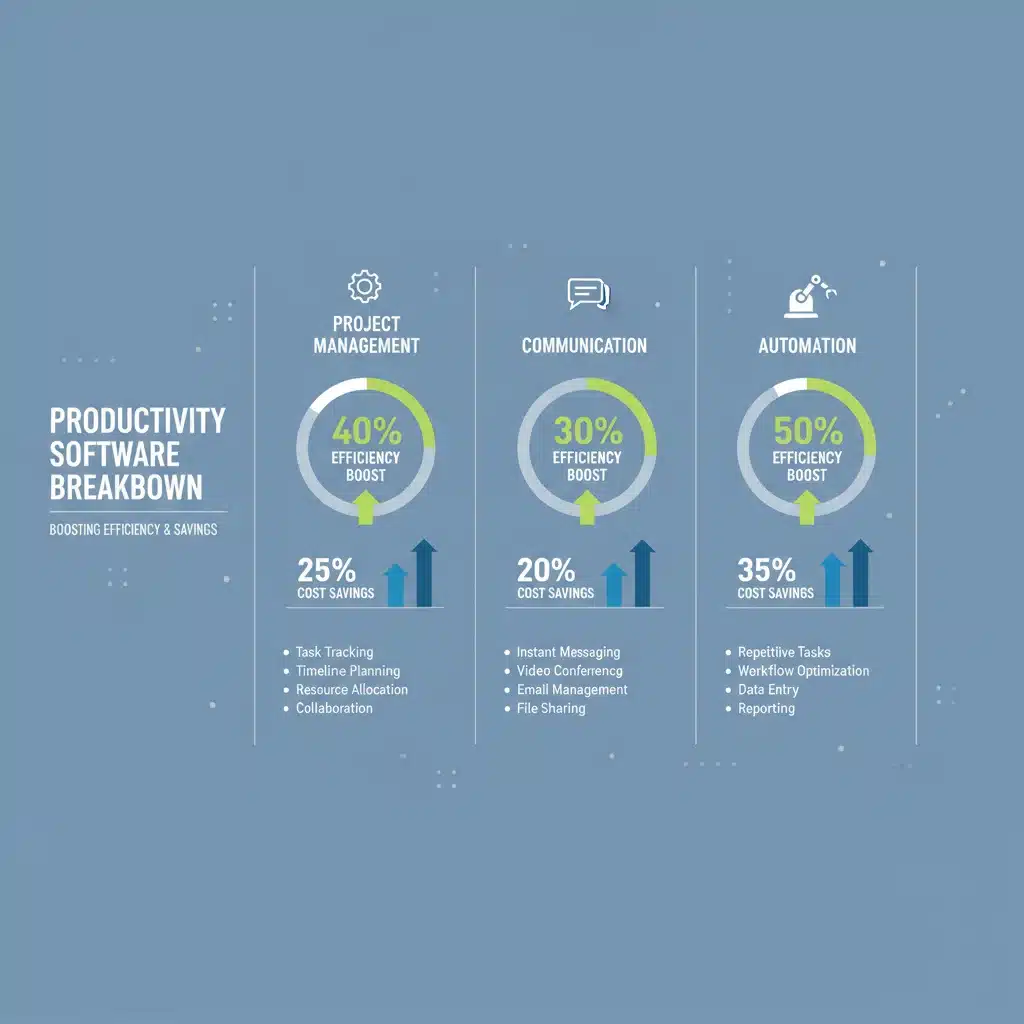
3. Provide Comprehensive Training and Support
Even the most intuitive software can be daunting if users are not properly trained. Investing in comprehensive training programs ensures that employees understand how to effectively use the new tools, leverage all their features, and integrate them into their daily workflows. Ongoing support, troubleshooting resources, and opportunities for feedback are also essential to ensure high adoption rates and continuous improvement. A well-trained workforce is key to unlocking the full productivity software ROI.
4. Foster a Culture of Adoption and Continuous Improvement
Successful software implementation goes beyond technical training; it requires a cultural shift. Leaders must champion the adoption of new tools, communicate their benefits, and demonstrate their own commitment. Encourage employees to experiment, provide feedback, and share best practices. Regularly review software usage metrics, gather user feedback, and make adjustments to workflows or configurations as needed. This iterative approach ensures that the software continues to meet evolving business needs and maximizes its productivity software ROI.
5. Integrate with Existing Systems
To truly maximize productivity software ROI, ensure that new tools integrate seamlessly with your existing technology stack. Disconnected systems can lead to data duplication, inconsistencies, and additional manual work, negating the very purpose of productivity software. Look for APIs, native integrations, or third-party connectors that allow your chosen software to communicate and share data with other essential business applications, such as CRM, ERP, or HR systems.
Case Studies: Real-World Productivity Software ROI in Action
Numerous US businesses across various sectors have already reaped substantial benefits from their investments in productivity software. While specific names are often proprietary, the patterns of success are clear:
- A Mid-Sized Tech Company: Implemented a comprehensive project management platform, reducing project delays by 25% and increasing on-time project completion by 35% within the first year. This led to improved client satisfaction and the ability to take on more projects without increasing headcount, demonstrating significant productivity software ROI.
- A Large Marketing Agency: Adopted a unified communication and collaboration suite, cutting down internal email volume by 40% and accelerating client feedback cycles by 20%. This resulted in faster campaign launches and a more agile response to market changes.
- A Distributed Retail Chain: Utilized task management software to standardize operational procedures across all stores, leading to a 15% improvement in inventory management accuracy and a 10% reduction in staff training time for new hires.
These examples underscore the diverse ways in which productivity software can drive efficiency, from streamlining core business processes to enhancing communication and accelerating project delivery. The consistent theme is a measurable improvement in key performance indicators, translating directly into a robust productivity software ROI.
The Future of Productivity Software and Its Impact on US Businesses
The landscape of productivity software is continuously evolving, driven by technological advancements and changing work paradigms. Several trends are set to further amplify the productivity software ROI for US businesses:
1. AI and Machine Learning Integration
Artificial intelligence and machine learning are increasingly embedded within productivity tools, offering features like intelligent task prioritization, predictive analytics for project risks, automated report generation, and personalized recommendations. These capabilities empower users to work smarter, not just harder, by offloading cognitive load and providing actionable insights. AI will make productivity software even more intuitive and proactive.
2. Hyper-Automation and Robotic Process Automation (RPA)
The convergence of AI, machine learning, and RPA is leading to hyper-automation, where entire end-to-end business processes can be automated. This goes beyond simple task automation to orchestrating complex workflows across multiple applications and departments. For US businesses, this means unprecedented levels of efficiency, error reduction, and cost savings, pushing the boundaries of productivity software ROI.
3. Enhanced Collaboration in Virtual and Augmented Reality
As remote and hybrid work models become more entrenched, there will be a greater demand for immersive collaboration experiences. Virtual and augmented reality (VR/AR) are poised to transform how teams interact, offering virtual meeting spaces that feel more engaging and collaborative than traditional video calls. While still nascent, these technologies hold immense potential for enhancing productivity in distributed environments.
4. Focus on Employee Well-being and Digital Dexterity
Future productivity software will increasingly incorporate features that support employee well-being, such as digital detox reminders, focus mode settings, and insights into work-life balance. Simultaneously, there will be a greater emphasis on developing digital dexterity – the ability of employees to adapt and leverage new technologies effectively. Tools will become more adaptive and personalized to individual working styles and needs.
5. Data Security and Compliance
With increased reliance on cloud-based productivity tools, data security and compliance will remain paramount. Vendors will continue to enhance their security features, offering robust encryption, multi-factor authentication, and compliance certifications to protect sensitive business information. US businesses must prioritize choosing software that meets stringent security standards to mitigate risks and maintain trust.
Measuring and Sustaining Productivity Software ROI
To ensure that the investment in productivity software continues to yield returns, businesses must establish clear metrics and a framework for ongoing evaluation. Measuring ROI involves both quantitative and qualitative indicators:
Quantitative Metrics:
- Project Completion Rates: Track the percentage of projects completed on time and within budget.
- Task Completion Time: Monitor the average time taken to complete specific tasks before and after software implementation.
- Operational Costs: Analyze reductions in labor costs (due to automation), paper consumption, travel expenses, and other operational overheads.
- Revenue Growth: Assess how increased efficiency and faster project delivery contribute to higher revenue or capacity for new business.
- Error Rates: Measure the decrease in errors or rework due to streamlined processes and automation.
Qualitative Metrics:
- Employee Satisfaction: Conduct surveys and gather feedback on how the software impacts employee morale, workload, and job satisfaction.
- Collaboration Effectiveness: Observe improvements in team communication, information sharing, and decision-making speed.
- Customer Satisfaction: Note any improvements in client relations due to faster project delivery or enhanced service.
Regularly reviewing these metrics allows businesses to identify areas where the software is performing well and where adjustments might be needed. This continuous feedback loop is crucial for optimizing workflows, providing additional training, or even exploring new features to further enhance productivity software ROI.
Sustaining ROI also involves staying abreast of software updates and new features. Vendors frequently release enhancements that can further improve efficiency. Businesses should encourage employees to explore these updates and integrate them into their workflows. Furthermore, periodic re-evaluation of the entire software ecosystem ensures that the tools remain relevant and effective as business needs evolve.
Challenges and Considerations
While the benefits of productivity software are clear, businesses should also be aware of potential challenges:
- User Adoption: Resistance to change can hinder the successful implementation of new software. Strong leadership, clear communication, and comprehensive training are vital.
- Integration Complexities: Integrating new software with legacy systems can be challenging. Careful planning and potentially custom development might be required.
- Data Security: As more data moves to the cloud, ensuring robust data security and compliance with regulations is a continuous concern.
- Cost Management: While ROI is significant, managing subscription costs for multiple tools, especially as teams grow, requires careful budgeting.
- Feature Overload: Some software can be overly complex with too many features, leading to confusion and underutilization. Simplicity and relevance should be prioritized.
Addressing these challenges proactively through thoughtful planning, stakeholder engagement, and ongoing support is crucial for maximizing the productivity software ROI.
Conclusion
The projection of US businesses achieving an average 30% increase in project completion rates by 2026 through productivity software is not merely an optimistic forecast; it’s a reflection of the tangible, measurable value these tools bring to the modern enterprise. From streamlining workflows and fostering collaboration to reducing costs and empowering better decision-making, the productivity software ROI is a compelling narrative for any organization striving for operational excellence.
By strategically selecting the right tools, investing in comprehensive training, nurturing a culture of adoption, and continuously measuring performance, US businesses can unlock the full potential of productivity software. The future of work is undeniably digital, and those who embrace and effectively leverage these powerful technologies will be the ones that lead their industries, innovate faster, and achieve sustainable growth in an increasingly competitive global economy. The journey to enhanced productivity and superior project completion begins with a commitment to smart software investment and intelligent implementation.