
Future-Proof Your Workflow: Essential Cybersecurity Features in Productivity Tools for US Enterprises in 2026
In the dynamic landscape of modern business, US enterprises are constantly striving for enhanced efficiency and collaboration. Productivity tools have become the backbone of daily operations, enabling teams to connect, create, and innovate regardless of geographical boundaries. However, this increased reliance on digital platforms also brings forth a heightened risk of cyber threats. As we look towards 2026, the sophistication of cyberattacks continues to escalate, making robust enterprise cybersecurity features in productivity tools not just an advantage, but a fundamental necessity for survival and growth.
The digital transformation journey for many US enterprises has been rapid, often prioritizing functionality and user experience over comprehensive security measures. This oversight can lead to significant vulnerabilities, exposing sensitive data, intellectual property, and critical operational systems to malicious actors. Therefore, understanding and implementing the right cybersecurity features is paramount. This extensive guide will delve into the essential Enterprise Cybersecurity Features that US enterprises must integrate into their productivity tools to safeguard their future.
The Evolving Threat Landscape: Why 2026 Demands More
The cyber threat landscape is a continually shifting battleground. What was considered cutting-edge security a few years ago might be insufficient today. By 2026, enterprises will face an even more complex array of threats, including:
- Sophisticated Phishing and Social Engineering: AI-powered phishing attacks will become increasingly convincing, making it harder for employees to distinguish legitimate communications from malicious ones.
- Ransomware 2.0: Beyond data encryption, future ransomware attacks may involve data exfiltration and extortion, threatening to leak sensitive information if demands are not met.
- Supply Chain Attacks: Attackers will continue to target weaker links in the supply chain to infiltrate larger organizations, making third-party risk management critical.
- Advanced Persistent Threats (APTs): Nation-state actors and highly organized criminal groups will employ stealthier and more persistent methods to gain long-term access to enterprise networks.
- Insider Threats: Both malicious and unintentional insider actions will remain a significant risk, requiring robust monitoring and access controls.
- Zero-Day Exploits: New vulnerabilities will constantly emerge, demanding proactive patching and threat intelligence.
In this environment, relying solely on traditional perimeter defenses is no longer enough. Cybersecurity must be embedded into the very fabric of every tool and process, especially those facilitating collaboration and data exchange. This is where robust Enterprise Cybersecurity Features in productivity tools become indispensable.
Core Pillars of Enterprise Cybersecurity Features in Productivity Tools
To effectively combat these evolving threats, productivity tools must incorporate a multi-layered security approach. Here are the essential cybersecurity features that US enterprises should prioritize by 2026:
1. Granular Access Controls and Identity Management
Identity is the new perimeter. Strong access controls are fundamental to preventing unauthorized access to sensitive information and systems. This pillar includes several critical Enterprise Cybersecurity Features:
- Multi-Factor Authentication (MFA) and Adaptive MFA: Beyond simple passwords, MFA adds layers of verification (e.g., biometrics, hardware tokens, one-time codes). Adaptive MFA takes this further by adjusting authentication requirements based on context, such as location, device, and user behavior. For instance, if an employee tries to log in from an unusual geographical location, adaptive MFA might trigger an additional authentication step.
- Single Sign-On (SSO): SSO streamlines access by allowing users to log in once to access multiple applications. While convenient, it must be implemented securely, often integrating with robust identity providers (IdPs) that offer advanced security features.
- Role-Based Access Control (RBAC): RBAC ensures that users only have access to the information and functionalities necessary for their specific role. This minimizes the risk of accidental data exposure or malicious activity by limiting privileges.
- Attribute-Based Access Control (ABAC): A more dynamic alternative to RBAC, ABAC grants access based on a combination of attributes (user, resource, environment). This allows for highly flexible and context-aware access policies, crucial for complex enterprise environments.
- Just-in-Time (JIT) Access: Granting temporary, time-limited access to resources only when needed reduces the window of opportunity for attackers and minimizes the impact of compromised credentials.
2. Advanced Data Protection and Privacy
Data is the lifeblood of any enterprise. Protecting its confidentiality, integrity, and availability is paramount. Productivity tools must offer comprehensive data protection Enterprise Cybersecurity Features:
- End-to-End Encryption (E2EE): All data, whether at rest (stored) or in transit (being communicated), must be encrypted. E2EE ensures that only authorized parties can read the data, even if intercepted. This applies to files, messages, video calls, and any other data exchanged within the productivity suite.
- Data Loss Prevention (DLP): DLP solutions monitor and control endpoint activities, filter data streams, and enforce data protection policies. They prevent sensitive information from leaving the organizational boundaries, whether through accidental sharing or malicious exfiltration.
- Data Masking and Tokenization: For non-production or test environments, data masking replaces sensitive data with structurally similar but inauthentic information. Tokenization replaces sensitive data with a unique identifier or token, protecting the original data while allowing processing.
- Secure File Sharing and Collaboration: Features allowing secure sharing with external parties, including password protection, expiry dates for shared links, and audit trails of access.
- Automated Data Backup and Recovery: Robust, encrypted backup solutions with quick recovery capabilities are essential for business continuity in the event of data loss due to cyberattacks, hardware failure, or human error.
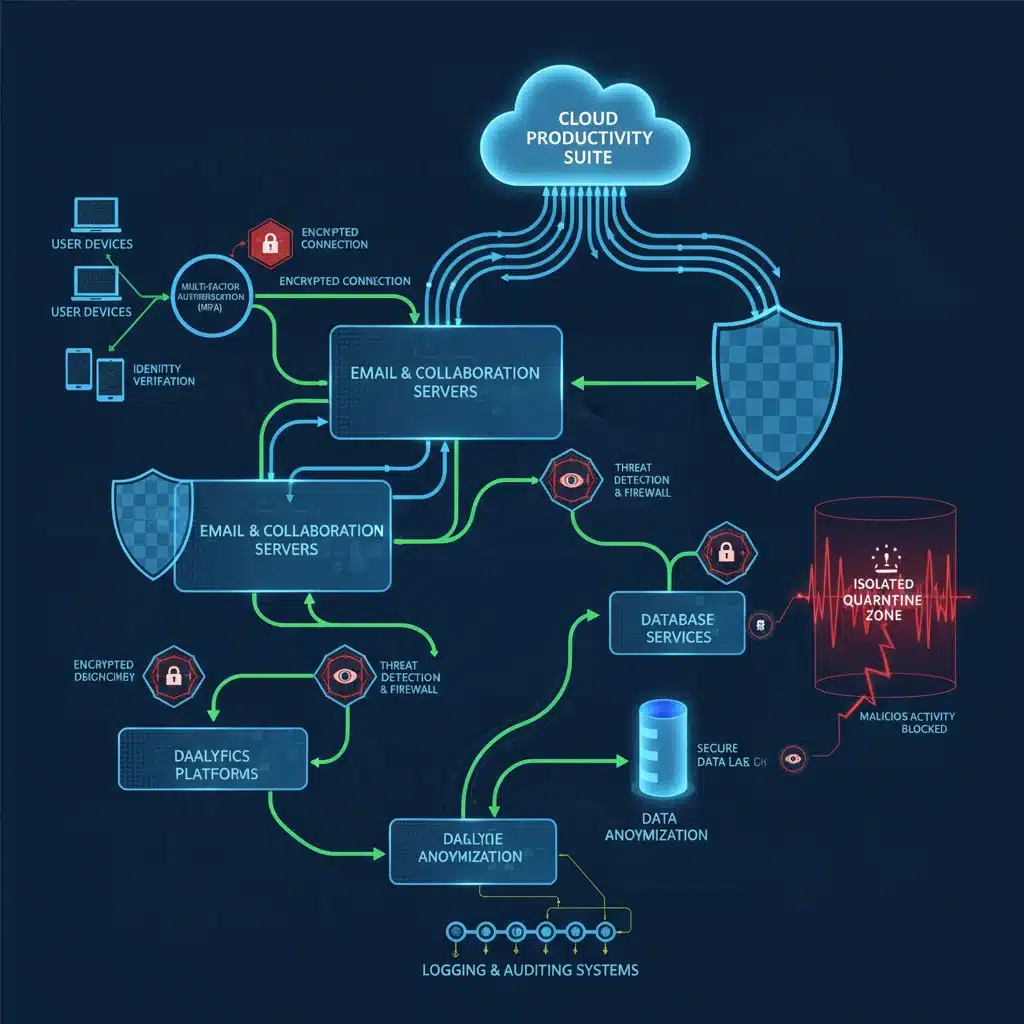
3. Threat Detection and Response Capabilities
Even with the best preventative measures, some threats will inevitably bypass defenses. Effective productivity tools must therefore include robust threat detection and response Enterprise Cybersecurity Features:
- Artificial Intelligence (AI) and Machine Learning (ML)-Powered Threat Detection: AI/ML algorithms can analyze vast amounts of data to identify anomalous behavior patterns that indicate a potential threat, often before human analysts can. This includes detecting unusual login attempts, abnormal file access patterns, or suspicious communication flows.
- Behavioral Analytics: Monitoring user and entity behavior (UEBA) helps establish baselines of normal activity. Deviations from these baselines can trigger alerts, indicating potential insider threats or compromised accounts.
- Real-time Malware and Virus Scanning: Integrated, continuously updated antivirus and anti-malware engines scan all files and attachments exchanged within the platform.
- Automated Incident Response: In the event of a detected threat, the system should be capable of initiating automated responses, such as isolating compromised accounts, revoking access, or quarantining suspicious files, to minimize damage.
- Security Information and Event Management (SIEM) Integration: Productivity tools should integrate seamlessly with enterprise SIEM solutions to centralize security logging and analysis, providing a holistic view of the security posture.
4. Compliance and Governance
US enterprises operate under a complex web of regulations (e.g., GDPR, CCPA, HIPAA, SOX). Productivity tools must facilitate compliance through specific Enterprise Cybersecurity Features:
- Audit Trails and Logging: Comprehensive logging of all user activities, data access, and system changes is crucial for forensic analysis, compliance audits, and accountability.
- E-discovery Capabilities: The ability to quickly search, identify, and retrieve electronic data for legal or compliance purposes is essential.
- Data Residency and Sovereignty Options: For global enterprises, the ability to store data in specific geographical regions to comply with local data residency laws is vital.
- Policy Enforcement: Tools should allow administrators to define and enforce granular security policies across the entire user base, ensuring consistent adherence to regulatory requirements and internal guidelines.
- Regular Security Audits and Certifications: Reputable productivity tool providers should undergo regular third-party security audits and hold relevant certifications (e.g., ISO 27001, SOC 2 Type 2) to demonstrate their commitment to security.
5. Secure Collaboration and Communication
Collaboration is at the heart of productivity. Ensuring that this collaboration happens securely is a critical aspect of Enterprise Cybersecurity Features:
- Secure Messaging and Video Conferencing: Encrypted communication channels, secure file transfer within chats, and robust meeting controls (e.g., waiting rooms, participant removal, end-to-end encryption for video calls) are non-negotiable.
- Content Scanning and Moderation: Tools should be able to scan shared content for malware, sensitive data, or inappropriate material, helping to maintain a secure and compliant environment.
- Version Control and Document Recovery: Robust version control not only aids collaboration but also serves as a crucial security feature, allowing rollbacks to previous, uncompromised versions of documents in case of accidental corruption or malicious alteration.
- Integration with Secure Gateways: Seamless integration with secure web gateways and cloud access security brokers (CASBs) to enforce consistent security policies for all cloud-based applications.
6. Zero Trust Architecture Integration
The principle of ‘never trust, always verify’ is gaining widespread adoption. Productivity tools in 2026 must be designed with Zero Trust in mind, meaning:
- Continuous Verification: Every access request, regardless of whether it originates inside or outside the network perimeter, must be authenticated and authorized.
- Least Privilege Access: Users are granted only the minimum access necessary to perform their tasks, and this access is continuously evaluated.
- Micro-segmentation: Networks are divided into smaller, isolated segments to limit lateral movement of attackers within the network.
- Device Posture Checks: Before granting access, the security posture of the device (e.g., up-to-date patches, antivirus status) is verified.
Implementing Zero Trust principles across productivity tools significantly enhances the overall security posture of an enterprise, making it one of the most vital Enterprise Cybersecurity Features.
The Role of AI in Fortifying Enterprise Cybersecurity Features
Artificial intelligence is not just a buzzword; it’s a transformative force in cybersecurity. By 2026, AI will be deeply integrated into productivity tools to enhance their security capabilities:
- Predictive Threat Intelligence: AI can analyze global threat data to predict emerging attack vectors and proactively adjust defenses.
- Automated Vulnerability Management: AI can identify and prioritize vulnerabilities in real-time, recommending patches and configurations.
- Intelligent Anomaly Detection: As mentioned, AI/ML excels at identifying deviations from normal behavior, providing early warnings of potential breaches.
- Security Orchestration, Automation, and Response (SOAR): AI-powered SOAR platforms can automate routine security tasks, freeing up human analysts to focus on more complex threats and ensuring faster incident response.
- Enhanced User Training: AI can tailor security awareness training based on individual user behavior and identified risk areas, making education more effective.
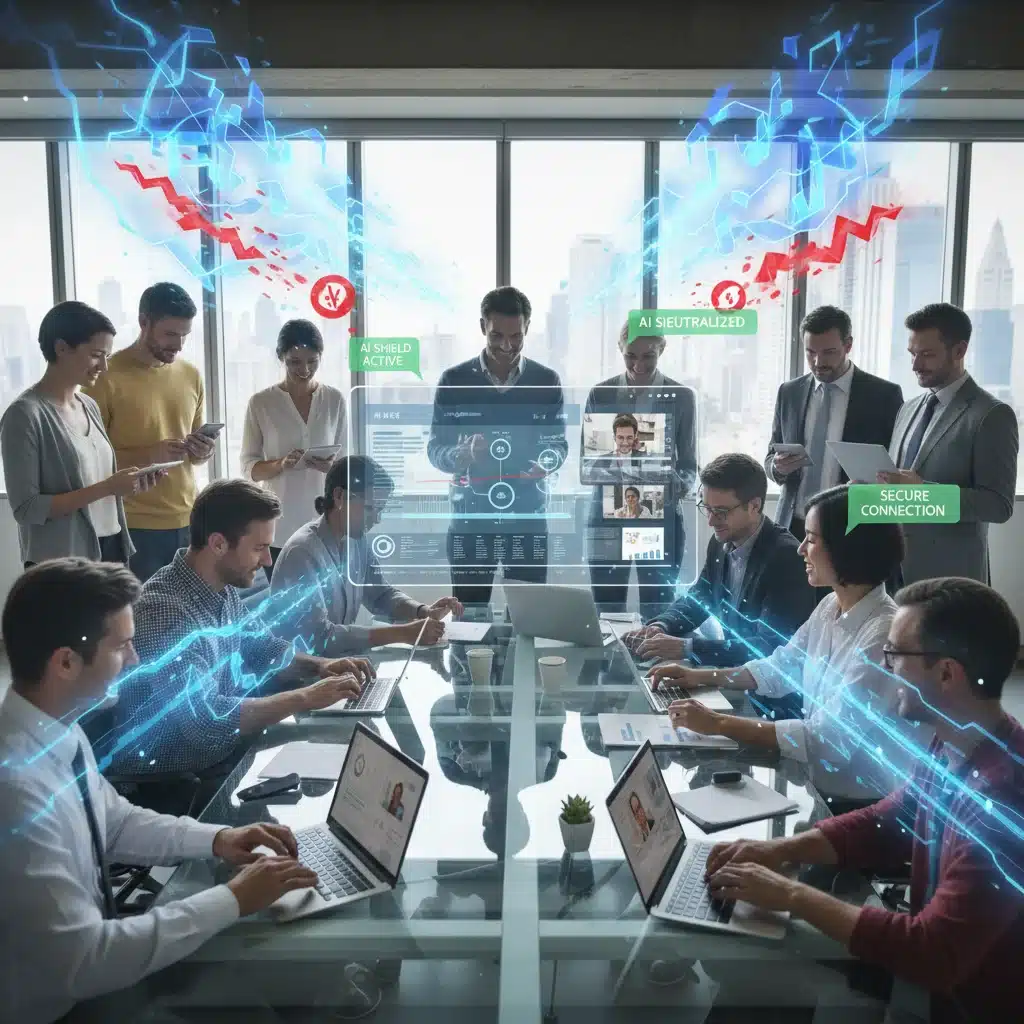
The integration of AI transforms reactive security into a proactive, intelligent defense system, making these AI-driven functionalities core Enterprise Cybersecurity Features for the future.
Choosing the Right Productivity Tools with Robust Enterprise Cybersecurity Features
When evaluating productivity tools for your US enterprise, security should be a primary consideration, not an afterthought. Here’s a checklist:
- Vendor Reputation and Security Track Record: Choose vendors with a proven commitment to security, transparent security policies, and a strong track record of protecting customer data. Investigate their incident response plans and past security breaches.
- Compliance Certifications: Ensure the tool complies with relevant industry standards and regulations pertinent to your business (e.g., HIPAA, SOC 2, ISO 27001, FedRAMP if working with federal agencies).
- Integration Capabilities: The tool should integrate seamlessly with your existing security stack (SIEM, identity providers, DLP solutions) to provide a unified security posture.
- Scalability and Flexibility: As your enterprise grows, your security needs will evolve. The chosen productivity tools should offer scalable security features that can adapt to changing requirements.
- User-Friendly Security: While powerful, security features should not hinder productivity. Look for tools that offer a balance between robust protection and ease of use for employees.
- Dedicated Security Support: Ensure the vendor provides adequate security support, including dedicated incident response teams and clear communication channels for security concerns.
- Regular Security Updates and Patches: The vendor must have a consistent schedule for security updates and patches to address newly discovered vulnerabilities.
- Transparency in Data Handling: Understand where your data is stored, who has access to it, and how it is processed and protected by the vendor.
Implementing and Maintaining Strong Enterprise Cybersecurity Features
Acquiring tools with robust security features is only half the battle. Effective implementation and continuous maintenance are equally crucial:
- Comprehensive Employee Training: Regular security awareness training is vital. Employees are often the first line of defense, and educating them on phishing, social engineering, and secure practices is paramount. Training should be ongoing and adapt to new threats.
- Regular Security Audits and Penetration Testing: Periodically audit your productivity tool configurations and conduct penetration tests to identify and rectify potential vulnerabilities before attackers can exploit them.
- Incident Response Plan: Develop and regularly test a comprehensive incident response plan specifically for security breaches involving productivity tools. This plan should detail steps for detection, containment, eradication, recovery, and post-incident analysis.
- Continuous Monitoring: Establish a robust security operations center (SOC) or leverage managed security services to continuously monitor all activity within your productivity tools for suspicious behavior.
- Policy Review and Updates: Security policies related to data access, sharing, and usage within productivity tools must be regularly reviewed and updated to reflect evolving threats and compliance requirements.
By proactively managing these aspects, US enterprises can ensure that their chosen Enterprise Cybersecurity Features remain effective and provide continuous protection.
The Future Outlook: Beyond 2026
Looking beyond 2026, the convergence of technologies like quantum computing, advanced AI, and the Internet of Things (IoT) will introduce new cybersecurity challenges and opportunities. Productivity tools will need to adapt, incorporating even more sophisticated Enterprise Cybersecurity Features such as:
- Quantum-Resistant Cryptography: As quantum computers become a reality, current encryption standards may become vulnerable. Future productivity tools will need to adopt quantum-resistant cryptographic algorithms.
- Decentralized Identity Management: Blockchain-based or decentralized identity solutions could offer enhanced security and user control over personal data.
- AI-Driven Proactive Defense: AI will move beyond detection to actively predict and neutralize threats before they can even materialize, creating self-healing systems.
- Contextual Awareness and Hyper-Personalized Security: Security measures will become even more tailored to individual user contexts, dynamically adjusting based on real-time risk assessments.
The journey to a truly secure digital workflow is ongoing. Enterprises must foster a culture of continuous learning and adaptation to stay ahead of cyber adversaries.
Conclusion: Securing the Digital Frontier for US Enterprises
For US enterprises, the integration of robust Enterprise Cybersecurity Features into productivity tools is not merely a technical requirement but a strategic imperative. As the digital landscape becomes more complex and interconnected, the risk of cyberattacks grows exponentially. By prioritizing granular access controls, advanced data protection, AI-powered threat detection, comprehensive compliance measures, and secure collaboration, businesses can build a resilient defense against future threats.
The year 2026 marks a critical juncture where proactive security strategies will distinguish leading enterprises from those vulnerable to debilitating cyber incidents. Investing in the right cybersecurity features for productivity tools is an investment in business continuity, reputation, and long-term success. Embrace these essential features, empower your workforce with secure tools, and future-proof your workflow against the inevitable challenges of the digital age.