Project Management Apps 2026: Boost Team Efficiency & Collaboration

Comparing 3 Leading Project Management Apps: Which Offers the Best Team Efficiency in 2026?
In today’s fast-paced business environment, maximizing team efficiency apps is no longer a luxury but a necessity. As we look towards 2026, the landscape of project management software continues to evolve, offering increasingly sophisticated tools designed to streamline workflows, enhance collaboration, and ultimately drive productivity. But with so many options available, how do you choose the one that truly elevates your team’s performance? This comprehensive guide dives deep into three of the most prominent project management applications poised to dominate the market in 2026, helping you understand their core strengths, unique features, and how they contribute to unparalleled team efficiency apps.
The right project management app can transform how your team operates. It can turn chaotic project timelines into clear, actionable plans, foster seamless communication, and ensure everyone is aligned with common goals. Conversely, choosing the wrong tool can lead to frustration, missed deadlines, and a significant drain on resources. Our goal is to equip you with the knowledge needed to make an informed decision, ensuring your investment directly translates into improved team efficiency apps and project success.
The Evolving Landscape of Project Management in 2026
The year 2026 brings with it new challenges and opportunities for teams across all industries. Remote and hybrid work models have become the norm, necessitating robust digital solutions that can bridge geographical gaps and maintain high levels of collaboration. Artificial intelligence (AI) and machine learning (ML) are no longer futuristic concepts but integrated components of modern project management, offering predictive analytics, automated task assignments, and intelligent insights to further boost team efficiency apps. Data security and compliance are also paramount, with businesses seeking tools that offer enterprise-grade protection for their sensitive project information.
Beyond these technological advancements, the emphasis remains on user experience. Tools that are intuitive, customizable, and integrate seamlessly with existing tech stacks are highly sought after. The ideal project management app in 2026 will not only manage tasks but also empower teams, foster a culture of accountability, and provide clear visibility into project progress at every stage. Understanding these trends is crucial as we evaluate the contenders for the best team efficiency apps.
Key Criteria for Evaluating Project Management Apps for Team Efficiency
Before we delve into the specifics of each application, it’s essential to establish a framework for evaluation. When assessing project management tools for optimal team efficiency apps, several critical factors come into play:
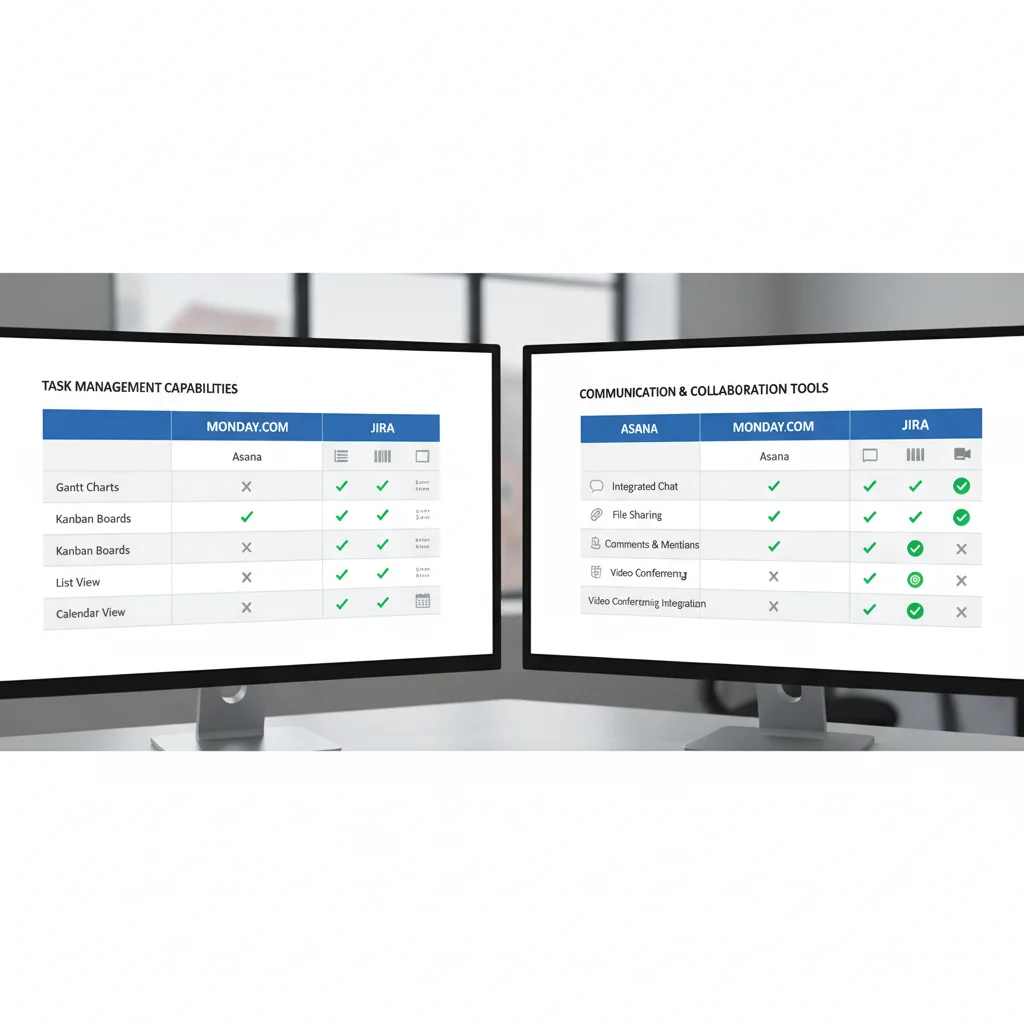
- Task Management Capabilities: How effectively does the app allow for task creation, assignment, tracking, and prioritization? Look for features like subtasks, recurring tasks, dependencies, and various views (Kanban, Gantt, list).
- Collaboration Features: Does it facilitate seamless communication, file sharing, commenting, and real-time co-editing? The ability to reduce reliance on external communication tools is a significant plus for team efficiency apps.
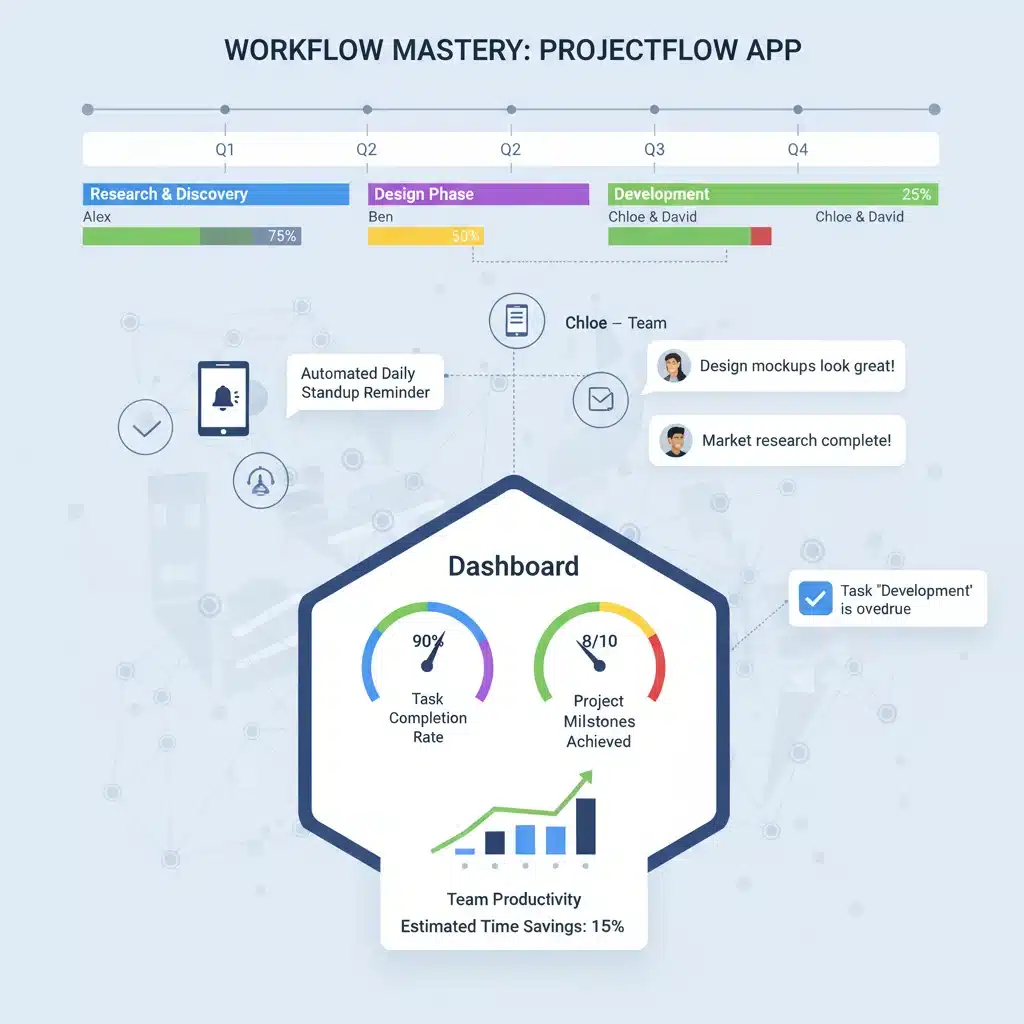
- Reporting and Analytics: Can managers gain insights into project progress, team workload, and potential bottlenecks? Customizable dashboards and comprehensive reporting are vital for data-driven decision-making.
- Integrations: How well does it connect with other essential business tools like Slack, Google Drive, Microsoft 365, CRM systems, and development platforms? Seamless integration prevents data silos and enhances overall team efficiency apps.
- Scalability: Can the app grow with your team and projects? Consider whether it supports small teams, large enterprises, and complex project portfolios.
- User Experience (UX) and User Interface (UI): Is it intuitive, easy to learn, and pleasant to use? A clunky interface can hinder adoption and negate any potential efficiency gains.
- Customization: Can workflows, fields, and dashboards be tailored to fit your team’s unique processes and terminology?
- Pricing Structure: Is the pricing transparent, scalable, and does it offer good value for the features provided?
- Security and Compliance: Does it meet industry standards for data protection, privacy, and regulatory compliance?
With these criteria in mind, let’s explore three leading project management applications that are setting the standard for team efficiency apps in 2026.
Contender 1: Asana – The Versatile Workflow Orchestrator
Overview
Asana has long been a frontrunner in the project management space, known for its intuitive interface and powerful task management capabilities. In 2026, Asana continues to evolve, offering advanced features that cater to a wide range of teams, from marketing and operations to product development and IT. Its core strength lies in providing clarity on who is doing what by when, making it an exceptional tool for enhancing team efficiency apps.
Key Features and How They Boost Team Efficiency
- Workload Management: Asana’s Workload feature allows managers to visualize team capacity, reassign tasks to prevent burnout, and ensure an even distribution of work. This proactive approach significantly boosts team efficiency apps by optimizing resource allocation.
- Goals (OKRs): Teams can connect daily tasks directly to company objectives and key results (OKRs). This alignment ensures that every effort contributes to broader strategic goals, providing clarity and purpose, which are critical for sustained team efficiency apps.
- Automations (Rules): Asana’s automation rules can automate routine tasks like assigning follow-ups, updating task statuses, or moving tasks between stages. This reduces manual effort and human error, freeing up team members to focus on high-value work.
- Portfolios: For organizations managing multiple projects, Portfolios provide a high-level overview of project health, progress, and potential risks across various initiatives, enabling strategic decision-making and better resource management.
- Universal Reporting: Advanced reporting capabilities allow for custom reports across projects and teams, offering deep insights into productivity trends, bottlenecks, and overall project performance.
- Integrations: Asana boasts a vast ecosystem of integrations with popular tools like Slack, Microsoft Teams, Google Workspace, Salesforce, Tableau, and Adobe Creative Cloud, ensuring a connected workflow.
Pros and Cons for Team Efficiency
- Pros: Excellent for task tracking and workload management, highly visual, robust automation capabilities, strong goal-setting features, extensive integrations, and a user-friendly interface that promotes rapid adoption.
- Cons: Can become complex for very small teams with minimal needs, advanced features might require a learning curve for some users, and pricing for larger teams with premium features can be substantial.
Contender 2: Monday.com – The Highly Customizable Work OS
Overview
Monday.com has carved out a niche as a highly visual and incredibly customizable ‘Work OS’ (Operating System). It’s designed to be adaptable to almost any workflow or industry, making it a powerful contender for teams seeking a flexible solution to enhance their team efficiency apps. Its vibrant interface and drag-and-drop functionality make it appealing to a broad user base.
Key Features and How They Boost Team Efficiency
- Customizable Boards: Users can create custom boards for virtually any project or workflow, utilizing various column types (status, date, text, numbers, files, etc.). This flexibility means teams can tailor the platform precisely to their needs, optimizing their specific processes.
- Automation Recipes: Monday.com offers a rich library of automation recipes that can be configured with simple if-then statements. These automations can send notifications, change statuses, move items, and more, significantly reducing repetitive manual tasks and boosting team efficiency apps.
- Dashboards: Powerful dashboards allow users to aggregate data from multiple boards into a single, customizable view. This provides real-time insights into project progress, team performance, budgets, and deadlines, empowering data-driven decisions.
- Workdocs: A collaborative document feature that allows teams to create, edit, and manage documents directly within Monday.com, linking them to specific tasks or projects. This centralizes information and reduces context switching.
- Integrations: Monday.com integrates with hundreds of tools, including communication platforms (Slack, Microsoft Teams), development tools (GitHub, GitLab), CRM (Salesforce), and marketing tools (Mailchimp, HubSpot).
- Multiple Views: Offers diverse ways to visualize data, including Kanban, Gantt charts, Calendar, Timeline, and Map views, catering to different preferences and project needs.
Pros and Cons for Team Efficiency
- Pros: Extremely flexible and customizable, highly visual and intuitive UI, powerful automation engine, excellent for diverse team functions, strong reporting dashboards, and robust integration options.
- Cons: The sheer number of customization options can be overwhelming for new users, pricing can escalate quickly with additional users and features, and some advanced project management functionalities (like complex resource leveling) might require workarounds.
Contender 3: Jira Software – The Powerhouse for Agile Development
Overview
Jira Software, from Atlassian, remains the undisputed champion for software development teams embracing Agile methodologies (Scrum, Kanban). While traditionally seen as a developer’s tool, Jira has expanded its capabilities and integrations to support broader business teams, making it a strong contender for overall team efficiency apps in organizations with a technical core.
Key Features and How They Boost Team Efficiency
- Agile Project Management: Jira is built from the ground up for Agile. It provides robust features for Scrum boards, Kanban boards, backlogs, sprints, roadmaps, and release management. This structured approach is crucial for predictable software delivery.
- Issue Tracking: At its heart, Jira is an exceptional issue and bug tracking system. Teams can track every piece of work, from feature requests to bug fixes, through customizable workflows and statuses, ensuring nothing falls through the cracks.
- Workflow Customization: Jira’s workflow engine is incredibly powerful, allowing teams to define complex issue lifecycles with custom statuses, transitions, and conditions. This ensures processes are followed consistently.
- Reporting and Insights: Offers a wealth of Agile-specific reports like burndown charts, sprint reports, velocity charts, and cumulative flow diagrams, providing deep insights into team performance and project health. This is vital for continuous improvement in team efficiency apps.
- Integrations with Atlassian Ecosystem: Seamlessly integrates with other Atlassian products like Confluence (for documentation), Bitbucket (for code management), and Trello (for simpler task management), creating a comprehensive ecosystem.
- Automation: Jira Automation allows teams to automate tasks like assigning issues, updating fields, sending notifications, and syncing data between Jira and other tools, streamlining operations and boosting team efficiency apps.
Pros and Cons for Team Efficiency
- Pros: Unparalleled for Agile software development, highly customizable workflows, robust issue tracking, comprehensive reporting for Agile metrics, strong integration with the Atlassian suite, and enterprise-grade security.
- Cons: Can have a steep learning curve, especially for non-technical users, UI can feel less intuitive compared to Asana or Monday.com for general project management, pricing can be complex, and its power can be overkill for teams not engaged in software development.
Comparative Analysis: Which App Reigns Supreme for Your Team?
Choosing the best among these top-tier team efficiency apps ultimately depends on your specific needs, team structure, and organizational culture. Here’s a quick comparative breakdown:
For General Project Management & Cross-Functional Teams: Asana
If your primary need is clear task management, workload balancing, and goal alignment across diverse departments (marketing, operations, HR, product), Asana often provides the most balanced and intuitive experience. Its focus on clarity and actionable items makes it excellent for improving overall team efficiency apps in a non-technical context.
For Highly Customizable Workflows & Visual Teams: Monday.com
If your team values extreme flexibility, visual appeal, and the ability to design workflows from scratch for unique processes, Monday.com is an outstanding choice. It’s particularly well-suited for creative agencies, event management, or any team that needs to adapt its tools to constantly evolving project requirements, making it a highly adaptable team efficiency app.
For Agile Software Development & Technical Teams: Jira Software
For engineering, development, and IT teams deeply embedded in Agile methodologies, Jira remains the gold standard. Its specialized features for sprints, backlogs, issue tracking, and release management are unmatched. While it can be adapted for other uses, its core strength lies in optimizing the software development lifecycle, making it an indispensable team efficiency app for technical projects.
Implementing Your Chosen Project Management App for Maximum Efficiency
Selecting the right tool is only half the battle. Successful implementation is crucial to truly unlock the potential of these team efficiency apps. Here are some best practices:
- Start Small and Scale: Don’t try to implement every feature at once. Start with core functionalities, get your team comfortable, and then gradually introduce more advanced capabilities.
- Provide Thorough Training: Invest in training sessions and create internal documentation. A well-trained team is a productive team.
- Define Clear Workflows: Before migrating, define your processes and workflows. The tool should support your processes, not dictate them.
- Appoint a Champion: Designate a team member to be the expert and advocate for the new tool. They can answer questions and drive adoption.
- Integrate Strategically: Connect the project management app with other essential tools your team already uses to create a seamless ecosystem and avoid context switching.
- Regularly Review and Optimize: Project management is iterative. Periodically review how your team is using the tool, gather feedback, and make adjustments to workflows or configurations to continuously improve team efficiency apps.
- Communicate Benefits Clearly: Ensure everyone understands how the new tool will make their work easier, more organized, and ultimately more impactful.
The Future of Team Efficiency Apps: What to Expect Beyond 2026
The evolution of team efficiency apps is far from over. Looking beyond 2026, we can anticipate even more sophisticated integrations of AI and machine learning. Predictive analytics will become more commonplace, offering proactive suggestions for resource allocation, risk mitigation, and even automated project adjustments based on real-time data. Natural Language Processing (NLP) will likely enable more intuitive interactions, allowing users to manage tasks and retrieve information through conversational interfaces.
Furthermore, expect enhanced collaboration features that leverage virtual and augmented reality for immersive team meetings and project reviews, especially for geographically dispersed teams. The focus will continue to be on reducing cognitive load, automating repetitive tasks, and providing actionable insights to empower teams to achieve more with less effort. Data security and privacy will also remain a paramount concern, with platforms offering increasingly robust, transparent, and user-controlled security features. The goal will always be to create a frictionless work environment where innovation and productivity can thrive.
Conclusion: Empowering Your Team with the Right Tools
In the dynamic landscape of 2026, selecting the right project management application is a strategic decision that directly impacts your team’s productivity, collaboration, and overall success. Whether you opt for Asana’s versatile workflow orchestration, Monday.com’s unparalleled customization, or Jira’s robust Agile development capabilities, the key is to choose a tool that aligns with your unique operational needs and empowers your team to work smarter, not just harder. By carefully considering the features, benefits, and implementation strategies discussed, you can confidently select one of these leading team efficiency apps to drive your projects forward and achieve your organizational goals.
Invest in the right technology, foster a culture of efficient collaboration, and watch your team achieve new heights of productivity and innovation. The future of work is collaborative, data-driven, and powered by intelligent tools – make sure your organization is equipped to lead the way.