
The business world is in a constant state of flux, driven by technological innovations that redefine how companies interact with their customers and manage their sales processes. In the United States, the adoption and evolution of Customer Relationship Management (CRM) systems have been pivotal in this transformation. As we look towards 2026, the US CRM productivity features are poised for a revolutionary leap, promising unprecedented levels of efficiency, personalization, and strategic foresight. This article delves deep into the anticipated advancements, exploring how these emerging capabilities will empower businesses to optimize their sales cycles, enhance customer satisfaction, and gain a significant competitive edge.
The core philosophy behind CRM has always been to centralize customer data and streamline interactions. However, the next few years will see this philosophy augmented by sophisticated technologies that move beyond mere data management to proactive intelligence and automation. The focus will shift from simply tracking customer journeys to actively shaping them, making every touchpoint more meaningful and every sales effort more effective. For businesses operating in the dynamic US market, understanding and leveraging these future CRM productivity features will not just be an advantage, but a necessity for sustained growth and profitability.
The Dawn of Hyper-Personalization: AI and Machine Learning at the Core of CRM Productivity Features
One of the most profound shifts in US CRM productivity features for 2026 will be the ubiquitous integration of Artificial Intelligence (AI) and Machine Learning (ML). These technologies are not new to CRM, but their application is maturing rapidly, moving from basic automation to sophisticated predictive analytics and hyper-personalization. Imagine a CRM system that not only tells you what a customer has done but also predicts what they are likely to do next, and even suggests the optimal communication strategy to achieve a desired outcome.
Predictive Analytics for Proactive Sales
By 2026, predictive analytics, powered by advanced AI algorithms, will be a standard component of leading CRM platforms. These capabilities will analyze vast datasets, including past purchase history, browsing behavior, social media interactions, and even external economic indicators, to forecast customer needs and potential churn risks. Sales teams will receive real-time alerts and recommendations, allowing them to engage with customers proactively, offer relevant solutions before a problem arises, and identify high-value opportunities that might otherwise be missed. This proactive approach will significantly boost sales efficiency by directing efforts where they are most likely to succeed.
Intelligent Lead Scoring and Prioritization
Manual lead scoring is often subjective and time-consuming. Future CRM productivity features will leverage AI to provide intelligent lead scoring that is dynamic and highly accurate. AI models will learn from successful conversions and lost opportunities, continuously refining their scoring criteria. This means sales representatives will no longer have to sift through countless leads; instead, the CRM will automatically prioritize those with the highest probability of conversion, ensuring that valuable sales time is spent on the most promising prospects. This optimization of lead management is a game-changer for enhancing sales productivity in the US market.
Hyper-Personalized Customer Journeys
The ability to deliver truly personalized experiences is becoming a key differentiator. AI-driven CRM systems will enable hyper-personalization across the entire customer journey. From initial contact to post-purchase support, every interaction can be tailored based on individual preferences, past behaviors, and real-time context. This includes personalized product recommendations, customized marketing messages, and even dynamic pricing strategies. The result is a more engaging and satisfying customer experience, fostering stronger relationships and increasing customer loyalty – a direct boost to overall business productivity.
Automation Beyond Repetitive Tasks: Smart Workflows and Virtual Assistants
While automation has been a hallmark of CRM for years, 2026 will see its evolution into more intelligent and autonomous forms. The focus will shift from automating simple, repetitive tasks to orchestrating complex workflows and providing virtual assistance that augments human capabilities.
Smart Workflow Automation
Next-generation CRM productivity features will go beyond basic rule-based automation. They will incorporate AI to create ‘smart workflows’ that adapt and optimize based on real-time data and changing conditions. For example, if a customer expresses a specific need during a call, the CRM could automatically trigger a sequence of actions: sending relevant information, scheduling a follow-up, and notifying the appropriate team member, all while learning from the outcome to refine future workflows. This level of intelligent automation will significantly reduce manual effort and accelerate response times, directly impacting sales efficiency.
AI-Powered Virtual Sales Assistants
Virtual sales assistants, akin to highly specialized digital colleagues, will become increasingly sophisticated. These AI assistants will handle routine inquiries, qualify leads, schedule meetings, and even draft personalized emails based on predefined templates and AI-generated insights. By offloading these time-consuming tasks, sales professionals can dedicate more time to strategic thinking, complex negotiations, and building deeper customer relationships. This is a crucial advancement in US CRM productivity features, allowing sales teams to focus on high-value activities.

Automated Data Entry and Enrichment
One of the biggest drains on sales productivity is manual data entry. Future CRM systems will employ advanced AI and natural language processing (NLP) to automate much of this process. They will be able to extract relevant information from emails, call transcripts, and external sources, automatically populating customer profiles and updating records. Furthermore, data enrichment tools will automatically pull in publicly available information about leads and accounts, providing sales teams with a more complete picture without any manual effort. This ensures data accuracy and frees up valuable time for sales activities.
Seamless Integration and Unified Platforms: Breaking Down Silos
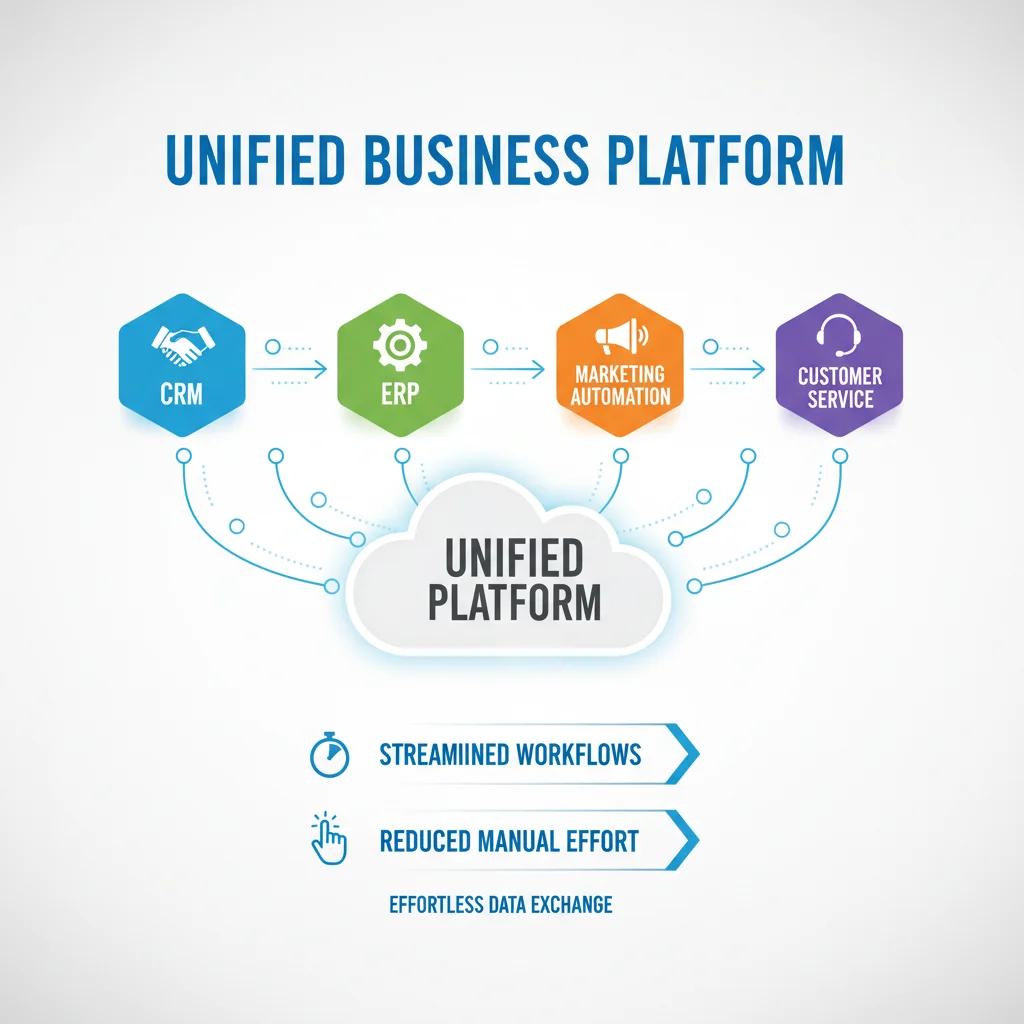
The modern business ecosystem relies on a multitude of specialized tools. The challenge has always been to make these tools work together harmoniously. In 2026, US CRM productivity features will emphasize seamless integration, creating unified platforms that eliminate data silos and provide a holistic view of the customer.
Deep Integration with Marketing Automation and Service Platforms
The lines between sales, marketing, and customer service are blurring. Future CRM systems will offer deeper, bidirectional integrations with marketing automation platforms (MAPs) and customer service solutions. This means that customer interactions initiated in marketing campaigns will seamlessly flow into the CRM for sales follow-up, and service issues will be visible to sales teams, allowing for more informed and empathetic conversations. This unified approach ensures a consistent customer experience and prevents disjointed communication.
Integration with Enterprise Resource Planning (ERP) and Business Intelligence (BI)
Beyond customer-facing tools, CRMs will integrate more tightly with back-office systems like ERP and advanced BI platforms. This integration will provide sales teams with real-time access to inventory levels, order status, financial data, and comprehensive business analytics directly within their CRM interface. Imagine a sales rep being able to confirm product availability and pricing instantly, or analyze a customer’s profitability before making an offer. This holistic view empowers sales teams with the data they need to make smarter, faster decisions, significantly boosting overall productivity and strategic sales.
Open APIs and Low-Code/No-Code Integration Tools
To facilitate this extensive integration, CRM vendors will increasingly offer robust open APIs and user-friendly low-code/no-code integration tools. This will allow businesses, even those without extensive IT resources, to customize their CRM ecosystem and connect it with virtually any other application they use. This flexibility is crucial for businesses across the US, enabling them to build a bespoke technological stack that perfectly aligns with their unique operational needs and further enhances CRM productivity features.
Enhanced Collaboration and Mobility: Empowering the Modern Sales Force
The way sales teams work is changing, with remote and hybrid models becoming more prevalent. Future CRM productivity features will cater to this evolving workforce, emphasizing enhanced collaboration tools and robust mobile capabilities.
Integrated Communication and Collaboration Hubs
CRMs will evolve into comprehensive communication and collaboration hubs. This means integrating chat, video conferencing, and document sharing directly within the CRM platform. Sales teams will be able to collaborate on deals, share insights, and get real-time feedback from colleagues and managers without ever leaving their CRM interface. This streamlined communication reduces context switching and ensures that everyone is on the same page, leading to more efficient team selling.
Advanced Mobile CRM Capabilities
Mobile CRM has been a reality for years, but 2026 will bring advancements that make mobile CRM truly indispensable. Expect fully functional mobile apps with offline capabilities, voice-activated commands, and augmented reality (AR) features. Sales reps on the go will be able to update records, access customer information, generate quotes, and even conduct virtual product demonstrations from anywhere, at any time. This unparalleled mobility will empower sales professionals to be productive regardless of their physical location, a critical factor for the diverse geography and business practices across the US.
Gamification and Performance Management
To keep sales teams motivated and engaged, future CRMs will incorporate advanced gamification elements and sophisticated performance management dashboards. Sales leaders will have access to real-time performance metrics, allowing them to identify coaching opportunities and celebrate successes. Gamified elements, such as leaderboards, badges, and challenges, will foster healthy competition and drive higher sales productivity. These features are designed to create a more dynamic and rewarding sales environment.
Ethical AI and Data Security: Building Trust in Advanced CRM
As CRM systems become more intelligent and handle increasingly sensitive data, the importance of ethical AI and robust data security cannot be overstated. For US CRM productivity features in 2026, these aspects will be foundational, not just add-ons.
Transparent AI and Explainable Models
The ‘black box’ nature of some AI algorithms raises concerns, especially when they influence critical business decisions. Future CRM systems will prioritize transparent AI and explainable models, allowing users to understand how the AI arrived at its recommendations or predictions. This fosters trust and enables sales professionals to leverage AI insights more effectively, ensuring they remain in control and can justify their actions.
Enhanced Data Privacy and Compliance
With evolving data privacy regulations (like CCPA in California and potential federal privacy laws), CRM platforms will integrate advanced features to ensure compliance. This includes granular control over data access, automated data anonymization tools, and built-in consent management features. Businesses will be able to manage customer data responsibly and securely, building trust and mitigating legal risks. Robust data security protocols, including advanced encryption and threat detection, will be standard, protecting sensitive customer information from cyber threats.
Bias Detection and Mitigation in AI
AI models can inadvertently perpetuate or amplify existing biases present in training data. Future CRM systems will incorporate tools for detecting and mitigating bias in AI algorithms, particularly those used for lead scoring, customer segmentation, and personalized recommendations. Ensuring fairness and equity in customer interactions is not only an ethical imperative but also crucial for maintaining customer trust and avoiding reputational damage. This commitment to ethical AI will be a key differentiator in the US CRM market.
The Impact on US Businesses: A Competitive Edge
The widespread adoption of these advanced US CRM productivity features will have a transformative impact on businesses across various sectors in the United States. From small and medium-sized enterprises (SMEs) to large corporations, the benefits will be multifaceted and far-reaching.
Increased Revenue and Market Share
By enabling more efficient sales processes, better lead prioritization, and hyper-personalized customer experiences, these CRM advancements will directly contribute to increased conversion rates and higher customer lifetime value. This, in turn, will translate into significant revenue growth and the ability to capture greater market share.
Operational Efficiency and Cost Reduction
Automation and smart workflows will drastically reduce the time spent on administrative tasks, allowing sales and marketing teams to focus on strategic initiatives. This boost in operational efficiency will lead to lower operational costs and a more optimized allocation of resources.
Superior Customer Experience
The ability to understand and anticipate customer needs, coupled with seamless and personalized interactions, will lead to a dramatically improved customer experience. In an increasingly competitive market, customer satisfaction and loyalty are paramount for brand reputation and sustained success.
Empowered Workforce
With virtual assistants handling routine tasks and AI providing intelligent insights, sales professionals will be empowered to perform at their best. They will have more time for meaningful customer engagement and strategic selling, leading to higher job satisfaction and lower employee turnover.
Preparing for the Future: Strategies for Adoption
To fully capitalize on the evolving US CRM productivity features, businesses need to start planning now. Here are some key strategies for successful adoption:
- Assess Current CRM Capabilities: Understand the strengths and weaknesses of your existing CRM system and identify areas where new features can provide the most value.
- Invest in Data Quality: AI and ML thrive on high-quality data. Prioritize data cleansing, enrichment, and governance to ensure your CRM data is accurate and reliable.
- Foster a Culture of Adoption: Change management is crucial. Educate your teams on the benefits of new CRM features and provide comprehensive training to ensure smooth adoption.
- Start Small, Scale Big: Don’t try to implement everything at once. Identify key features that can deliver immediate impact, pilot them, and then scale up.
- Partner with the Right Vendors: Choose CRM providers that are at the forefront of innovation, offering robust AI, automation, and integration capabilities, and demonstrating a strong commitment to data security and ethical AI.
- Embrace Continuous Learning: The CRM landscape will continue to evolve. Encourage your teams to stay updated on the latest trends and best practices to maximize the utility of your CRM investment.
Conclusion: The Future is Intelligent, Integrated, and Productive
The year 2026 promises a new era for CRM in the United States, defined by intelligent, integrated, and highly productive systems. The advanced US CRM productivity features, driven by AI, sophisticated automation, and seamless connectivity, will reshape how businesses manage customer relationships and drive sales. Companies that embrace these innovations will not only streamline their operations and boost their bottom line but also deliver unparalleled customer experiences, solidifying their position in an increasingly competitive market.
The journey towards this future requires strategic planning, investment in technology, and a commitment to continuous improvement. By focusing on data quality, fostering a culture of innovation, and carefully selecting the right technological partners, US businesses can unlock the full potential of next-generation CRM, transforming their sales efficiency and achieving sustainable growth in the years to come. The future of customer relationship management is not just about managing relationships; it’s about intelligently nurturing them for mutual success.