Mobile OS Updates: Your 2026 Security Imperative
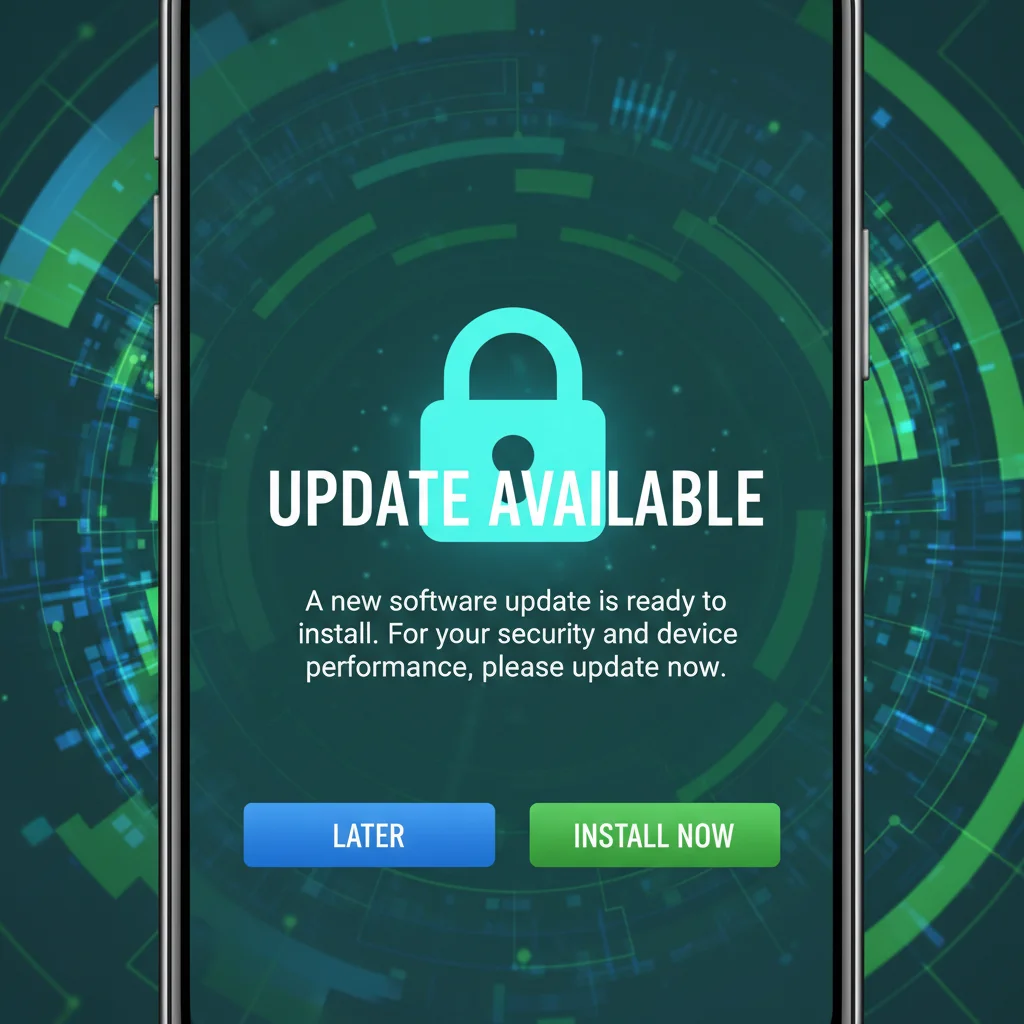
In the rapidly evolving digital landscape of 2026, your smartphone is more than just a communication device; it’s a personal data hub, a financial tool, and a gateway to your professional and social life. With such critical reliance, the importance of maintaining its security and efficiency cannot be overstated. This is where Mobile OS Updates become not just a recommendation, but a critical imperative. Ignoring these updates can leave you vulnerable to sophisticated cyber threats, compromise your data, and degrade your device’s performance. This comprehensive guide will delve deep into why timely mobile OS updates are indispensable for your digital well-being in 2026 and beyond.
The Escalating Threat Landscape: Why 2026 Demands Vigilance
The year 2026 has witnessed an unprecedented surge in the complexity and frequency of cyberattacks. Malicious actors are constantly innovating, developing new exploits and malware strains that specifically target vulnerabilities in outdated operating systems. These threats range from subtle data harvesting techniques to aggressive ransomware attacks that can lock you out of your device and demand payment. Your smartphone, being a constant companion, is often the easiest target.
Zero-Day Exploits and Advanced Persistent Threats (APTs)
One of the most dangerous threats is the “zero-day exploit.” These are vulnerabilities in software that are unknown to the vendor and thus have no patch available. Attackers can exploit these flaws before developers even know they exist, making them incredibly potent. While a zero-day exploit might not be directly addressed by an update immediately, subsequent Mobile OS Updates often contain patches for these newly discovered vulnerabilities as soon as they are identified and fixed by the OS developer.
Advanced Persistent Threats (APTs), on the other hand, are long-term, targeted attacks where an intruder gains access to a network or system and remains undetected for an extended period. While often associated with corporate espionage, APTs can also target individuals with high-value data, and an unpatched mobile OS can serve as an easy entry point for such sophisticated attacks.
The Role of Mobile OS Updates in Countering Threats
Operating system developers like Apple and Google are at the forefront of identifying and mitigating these threats. Each Mobile OS Update package isn’t just about new emojis or interface tweaks; it’s primarily a critical delivery mechanism for security patches. These patches close loopholes, fix bugs, and strengthen your device’s defenses against the latest known exploits. Without these updates, your device remains exposed to vulnerabilities that have already been identified and addressed for updated systems, essentially leaving your digital front door wide open.
Beyond Security: The Multifaceted Benefits of Timely Mobile OS Updates
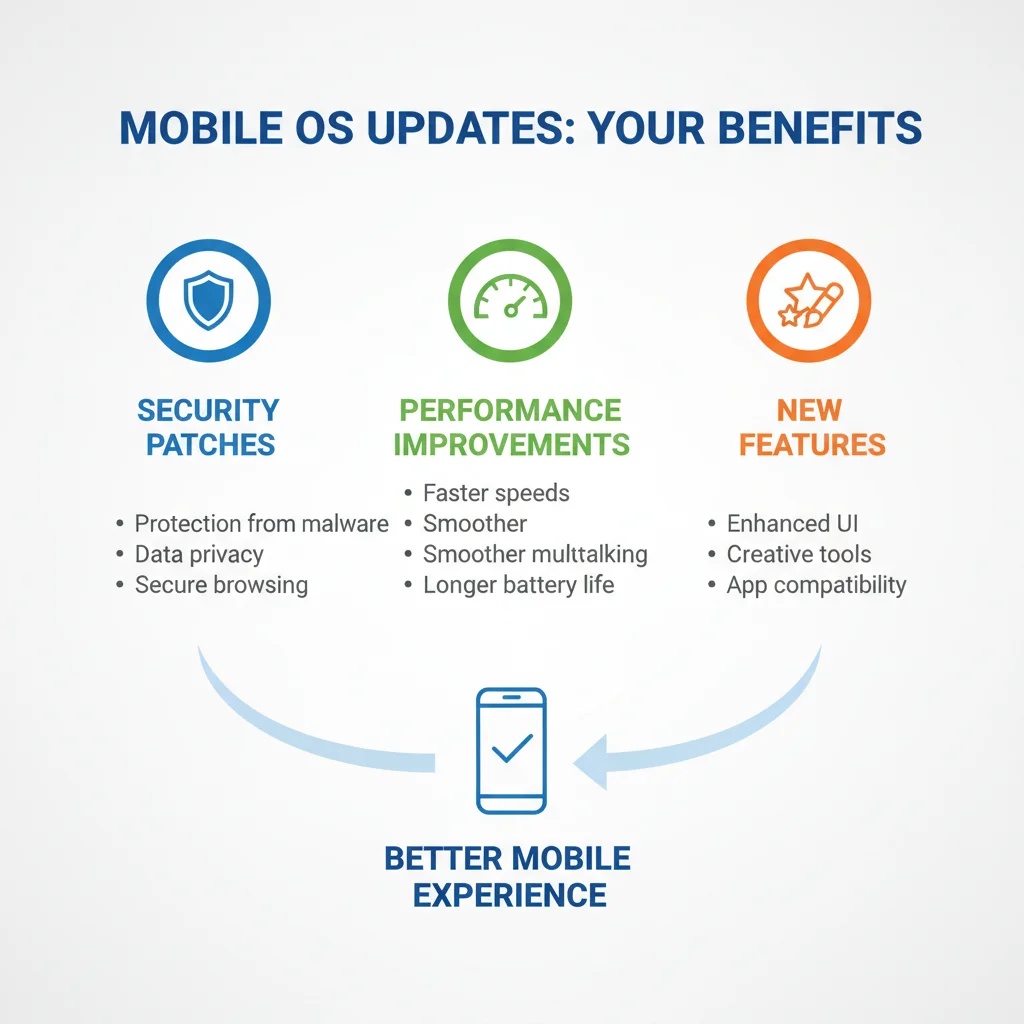
While security is paramount, Mobile OS Updates offer a wealth of other advantages that significantly enhance your smartphone experience. These benefits contribute to a more efficient, enjoyable, and reliable device.
Enhanced Performance and Stability
Over time, operating systems can accumulate minor bugs and inefficiencies that lead to slower performance, app crashes, and reduced battery life. Mobile OS Updates often include performance optimizations, bug fixes, and memory management improvements. These enhancements can make your device feel faster, apps run smoother, and overall stability improve, extending the usable life of your smartphone.
New Features and Functionality
OS updates are also the gateway to exciting new features and functionalities. These can range from subtle interface improvements and new camera modes to entirely new ways of interacting with your device and its applications. For example, recent updates have introduced advanced privacy controls, improved AI capabilities, and enhanced multitasking features. Keeping your OS updated ensures you’re not missing out on these innovations that can genuinely improve your daily mobile interactions.
Consider the impact on productivity apps, communication tools, or even entertainment platforms. Developers often optimize their applications for the latest OS versions, meaning that older OS versions might miss out on critical app features or even experience compatibility issues.
Improved Battery Life
Battery drain is a common complaint among smartphone users. While hardware degradation plays a role, inefficient software can also be a significant culprit. Mobile OS Updates frequently include power management optimizations that help your device conserve battery life more effectively. These optimizations can fine-tune how background processes run, how much power the display consumes, and how efficiently the processor operates, leading to noticeable improvements in your phone’s endurance throughout the day.
The Hidden Dangers of Neglecting Mobile OS Updates
Many users delay or outright skip Mobile OS Updates for various reasons, often due to concerns about compatibility, storage space, or the time it takes. However, the risks associated with this neglect far outweigh any perceived inconveniences.
Vulnerability to Malware and Viruses
As mentioned, outdated operating systems are prime targets for malware and viruses. These malicious programs can steal your personal information (passwords, bank details, photos), spy on your activities, or even turn your device into part of a botnet for further attacks. The latest Mobile OS Updates are specifically designed to patch these known vulnerabilities, creating a stronger barrier against such intrusions.
Data Breaches and Identity Theft
Your smartphone holds a treasure trove of personal data. If an attacker exploits an unpatched vulnerability, they could gain unauthorized access to your emails, messages, contacts, photos, and even financial applications. This can lead to devastating consequences, including identity theft, financial fraud, and significant privacy violations. Regular Mobile OS Updates are your first line of defense against these catastrophic scenarios.
Reduced App Compatibility and Functionality
App developers continuously update their applications to leverage the latest features and security protocols of modern operating systems. If your phone’s OS is significantly outdated, you might find that some apps no longer function correctly, or worse, become entirely incompatible. This can limit your productivity, entertainment options, and connectivity, essentially diminishing the utility of your smartphone.
Potential for Device Bricking (Rare but Possible)
While extremely rare with official updates, in some fringe cases, a severely outdated OS trying to jump multiple versions at once, or an interrupted update, could theoretically lead to software corruption that renders the device unusable – often referred to as “bricking.” Sticking to a regular update schedule minimizes the chances of encountering such drastic issues by applying changes incrementally.
How to Ensure Timely Mobile OS Updates
Staying updated is straightforward, but it requires a conscious effort. Here’s how you can ensure your device is always running the latest and most secure version of its operating system.
Enable Automatic Updates
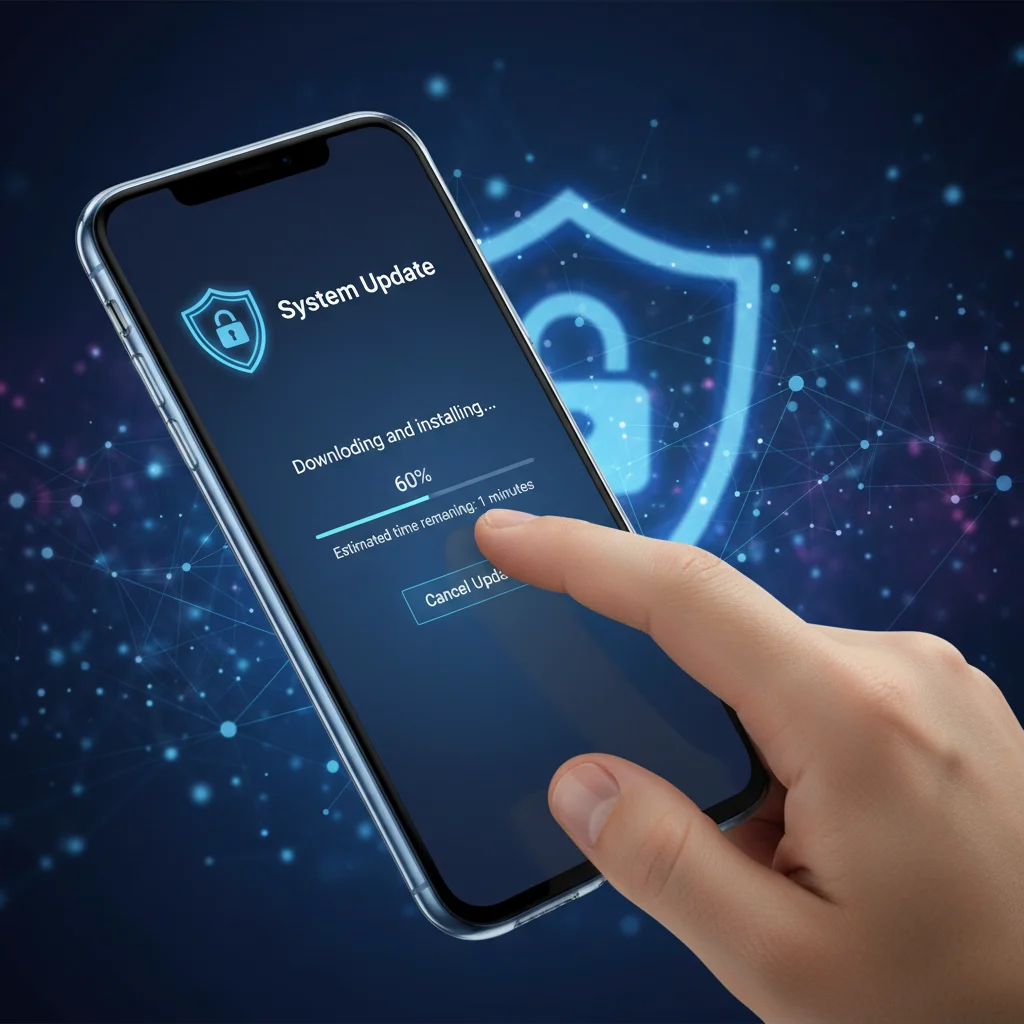
The simplest and most effective way to stay current is to enable automatic updates. Both Android and iOS offer settings that allow your device to download and install updates automatically, usually overnight or when connected to Wi-Fi and charging. This “set it and forget it” approach ensures you receive critical patches as soon as they’re released without needing to manually check.
Regularly Check for Updates Manually
If you prefer more control, or if automatic updates aren’t enabled, make it a habit to manually check for updates every few weeks. This option is usually found in your phone’s “Settings” menu, under “Software Update” or “System Update.” A quick check can confirm if your device is running the latest version or if an update is pending.
Ensure Sufficient Storage Space
Mobile OS Updates can sometimes be large, requiring several gigabytes of free storage space. Before initiating an update, ensure your device has enough available storage. If not, consider deleting unnecessary apps, photos, or videos, or offloading them to cloud storage.
Maintain a Stable Wi-Fi Connection and Sufficient Battery
For a smooth update process, always connect to a stable Wi-Fi network to avoid data charges and ensure a consistent download. Additionally, ensure your device has at least 50% battery life, or ideally, is plugged into a charger. This prevents the update process from being interrupted due to power loss, which can lead to software corruption.
Understanding the Update Cycle: Major vs. Minor Updates
It’s important to distinguish between major and minor Mobile OS Updates, as they serve different purposes and have varying impacts on your device.
Major OS Updates (e.g., iOS 17 to iOS 18, Android 13 to Android 14)
These are significant updates released annually that introduce substantial new features, a revamped user interface, and often foundational changes to the operating system’s architecture. While they include numerous security enhancements, their primary focus is on innovation and expanding capabilities. These updates typically require more storage space and a longer installation time.
Minor OS Updates (e.g., iOS 17.1 to 17.2, Android 13.0.1 to 13.0.2)
Also known as “point releases” or “patch updates,” these are more frequent, smaller updates that primarily focus on bug fixes, performance improvements, and, crucially, security patches for newly discovered vulnerabilities. These are the updates that directly address zero-day exploits and other immediate threats. They are generally quicker to download and install and are vital for maintaining continuous security.
The Future of Mobile Security and Updates in 2026
As we navigate further into 2026, the landscape of mobile security will continue to evolve. Artificial intelligence (AI) and machine learning (ML) are increasingly being integrated into OS security protocols, allowing devices to proactively detect and neutralize threats. However, even with these advanced technologies, the fundamental need for Mobile OS Updates remains.
AI-Powered Security and Proactive Threat Detection
Modern mobile operating systems are leveraging AI to analyze app behavior, identify suspicious patterns, and predict potential threats before they can cause harm. This includes on-device machine learning models that can detect phishing attempts, identify malicious links, and even recognize unusual network activity. These AI models are constantly refined and improved through OS updates, making your device smarter and more resilient against emerging threats.
Hardware-Level Security Enhancements
Beyond software, hardware manufacturers are also integrating advanced security features directly into the device’s silicon. Secure enclaves, trusted execution environments, and biometric authentication modules are becoming standard. While these are hardware-based, their full potential is often unlocked and optimized through corresponding Mobile OS Updates that provide the software interface and controls. Ensuring your OS is current means you’re fully utilizing these underlying hardware protections.
The Ecosystem Approach to Security
In 2026, mobile security is increasingly viewed as an ecosystem. This means that not only your OS needs to be updated, but also your apps, and even your connected accessories (like smartwatches or IoT devices) should be kept current. A vulnerability in one part of your digital ecosystem can potentially compromise the entire chain. Regular Mobile OS Updates are the cornerstone of this holistic security strategy, ensuring the core of your mobile experience is always fortified.
Addressing Common Concerns about Mobile OS Updates
Despite the overwhelming benefits, some users harbor reservations about updating their mobile OS. Let’s address some of these common concerns.
“Updates Slow Down My Phone!”
This is a persistent myth, often stemming from older devices struggling with new, more resource-intensive OS versions. While a brand new OS on a very old phone *might* feel slightly less snappy due to hardware limitations, modern Mobile OS Updates are typically optimized for a range of devices, and often include performance improvements and bug fixes that *speed up* your phone. The perception of slowdown can also be due to new features consuming more resources or simply the placebo effect. Most often, the benefits of security and new features far outweigh any minor performance differences, especially on devices less than 3-4 years old.
“Updates Break Apps or Change the Interface Too Much!”
While interface changes can take some getting used to, they are usually designed to enhance usability and introduce new functionalities. App compatibility issues are rare with official updates, especially from major OS providers. App developers are typically given ample time to adapt their apps to upcoming OS versions. If an app does break, it’s usually a temporary issue that the app developer quickly patches. It’s always a good practice to check app reviews after a major OS update if you rely on a very specific, niche application.
“Updates Use Too Much Data!”
This concern is valid for those with limited mobile data plans, as major updates can indeed be large. However, most smartphones allow you to restrict update downloads to Wi-Fi only. For minor security patches, the data usage is usually minimal. Enabling automatic updates over Wi-Fi ensures you get all the necessary updates without impacting your mobile data allowance.
“I Don’t Have Time to Update!”
The time it takes to download and install an update can vary, but modern updates are often designed to be installed in the background or during off-peak hours (like overnight). Enabling automatic updates and scheduling them for convenient times minimizes disruption. The few minutes or hours it takes to update is a small price to pay for safeguarding your digital life against potentially catastrophic security breaches that could take days or weeks to recover from.
Conclusion: Make Mobile OS Updates a Priority
In the connected world of 2026, your smartphone is a crucial component of your personal and professional security posture. Neglecting Mobile OS Updates is akin to leaving your house unlocked in a neighborhood with rising crime rates. These updates are the essential armor that protects your personal data, ensures your device performs optimally, and keeps you equipped with the latest features and innovations.
By making timely Mobile OS Updates a non-negotiable part of your digital routine, you’re not just patching vulnerabilities; you’re investing in the longevity, efficiency, and overall security of your smartphone. Don’t wait until a security breach forces your hand; be proactive, stay updated, and secure your digital future in 2026 and beyond.