5G Evolution U.S. 2026: Reshaping Mobile App Performance
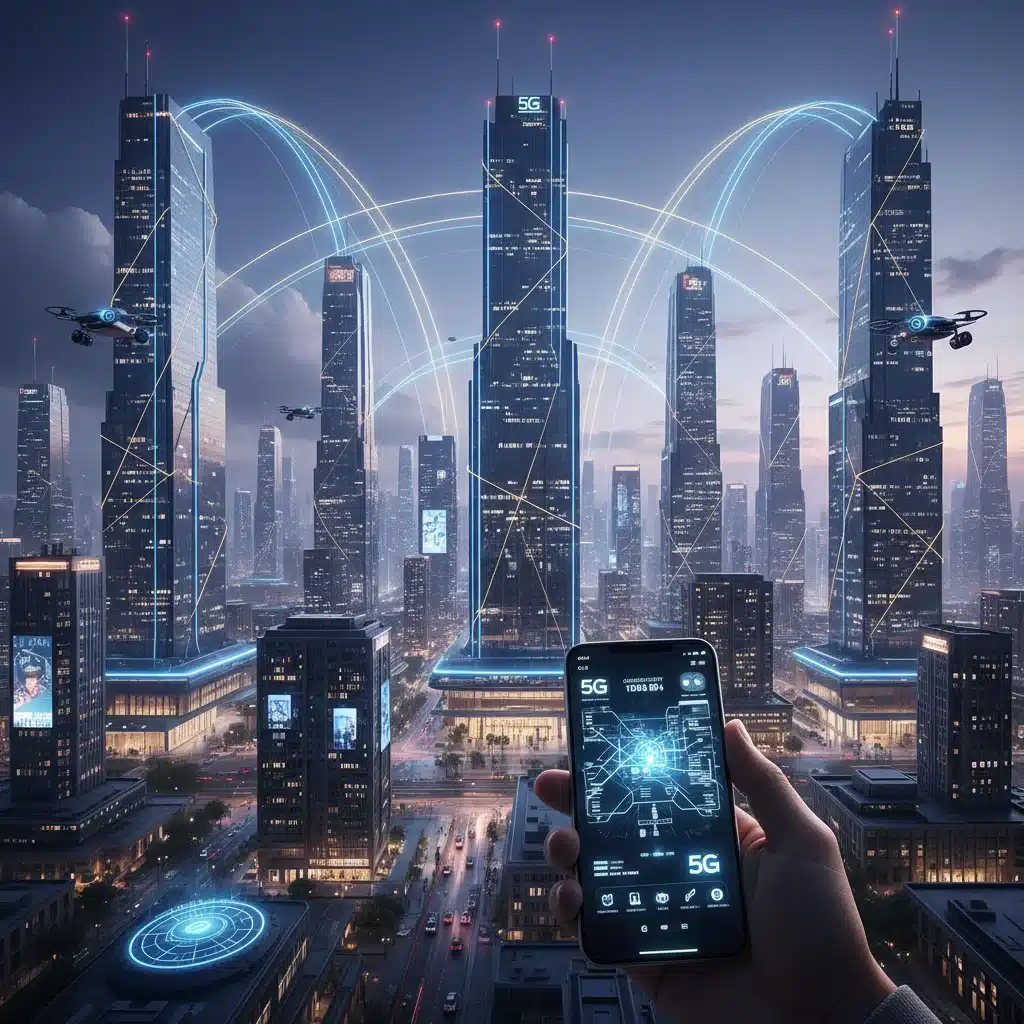
The landscape of mobile technology is in a constant state of flux, driven by relentless innovation and an ever-increasing demand for faster, more reliable connectivity. At the forefront of this transformation is 5G, the fifth generation of cellular technology, which promises to revolutionize not just how we connect, but how we interact with our digital world. As we look towards 2026, the 5G evolution U.S. is poised to reach a critical juncture, with significant network upgrades expected to profoundly reshape mobile app performance and user experiences across the nation.
This comprehensive article delves into the anticipated advancements in 5G infrastructure, explores the intricate ways these upgrades will impact mobile applications, and provides insights for developers, businesses, and consumers alike. Understanding the trajectory of 5G evolution U.S. is no longer a niche concern for tech enthusiasts; it is a fundamental requirement for anyone operating in or relying on the mobile ecosystem.
The Current State of 5G in the U.S.: A Foundation for Growth
Before we project into 2026, it’s essential to understand the current footprint and capabilities of 5G in the United States. While 5G has been rolling out for several years, its implementation has been a multi-faceted process, involving various spectrum bands and deployment strategies. Early deployments focused on high-band millimeter-wave (mmWave) in dense urban areas, offering blistering speeds but limited coverage. Simultaneously, mid-band and low-band spectrums have been crucial for broader coverage, albeit with more moderate speed improvements over 4G LTE.
The initial phase of 5G evolution U.S. brought about noticeable improvements in download speeds for many users, particularly in areas with robust mid-band coverage. However, the true promise of 5G – ultra-low latency, massive device connectivity, and transformative new applications – has largely remained aspirational for the general public. This is primarily due to the ongoing build-out of infrastructure, the integration of advanced technologies like standalone 5G (SA 5G), and the optimization of network architectures.
As of today, major U.S. carriers have achieved significant 5G population coverage, but the quality and consistency of that coverage can vary widely. The focus has been on expanding reach, and now the emphasis is shifting towards densification, capacity enhancement, and unlocking the full potential of the 5G core network. This foundational work sets the stage for the dramatic changes expected by 2026, as the 5G evolution U.S. accelerates.
Key Network Upgrades Driving 5G Evolution by 2026
The period leading up to and including 2026 will witness several critical network upgrades that will collectively define the next phase of 5G evolution U.S. These advancements are not merely incremental; they represent a fundamental shift in network capabilities.
1. Standalone 5G (SA 5G) Core Deployment and Maturation
Perhaps the most significant upgrade is the widespread deployment and maturation of Standalone 5G (SA 5G) networks. Unlike Non-Standalone (NSA) 5G, which relies on existing 4G LTE core infrastructure, SA 5G operates on a dedicated 5G core. This brings several advantages:
- Ultra-Low Latency: Without the need to route traffic through a 4G core, SA 5G drastically reduces latency, enabling near real-time communication critical for applications like augmented reality (AR), virtual reality (VR), and autonomous vehicles.
- Network Slicing: SA 5G allows for network slicing, where a single physical network can be partitioned into multiple virtual networks, each optimized for specific applications (e.g., one slice for mission-critical IoT, another for high-bandwidth video streaming). This customization enhances efficiency and reliability.
- Enhanced Machine-Type Communication (eMTC) & Ultra-Reliable Low-Latency Communication (URLLC): These capabilities, inherent to SA 5G, are crucial for industrial IoT, smart cities, and other enterprise applications requiring high reliability and minimal delay.
By 2026, SA 5G is expected to be the dominant 5G architecture in the U.S., unlocking a new era of application possibilities.
2. Increased Mid-Band Spectrum Deployment
Mid-band spectrum (often referred to as the ‘Goldilocks’ spectrum) offers an optimal balance of speed and coverage. The ongoing deployment of C-band and other mid-band frequencies will be pivotal. This expansion will significantly boost capacity and speeds for a larger user base, moving beyond the limited footprint of mmWave and the more modest speeds of low-band. More mid-band means more robust and consistent 5G experiences for everyday users.
3. Network Densification and Small Cell Deployment
To deliver consistent high speeds and low latency, especially in urban and suburban areas, carriers will continue to densify their networks. This involves deploying a greater number of smaller cell sites (small cells) closer to end-users. These small cells augment macro cell coverage, improve capacity, and reduce signal travel distance, thereby lowering latency. This densification is a continuous process that will be noticeably more advanced by 2026, enhancing the overall performance of the 5G evolution U.S..
4. Advanced Antenna Technologies (Massive MIMO)
Massive Multiple Input, Multiple Output (Massive MIMO) is a foundational 5G technology that uses a large number of antennas at the base station to simultaneously serve multiple users. This increases network capacity, improves spectral efficiency, and enhances signal quality. Further optimization and widespread deployment of Massive MIMO will be key to handling the increasing data demands and supporting a higher density of connected devices.
5. Edge Computing Integration
While not strictly a cellular network upgrade, the increasing integration of edge computing with 5G networks is a critical development. Edge computing brings data processing and storage closer to the source of data generation (i.e., the user’s device or local network). When combined with 5G’s low latency, edge computing can dramatically reduce the round-trip time for data, enabling truly real-time applications and services. This synergy is fundamental to realizing the full potential of the 5G evolution U.S. in areas like industrial automation, smart healthcare, and immersive entertainment.
How 5G Evolution U.S. will Reshape Mobile App Performance
The culmination of these network upgrades will have a transformative impact on mobile app performance across several key metrics:
1. Unprecedented Speed and Bandwidth
The most immediately noticeable impact will be on speed. Users can expect significantly faster download and upload speeds, even in crowded environments. This means:
- Instant Downloads: Large files, high-resolution videos, and extensive game updates will download in seconds, not minutes.
- Seamless Streaming: 4K and even 8K video streaming on mobile devices will become commonplace, without buffering or quality degradation.
- Faster App Loading: Apps that rely on fetching large amounts of data from the cloud will load and respond more quickly.
This increase in bandwidth will allow developers to create richer, more data-intensive applications without compromising performance, pushing the boundaries of what’s possible on mobile.
2. Ultra-Low Latency Enables New Experiences
The reduction in latency to single-digit milliseconds is perhaps the most revolutionary aspect of advanced 5G. This opens doors for applications that were previously impractical on mobile networks:
- Real-time Gaming: Cloud gaming and competitive online multiplayer games will achieve console-like responsiveness on mobile, eliminating lag.
- Immersive AR/VR: Augmented and virtual reality applications will become far more realistic and interactive, with reduced motion sickness and more fluid experiences. This will impact education, entertainment, and professional training.
- Remote Control and Robotics: Applications for remotely controlling drones, robots, or even surgical instruments will become viable, requiring instant feedback.
- Enhanced Live Collaboration: Real-time co-editing of complex documents, interactive virtual meetings with 3D models, and instant communication will be seamless.

3. Enhanced Reliability and Consistent Connectivity
The combination of network densification, SA 5G, and advanced antenna technologies will lead to more reliable and consistent connectivity. Dropped calls, patchy internet, and dead zones will become less frequent, particularly in urban and suburban areas. For mobile apps, this means:
- Uninterrupted Services: Business-critical applications, navigation tools, and communication platforms will function more consistently.
- Improved IoT Integration: Devices requiring constant, reliable connectivity (e.g., smart home security, connected health monitors) will perform better.
4. Massive Device Connectivity for Smart Environments
5G is designed to connect a significantly larger number of devices per square kilometer compared to 4G. This capability is crucial for the proliferation of IoT (Internet of Things) devices and the development of smart cities and intelligent environments. Mobile apps will become central to managing and interacting with these vast networks of connected devices, from smart home ecosystems to urban infrastructure monitoring.
5. Opportunities for Edge-Powered Applications
The synergy between 5G and edge computing will enable a new class of mobile applications that leverage localized processing power. This can lead to:
- Hyper-Personalized Experiences: Data can be processed closer to the user, allowing for more immediate and context-aware personalization without sending all data to a distant cloud server.
- Reduced Cloud Dependency: Certain tasks can be offloaded from the central cloud, reducing bandwidth consumption and improving response times.
- Enhanced Security: Processing sensitive data at the edge can offer improved privacy and security for certain applications.
Implications for Mobile App Developers
For mobile app developers, the 5G evolution U.S. by 2026 presents both exciting opportunities and new challenges. Adapting to this advanced network environment will be crucial for success.
1. Designing for Ultra-Low Latency and High Bandwidth
Developers will need to rethink app design paradigms. Instead of optimizing for limited bandwidth and higher latency, they can now design for rich, real-time interactions. This includes:
- More Interactive UI/UX: Incorporating more dynamic elements, real-time data visualizations, and instant feedback mechanisms.
- Higher Fidelity Content: Integrating high-resolution graphics, 3D models, and uncompressed audio/video directly into apps.
- Cloud-Native Architectures: Leveraging cloud services more extensively for compute-intensive tasks, knowing that the network can handle the data transfer efficiently.
2. Embracing Edge Computing and Distributed Architectures
Understanding and utilizing edge computing capabilities will become increasingly important. Developers should explore how to:
- Distribute Workloads: Identify app components that can benefit from processing at the edge versus the central cloud.
- Optimize for Local Data: Design apps that can intelligently cache and process data locally or at nearby edge nodes.
- Develop for Network Slicing: For enterprise or specialized applications, working with carriers to utilize dedicated network slices can guarantee performance for mission-critical functions.
3. Developing for New Use Cases: AR/VR, IoT, and AI Integration
The enhanced capabilities of 5G will fuel the growth of several emerging technologies. Developers should:
- Invest in AR/VR Development: With reduced latency, AR/VR experiences will be far more compelling. Developers should explore SDKs and tools for creating these immersive applications.
- Build IoT Management Apps: As IoT devices proliferate, there will be a growing need for robust mobile applications to manage, monitor, and interact with them.
- Leverage AI on the Edge: The combination of 5G and edge computing enables more sophisticated AI processing directly on devices or at the network edge, leading to smarter, more responsive applications.

4. Prioritizing Security and Privacy
With more data flowing at higher speeds and more devices connected, security and privacy concerns will be paramount. Developers must integrate robust security measures from the ground up, adhering to best practices for data encryption, user authentication, and privacy regulations. The distributed nature of edge computing also introduces new security considerations that need to be addressed.
Impact on Businesses and Industries
Beyond individual app performance, the 5G evolution U.S. will have profound implications for various industries:
1. Healthcare
Remote surgery, real-time patient monitoring via wearables, high-definition telehealth consultations, and instant access to large medical imaging files will become more commonplace, improving patient care and accessibility.
2. Manufacturing and Industrial IoT
Smart factories leveraging 5G for automated guided vehicles (AGVs), real-time machine analytics, predictive maintenance, and robotic control will become more efficient and productive. URLLC capabilities will be critical here.
3. Transportation
Connected vehicles, smart traffic management systems, and enhanced navigation apps will benefit from the low latency and high bandwidth of 5G, paving the way for safer and more efficient transportation networks.
4. Entertainment and Media
Immersive AR/VR experiences, mobile cloud gaming, live 360-degree video streaming, and personalized content delivery will transform how consumers experience entertainment. Sports broadcasting, for instance, could offer multi-angle, real-time interactive feeds directly to mobile devices.
5. Retail
Enhanced in-store AR experiences, personalized shopping recommendations based on real-time data, faster mobile point-of-sale systems, and efficient inventory management through IoT devices will redefine the retail experience.
Challenges and Considerations for the Road Ahead
While the future of 5G evolution U.S. is bright, several challenges and considerations remain:
1. Continued Infrastructure Investment
The deployment of SA 5G, mid-band spectrum, and small cells requires massive ongoing investment from carriers. Policy and regulatory environments will play a crucial role in facilitating this continued build-out.
2. Spectrum Availability and Allocation
Ensuring sufficient and appropriately allocated spectrum is vital for 5G’s long-term success. Future spectrum auctions and regulatory decisions will impact the pace and quality of 5G development.
3. Device Compatibility and Adoption
For users to fully experience the benefits of advanced 5G, they need 5G-enabled devices that support the latest spectrum bands and SA 5G capabilities. Device upgrade cycles will influence adoption rates.
4. Cybersecurity Threats
A more interconnected world with more devices and faster data transfer also means a larger attack surface for cyber threats. Robust cybersecurity frameworks will be essential to protect critical infrastructure and user data.
5. Skill Gap in Development
Developers will need to acquire new skills and knowledge to effectively leverage the advanced capabilities of 5G, edge computing, and related technologies. Training and education initiatives will be crucial.
The Future is Now: Preparing for 2026 and Beyond
The 5G evolution U.S. by 2026 is not just about faster internet; it’s about enabling a new generation of mobile applications and services that will fundamentally change how we live, work, and play. For consumers, it means richer, more immersive, and more responsive digital experiences. For businesses, it offers unprecedented opportunities for innovation, efficiency, and new revenue streams. For developers, it’s a call to action to imagine and build the next wave of transformative mobile applications.
Staying informed about these developments, investing in relevant technologies, and fostering a culture of innovation will be key to harnessing the full potential of this technological shift. The journey of 5G evolution U.S. is rapidly accelerating, and 2026 marks a significant milestone in this exciting transformation.
Conclusion
The comprehensive upgrades to 5G infrastructure in the U.S. by 2026, particularly the widespread adoption of SA 5G, increased mid-band spectrum, network densification, and the integration of edge computing, will usher in a new era for mobile app performance. Applications will no longer be constrained by network limitations, opening up possibilities for ultra-low latency interactions, massive device connectivity, and truly immersive experiences. Developers who strategically embrace these advancements will be at the forefront of creating the next generation of mobile innovations, driving economic growth and enhancing daily life across the nation. The future of mobile is 5G, and its full potential is rapidly approaching.