Mastering Project Management: Essential Strategies and Tools

In today’s fast-paced business environment, the ability to effectively manage projects is not just an advantage—it’s a necessity. From small startups to multinational corporations, every organization relies on successful project execution to achieve its strategic objectives, drive innovation, and maintain a competitive edge. This comprehensive guide will delve into what it truly means to achieve Project Management Mastery, exploring the foundational principles, cutting-edge methodologies, and indispensable tools that empower project managers to deliver exceptional results consistently.
The Core Pillars of Project Management Mastery
Achieving Project Management Mastery isn’t about memorizing a checklist; it’s about internalizing a set of core principles and adapting them to diverse situations. At its heart, project management is the application of knowledge, skills, tools, and techniques to project activities to meet the project requirements. It encompasses a wide array of disciplines, each critical to the overall success of a project.
Understanding Project Life Cycles
Every project, regardless of its size or complexity, follows a life cycle. Understanding these phases is crucial for effective management. Typically, project life cycles include:
- Initiation: Defining the project’s purpose, objectives, and scope. This phase involves creating a project charter and identifying key stakeholders.
- Planning: Developing a detailed roadmap that outlines how the project will be executed, monitored, controlled, and closed. This includes defining tasks, resources, timelines, and budgets.
- Execution: Carrying out the planned activities, managing resources, and leading the project team. This is where the bulk of the work happens.
- Monitoring and Controlling: Tracking project progress, managing changes, identifying and mitigating risks, and ensuring that the project stays on track against the plan.
- Closure: Formalizing the completion of the project, archiving documentation, releasing resources, and conducting post-project reviews to capture lessons learned.
True Project Management Mastery involves not just knowing these phases but mastering the transitions between them, ensuring seamless progression and continuous alignment with project goals.
Key Knowledge Areas
The Project Management Institute (PMI) identifies ten key knowledge areas essential for project managers:
- Integration Management: Coordinating all aspects of the project.
- Scope Management: Defining and controlling what is and is not included in the project.
- Schedule Management: Managing the timely completion of the project.
- Cost Management: Planning, estimating, budgeting, financing, funding, managing, and controlling costs so that the project can be completed within the approved budget.
- Quality Management: Ensuring that the project and its deliverables meet the defined quality standards.
- Resource Management: Identifying, acquiring, and managing the resources needed for the successful completion of the project.
- Communications Management: Ensuring timely and appropriate planning, collection, creation, distribution, storage, retrieval, management, control, monitoring, and the ultimate disposition of project information.
- Risk Management: Conducting risk management planning, identification, analysis, response planning, and controlling risk on a project.
- Procurement Management: Acquiring goods, services, or results from outside the project team.
- Stakeholder Management: Identifying all people or organizations impacted by the project, analyzing stakeholder expectations and their impact on the project, and developing appropriate management strategies for effectively engaging stakeholders in project decisions and execution.
A deep understanding and practical application of these knowledge areas are fundamental to achieving Project Management Mastery and delivering successful outcomes.
Strategic Methodologies for Project Success
The landscape of project management methodologies has evolved significantly, offering various approaches to suit different project types and organizational cultures. Choosing the right methodology is a critical step towards Project Management Mastery.
Traditional (Waterfall) Methodology
The Waterfall method is a linear, sequential approach where each phase of the project must be completed before the next phase can begin. It’s best suited for projects with well-defined requirements and minimal anticipated changes. While offering clear documentation and a structured approach, its rigidity can be a drawback for projects with evolving requirements.
Agile Methodologies
Agile is an iterative and incremental approach that emphasizes flexibility, collaboration, and customer feedback. It’s particularly effective for projects with uncertain or changing requirements. Key Agile frameworks include:
- Scrum: A framework for developing, delivering, and sustaining complex products. It involves short iterations called ‘sprints’ and roles like Scrum Master, Product Owner, and Development Team.
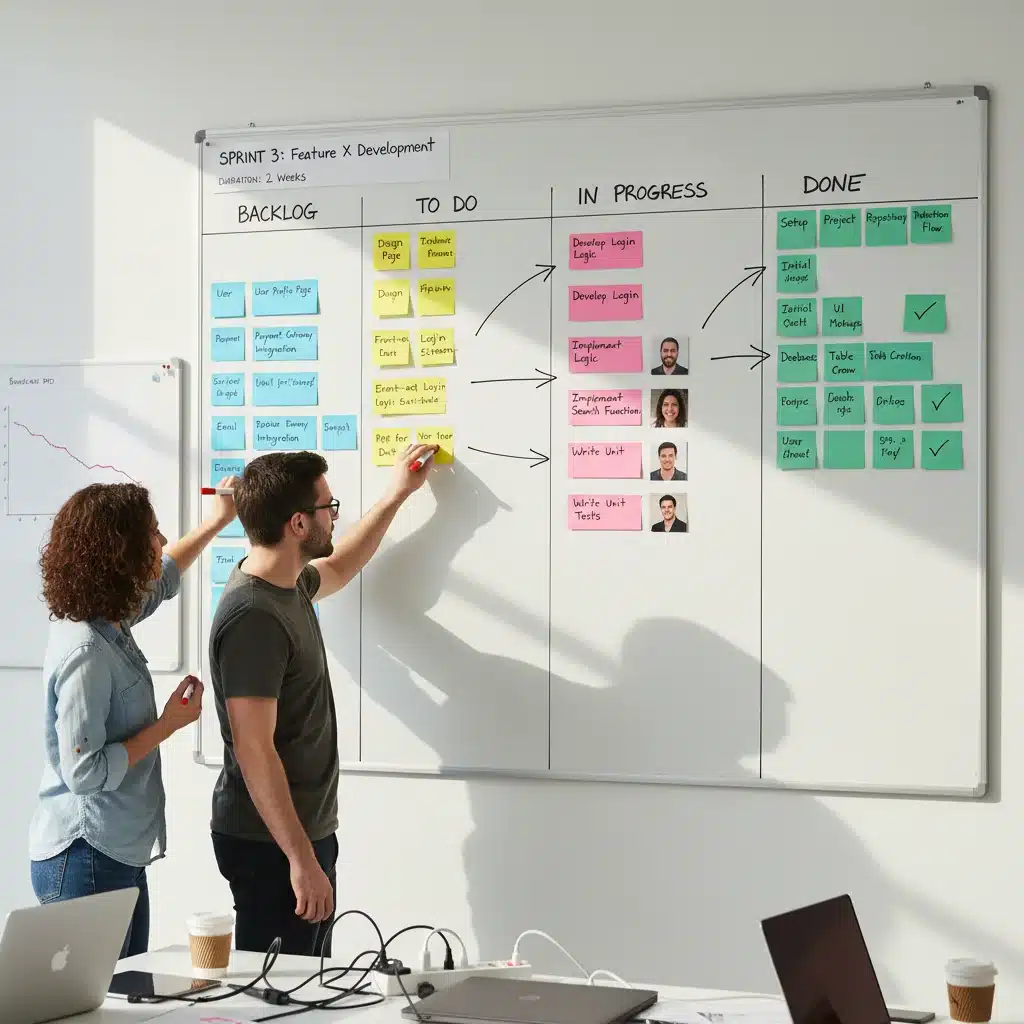
- Kanban: A method for managing work with an emphasis on continuous delivery without overburdening the development team. It visualizes the workflow using a Kanban board.
- Lean: Focuses on maximizing customer value while minimizing waste. It aims to deliver more value with fewer resources.
Embracing Agile principles is often a hallmark of Project Management Mastery, enabling teams to respond quickly to changes and deliver value incrementally.
Hybrid Approaches
Many organizations combine elements of traditional and Agile methodologies to create a hybrid approach that best fits their unique needs. This flexibility is a testament to advanced Project Management Mastery, allowing project managers to leverage the strengths of different frameworks.
Essential Tools for Modern Project Management
In today’s digital age, a plethora of tools are available to support project managers in their quest for Project Management Mastery. These tools streamline processes, enhance collaboration, and provide valuable insights into project progress.
Project Planning and Scheduling Tools
- Microsoft Project: A robust tool for complex project planning, scheduling, and resource management.
- Primavera P6: Enterprise project portfolio management software for large-scale, highly complex projects.
- Asana: A web and mobile application designed to help teams organize, track, and manage their work.
- Trello: A visual collaboration tool that organizes your projects into boards, lists, and cards.
Collaboration and Communication Tools
- Slack: A popular messaging platform for teams, facilitating quick communication and file sharing.
- Microsoft Teams: A hub for team collaboration within Microsoft 365, integrating chat, meetings, files, and apps.
- Zoom: A leading platform for video conferencing and webinars.
Risk Management and Reporting Tools
Many project management software solutions now include integrated risk management features and robust reporting capabilities, allowing project managers to monitor key performance indicators (KPIs) and make data-driven decisions. Tools like JIRA for issue tracking and risk management, coupled with business intelligence dashboards, are crucial for achieving Project Management Mastery.
The Role of Leadership and Soft Skills in Project Management Mastery
While technical skills and knowledge of methodologies are vital, true Project Management Mastery is often distinguished by strong leadership and a suite of well-honed soft skills. A project manager is not just a taskmaster but a leader, motivator, and facilitator.
Effective Communication
Communication is the bedrock of successful project management. Project managers must be adept at communicating with stakeholders, team members, and senior management. This includes active listening, clear articulation of expectations, and timely dissemination of information.
Team Leadership and Motivation
Inspiring and motivating a project team is paramount. A project manager with Project Management Mastery understands how to build a cohesive team, delegate effectively, provide constructive feedback, and foster an environment of trust and psychological safety.
Problem-Solving and Decision-Making
Projects are inherently unpredictable, and challenges will inevitably arise. The ability to identify problems, analyze potential solutions, and make timely, informed decisions under pressure is a hallmark of an expert project manager. This often involves critical thinking, creativity, and a willingness to adapt.
Negotiation and Conflict Resolution
Project managers frequently find themselves in situations requiring negotiation, whether it’s with vendors, stakeholders, or team members. The skill to navigate disagreements, find common ground, and resolve conflicts constructively is essential for maintaining project momentum and relationships.
Adaptability and Resilience
The project landscape is constantly shifting. A project manager exhibiting Project Management Mastery is adaptable, capable of adjusting plans in response to new information or unforeseen obstacles, and resilient in the face of setbacks.
Advanced Strategies for Achieving Project Management Mastery
Beyond the fundamentals, there are advanced strategies that elevate a project manager from competent to truly masterful. These involve a deeper understanding of organizational dynamics, strategic alignment, and continuous improvement.
Strategic Alignment
A master project manager ensures that every project is not just completed on time and within budget, but also aligns perfectly with the organization’s overarching strategic goals. This involves understanding the business context, the market, and how the project contributes to the larger vision. It’s about delivering not just outputs, but strategic outcomes.
Portfolio and Program Management
For those aspiring to the highest levels of Project Management Mastery, understanding portfolio and program management is crucial. Portfolio management involves selecting and managing a collection of projects or programs that align with strategic objectives. Program management focuses on coordinating a group of related projects to achieve benefits that would not be available from managing them individually.
Advanced Risk Management Techniques
While basic risk identification and mitigation are standard, advanced risk management involves quantitative risk analysis, Monte Carlo simulations, and developing sophisticated contingency plans. It’s about not just reacting to risks but proactively anticipating and modeling their potential impact on the project.

Performance Measurement and Metrics
Defining clear, measurable KPIs and using advanced analytical tools to track project performance are key. This includes Earned Value Management (EVM), which integrates scope, schedule, and cost to provide a comprehensive view of project performance. Regularly reviewing these metrics and adjusting strategies accordingly is a hallmark of Project Management Mastery.
Change Management Integration
Projects inherently bring change. A masterful project manager understands the human element of change and integrates robust change management strategies into the project plan. This ensures that the organization and its people are ready for and embrace the changes brought about by the project, leading to higher adoption rates and sustained benefits.
Continuous Learning and Professional Development
The field of project management is constantly evolving. Achieving and maintaining Project Management Mastery requires a commitment to continuous learning. This includes staying updated on new methodologies, tools, and best practices, pursuing certifications (e.g., PMP, CSM), and actively participating in professional communities.
Overcoming Common Project Management Challenges
Even with the best strategies and tools, project managers will face challenges. True mastery lies in the ability to anticipate, address, and overcome these hurdles effectively.
Scope Creep
One of the most common challenges, scope creep refers to uncontrolled changes or continuous growth in a project’s scope without adjustments to time, cost, or resources. To combat this, master project managers implement rigorous change control processes and maintain clear communication with stakeholders regarding scope boundaries.
Resource Constraints
Projects often operate with limited resources, whether it’s budget, personnel, or time. Effective resource allocation, negotiation, and prioritization are critical. Sometimes, this involves creative problem-solving to make the most of what’s available or making a compelling case for additional resources.
Stakeholder Misalignment
When stakeholders have conflicting interests or expectations, it can derail a project. A project manager demonstrating Project Management Mastery excels at stakeholder analysis, engagement, and communication, working to build consensus and manage expectations proactively.
Unforeseen Risks
Despite thorough risk planning, unexpected issues can arise. The ability to quickly assess the situation, develop a workaround, and communicate the impact to relevant parties is vital. This often draws on problem-solving skills and adaptability.
The Future of Project Management Mastery
The project management landscape is continuously evolving, shaped by technological advancements, globalization, and changing workforce dynamics. Future trends that will influence Project Management Mastery include:
- Artificial Intelligence (AI) and Machine Learning (ML): These technologies are poised to revolutionize project management by automating routine tasks, enhancing predictive analytics for risk and scheduling, and providing deeper insights into project performance.
- Big Data Analytics: Leveraging vast amounts of project data to identify patterns, optimize resource allocation, and improve decision-making.
- Remote and Hybrid Work Models: The increasing prevalence of distributed teams requires project managers to master virtual collaboration tools and strategies to maintain team cohesion and productivity.
- Emphasis on Emotional Intelligence (EQ): As AI handles more technical tasks, the human elements of leadership, empathy, and relationship building will become even more critical for successful project outcomes.
- Sustainability and Ethical Considerations: Projects are increasingly expected to consider their environmental and social impact, adding new layers of complexity and responsibility for project managers.
Embracing these future trends and continuously adapting will be key to sustaining Project Management Mastery in the years to come.
Conclusion: Your Journey to Project Management Mastery
Achieving Project Management Mastery is a continuous journey, not a destination. It requires a blend of foundational knowledge, strategic methodological application, proficiency with modern tools, exceptional leadership, and a commitment to lifelong learning. By diligently applying the principles and strategies outlined in this guide, project managers can elevate their capabilities, lead their teams to greater success, and consistently deliver projects that drive organizational value.
Whether you are just starting your project management career or are a seasoned professional looking to refine your skills, the path to mastery is always open. Embrace the challenges, celebrate the successes, and never stop learning. The world of project management is dynamic and rewarding, and with dedication, Project Management Mastery is well within your reach.