Mastering Advanced Task Management Systems for Project Success

Beyond Basic To-Do Lists: Implementing Advanced Task Management Systems for a 20% Boost in Project Completion
In today’s fast-paced professional landscape, the simple to-do list, while a foundational tool, often falls short in managing the complexities of modern projects and team collaborations. As demands grow, so does the need for more sophisticated approaches to task organization and execution. This is where Advanced Task Management systems come into play, offering a robust framework to not only track tasks but to optimize workflows, enhance communication, and ultimately, drive significant improvements in project completion rates. Imagine boosting your project completion by a remarkable 20% – that’s the transformative power of moving beyond the basics.
Many individuals and teams find themselves drowning in a sea of emails, scattered notes, and fragmented communication, leading to missed deadlines, duplicated efforts, and a general sense of overwhelm. The promise of Advanced Task Management isn’t just about getting things done; it’s about getting the right things done, at the right time, with maximum efficiency and minimal stress. It’s about creating a transparent, accountable, and agile environment where every team member understands their role and contributes effectively towards shared objectives.
This comprehensive guide will delve into the core principles of Advanced Task Management, exploring various methodologies, essential features of powerful tools, and practical strategies for implementation. Whether you’re a project manager looking to streamline complex workflows, a team leader aiming for higher productivity, or an individual striving for better personal organization, understanding and applying these advanced techniques will be a game-changer. We’ll uncover how to choose the right system, integrate it seamlessly into your existing processes, and leverage its full potential to achieve unprecedented levels of project success.
The Evolution from To-Do Lists to Advanced Task Management
The journey from a simple paper and pen to sophisticated digital platforms marks a significant evolution in how we approach work. Initially, to-do lists served their purpose, providing a basic record of tasks. However, as projects grew in complexity, involving multiple stakeholders, interdependencies, and dynamic timelines, these rudimentary lists became inadequate. They lacked context, progress tracking, collaboration features, and integration capabilities – all crucial elements for effective project delivery.
Advanced Task Management systems address these gaps by offering a holistic approach. They are not merely lists; they are comprehensive ecosystems designed to manage the entire lifecycle of a task, from conception to completion. This includes defining tasks, assigning responsibilities, setting deadlines, tracking progress, managing resources, facilitating communication, and providing analytical insights. The shift represents a move from reactive task tracking to proactive project orchestration, enabling teams to anticipate challenges, allocate resources intelligently, and maintain clear visibility over every aspect of their work.
Consider the difference: a basic to-do list might say "Write blog post." An Advanced Task Management system would break this down into sub-tasks: "Research keywords," "Outline structure," "Draft content," "Edit and proofread," "Add images," "Schedule publication." Each sub-task could have an assignee, a due date, attached resources (like research links or image files), comments for collaboration, and dependencies on other tasks. This granular level of detail, coupled with integrated tools, transforms a vague item into a fully manageable, trackable, and collaborative piece of work.
The benefits of this evolution are manifold: increased clarity, reduced ambiguity, improved accountability, better resource allocation, enhanced team collaboration, and ultimately, a higher likelihood of meeting project objectives on time and within budget. For any organization aiming for sustained growth and efficiency, embracing Advanced Task Management is no longer an option but a necessity.
Key Methodologies Driving Advanced Task Management
The effectiveness of an Advanced Task Management system often hinges on the underlying methodology it supports. Several well-established frameworks provide structured approaches to organizing and executing work. Understanding these can help you choose the best fit for your team and projects.
1. Agile and Scrum
Originating in software development, Agile methodologies, particularly Scrum, have permeated various industries due to their iterative and flexible nature. Agile emphasizes breaking projects into small, manageable "sprints" (typically 1-4 weeks), with daily stand-ups, continuous feedback, and adaptive planning. Tasks are often managed using a backlog and sprint boards (like Kanban boards), allowing teams to prioritize, work collaboratively, and respond quickly to changes. This approach is ideal for projects with evolving requirements and a need for rapid delivery.
2. Kanban
Kanban is a visual system for managing work as it moves through a process. It uses a board with columns representing different stages of a workflow (e.g., "To Do," "In Progress," "Review," "Done"). Tasks are represented by cards that move across these columns. Key principles include visualizing the workflow, limiting work in progress (WIP), and continuously improving the flow. Kanban is highly adaptable and excellent for teams needing to visualize workflow bottlenecks, balance workload, and improve efficiency without rigid timeboxes.
3. Getting Things Done (GTD)
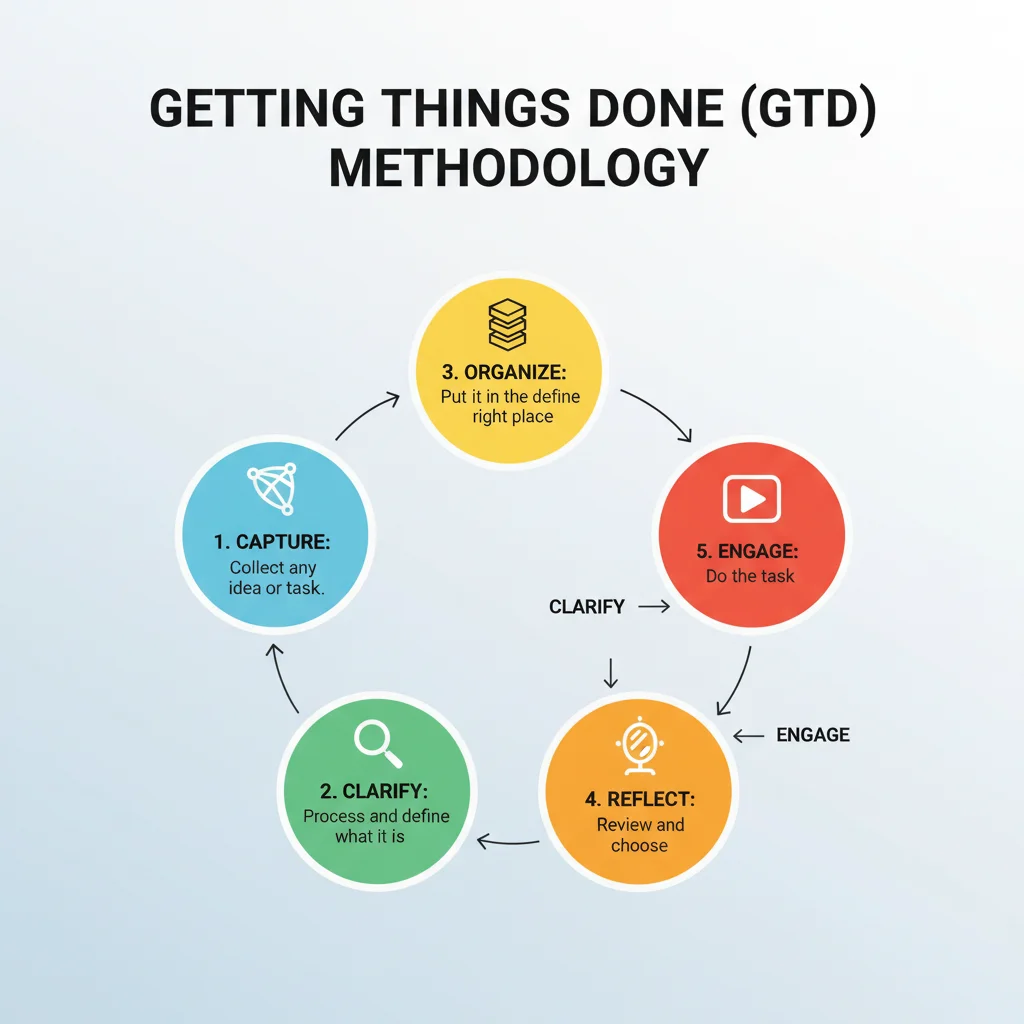
David Allen’s GTD methodology is a personal productivity system that focuses on capturing all tasks and ideas, clarifying what they mean, organizing them into actionable items, reflecting on priorities, and engaging with the work. While often applied at an individual level, its principles of breaking down overwhelming tasks, identifying next actions, and maintaining organized lists (projects, someday/maybe, waiting for) can be scaled to team environments, especially for knowledge work. It promotes a sense of control and reduces mental clutter.
4. Critical Path Method (CPM) and Program Evaluation and Review Technique (PERT)
These are more traditional project management techniques, often used for large, complex projects with well-defined tasks and dependencies. CPM identifies the longest sequence of dependent activities (the critical path) that dictates the minimum time to complete a project. PERT introduces probabilistic time estimates to account for uncertainties. While less flexible than Agile, they are invaluable for projects where precise scheduling and dependency management are paramount, often visualized through Gantt charts within Advanced Task Management software.
The best Advanced Task Management system often allows for the integration or adaptation of elements from these diverse methodologies, providing teams with the flexibility to tailor their approach to specific project needs. The goal is always to enhance clarity, improve execution, and achieve superior project outcomes.
Essential Features of Advanced Task Management Tools
The market is flooded with tools promising to revolutionize your productivity. However, to truly implement Advanced Task Management, you need to look beyond basic checklist functionalities. Here are the essential features that differentiate powerful task management solutions:
1. Granular Task Breakdown and Sub-tasks
The ability to break down large projects into smaller, manageable tasks and further into sub-tasks is fundamental. This hierarchical structure provides clarity, allows for precise assignment, and makes overwhelming projects seem more achievable. Each sub-task should ideally have its own due date, assignee, and status.
2. Dependency Management
In real-world projects, tasks are rarely isolated. One task often cannot start until another is finished. Advanced Task Management systems offer robust dependency tracking, allowing you to link tasks (e.g., ‘finish-to-start,’ ‘start-to-start’). This is crucial for accurate scheduling and identifying critical path items, preventing bottlenecks before they occur.
3. Collaborative Features
Teamwork is at the heart of most projects. Essential collaborative features include:
- Task Assignment: Clearly assign tasks to team members.
- Comments and Discussions: Facilitate communication directly within tasks, keeping context centralized.
- File Sharing: Attach relevant documents, images, and links to tasks.
- Real-time Updates: See changes and progress as they happen.
- Notifications: Alert team members about new assignments, updates, and approaching deadlines.
4. Customizable Workflows and Statuses
Every team and project has unique processes. An effective Advanced Task Management tool should allow you to define custom workflows (e.g., "New," "In Progress," "Pending Review," "Blocked," "Completed") and statuses that match your operational reality. This flexibility ensures the system adapts to you, not the other way around.
5. Multiple Views (Kanban, Gantt, List, Calendar)
Different team members and project types benefit from different visual representations of tasks. A versatile system offers:
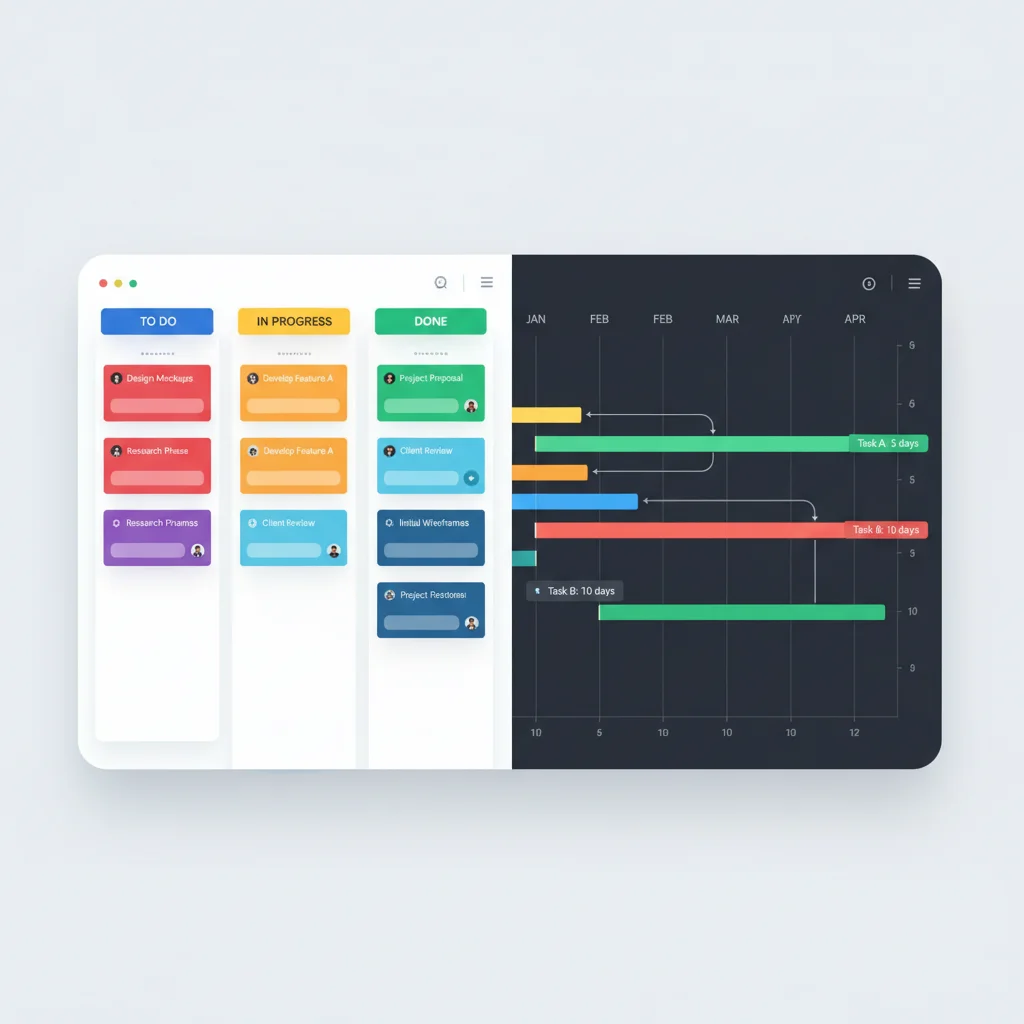
- Kanban Boards: For visualizing workflow and managing work in progress.
- Gantt Charts: For detailed project timelines, dependencies, and critical path analysis.
- List Views: For a straightforward overview of tasks and their details.
- Calendar Views: For scheduling and seeing deadlines at a glance.
6. Time Tracking and Reporting
Understanding how much time is spent on tasks is vital for budgeting, resource allocation, and future planning. Integrated time tracking allows for accurate data collection, which can then be used to generate reports on team productivity, project profitability, and potential areas for improvement. Detailed reports provide valuable insights into project health and resource utilization, reinforcing the value of Advanced Task Management.
7. Integrations
Your task management system doesn’t operate in a vacuum. It should seamlessly integrate with other tools your team uses daily, such as communication platforms (Slack, Microsoft Teams), cloud storage (Google Drive, Dropbox), CRM systems, and development tools (GitHub, Jira). These integrations create a unified workspace, reducing context switching and improving overall efficiency.
8. Automation Capabilities
Automating repetitive tasks, such as sending reminders, updating task statuses based on actions, or creating recurring tasks, can save significant time and reduce manual errors. This allows teams to focus on more strategic work, making the Advanced Task Management system work smarter for them.
9. Robust Search and Filtering
As projects grow, the ability to quickly find specific tasks, filter by assignee, due date, status, or custom tags becomes indispensable. A powerful search and filtering mechanism ensures that information is always accessible and actionable.
10. Security and Permissions
Data security and controlled access are paramount. An Advanced Task Management system must offer robust security features and granular permission settings, allowing administrators to define who can view, edit, and manage specific tasks or projects.
By prioritizing these features, organizations can select an Advanced Task Management tool that not only tracks tasks but actively contributes to the strategic execution and successful completion of their projects.
Choosing the Right Advanced Task Management System
Selecting the ideal Advanced Task Management system can be daunting given the plethora of options. The "best" tool is subjective and depends heavily on your specific needs, team size, project complexity, and budget. Here’s a structured approach to making an informed decision:
1. Assess Your Current Needs and Pain Points
Before looking at any tools, clearly define what problems you’re trying to solve. Are you struggling with missed deadlines, poor communication, lack of visibility, or inefficient workflows? Document these pain points. Identify your current processes and where they break down. What features are absolutely essential for your team? What are nice-to-haves? This initial self-assessment is crucial for effective Advanced Task Management implementation.
2. Consider Your Team Size and Structure
- Small Teams/Startups: Might benefit from simpler, more agile tools with intuitive interfaces and lower costs.
- Medium to Large Enterprises: May require more robust systems with advanced reporting, security, integrations, and scalability.
- Cross-Functional Teams: Need platforms that facilitate seamless collaboration across different departments and skill sets.
3. Define Your Project Types
Are your projects typically sequential and long-term (e.g., construction, product launches, where Gantt charts are vital)? Or are they agile, iterative, and constantly evolving (e.g., software development, marketing campaigns, where Kanban or Scrum boards are preferred)? Some Advanced Task Management tools excel in specific methodologies, while others offer versatility across several.
4. Evaluate Key Features Against Your Requirements
Go back to the list of essential features discussed earlier (granular breakdown, dependencies, collaboration, multiple views, etc.) and rank them based on your team’s priorities. Create a checklist and use it to evaluate potential tools. Pay close attention to how well each tool supports your chosen methodologies (Agile, Kanban, GTD).
5. User Experience (UX) and Ease of Adoption
Even the most feature-rich system is useless if your team finds it difficult to learn or use. Prioritize tools with an intuitive interface, clear navigation, and a gentle learning curve. Look for good onboarding resources, tutorials, and customer support. High user adoption is key to the success of any Advanced Task Management system.
6. Integration Capabilities
Map out all the other software your team heavily relies on (e.g., communication, CRM, development, document management). Ensure the prospective task management system offers native integrations or at least robust API access to connect with these tools. A disconnected system can create more work than it saves.
7. Scalability and Future Growth
Choose a system that can grow with your organization. Can it handle an increasing number of users, projects, and tasks? Does it offer different pricing tiers or enterprise-level features that you might need in the future? Investing in a scalable Advanced Task Management solution prevents the need for costly migrations down the line.
8. Security and Compliance
For many organizations, especially those handling sensitive data, security is non-negotiable. Investigate the security protocols, data encryption, compliance certifications (e.g., GDPR, HIPAA), and data backup policies of any potential tool. Ensure it meets your industry’s regulatory requirements.
9. Pricing Model
Compare the pricing structures. Is it per user, per project, or tiered? Factor in potential hidden costs for premium features, integrations, or increased storage. Many tools offer free trials or freemium versions – take advantage of these to test the system with your team before committing.
10. Read Reviews and Ask for Demos
Consult independent review sites (G2, Capterra, Gartner Peer Insights) to get unbiased opinions from other users. Shortlist a few top contenders and request live demos. Prepare specific questions based on your unique requirements and pain points. Seeing the tool in action and asking targeted questions can highlight crucial differences.
By systematically evaluating these factors, you can confidently select an Advanced Task Management system that not only meets your current needs but also empowers your team to achieve new levels of productivity and project success.
Implementing and Optimizing Your Advanced Task Management System
Adopting a new Advanced Task Management system is more than just choosing software; it’s a change management initiative. Successful implementation requires careful planning, clear communication, and continuous optimization.
1. Start Small and Pilot
Don’t try to roll out the new system to your entire organization at once. Select a small, enthusiastic team or a less critical project for a pilot phase. This allows you to identify kinks, gather feedback, and refine your processes before a broader rollout. A successful pilot builds internal champions and demonstrates the value of Advanced Task Management.
2. Define Clear Guidelines and Best Practices
Establish clear rules for how the system will be used. This includes:
- Task Naming Conventions: How should tasks be titled for clarity?
- Priority Levels: How will priorities be defined and assigned?
- Status Definitions: What does ‘In Progress’ or ‘Pending Review’ truly mean?
- Use of Tags/Labels: How will categories, projects, or clients be identified?
- Communication Protocols: When should discussions happen within the task vs. in a separate meeting?
Consistency is key to leveraging the power of Advanced Task Management for reporting and search.
3. Provide Comprehensive Training
Don’t assume everyone will intuitively understand the new system. Offer regular training sessions, create user guides, and provide ongoing support. Highlight how the new system addresses their previous pain points and makes their work easier. Emphasize the ‘why’ behind the change to foster buy-in.
4. Migrate Existing Data Strategically
If you’re moving from an older system or disparate lists, plan your data migration carefully. Decide what data is essential to transfer and what can be archived. Avoid overwhelming the new system with irrelevant or outdated information. Clean data ensures a smooth start with your Advanced Task Management tool.
5. Integrate with Existing Tools
Connect your Advanced Task Management system with other critical tools (e.g., Slack, Google Drive, CRM). This reduces context switching, streamlines workflows, and ensures information flows freely between platforms. A well-integrated ecosystem enhances overall productivity.
6. Foster a Culture of Accountability and Transparency
Advanced Task Management systems thrive on transparency. Encourage team members to regularly update task statuses, add comments, and track their progress. As a leader, model this behavior. This fosters accountability and provides everyone with a clear understanding of project status and individual contributions.
7. Monitor, Analyze, and Iterate
Regularly review the data and reports generated by your Advanced Task Management system. Look for trends in task completion, bottlenecks, resource allocation, and project delays. Use this information to identify areas for improvement in your processes. Conduct retrospectives to gather feedback from the team on what’s working and what isn’t, then make necessary adjustments. This continuous optimization is vital for maximizing the benefits of your Advanced Task Management efforts.
8. Celebrate Successes
Acknowledge and celebrate when milestones are met, projects are completed efficiently, or team members demonstrate excellent use of the new system. Positive reinforcement encourages continued adoption and highlights the tangible benefits of Advanced Task Management.
Implementing an Advanced Task Management system is an ongoing process, not a one-time event. By following these steps, you can ensure a successful rollout and continuously optimize its use to achieve that impressive 20% boost in project completion and beyond.
Common Pitfalls and How to Avoid Them in Advanced Task Management
While the benefits of Advanced Task Management are undeniable, several common pitfalls can derail even the best-intentioned implementation. Awareness and proactive measures can help you avoid these traps.
1. Over-Complication and Feature Overload
Pitfall: Choosing a system with too many features that your team doesn’t need, leading to confusion and underutilization. Or, trying to implement every single feature from day one, overwhelming users.
Avoidance: Start with core functionalities. Gradually introduce more advanced features as your team becomes comfortable. Prioritize tools that offer flexibility to scale up or down based on your needs. Remember, the goal of Advanced Task Management is to simplify, not complicate.
2. Lack of Proper Training and Onboarding
Pitfall: Assuming team members will figure out the new system on their own, resulting in inconsistent usage, frustration, and eventual abandonment.
Avoidance: Invest in thorough training. Provide clear documentation, video tutorials, and dedicated support channels. Emphasize the ‘why’ – how the new system will make individual roles easier and contribute to overall success. Lead by example by actively using the Advanced Task Management system yourself.
3. Inconsistent Usage and Data Entry
Pitfall: Team members not adhering to established naming conventions, status updates, or task assignment rules, leading to messy data and unreliable reports.
Avoidance: Enforce clear guidelines from the start. Conduct regular audits to ensure compliance. Provide gentle reminders and feedback. Highlight the benefits of consistent data (e.g., accurate reporting, easier search) to reinforce the importance of proper Advanced Task Management practices.
4. Neglecting Regular Review and Optimization
Pitfall: Setting up the system once and never revisiting its effectiveness or making adjustments, causing it to become outdated or inefficient as team needs evolve.
Avoidance: Schedule regular reviews (e.g., quarterly) to assess how well the system is meeting your needs. Gather feedback from users, analyze performance metrics, and be prepared to make iterative improvements. Advanced Task Management is a dynamic process.
5. Disconnecting from Other Workflows
Pitfall: Treating the task management system as an isolated island, separate from communication tools, document storage, or CRM, leading to fragmented information and duplicate efforts.
Avoidance: Prioritize integrations with your existing tech stack. Ensure that information flows seamlessly between tools. This creates a unified workspace and maximizes the efficiency gains from your Advanced Task Management solution.
6. Micromanagement Tendencies
Pitfall: Using the detailed visibility offered by Advanced Task Management systems to micromanage team members, eroding trust and autonomy.
Avoidance: Focus on empowering teams and providing transparency, not control. Use the data for strategic insights and support, not to scrutinize every minute detail of an individual’s work. Promote self-organization within the framework of the system.
7. Over-Reliance on the Tool Itself
Pitfall: Believing that simply implementing a tool will solve all productivity problems, ignoring the underlying process issues or team dynamics.
Avoidance: Recognize that an Advanced Task Management system is a facilitator, not a magic bullet. It supports good processes and healthy team collaboration. Address any foundational issues in your workflow or team culture first. The tool amplifies existing strengths and weaknesses.
By being mindful of these common pitfalls, organizations can navigate the complexities of implementing Advanced Task Management more effectively, ensuring a smoother transition and more sustainable long-term benefits.
The Future of Advanced Task Management
The landscape of Advanced Task Management is continuously evolving, driven by technological advancements and changing work paradigms. Several trends are shaping its future, promising even greater efficiency and intelligence.
1. AI and Machine Learning Integration
Artificial intelligence and machine learning are set to revolutionize task management. Expect features like:
- Intelligent Task Prioritization: AI analyzing historical data to suggest the most critical tasks based on deadlines, dependencies, and impact.
- Automated Workflow Suggestions: AI identifying patterns in your work and proposing optimal workflows or automation rules.
- Predictive Analytics: Forecasting project completion times and identifying potential bottlenecks before they occur.
- Smart Resource Allocation: AI recommending the best team members for specific tasks based on skills and availability.
These capabilities will move Advanced Task Management from reactive tracking to proactive guidance.
2. Enhanced Automation
Beyond simple rules, future systems will offer more sophisticated automation. Imagine natural language processing (NLP) to extract tasks from emails or meeting notes, or AI-driven bots that can handle routine follow-ups and status updates, freeing up human time for more complex problem-solving. This will further streamline workflows and reduce manual overhead, making Advanced Task Management even more efficient.
3. Hyper-Personalization and Adaptive Interfaces
Task management interfaces will become even more adaptive to individual user preferences and roles. This means personalized dashboards, customized views, and intelligent notifications that learn what’s most relevant to each user, reducing information overload and enhancing focus. The system will adapt to the user, rather than the user adapting to the system.
4. Deeper Collaboration and Communication Integration
The lines between task management, communication platforms, and document collaboration tools will continue to blur. Expect even more seamless integration, where discussions, file sharing, and task updates occur in a unified context, reducing the need to switch between applications. Real-time co-editing within tasks and integrated video conferencing will become standard.
5. Greater Emphasis on Data Visualization and Insights
As organizations collect more data through their Advanced Task Management systems, the demand for sophisticated, intuitive data visualization and actionable insights will grow. Dashboards will become more dynamic, offering real-time performance metrics, trend analysis, and predictive models to inform strategic decision-making and continuous process improvement.
6. Remote and Hybrid Work Optimization
With the continued prevalence of remote and hybrid work models, Advanced Task Management systems will further optimize for distributed teams. This includes features like enhanced time zone management, asynchronous communication tools, and robust offline capabilities to ensure productivity regardless of location.
The future of Advanced Task Management is bright, promising systems that are not just tools for tracking, but intelligent partners in achieving organizational goals. By embracing these advancements, businesses can look forward to even greater strides in productivity, efficiency, and project success.
Conclusion: Elevating Your Productivity with Advanced Task Management
The journey from basic to-do lists to sophisticated Advanced Task Management systems represents a fundamental shift in how we approach work, projects, and collaboration. It’s a recognition that modern challenges demand modern solutions – systems that offer more than just checkboxes, but provide a comprehensive framework for planning, executing, and optimizing every aspect of your professional endeavors.
By understanding and implementing the methodologies like Agile, Kanban, and GTD, leveraging essential features such as granular task breakdown, dependency management, and robust collaboration tools, and strategically choosing the right system for your unique needs, you can unlock significant gains in efficiency. The goal is not just to manage tasks, but to master your workflow, empower your team, and achieve a remarkable boost in project completion – a tangible 20% or even more.
The path to successful Advanced Task Management involves careful planning, consistent training, adherence to best practices, and a commitment to continuous improvement. It’s about fostering a culture of transparency and accountability, where every team member is aligned and contributes effectively towards shared objectives. By avoiding common pitfalls and staying abreast of future trends like AI integration and hyper-personalization, organizations can ensure their task management strategies remain cutting-edge and highly effective.
Embrace the power of Advanced Task Management. Transform your cluttered workflows into streamlined processes, turn ambitious goals into achievable milestones, and elevate your team’s productivity to unprecedented levels. The time to move beyond the basic to-do list is now – the rewards are well worth the investment.