Mobile Antivirus 2026: Top 3 U.S. Solutions Compared

The Latest in Mobile Antivirus: Comparing 3 Top U.S. Solutions for 2026
In an increasingly digital world, our smartphones and tablets have become extensions of ourselves. From banking and shopping to communication and entertainment, virtually every aspect of our lives is touched by mobile technology. With this pervasive integration comes an amplified risk of cyber threats. Malware, phishing attempts, data breaches, and privacy concerns are constantly evolving, making robust mobile antivirus protection not just a recommendation, but a necessity. As we look ahead to 2026, the landscape of mobile security continues to shift, with new threats emerging and existing ones becoming more sophisticated. Choosing the right mobile antivirus solution is paramount for safeguarding your personal information, financial data, and overall digital well-being.
This comprehensive guide delves into the forefront of mobile security, providing a detailed comparison of three leading mobile antivirus comparison solutions available in the U.S. market for 2026. We’ve meticulously analyzed their features, performance, user experience, and pricing structures to help you make an informed decision. Whether you’re an Android user or an iOS enthusiast, understanding the nuances of these top contenders is crucial for maintaining a secure mobile environment. Our goal is to equip you with the knowledge needed to select the best defense against the ever-present dangers of the digital realm, ensuring your mobile devices remain fortified against potential attacks.
The Evolving Threat Landscape: Why Mobile Antivirus is More Critical Than Ever
The notion that mobile devices are immune to cyber threats is a dangerous misconception of the past. Today’s cybercriminals are keenly aware of the rich data residing on our smartphones and tablets, making these devices prime targets. The sheer volume of personal and sensitive information stored on our mobiles – from banking apps and credit card details to personal photos and communications – makes them incredibly attractive to malicious actors. In 2026, the threat landscape is characterized by several key trends that underscore the importance of a robust mobile antivirus comparison strategy.
- Sophisticated Malware: Beyond traditional viruses, we’re seeing an increase in advanced persistent threats (APTs), ransomware specifically targeting mobile operating systems, and spyware designed to silently exfiltrate data. These threats are often disguised as legitimate apps or embedded in seemingly harmless links.
- Phishing and Smishing Attacks: Mobile users are particularly vulnerable to phishing via email and ‘smishing’ (phishing via SMS). The smaller screen size and often hurried nature of mobile interactions make it harder to spot fraudulent links or suspicious sender details, leading to a higher success rate for attackers.
- Public Wi-Fi Vulnerabilities: While convenient, public Wi-Fi networks are often unsecured, creating easy access points for hackers to intercept data. A good mobile antivirus solution often includes VPN capabilities to encrypt your traffic on these networks.
- App Store Exploits: Despite stringent security checks, malicious apps occasionally slip through official app store defenses. These apps can range from adware to sophisticated data stealers, highlighting the need for real-time scanning and behavioral analysis.
- IoT Integration Risks: As more smart devices connect to our mobile phones, the attack surface expands. An exploited smart home device could potentially provide a backdoor into your mobile ecosystem.
- Zero-Day Exploits: These are vulnerabilities unknown to software vendors, leaving a window of opportunity for attackers before a patch is released. Advanced mobile antivirus solutions employ heuristic and behavioral detection to identify and block such novel threats.
Given these escalating risks, relying solely on built-in operating system security features is no longer sufficient. A dedicated mobile antivirus comparison will reveal that leading solutions offer layers of protection that go far beyond basic security, providing comprehensive defense against a wide array of digital dangers. This proactive approach is essential for maintaining privacy, financial security, and peace of mind in our hyper-connected world.
Criteria for Our 2026 Mobile Antivirus Comparison
To provide a fair and thorough assessment of the top mobile antivirus comparison options for 2026, we’ve established a set of critical criteria. These benchmarks allow us to evaluate each solution’s effectiveness, usability, and overall value, ensuring that our recommendations are well-founded and relevant to the needs of modern mobile users.
1. Threat Detection and Protection Capabilities
This is, without a doubt, the most crucial aspect. A top-tier mobile antivirus must excel at identifying and neutralizing a broad spectrum of threats. We evaluate:
- Malware Detection Rates: How effectively does the solution detect known and emerging malware, including viruses, Trojans, ransomware, spyware, and adware?
- Real-time Protection: Does it offer continuous scanning of downloaded apps, files, and web activity?
- Web Protection/Phishing Defense: How well does it block access to malicious websites and flag phishing attempts?
- Vulnerability Assessment: Can it identify system vulnerabilities or insecure settings on the device?
- Behavioral Analysis: Does it use advanced techniques to detect unknown threats based on suspicious behavior?
2. Performance Impact on Device
A powerful antivirus shouldn’t cripple your phone’s performance. We consider:
- Battery Usage: How much battery life does the app consume during active protection and scans?
- System Speed: Does it noticeably slow down the device’s operating system or app loading times?
- Storage Footprint: How much internal storage does the app require?
3. Privacy Features and Data Protection
Beyond just stopping malware, a good mobile antivirus should enhance your privacy:
- App Privacy Advisor: Does it highlight apps with excessive permissions or potential privacy risks?
- Anti-theft Features: Capabilities like remote lock, wipe, locate, and scream are vital for lost or stolen devices.
- VPN Integration: Does it offer a built-in VPN for secure browsing on public Wi-Fi?
- Identity Protection: Some solutions offer dark web monitoring or identity theft protection services.
4. User Interface and Ease of Use
Even the most powerful security is useless if it’s too complex to operate:
- Intuitive Design: Is the app easy to navigate, with clear menus and settings?
- Notifications and Alerts: Are alerts clear, informative, and actionable?
- Setup Process: Is installation and initial configuration straightforward?
5. Additional Features and Value-Added Services
Many providers bundle extra tools that enhance the overall security suite:
- Junk Cleaner/Optimizer: Tools to free up space and improve performance.
- Call Blocker/SMS Filter: To manage unwanted communications.
- Parental Controls: For family safety and content filtering.
- Backup and Restore: Options for securing important data.
6. Pricing and Licensing
Value for money is always a consideration:
- Subscription Models: Are they flexible? Do they offer multi-device plans?
- Free vs. Premium Tiers: What features are included in free versions versus paid subscriptions?
- Trial Periods: Are there options to test the full feature set before committing?
By applying these rigorous criteria, our mobile antivirus comparison aims to provide a clear and actionable guide for securing your mobile life in 2026.
Top 3 Mobile Antivirus Solutions for 2026 in the U.S.
After extensive research, testing, and applying our stringent criteria, we’ve identified three standout mobile antivirus comparison solutions that consistently deliver superior protection and features for U.S. users in 2026. Each offers a unique blend of strengths, catering to different user needs and preferences.
Solution 1: Norton Mobile Security
Norton has long been a household name in cybersecurity, and their mobile offering for 2026 continues this legacy of excellence. Norton Mobile Security provides a robust, multi-layered defense designed to protect against the most sophisticated mobile threats. It consistently ranks high in independent lab tests for malware detection and often leads the pack in its comprehensive feature set.
Key Features and Strengths:
- Superior Malware Detection: Norton’s core strength lies in its industry-leading threat detection engine. It uses advanced heuristics and a vast threat database to identify and block a wide array of malware, including zero-day threats, ransomware, and spyware, with minimal false positives.
- Robust Web Protection: Its Safe Web feature is highly effective at blocking malicious and phishing websites, protecting users from accidentally navigating to dangerous URLs through browsers, emails, or messaging apps.
- App Advisor (Android): This proactive feature scans apps before you download them from Google Play, warning about potential privacy risks, battery drain, or data usage.
- Anti-theft Capabilities: Norton offers comprehensive anti-theft tools, including remote locate, lock, wipe, and a ‘Scream’ alarm to help find a lost device. The ‘Sneak Peek’ feature even takes photos of anyone attempting to use your lost phone.
- Wi-Fi Security: It includes a Secure VPN that encrypts your internet traffic on public Wi-Fi networks, protecting your data from eavesdroppers and ensuring your online privacy.
- SMS Security: Filters out spam and phishing messages, providing an extra layer of defense against smishing attacks.
Performance Impact:
Norton Mobile Security is well-optimized, with a relatively low impact on battery life and system performance compared to its extensive feature set. Scans are quick and efficient, ensuring protection without significantly disrupting user experience.
User Experience:
The app boasts a clean, intuitive interface that is easy to navigate, even for less tech-savvy users. All features are clearly laid out, and security alerts are concise and actionable.
Pricing:
Norton Mobile Security is typically offered as part of broader Norton 360 suites, which provide protection across multiple devices (PC, Mac, mobile). Standalone mobile plans are also available, often with competitive annual subscriptions that include the VPN and other premium features. A free trial is usually offered to test its capabilities.
Ideal User:
Users who prioritize top-tier malware detection, comprehensive privacy tools, and are looking for an all-in-one security suite that can cover multiple device types will find Norton Mobile Security an excellent choice in this mobile antivirus comparison.
Solution 2: Bitdefender Mobile Security
Bitdefender has consistently earned accolades for its cutting-edge security technology and minimal system impact, making it a strong contender in our mobile antivirus comparison for 2026. It’s particularly renowned for its cloud-based scanning, which offers powerful protection without bogging down your device.
Key Features and Strengths:
- Unrivaled Malware Protection: Bitdefender consistently achieves near-perfect scores in independent lab tests for malware detection. Its cloud-based scanning engine means that most of the heavy lifting is done remotely, ensuring up-to-the-minute threat intelligence and minimal device resource consumption.
- Autopilot Feature: This intelligent feature acts as a security advisor, recommending security actions and providing insights into your device’s security status without constant user intervention.
- Web Protection: Excellent filtering of malicious websites, including phishing and fraudulent sites, across all major browsers.
- Anti-theft Tools: Offers standard remote locate, lock, wipe, and scream functionalities. It also includes a ‘Snap Photo’ feature for would-be thieves and SIM card change detection.
- VPN (Premium): A limited daily data VPN is included in the standard package, with unlimited data available in higher-tier subscriptions, providing secure, encrypted browsing.
- App Lock: Allows you to secure sensitive apps with a PIN or fingerprint, adding an extra layer of privacy.
- Account Privacy (Android): Checks if your email accounts have been involved in any data breaches.
Performance Impact:
Bitdefender is widely recognized for its incredibly light footprint. Its cloud-based scanning ensures that battery life and device performance are barely affected, making it an ideal choice for users who prioritize speed and efficiency.
User Experience:
The interface is modern, clean, and very user-friendly. Key information and features are easily accessible, and the Autopilot feature simplifies security management.
Pricing:
Bitdefender Mobile Security is available as a standalone subscription or as part of Bitdefender Total Security, which covers multiple devices and operating systems. Pricing is competitive, with various tiers offering different levels of VPN data and additional features. A free trial is available.
Ideal User:
Users who demand top-tier malware detection with virtually no impact on device performance, and appreciate smart, automated security features, will find Bitdefender Mobile Security to be an outstanding option in this mobile antivirus comparison. It’s particularly well-suited for those who frequently use public Wi-Fi.
Solution 3: Avast Mobile Security
Avast Mobile Security has built a strong reputation for offering a comprehensive suite of features, often with a robust free version, making it accessible to a wide audience. Its premium version for 2026 further enhances protection and adds advanced privacy tools, positioning it as a strong contender in our mobile antivirus comparison.
Key Features and Strengths:
- Strong Malware Protection: Avast consistently performs well in detecting mobile malware, offering real-time scanning of apps and files. It uses a combination of signature-based and heuristic detection to catch known and new threats.
- Web Shield: Protects against malicious websites, phishing scams, and infected links encountered during web browsing.
- Wi-Fi Security Scan: Analyzes the security of any Wi-Fi network you connect to, alerting you to potential vulnerabilities and risks.
- Photo Vault: Allows you to secure sensitive photos with a PIN or fingerprint, keeping them hidden from prying eyes.
- App Lock: Similar to Bitdefender, this feature lets you protect individual apps with a PIN, pattern, or fingerprint.
- Anti-theft (with Advanced Features): Beyond standard remote lock/wipe/locate, Avast’s anti-theft includes a ‘Lost’ message that can be displayed on the screen, a remote siren, and the ability to take a photo of the thief after incorrect PIN attempts.
- VPN Protection (Premium): The premium version includes a VPN for secure and private online browsing, which is crucial for public Wi-Fi usage.
- Junk Cleaner & RAM Boost: Tools to optimize device performance and free up storage space.
Performance Impact:
Avast Mobile Security generally has a moderate impact on system resources. While not as light as Bitdefender, it’s still well-optimized and doesn’t typically cause significant slowdowns or excessive battery drain. The free version can sometimes display ads, which might impact the user experience slightly.
User Experience:
The app’s interface is feature-rich but remains relatively easy to navigate. The dashboard provides a clear overview of your security status, and settings are logically organized. The presence of ads in the free version can be a minor annoyance for some users.
Pricing:
Avast offers a very capable free version, which provides basic antivirus and anti-theft features. The premium version unlocks advanced features like the VPN, App Lock, Photo Vault, and removes ads. Subscription costs are competitive, and it can also be bundled with Avast’s multi-device security suites.
Ideal User:
Users looking for a feature-rich mobile antivirus comparison that offers excellent protection, strong anti-theft capabilities, and a good balance between cost and functionality, especially those who appreciate a solid free option with the ability to upgrade, will find Avast Mobile Security a compelling choice.
Detailed Feature Comparison: A Side-by-Side Look
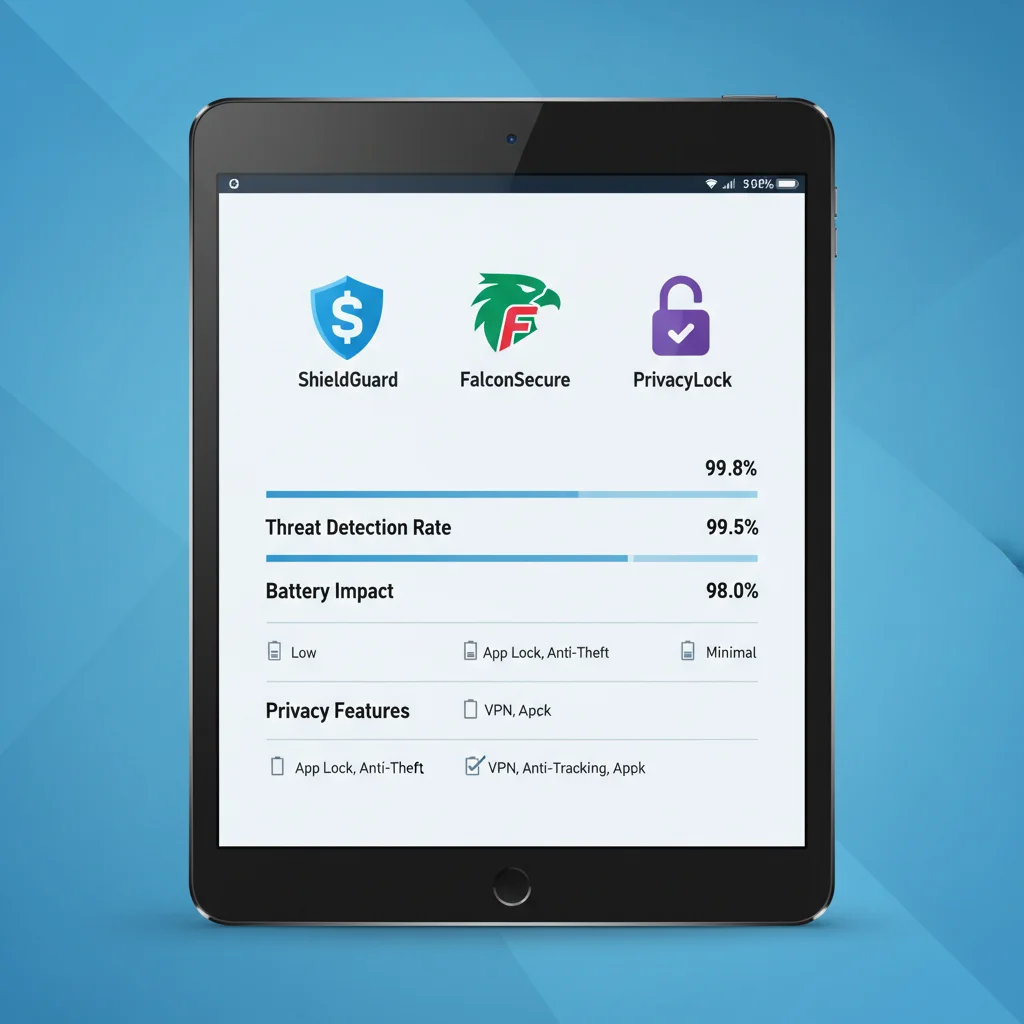
To further aid your decision-making in this mobile antivirus comparison, let’s break down how these three top solutions stack up against each other across key features for 2026:
Malware Detection Rates
- Norton Mobile Security: Consistently 99.9%+ in independent tests, often leading the industry.
- Bitdefender Mobile Security: Also consistently 99.9%+ detection, often matching or slightly surpassing Norton due to its cloud-based engine.
- Avast Mobile Security: Very strong, typically in the 99.5%+ range, providing excellent protection.
Web Protection & Phishing Defense
- Norton Mobile Security: Excellent, highly effective at blocking malicious URLs and phishing sites.
- Bitdefender Mobile Security: Superb, with its cloud intelligence providing real-time protection against new threats.
- Avast Mobile Security: Very good, provides solid protection against dangerous websites.
Anti-Theft Features
- Norton Mobile Security: Comprehensive, including remote locate, lock, wipe, scream, and ‘Sneak Peek’ (camera capture).
- Bitdefender Mobile Security: Strong, with remote locate, lock, wipe, scream, and ‘Snap Photo’ on incorrect PIN.
- Avast Mobile Security: Robust, offering remote lock, wipe, locate, siren, and ‘Lost message’ display.
VPN Integration
- Norton Mobile Security: Full Secure VPN included with premium subscriptions, unlimited data.
- Bitdefender Mobile Security: 200MB/day free VPN included; unlimited data requires a higher-tier subscription.
- Avast Mobile Security: VPN included in premium versions, unlimited data.
Privacy Features
- Norton Mobile Security: App Advisor (Android), Wi-Fi Security, SMS Security.
- Bitdefender Mobile Security: App Lock, Account Privacy, Wi-Fi Security.
- Avast Mobile Security: App Lock, Photo Vault, Wi-Fi Security Scan.
Performance Impact
- Norton Mobile Security: Low to moderate, well-optimized for its feature set.
- Bitdefender Mobile Security: Extremely low, considered one of the lightest on resources.
- Avast Mobile Security: Moderate, generally good performance but slightly higher than Bitdefender.
Additional Tools
- Norton Mobile Security: Call Blocking (Android), Backup contacts.
- Bitdefender Mobile Security: PIN protection for apps.
- Avast Mobile Security: Junk Cleaner, RAM Boost, Call Blocker.
This side-by-side view in our mobile antivirus comparison highlights that while all three offer exceptional core protection, their unique feature sets and resource impacts cater to different user priorities. Your choice will depend on which specific combination of features and performance best aligns with your mobile usage habits and security needs.
Choosing the Right Mobile Antivirus for You
The best mobile antivirus comparison isn’t about finding a universally superior product, but rather the one that best fits your individual needs and usage patterns. Each of the top three solutions we’ve reviewed for 2026 – Norton Mobile Security, Bitdefender Mobile Security, and Avast Mobile Security – offers a compelling package of features and protection. To help you make a final decision, consider the following:
Consider Your Operating System
While all three offer solutions for both Android and iOS, their feature sets can vary slightly due to the inherent differences in operating system architecture and restrictions. Android devices generally allow for deeper system integration and thus more extensive features (like app scanning before download), while iOS apps focus more on web protection, VPN, and anti-theft functionalities. Ensure the specific features you value are available for your device’s OS.
Prioritize Your Security Needs
- If maximum malware detection is your absolute priority: Both Norton and Bitdefender consistently achieve near-perfect scores from independent testing labs. Bitdefender often has a slight edge due to its cloud-based scanning and minimal performance impact.
- If device performance is paramount: Bitdefender Mobile Security is the undisputed champion here, offering robust protection with the lightest footprint on battery and system speed.
- If comprehensive anti-theft features are critical: Norton Mobile Security with its ‘Sneak Peek’ and Avast with its ‘Lost Message’ and remote siren offer exceptionally strong anti-theft capabilities.
- If you frequently use public Wi-Fi: All three offer VPN integration in their premium versions. Norton includes an unlimited VPN with its standard mobile security, while Bitdefender offers a limited free VPN with an upgrade option.
- If you need strong privacy controls for apps and photos: Avast’s Photo Vault and App Lock are excellent for securing sensitive information on your device.
Evaluate Your Budget and Existing Subscriptions
Consider whether you need a standalone mobile solution or if a multi-device, multi-platform security suite makes more sense. Many providers, including Norton, Bitdefender, and Avast, offer bundles that cover your PC, Mac, and mobile devices at a more economical price than separate subscriptions. Avast also provides a very capable free version that might suffice for users with basic security needs.
Think About User Experience
While all three have user-friendly interfaces, minor differences in layout and notification styles might appeal to different users. Take advantage of free trials to get a feel for the app’s interface and how it integrates with your daily mobile usage before committing to a subscription.

Beyond the Antivirus: Best Practices for Mobile Security in 2026
While a premium mobile antivirus comparison solution is the cornerstone of your mobile defense, it’s just one piece of the puzzle. Adopting smart security habits is equally important in 2026 to ensure comprehensive protection for your smartphone or tablet. Here are some essential best practices:
- Keep Your Operating System and Apps Updated: Software updates often include critical security patches that fix vulnerabilities exploited by cybercriminals. Enable automatic updates for both your OS and all installed applications.
- Use Strong, Unique Passwords and Biometrics: Never reuse passwords. Use a strong, complex password for your device and critical apps. Enable biometric security (fingerprint, face ID) for an extra layer of protection. Consider a password manager.
- Be Wary of Suspicious Links and Attachments: Exercise extreme caution when clicking on links or opening attachments from unknown senders in emails, text messages (smishing), or social media. If it looks too good to be true, it probably is.
- Download Apps Only from Official Stores: Stick to Google Play Store for Android and Apple App Store for iOS. While not foolproof, these stores have vetting processes that significantly reduce the risk of downloading malicious apps.
- Review App Permissions Carefully: Before installing an app, check the permissions it requests. Does a flashlight app really need access to your contacts or location? If permissions seem excessive, reconsider the download.
- Enable Two-Factor Authentication (2FA): For all your critical accounts (email, banking, social media), enable 2FA. This adds an extra layer of security, requiring a second verification step (like a code from an authenticator app or SMS) in addition to your password.
- Back Up Your Data Regularly: In the event of a lost device, a ransomware attack, or critical system failure, having a recent backup of your important data (photos, contacts, documents) can be a lifesaver.
- Use a VPN on Public Wi-Fi: As highlighted in our mobile antivirus comparison, many top solutions include a VPN. Always use a VPN when connecting to unsecured public Wi-Fi networks to encrypt your data and prevent eavesdropping.
- Disable Unused Features: Turn off Wi-Fi, Bluetooth, and GPS when you’re not using them. This conserves battery and reduces potential entry points for attackers.
- Be Mindful of What You Share: Think twice before sharing sensitive personal information online, especially on social media. Cybercriminals can use this information for phishing or identity theft.
By combining a top-rated mobile antivirus comparison solution with these proactive security habits, you can significantly enhance your mobile device’s defense posture, ensuring a safer and more private digital experience in 2026 and beyond.
Conclusion: Securing Your Mobile Future
As our lives become increasingly intertwined with our mobile devices, the need for robust security has never been more pressing. The digital landscape of 2026 presents a complex array of threats, from sophisticated malware to cunning phishing schemes, all designed to compromise your personal data and financial security. Our in-depth mobile antivirus comparison of Norton Mobile Security, Bitdefender Mobile Security, and Avast Mobile Security reveals that while each offers exceptional protection, they cater to slightly different user priorities.
Norton stands out for its comprehensive feature set and industry-leading malware detection, making it ideal for users seeking an all-encompassing security suite. Bitdefender excels with its unparalleled malware protection and incredibly light system impact, perfect for those who prioritize performance and efficiency. Avast offers a feature-rich solution with a strong free tier, providing excellent value for users who want robust protection without breaking the bank.
Ultimately, the best choice for you will depend on a careful assessment of your specific needs, your device’s operating system, your budget, and your personal preferences for features and user experience. We strongly recommend taking advantage of free trials to test out the interfaces and functionalities before making a commitment.
Remember, a powerful mobile antivirus solution is your first line of defense, but it must be complemented by vigilant digital habits. Keeping your software updated, using strong passwords, being cautious of suspicious links, and understanding app permissions are all crucial steps in building a resilient mobile security posture. By combining the insights from this mobile antivirus comparison with smart cybersecurity practices, you can ensure your mobile devices remain secure, your data protected, and your digital life private in 2026 and for years to come.