Music Streaming 2026: Apps, Audio, Features for US Listeners
Music Streaming in 2026: A Deep Dive into 3 Popular Apps and Their Evolving Audio Quality and Features for US Listeners
The year is 2026, and the soundscape of American homes, commutes, and workouts has been irrevocably shaped by the relentless innovation of music streaming services. What began as a convenient alternative to physical media has blossomed into a sophisticated ecosystem, offering unprecedented access to global music libraries, often tailored to individual tastes. As we peer into the near future, the competition among the titans of the industry – Spotify, Apple Music, and Tidal – remains fierce, driven by a constant pursuit of superior audio quality, groundbreaking features, and an ever-deeper connection with their US listener base. This comprehensive exploration delves into the anticipated advancements and strategic directions of these three dominant platforms, examining how they are set to redefine the Music Streaming 2026 experience.
The evolution of Music Streaming 2026 is not merely about more songs or better playlists; it’s about an immersive, personalized, and high-fidelity auditory journey. From lossless audio to spatial sound, from AI-driven recommendations to interactive fan experiences, these apps are pushing the boundaries of what’s possible. For the discerning US listener, understanding these shifts is key to navigating the future of their musical consumption.
The Current Landscape: Setting the Stage for 2026
Before we project forward, it’s crucial to acknowledge the foundation upon which Music Streaming 2026 will be built. Today, Spotify dominates in user numbers, lauded for its discovery features and social integration. Apple Music, backed by the colossal Apple ecosystem, offers deep integration with Apple devices and a strong emphasis on editorial content. Tidal, on the other hand, has carved out a niche with its focus on high-fidelity audio and artist-centric payouts. Each has its strengths and weaknesses, but all are acutely aware that stagnation in this dynamic market is not an option.
The past few years have seen a significant shift in listener expectations. The demand for higher audio quality, once a niche concern, has moved into the mainstream. Users are no longer content with standard compressed audio; they crave the richness and detail of lossless formats. Furthermore, the rise of spatial audio technologies has opened up new dimensions for musical immersion, making the listening experience more engaging than ever before. These trends will undoubtedly accelerate, profoundly influencing the strategies of streaming providers by Music Streaming 2026.
Spotify in 2026: The AI-Powered Discovery Engine with Enhanced Audio
By Music Streaming 2026, Spotify is expected to solidify its position as the undisputed king of music discovery, but with a significant upgrade in its audio offerings. While it has historically been criticized for lagging in lossless audio compared to competitors, industry insiders predict that by 2026, Spotify HiFi (or a similarly branded service) will be not just a premium add-on, but a more integrated and widely available option for its subscribers, especially in the US market. The pressure from Apple Music and Tidal’s existing high-fidelity tiers will be too great to ignore.
Beyond audio quality, Spotify’s core strength lies in its recommendation algorithms. By 2026, these algorithms will be even more sophisticated, leveraging advanced AI and machine learning to predict listener preferences with uncanny accuracy. Imagine not just personalized playlists, but dynamic, evolving soundscapes that adapt in real-time to your mood, activity, and even environmental factors. Integration with smart home devices will be seamless, allowing for contextual music playback based on your daily routine.
New features could include:
- Hyper-Personalized Soundscapes: AI-generated ambient music or instrumental tracks tailored to focus, relaxation, or sleep, dynamically created based on biometric data (if users opt-in) and daily schedules.
- Interactive Music Experiences: Deeper integration with artist content, perhaps offering virtual concert experiences, behind-the-scenes documentaries, or even interactive narratives directly within the app.
- Advanced Social Listening: Enhanced collaborative playlists with real-time editing and shared listening parties with integrated voice chat, transcending geographical barriers.
- Creator Economy Tools: More robust tools for independent artists to connect directly with their fanbase, offering exclusive content, merchandise, and even direct monetization opportunities within the Spotify ecosystem.
- Podcast and Audiobook Convergence: Further integration of podcasts and audiobooks, with AI-driven summaries, personalized recommendations across all audio formats, and perhaps even interactive audio dramas.
Spotify’s strategy for Music Streaming 2026 will focus on maintaining its vast user base through unparalleled personalization and expanding its audio quality options to cater to increasingly demanding audiophiles. The platform’s extensive data on user behavior will be its most valuable asset, enabling it to deliver experiences that feel almost prescient to the listener.
Apple Music in 2026: Seamless Ecosystem Integration and Spatial Audio Dominance
Apple Music, by Music Streaming 2026, will likely double down on its strengths: seamless integration within the Apple ecosystem and its pioneering work in spatial audio. Having already introduced Lossless Audio and Spatial Audio with Dolby Atmos, Apple is poised to make these features the standard, not the exception, for its subscribers. We can expect even more content mixed specifically for spatial audio, transforming how music is produced and consumed.
The tight integration with hardware will be a significant differentiator. Imagine AirPods Pro (or their 2026 successors) offering even more sophisticated head-tracking, personalized sound profiles based on individual ear canal geometry, and enhanced noise cancellation that dynamically adjusts to your environment. The Apple Watch could provide real-time biometric feedback to tailor music selections for workouts, while Apple Vision Pro (or similar AR/VR devices) could unlock entirely new visual dimensions for listening.
Anticipated advancements for Apple Music include:
- Ubiquitous Spatial Audio: Virtually all new releases and a significant portion of the back catalog will be available in Spatial Audio, becoming the default listening experience for compatible devices.
- Advanced Ecosystem Synergy: Deeper integration with Apple’s entire suite of products, from HomePod to Apple TV, creating a truly unified and intelligent audio experience across all devices.
- Curated Immersive Experiences: Beyond just spatial audio, Apple Music might offer curated ‘soundscapes’ that combine music, ambient sounds, and even visual elements (for AR/VR devices) for a truly multi-sensory experience.
- Artist-Centric Content Hub: Expanding on its existing editorial features, Apple Music could become an even more robust hub for exclusive artist content, including interactive interviews, virtual meet-and-greets, and personalized messages from artists.
- Enhanced Discovery with Human Curation: While AI will play a role, Apple Music is likely to maintain its emphasis on human curation, providing a more editorialized and trustworthy discovery experience, potentially with personalized radio stations hosted by virtual DJs.
Apple’s vision for Music Streaming 2026 is one where music is not just heard, but experienced within a rich, interconnected digital environment. Their focus will remain on premium quality, seamless user experience, and leveraging their hardware advantage to deliver unparalleled immersion to US listeners.
Tidal in 2026: The Audiophile’s Utopia with Enhanced Artist Connection
Tidal, by Music Streaming 2026, will undoubtedly continue to be the standard-bearer for audio fidelity, pushing the boundaries of what’s possible in digital sound. With its established MQA (Master Quality Authenticated) and HiRes FLAC offerings, Tidal is expected to further refine its high-resolution audio streaming, making it more accessible and perhaps even integrating new, cutting-edge audio codecs that surpass current standards.
However, Tidal’s future isn’t solely about bitrates. Its commitment to artists and fair compensation is a powerful draw for many subscribers. By 2026, Tidal could strengthen this aspect, offering even more transparent payout models, direct-to-fan monetization features, and unique artist interaction opportunities that differentiate it from its larger competitors. 
Potential innovations for Tidal include:
- Next-Generation High-Resolution Audio: Exploration and adoption of even higher fidelity audio formats, potentially pushing beyond current HiRes FLAC capabilities, or implementing adaptive streaming that dynamically adjusts to network conditions without compromising perceived quality.
- Advanced Personalization for Audiophiles: Tailored recommendations not just based on genre, but on mastering quality, dynamic range, and preferred production styles, catering to the nuanced tastes of audiophiles.
- Direct Artist Support & Fan Engagement: Enhanced features for direct artist support, such as tipping mechanisms, exclusive content tiers, and perhaps even decentralized artist tokens or NFTs that offer unique fan benefits.
- Immersive Audio Education: In-app content that educates listeners about audio engineering, mastering, and the nuances of high-fidelity sound, fostering a deeper appreciation for music production.
- Hardware Integration for Optimal Playback: Partnerships with high-end audio equipment manufacturers to ensure seamless integration and optimized playback through Tidal’s platform, offering certified ‘Tidal-ready’ devices.
Tidal’s niche will remain its strength. For the US listener who prioritizes uncompromised sound quality and wants to directly support artists, Tidal in Music Streaming 2026 will be the ultimate destination. Its evolution will be characterized by a relentless pursuit of sonic perfection and a deepening of the artist-fan relationship.
Evolving Audio Quality: Beyond Lossless and Spatial
The conversation around audio quality in Music Streaming 2026 will extend far beyond the current benchmarks of lossless and spatial audio. While these will be standard, next-generation technologies are already on the horizon.
Adaptive Audio Streaming
Imagine a streaming service that dynamically adjusts the audio quality not just based on your internet connection, but also on your listening environment. If you’re in a noisy subway, the system might subtly enhance certain frequencies to cut through the ambient sound, while in a quiet living room, it would deliver the full, uncompressed fidelity. This intelligent, adaptive audio could revolutionize the listening experience, ensuring optimal quality in any scenario.
Personalized Psychoacoustic Enhancement
As biometric and AI technologies advance, streaming services could offer personalized psychoacoustic enhancements. This means the audio could be subtly adjusted to compensate for individual hearing profiles, age-related hearing loss, or even to enhance certain emotional responses. While this treads into potentially controversial territory regarding artistic intent, the option for personalized soundscapes could be a powerful tool for accessibility and tailored enjoyment.
Interactive Mixes and Generative Music
The concept of a static song might evolve. By 2026, we could see more interactive mixes where listeners can adjust elements of a track – bring up the vocals, reduce the bass, or even swap out instruments. Generative music, where AI creates unique, never-ending soundscapes based on user input or preferences, could also become a mainstream feature, offering an infinite supply of background music tailored to specific activities or moods. This could be particularly appealing for productivity, meditation, or gaming.
Key Features Driving User Engagement in 2026
Beyond audio quality, the battle for user loyalty in Music Streaming 2026 will be fought on the field of innovative features. Personalization, community, and augmented reality will be at the forefront.
Advanced AI-Driven Curation and Discovery
All three platforms will leverage AI to an even greater extent for discovery. This won’t just be about recommending similar artists; it will involve predicting your next favorite song before you even know it, introducing you to obscure genres you’ll love, and creating dynamic playlists that evolve with your taste in real-time. Expect AI to analyze not just your listening habits, but also your online activity, social media trends, and even public sentiment around artists to offer hyper-relevant suggestions.
Enhanced Social and Community Features
The solitary act of listening to music is increasingly becoming a shared experience. By 2026, streaming apps will offer more robust social features, enabling users to create and join listening parties, share specific moments within songs, and interact directly with artists and other fans. This could manifest as:
- Real-time Collaborative Playlists: Friends or communities can add songs to a shared queue in real-time, influencing the musical flow of a gathering or online event.
- Integrated Fan Forums: Dedicated spaces within the app for discussions, reviews, and interaction around specific artists, albums, or genres.
- Virtual Concerts and Meet-and-Greets: High-fidelity virtual events that offer interactive elements, backstage access, and opportunities to connect with artists in a more intimate setting than traditional live streams.
Augmented Reality (AR) and Virtual Reality (VR) Integration
With the increasing proliferation of AR/VR devices, Music Streaming 2026 will inevitably integrate these technologies. Imagine:
- Visualizing Music: AR overlays that project visual representations of music onto your environment, creating dynamic light shows or abstract art that responds to the beat.
- Immersive Album Experiences: VR environments that transport you into the world of an album, offering a multi-sensory journey designed by the artist.
- Interactive Music Creation: Simple AR/VR tools that allow users to playfully interact with musical elements, remixing tracks or creating their own generative soundscapes.
Cross-Platform and Multi-Device Continuity
The experience of listening to music will be utterly seamless across all devices. Start a song on your smart speaker, pick it up on your headphones during your commute, and then seamlessly transfer it to your car’s infotainment system. The concept of ‘device handoff’ will be refined to perfection, ensuring an uninterrupted flow of music throughout your day. 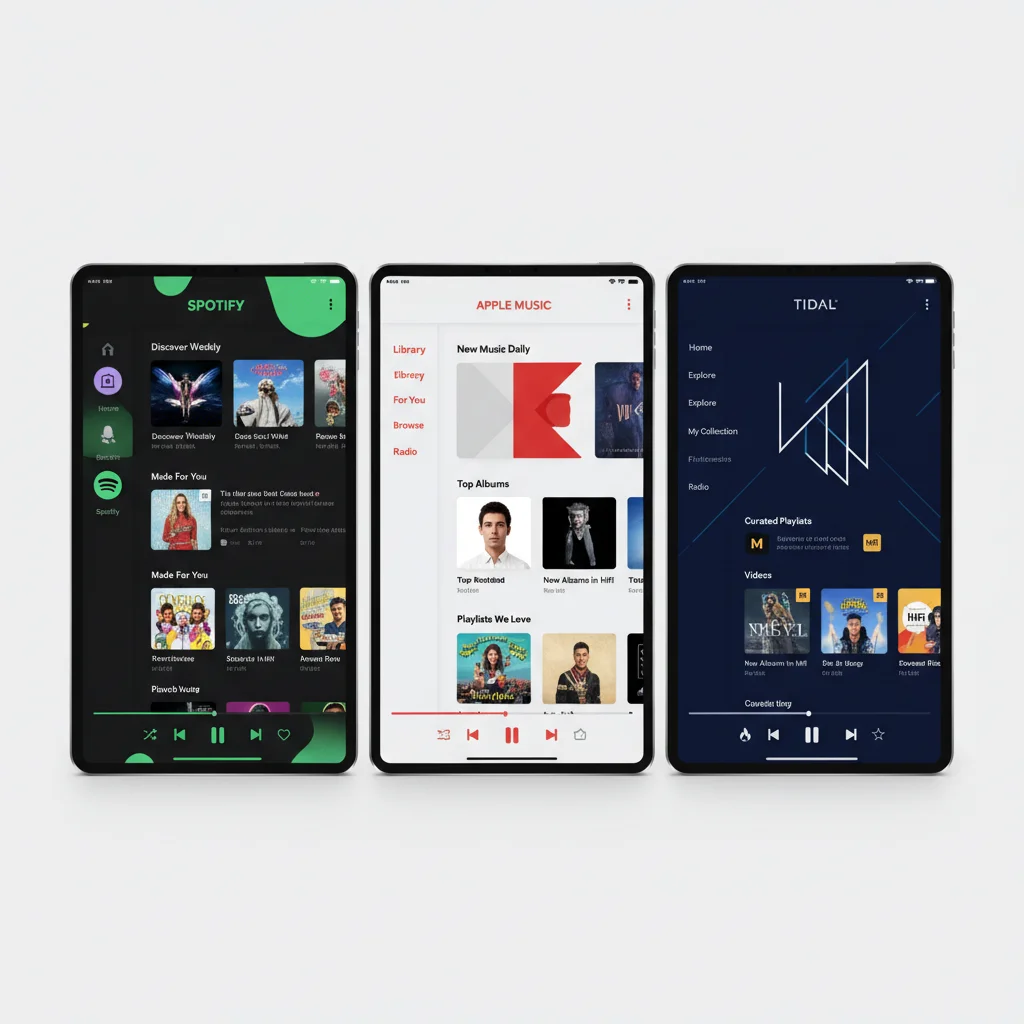
The US Listener Perspective: What Matters Most in 2026
For US listeners, the priorities in Music Streaming 2026 will likely center on a blend of convenience, quality, and value. While price will always be a factor, the perceived value will increasingly come from the richness of the overall experience.
- Uncompromised Audio Fidelity: A significant portion of US listeners will expect high-fidelity audio (lossless, HiRes, spatial) as a standard, not a premium add-on.
- Superior Discovery: The ability to constantly find new music that resonates with their tastes will remain a critical factor in platform loyalty.
- Seamless Integration: The expectation for music to flow effortlessly across all personal devices and smart home ecosystems will be paramount.
- Engaging Features: Beyond just playing music, listeners will seek interactive, social, and immersive features that deepen their connection to music and artists.
- Ethical Considerations: Increasing awareness of artist compensation and data privacy might influence choices, with platforms offering transparent models potentially gaining an edge.
- Content Diversity: Access to a wide range of audio content, including music, podcasts, audiobooks, and exclusive artist content, will be crucial.
The competitive landscape for Music Streaming 2026 in the US will thus be characterized by platforms striving to meet these evolving demands, each playing to its unique strengths while adapting to market shifts.
Challenges and Opportunities for Streaming Services
Despite the promising future, streaming services face significant challenges by 2026. Licensing agreements, artist compensation models, and the ever-present threat of market saturation will continue to shape their strategies. However, these challenges also present opportunities for innovation.
- Monetization Beyond Subscriptions: As subscription fatigue sets in for some users, platforms might explore alternative monetization models, such as tiered advertising, micro-transactions for exclusive content, or even integrated marketplaces for merchandise and digital collectibles.
- Global Expansion & Localization: While the US market is mature, there’s still room for growth and deeper localization, offering content and features tailored to specific regional tastes and cultural nuances within the country.
- Sustainability: With growing environmental concerns, streaming services might invest in more energy-efficient data centers and promote sustainable practices, appealing to an eco-conscious user base.
- Combating AI-Generated Music: The rise of AI-generated music presents both an opportunity (for creative tools) and a challenge (for distinguishing authentic art and fair compensation). Platforms will need robust policies and technologies to navigate this new frontier.
Conclusion: The Harmonious Future of Music Streaming in 2026
By Music Streaming 2026, the digital music landscape for US listeners will be richer, more immersive, and deeply personalized than ever before. Spotify will likely continue to lead with its unparalleled discovery and social features, enhanced by a more robust high-fidelity offering. Apple Music will leverage its powerful ecosystem and spatial audio dominance to deliver a seamlessly integrated, premium experience. Tidal will remain the sanctuary for audiophiles and artist advocates, pushing the boundaries of sound quality and direct artist engagement.
The convergence of advanced AI, high-resolution audio, spatial sound, and immersive technologies will transform how we interact with music. It won’t just be about listening; it will be about experiencing, discovering, and connecting in ways we are only just beginning to imagine. For the US listener, the future of music streaming promises a harmonious blend of quality, convenience, and captivating innovation, making 2026 an exciting year for auditory exploration.
The choice between these platforms will ultimately boil down to individual priorities: whether it’s the breadth of discovery, the depth of ecosystem integration, or the purity of sound and artist support. Regardless of the choice, one thing is certain: the soundtrack to our lives in 2026 will be more vibrant and dynamic than ever.