iOS 18 Privacy Features: A Deep Dive into 5 New Controls That Bolster Your Mobile Security in 2026
iOS 18 Privacy Features: A Deep Dive into 5 New Controls That Bolster Your Mobile Security in 2026
As we navigate an increasingly digital world, the sanctity of our personal data has become paramount. With each passing year, the sophistication of cyber threats grows, making robust privacy features not just a luxury, but a necessity. Apple has consistently positioned itself at the forefront of user privacy, and with the anticipated release of iOS 18 in 2026, they are set to raise the bar once again. This iteration promises a suite of groundbreaking privacy controls designed to empower users with unprecedented command over their digital footprint. In this comprehensive guide, we’ll delve deep into five pivotal iOS 18 privacy features that are poised to redefine mobile security and user autonomy.
The Evolving Landscape of Digital Privacy: Why iOS 18 Privacy Controls Matter
Before we dissect the specifics of iOS 18’s new offerings, it’s crucial to understand the context in which these advancements are being made. The digital landscape is a dynamic battleground where personal information is a valuable commodity. From targeted advertising to sophisticated phishing schemes and data breaches, users are constantly exposed to risks that can compromise their identity, financial well-being, and peace of mind. Regulatory bodies worldwide are enacting stricter data protection laws, reflecting a global consensus that individuals deserve greater control over their data. Apple’s philosophy, deeply rooted in privacy by design, aligns perfectly with this evolving sentiment. The iOS 18 privacy controls are not just incremental updates; they represent a significant leap forward in creating a more secure and private mobile ecosystem. They acknowledge the growing user demand for transparency and actionable control, moving beyond mere compliance to proactive empowerment.
The average smartphone user interacts with dozens of apps daily, each potentially requesting access to sensitive data such as location, contacts, photos, and microphone. While many apps offer genuine utility, the potential for data misuse or over-collection is a constant concern. iOS 18 aims to address these anxieties head-on, providing tools that are both powerful and intuitive. This ensures that users, regardless of their technical proficiency, can make informed decisions about their data. The emphasis is on shifting the power dynamic back to the user, making privacy an active choice rather than a passive default. The upcoming iOS 18 privacy controls are a testament to Apple’s unwavering commitment to user trust and digital well-being.
1. Enhanced App-Specific Data Sandboxing: A New Frontier for iOS 18 Privacy
One of the most significant advancements in iOS 18 privacy features is the introduction of Enhanced App-Specific Data Sandboxing. While iOS has always employed sandboxing to isolate apps and prevent them from accessing data outside their designated containers, this new iteration takes it several steps further. Traditionally, if an app was granted access to, say, your photos, it could potentially access all photos on your device. Enhanced App-Specific Data Sandboxing allows users to create highly granular, temporary, or time-limited access permissions for specific data types within an app.
How it Works:
- Granular Photo Access: Instead of granting an app access to your entire photo library, you can now select individual photos or albums for a one-time use or for a limited duration. For example, a social media app might only get access to the specific photo you want to upload, and not your entire gallery.
- Contextual Location Sharing: Beyond precise or approximate location, users can define geofenced areas where an app is permitted to access location data. If the app attempts to access location outside this defined zone, it will be automatically denied unless explicit permission is granted again.
- Dynamic Contact Sharing: When an app requests access to contacts, you can now create a temporary, anonymized contact card with only the necessary information (e.g., just a name and email for a specific interaction) instead of sharing your entire address book.
This level of control significantly minimizes the risk of data over-collection and ensures that apps only access the precise data they need, exactly when they need it. It’s a game-changer for iOS 18 privacy, offering users peace of mind that their digital boundaries are respected and enforced at a fundamental level.
2. AI-Powered Privacy Assistant: Your Personal Data Guardian in iOS 18
Artificial Intelligence (AI) is no longer just for smart assistants and predictive text; in iOS 18, it’s being harnessed to become your proactive privacy guardian. The new AI-Powered Privacy Assistant is designed to intelligently monitor app behaviors, identify potential privacy risks, and provide actionable recommendations to users. This feature leverages on-device machine learning to analyze how apps interact with your data without sending any of your personal information to Apple’s servers, ensuring privacy by design.
Key Functions:
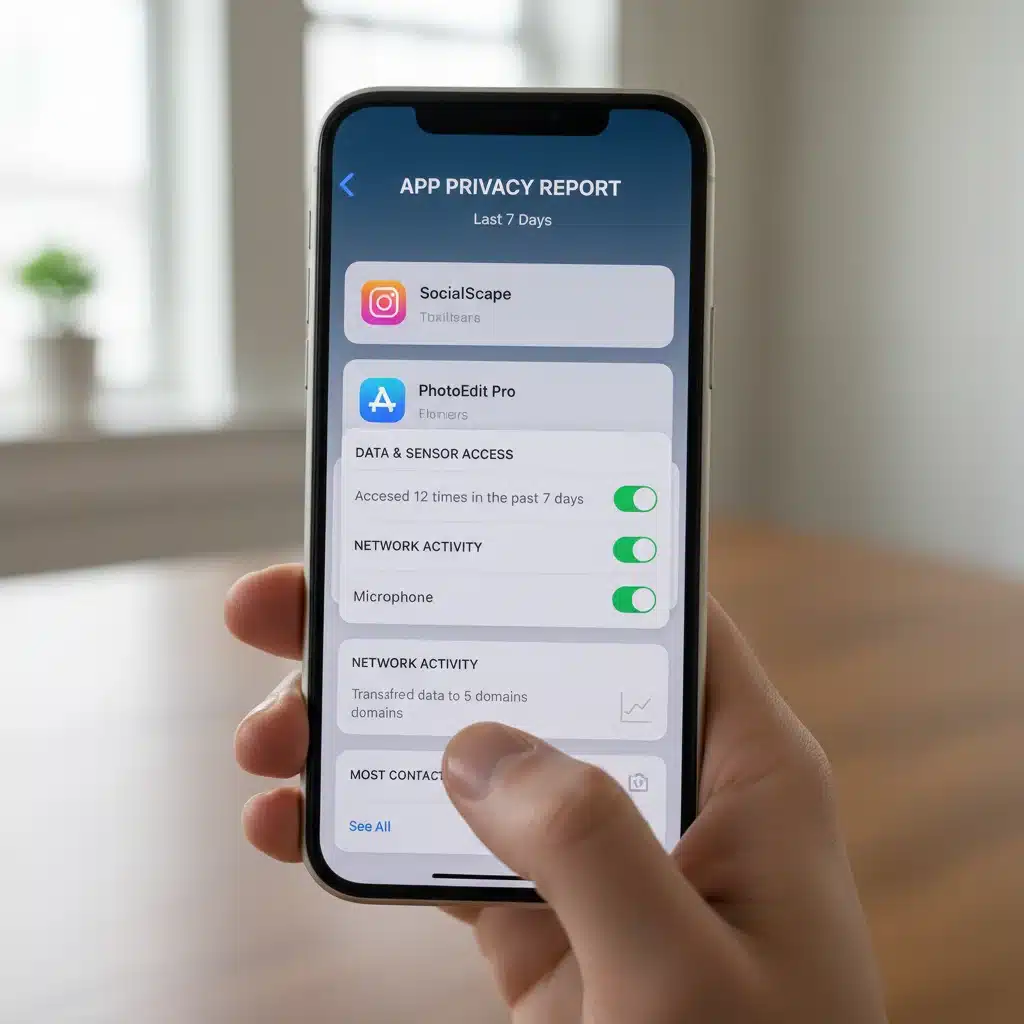
- Proactive Permission Audits: The AI assistant continuously reviews app permissions in the background. If an app hasn’t used a particular permission (e.g., microphone access) for an extended period, it will suggest revoking that permission, reducing unnecessary data exposure.
- Unusual Activity Detection: It can detect anomalies in app behavior, such as an app frequently accessing your location in the background when it typically doesn’t, or attempting to access data types it hasn’t before. Users will receive alerts and options to investigate or restrict the app.
- Privacy Score and Recommendations: The assistant provides a personalized ‘Privacy Score’ for your device, based on your current settings and app behaviors. It offers tailored recommendations to enhance your iOS 18 privacy, such as enabling specific security features or adjusting app settings for better protection.
- Simplified Privacy Policy Summaries: Leveraging natural language processing, the AI can condense lengthy and often complex privacy policies of newly installed apps into concise, easy-to-understand summaries, highlighting key data collection practices and sharing policies before you grant permissions.
This intelligent assistant transforms privacy management from a reactive chore into a proactive, guided experience, making it easier than ever for users to maintain a strong privacy posture within iOS 18 privacy controls.
3. Advanced On-Device Data Processing with Differential Privacy 2.0
Apple has been a pioneer in implementing differential privacy to collect usage data while protecting individual user identities. With iOS 18, they are rolling out Differential Privacy 2.0, an even more sophisticated approach that significantly expands the scope of on-device data processing. This means more personal data analysis, such as health metrics, browsing habits, and app usage patterns, will occur directly on your device rather than being sent to cloud servers for processing. This architectural shift is a cornerstone of enhanced iOS 18 privacy.
The Benefits:
- Reduced Data Exposure: By processing data locally, the need to transmit sensitive information to external servers is minimized, drastically reducing the risk of data breaches during transit or at rest on third-party infrastructure.
- Enhanced Anonymity: When aggregated data is eventually sent to Apple for service improvement (e.g., improving Siri suggestions or keyboard predictions), Differential Privacy 2.0 ensures that noise is added to individual data points, making it statistically impossible to re-identify any single user.
- Faster Insights: On-device processing can often provide more immediate and personalized insights without the latency associated with cloud-based computations.
- Greater User Trust: Users can have higher confidence that their most personal data remains on their device, under their control, and is not being used for purposes beyond improving their direct user experience.
This evolution in data handling underscores Apple’s commitment to building a privacy-first ecosystem, where valuable insights can be derived without compromising the individual’s right to privacy. It’s a critical component of the robust iOS 18 privacy framework.
4. Secure Enclave for All User-Generated AI Data: Fortifying iOS 18 Privacy
The rise of on-device AI and machine learning models means more personal data is being processed locally to power features like enhanced photo search, personalized health insights, and advanced Siri capabilities. With iOS 18, Apple is extending the protection of the Secure Enclave to encompass all user-generated AI data. The Secure Enclave is a dedicated, isolated hardware component that handles cryptographic operations and protects sensitive user data, even if the main processor is compromised. This expansion is a monumental step for iOS 18 privacy.
Implications for Users:
- Unparalleled Protection for AI Models: The data used to train and refine on-device AI models, such as your voice patterns for Siri or your typing habits for predictive text, will now be encrypted and stored within the Secure Enclave. This makes it virtually impossible for unauthorized access, even by Apple itself.
- Biometric Data Integration: Further integration with biometric data (Face ID, Touch ID) means that access to certain AI-generated insights or features can be more securely authenticated, ensuring that only the authorized user can interact with highly personalized AI outputs.
- Enhanced Data Integrity: The Secure Enclave’s robust security measures ensure the integrity of AI models and the data they process, preventing tampering or manipulation that could lead to privacy breaches or biased outcomes.
- Future-Proofing Privacy: As AI capabilities on devices grow, protecting the data that fuels these capabilities becomes increasingly vital. Extending Secure Enclave protection to all user-generated AI data is a proactive measure that future-proofs iOS 18 privacy against emerging threats.
This commitment to hardware-level security for AI data reinforces Apple’s dedication to making privacy a foundational element of its technological advancements. It ensures that the intelligence of your device works for you, without compromising your personal information.
5. Decentralized Identity Verification for Third-Party Apps: A Leap for iOS 18 Privacy
One of the persistent challenges in the digital world is verifying identity securely without oversharing personal information. iOS 18 introduces Decentralized Identity Verification, a revolutionary feature that allows users to prove their identity to third-party apps and services without revealing underlying personal data, utilizing verifiable credentials and blockchain-like technologies. This is a game-changer for online interactions and a significant boost for iOS 18 privacy.
How it Transforms Identity:
- Zero-Knowledge Proofs: Users can verify specific attributes about themselves (e.g., ‘I am over 18’ or ‘I am a registered student’) without disclosing their date of birth or actual student ID. The system only confirms the truthfulness of the attribute, not the underlying data.
- Self-Sovereign Identity: Your identity is no longer tied to a central authority or a single service provider. You, the user, own and control your digital identifiers and decide precisely what information to share and with whom, fostering true self-sovereignty.
- Reduced Data Footprint: By minimizing the amount of personal data shared during verification processes, the risk of your data being compromised in third-party breaches is drastically reduced.
- Enhanced Trust and Security: The cryptographic nature of verifiable credentials ensures that the proofs of identity are tamper-proof and highly secure, providing a more reliable and private method of authentication than traditional login systems.
This feature has profound implications for everything from online banking and e-commerce to social media and digital rights management, offering a future where digital interactions are both secure and respectful of individual privacy. It represents a bold step forward in the evolution of iOS 18 privacy, placing users firmly in control of their digital personas.

The Broader Impact of iOS 18 Privacy Features on the Digital Ecosystem
The introduction of these advanced iOS 18 privacy controls is not just about individual user protection; it has far-reaching implications for the entire digital ecosystem. Developers will need to adapt their practices, prioritizing privacy by design in their app development cycles. Companies that rely heavily on data collection will be compelled to re-evaluate their strategies, shifting towards more ethical and transparent data handling practices. This push from Apple could set a new industry standard, encouraging other platforms to follow suit and elevate their privacy offerings.
For consumers, these features translate into greater peace of mind and a more secure digital experience. The ability to finely tune data access, receive AI-driven privacy advice, benefit from on-device processing, secure AI data, and verify identity privately empowers users like never before. It reinforces the idea that technology can be both powerful and protective, fostering innovation while upholding fundamental rights to privacy.
Moreover, the emphasis on on-device processing and decentralized identity could spur further innovation in edge computing and secure distributed ledger technologies. As users demand more control, the market will respond with solutions that respect and reinforce these new privacy paradigms. The iOS 18 privacy features are not just a set of updates; they are a statement about the future direction of mobile technology – a future where privacy is not an afterthought but a core principle.
Preparing for the Future: Embracing iOS 18 Privacy Controls
As we look towards 2026 and the official rollout of iOS 18, it’s clear that Apple is not just reacting to privacy concerns but actively shaping the future of digital security. These five key iOS 18 privacy features – Enhanced App-Specific Data Sandboxing, the AI-Powered Privacy Assistant, Advanced On-Device Data Processing with Differential Privacy 2.0, Secure Enclave for All User-Generated AI Data, and Decentralized Identity Verification – collectively represent a monumental leap forward. They offer users unparalleled control, transparency, and protection in an increasingly complex digital world.
For current iPhone users, this means an even more secure and private experience awaits. For developers, it signifies a continued commitment to building apps that respect user data at every level. And for the broader tech industry, it serves as a powerful reminder that privacy is not a niche concern but a fundamental expectation that drives innovation and trust. Embracing these iOS 18 privacy controls will be crucial for anyone navigating the digital realm, ensuring that personal data remains personal and that technology serves humanity responsibly.
Stay tuned for more updates as we get closer to the official release of iOS 18 and its transformative privacy features. The future of mobile security looks brighter, and more private, than ever before.