Streamline Your Workflow: A 7-Step Guide to Automating Tasks with New US Productivity Apps in 2026

In the rapidly evolving digital landscape of 2026, the demand for efficiency and productivity has never been higher. Businesses and individuals alike are constantly seeking innovative ways to optimize their operations, save time, and focus on high-value tasks. The answer often lies in effective workflow automation. By strategically implementing new US productivity apps, you can transform tedious, repetitive tasks into seamless, automated processes, freeing up valuable resources and boosting overall output. This comprehensive 7-step guide will walk you through the essential stages of how to Automate Workflow Productivity, leveraging the latest tools and strategies to revolutionize your work life.
The concept of automation is not new, but its application has grown exponentially with advancements in artificial intelligence, machine learning, and cloud computing. What was once the domain of large enterprises is now accessible to small businesses and even individual professionals. The right set of US productivity apps can act as your digital assistant, handling everything from email management and data entry to report generation and customer communication. The goal is not to replace human effort entirely, but to augment it, allowing humans to concentrate on creativity, critical thinking, and strategic development – areas where machines still cannot compete.
Before diving into the steps, it’s crucial to understand the immense benefits of integrating automation into your workflow. Beyond the obvious time savings, automation reduces human error, ensures consistency, improves data accuracy, and provides valuable insights through analytics. It empowers teams to achieve more with less, fostering a more productive and less stressful work environment. As we move further into 2026, staying ahead of the curve means embracing these technological shifts. Let’s embark on this journey to discover how you can effectively Automate Workflow Productivity and unlock your full potential.
Step 1: Identify Repetitive Tasks and Bottlenecks
The first and most critical step in successful workflow automation is to accurately identify which tasks are suitable for automation. Not every task can or should be automated. The sweet spot lies in repetitive, rule-based tasks that consume a significant amount of your time or act as bottlenecks in your current processes. Start by conducting a thorough audit of your daily, weekly, and monthly routines. Keep a log of all tasks you perform, noting down their frequency, the time they consume, and any frustrations or delays they cause.
Common Areas for Automation Identification:
- Data Entry: Copying information from one system to another, updating spreadsheets, or inputting customer details.
- Email Management: Sorting emails, sending routine responses, scheduling follow-ups.
- Report Generation: Compiling data from various sources into regular reports.
- Scheduling: Booking meetings, sending reminders, managing calendars.
- Onboarding/Offboarding: Setting up new employees, granting/revoking access, sending welcome packets.
- Content Distribution: Posting updates to multiple social media platforms, distributing newsletters.
- Customer Support: Answering frequently asked questions, routing inquiries to the correct department.
Pay close attention to tasks that are prone to human error. These are prime candidates for automation, as a machine can perform them with perfect consistency every time. Also, look for tasks that create delays for subsequent steps in a process. Automating these bottlenecks can significantly speed up your entire operation. In 2026, many US productivity apps offer built-in analytics and time-tracking features that can help you pinpoint these areas more easily. Don’t underestimate the power of a simple pen and paper or a spreadsheet to map out your current workflows. Visualizing your processes can reveal hidden inefficiencies and opportunities to Automate Workflow Productivity.
Step 2: Define Clear Automation Goals and Metrics
Once you’ve identified potential tasks for automation, the next step is to define clear, measurable goals for what you want to achieve. Without specific objectives, it’s difficult to gauge the success of your automation efforts. Your goals should align with your broader business or personal objectives. Do you want to save a certain number of hours per week? Reduce errors by a specific percentage? Improve response times? Increase customer satisfaction? Be precise.
Examples of Automation Goals:
- Reduce time spent on data entry by 50% within three months.
- Decrease lead response time to under 15 minutes for all incoming inquiries.
- Automate monthly report generation, saving 8 hours of manual work per month.
- Improve client onboarding completion rate by 20% through automated reminders.
- Eliminate 90% of manual scheduling conflicts for team meetings.
Alongside your goals, establish key performance indicators (KPIs) to track your progress. These metrics will provide tangible evidence of the impact of your automation. For instance, if your goal is to save time, track the actual time saved. If it’s to reduce errors, monitor the error rate before and after automation. Many modern US productivity apps come with robust analytics dashboards that make tracking these metrics straightforward. Regularly reviewing these KPIs will allow you to fine-tune your automated processes and demonstrate the return on investment (ROI) of your efforts to Automate Workflow Productivity.
Step 3: Research and Select the Right US Productivity Apps
This is where the rubber meets the road. With countless US productivity apps available in 2026, choosing the right tools is paramount. The ideal apps will seamlessly integrate with your existing systems, offer the specific automation capabilities you need, and be user-friendly. Don’t jump for the first popular app you see; instead, conduct thorough research based on your identified tasks and goals from the previous steps.
Key Considerations When Choosing Apps:
- Integration Capabilities: Can the app connect with your existing CRM, email client, project management software, etc.? API access and Zapier/Make.com integrations are crucial.
- Specific Automation Features: Does it offer the exact triggers and actions required for your tasks (e.g., conditional logic, multi-step workflows, AI-powered suggestions)?
- Scalability: Can the app grow with your needs? Will it handle increased volume or more complex workflows in the future?
- User Interface (UI) and User Experience (UX): Is it intuitive and easy for you and your team to learn and use?
- Security and Compliance: Does it meet industry standards for data security and privacy?
- Cost: Does it fit within your budget? Consider both subscription fees and potential savings.
- Customer Support and Community: Is there reliable support and an active user community for troubleshooting and learning?
Some prominent categories of US productivity apps for automation in 2026 include:
- Integration Platforms: Zapier, Make (formerly Integromat) are indispensable for connecting disparate apps.
- Project Management with Automation: Asana, Monday.com, ClickUp offer extensive automation rules for tasks, deadlines, and notifications.
- CRM with Automation: Salesforce, HubSpot, Zoho CRM automate lead nurturing, follow-ups, and sales processes.
- Email Automation: Mailchimp, ActiveCampaign, ConvertKit for marketing and customer communication.
- Document Management & E-signature: Adobe Acrobat, DocuSign integrate workflow approvals and document routing.
- AI-Powered Assistants: Tools like advanced virtual assistants or specialized AI services can automate complex data analysis or personalized communications.
Start with a few promising options and take advantage of free trials. Test their capabilities with a small, non-critical task before committing. The right selection of tools is foundational to successfully Automate Workflow Productivity.
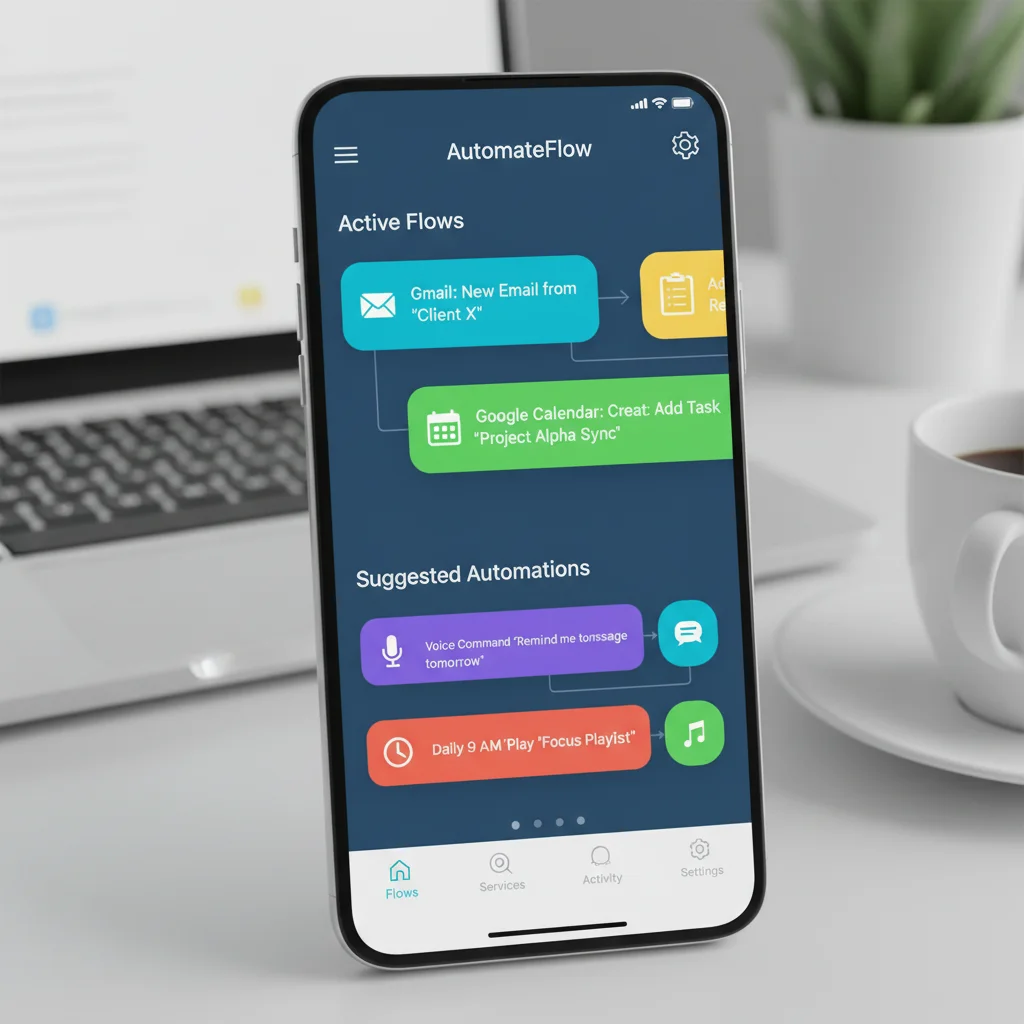
Step 4: Design and Map Out Your Automated Workflows
Before you start configuring settings in your chosen apps, it’s vital to design and map out your automated workflows. This step involves visualizing the sequence of events, triggers, actions, and conditions that will govern your automated tasks. Think of it as creating a blueprint for your automation. Flowcharting tools or even simple diagrams can be incredibly helpful here.
Elements of a Well-Designed Workflow:
- Trigger: What event initiates the automation? (e.g., new email received, form submission, task completed).
- Conditions: Are there any specific criteria that must be met for the automation to proceed? (e.g., email from a specific sender, form field contains certain data).
- Actions: What steps will the automation take? (e.g., send an email, create a task, update a record, move a file).
- Delays/Pauses: Are there any points where the automation needs to wait before proceeding? (e.g., wait 3 days before sending a follow-up).
- Error Handling: What happens if an action fails? How will you be notified?
- Notifications: Who needs to be informed when the automation runs successfully or encounters an issue?
Clarity in this stage prevents confusion and errors down the line. For example, a simple workflow might be: Trigger: New lead form submitted on website. Condition: Lead source is ‘Organic Search’. Action 1: Create new contact in CRM. Action 2: Assign lead to sales rep. Action 3: Send automated welcome email to lead. Action 4: Send notification to sales rep. For more complex processes, you might have multiple branches based on different conditions.
In 2026, many US productivity apps offer visual workflow builders that simplify this design process. Utilize these features to drag and drop elements, making it easier to see how each step connects. Involving team members who perform these tasks daily can provide invaluable insights and ensure that the automated workflow accurately reflects real-world needs. A well-mapped workflow is the backbone of effective automation and key to successfully beginning to Automate Workflow Productivity.
Step 5: Implement and Test Your Automated Workflows
With your design in hand, it’s time to implement your automated workflows within your chosen US productivity apps. This involves configuring the triggers, actions, and conditions in the app’s interface. Start with simple automations first to build confidence and understand the nuances of the platform. Don’t try to automate everything at once.
Implementation Best Practices:
- Start Small: Implement one or two critical workflows first. This allows for easier troubleshooting and iteration.
- Use Test Data: Never test automations with live, critical data initially. Create dummy accounts, test emails, and sample entries to ensure everything functions as expected.
- Document Everything: Keep a record of your automated workflows, including triggers, actions, conditions, and any custom code or integrations. This is crucial for maintenance and onboarding new team members.
- Set Up Notifications: Configure alerts for when automations run, succeed, or fail. This helps you monitor their performance.
- Iterate and Refine: Automation is rarely perfect on the first try. Be prepared to make adjustments based on your testing and initial results.
Thorough testing is non-negotiable. Run through every possible scenario you’ve designed. What happens if a condition isn’t met? What if an integrated app is temporarily down? Ensure that your error handling mechanisms are in place and that notifications are sent to the right people. Gather feedback from anyone impacted by the automation. Their insights are invaluable for identifying overlooked issues or opportunities for improvement. This rigorous testing phase is crucial for ensuring that your efforts to Automate Workflow Productivity lead to reliable and effective systems.
Step 6: Monitor, Analyze, and Optimize
Implementing automation is not a one-time event; it’s an ongoing process of monitoring, analyzing, and optimizing. Once your automated workflows are live, it’s essential to continuously keep an eye on their performance. Are they achieving the goals you set in Step 2? Are there any unexpected side effects or new bottlenecks emerging?
Key Activities for Monitoring and Optimization:
- Regular Review of KPIs: Consistently check the metrics you established. Are you saving the projected time? Is the error rate decreasing?
- Error Logs and Alerts: Review any error logs provided by your US productivity apps. Address failures promptly to prevent disruptions.
- User Feedback: Solicit feedback from team members or customers who interact with the automated processes. Their experiences can highlight areas for improvement.
- Performance Audits: Periodically audit your automated workflows to ensure they are still relevant and efficient. Business needs and app functionalities can change.
- Look for Further Opportunities: As you become more proficient, you’ll likely identify new tasks or parts of existing tasks that can be automated.
In 2026, many advanced US productivity apps incorporate AI and machine learning to offer insights into workflow performance and suggest optimizations. Leverage these features to your advantage. For example, an app might suggest a more efficient way to route customer inquiries based on historical data. Don’t be afraid to tweak, refine, or even completely overhaul an automated workflow if it’s not delivering the desired results. The goal is continuous improvement to truly Automate Workflow Productivity to its maximum potential.

Step 7: Foster a Culture of Automation and Continuous Learning
The final step is perhaps the most crucial for long-term success: fostering a culture that embraces automation and continuous learning. Automation is not just about tools; it’s about a mindset shift. Encourage your team, or yourself, to constantly look for opportunities to improve processes through automation. This involves training, knowledge sharing, and celebrating successes.
Building an Automation-Centric Culture:
- Training and Education: Provide resources and training for team members to learn about automation tools and best practices. Organize workshops or share online courses.
- Knowledge Sharing: Create a central repository for documentation of automated workflows. Encourage team members to share their automation tricks and successes.
- Empowerment: Empower employees to experiment with automation in their own roles. Give them the tools and support to solve their own repetitive task problems.
- Celebrate Successes: Acknowledge and celebrate the time saved, errors reduced, and efficiencies gained through automation. This reinforces positive behavior.
- Stay Updated: The landscape of US productivity apps is constantly evolving. Stay informed about new features, integrations, and emerging technologies that can further enhance your automation efforts.
By making automation a core part of your operational philosophy, you ensure that the benefits are sustained and expanded over time. This continuous pursuit of efficiency not only improves productivity but also enhances job satisfaction by removing mundane tasks and allowing individuals to focus on more engaging and impactful work. Embracing this culture is the ultimate way to sustainably Automate Workflow Productivity and thrive in the future of work.
Conclusion: The Future of Work is Automated
In conclusion, the journey to Automate Workflow Productivity is a strategic imperative for individuals and organizations aiming to stay competitive and efficient in 2026 and beyond. By diligently following these seven steps – identifying repetitive tasks, defining clear goals, selecting the right US productivity apps, designing workflows, implementing and testing, continuously monitoring and optimizing, and fostering a culture of automation – you can unlock a new level of operational excellence.
The power of automation extends far beyond simply saving time; it’s about reducing stress, minimizing errors, gaining valuable insights, and empowering your workforce to focus on innovation and creativity. The array of sophisticated US productivity apps available today provides unparalleled opportunities to transform how you work. Don’t let manual, repetitive tasks hold you back. Embrace the future, automate your workflow, and reclaim your time and energy for what truly matters.
Start your automation journey today. The investment in time and effort will yield significant returns, paving the way for a more streamlined, productive, and ultimately, more successful future. Leveraging the latest tools and adopting a strategic approach to automation will not only enhance your current operations but also position you for sustained growth and adaptability in an ever-changing digital world. Take control of your workflow and let technology work for you.